
Sign up to save your podcasts
Or

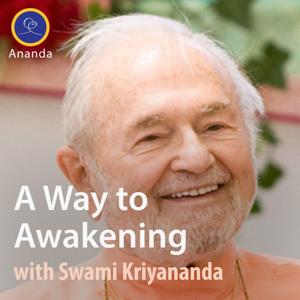

This talk centers on the spiritual purpose of suffering and the journey toward Self-realization. Swami Kriyananda opens with the idea of offering one's whole being to the divine, framing all hardship as part of a larger, ultimately joyful unfolding—those who reach enlightenment never regret the struggle that led them there. He uses the Bhagavad Gita's battlefield as a metaphor for the inner war between our higher and lower tendencies. He draws on the biblical story of the Israelites wandering the desert as a symbol of the soul's long search for the "Promised Land" of infinite consciousness, noting that the ego can walk us close to liberation but cannot itself enter it.
He then shares anecdotes from his guru, Paramhansa Yogananda, including an encounter with an ascetic who criticized Yogananda's practical approach to generosity, and Yogananda's exchange with Gandhi about nonviolence versus the necessity of defense. Stories about the saint Pranabananda's childhood renunciation and the sage Sukadeva learning true detachment from King Janaka illustrate that real renunciation is inner freedom from ego and attachment, not external poverty. He reflects on humility as the path to happiness.
 View all episodes
 By Ananda

4.8
1616 ratings
This talk centers on the spiritual purpose of suffering and the journey toward Self-realization. Swami Kriyananda opens with the idea of offering one's whole being to the divine, framing all hardship as part of a larger, ultimately joyful unfolding—those who reach enlightenment never regret the struggle that led them there. He uses the Bhagavad Gita's battlefield as a metaphor for the inner war between our higher and lower tendencies. He draws on the biblical story of the Israelites wandering the desert as a symbol of the soul's long search for the "Promised Land" of infinite consciousness, noting that the ego can walk us close to liberation but cannot itself enter it.
He then shares anecdotes from his guru, Paramhansa Yogananda, including an encounter with an ascetic who criticized Yogananda's practical approach to generosity, and Yogananda's exchange with Gandhi about nonviolence versus the necessity of defense. Stories about the saint Pranabananda's childhood renunciation and the sage Sukadeva learning true detachment from King Janaka illustrate that real renunciation is inner freedom from ego and attachment, not external poverty. He reflects on humility as the path to happiness.