
Sign up to save your podcasts
Or

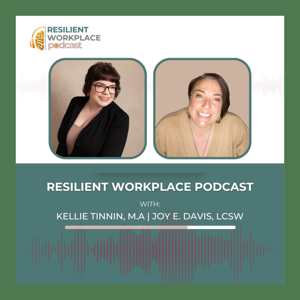


Resilient Workplace Podcast — Season 1 Wrap-Up
Title: From Awareness to Action: Building Human-Centered Workplaces
In this Season 1 finale, hosts Kellie Tinnin, M.A and Joy E. Davis, LCSW reflect on the core conversations that sparked change — from addressing burnout and hybrid fatigue to building emotionally intelligent, human-centered workplaces. This wrap-up episode connects the dots from awareness to action and previews what’s coming next in Season 2.
“Resilience isn’t a trait — it’s a team culture.”
✅ Download the Season 1 Toolkit Bundle – scripts, worksheets, and checklists for a resilient workplace on our website.
→ Subscribe now so you don’t miss Season 2-
We would LOVE to hear from you… email: [email protected]
let us know what you wanna hear for Season 2 coming in September 2025.
Episode #10
Title: Part 3: Leading with Courage & Compassion
Date: Jun 4, 2025
Hosts: Kellie Tinnin & Joy Davis
In the final episode of our Courageous Conversations series, Joy and Kellie explore how leaders and HR professionals can build cultures where feedback isn’t feared—it’s expected. Learn how to lead with both courage and compassion to foster high-trust, resilient teams.
Conflict resolution isn’t just for HR—it’s a critical leadership competency. The Word Conflict is just a realignment conversation...Let’s train for it.
Workplaces that normalize healthy feedback reduce shame and increase retention and trust.
Tune in and learn how to lead human-first cultures where courageous conversations are the norm—not the exception.
Follow our RWI FB/LinkedIn for Tools/Tips on Improving Communication to Build RESILIENT Teams.
Resources:
Check out: Leader Guide Here: https://www.resilientworkplaceinnovations.com/ on resource page.
A simple framework to guide meaningful leadership moments.
“Can I share an observation with you?”
“I want us to move forward together—can we talk about what’s getting in the way?”
Avoid: “You always…” “Why would you…” — they trigger defensiveness.
Kind leaders offer clear expectations + compassion.
"Every tough conversation is a chance to model values, build trust, and create change."
Books:
Teaming by Amy Edmondson
Cues By Vanessa Van Edwards
Leading with Kindness by William Baker, PhD. & Michael O’Malley, PhD
Listening Well by William R. Miller
The Next Conversation by Jefferson Fisher
Title: Continuing Communication Series to Build Resilient Teams
Series Title: Courageous Conversations
Talk About It: Why Communication is the Foundation of a Human-Centered Workplace
In this follow-up to Episode 8, Kellie and Joy equip you with practical tools for navigating tough conversations with clarity, confidence, and compassion. Learn how preparation, emotional regulation, and feedback frameworks can transform conflict into collaboration.
Bonus Insights:
Follow our RWI FB/LinkedIn for tools/tips to improve communication
Resilient Workplace Podcast — Episode 8
LEARNING OBJECTIVE:
Summarize techniques for having difficult conversations in the workplace and explore the hidden mental health and HR costs of poor communication.
Series Title: Courageous Conversations
Talk About It: Why Communication is the Foundation of a Human-Centered Workplace
Core Theme: Communication is more than words — it's culture in action. In this kickoff episode, Joy and Kellie explore why so many workplace issues stem from unspoken expectations, assumptions, and fear of conflict.
🔹 Key Topics:
🔹Real-life scenario: A manager avoids giving feedback → results in performance and trust breakdown and stress responses.
A Joy Note: Silence in the workplace is not productive however in therapy it is a very valuable tool.
Follow our RWI FB/LinkedIn for Tool spotlights on Communication
Listener Prompt:
“What conversation have you been avoiding at work?”
"Where do you get stuck when preparing for a tough conversation?"
The Resilient Workplace Podcast
In today’s episode, we discuss how rapidly changing technology is reshaping the workplace. From AI integration to digital automation, companies must navigate new opportunities and challenges. We explore how employees and employers are adjusting to AI-driven workflows, the psychological impact of technological advancements, and strategies to foster a balanced and supportive work environment. Stay tuned for insights on AI policies, professional development, and mental health implications.
The workplace is evolving rapidly with AI integration, automation, and digital learning.
AI is increasingly used for:
Personalized learning and development programs.
Automating repetitive tasks to improve efficiency.
Enhancing HR processes, including SOP guidance and job description generation.
Companies that fail to adapt risk falling behind in productivity and innovation.
According to the APA’s 2023 Work in America Survey:
38% of workers worry that AI will make their job duties obsolete.
51% of AI-concerned workers report work negatively affecting their mental health.
64% experience heightened stress due to AI integration.
Employees monitored by technology report feeling micromanaged and emotionally exhausted.
AI interactions contribute to increased workplace loneliness, sleep disturbances, and even higher alcohol consumption.
Employers must address AI anxiety through:
Transparent communication on AI’s role and impact.
Opportunities for social interaction to counteract workplace loneliness.
Balanced task allocation, using AI for repetitive tasks while keeping collaborative work human-focused.
Support for professional development, helping employees upskill in an AI-driven landscape.
Despite the rise of AI tools, concerns remain about data privacy and security.
Some organizations are developing their own AI models for internal use.
Establishing AI policies can help organizations:
Ensure ethical AI use in decision-making.
Protect employee data and privacy.
Train managers and HR professionals on AI-driven insights and process improvements.
AI and automation are transforming the workplace, impacting job roles and employee well-being.
Employers must proactively address AI-related stress by fostering transparency, social engagement, and upskilling initiatives.
The future of work will require a balance between human collaboration and AI-driven efficiency.
Organizations should develop AI policies to manage integration, privacy, and security concerns effectively.
Episode #8: Navigating Difficult Conversations in the Workplace
We’ll explore how to have and manage difficult conversations at work, focusing on communication strategies and emotional intelligence a three part series.
LinkedIn: [/resilient-workplace-innovations]
Thank you for listening to The Resilient Workplace Podcast! Don’t forget to leave a review and subscribe for more.
Resources:
SHRM: Millennials Lead the Way in Embracing AI at Work
Springer: AI and Workforce Transformation
APA: 2023 Work in America AI and Monitoring Report
APA: AI-Induced Loneliness and Mental Health
The Times: Will 2025 Be the Year of AI Workers?
The Resilient Workplace Podcast
In today’s episode, we’re diving into the world of neuroscience and its profound impact on workplace culture and mental health. We’ll be exploring three key concepts—Neurodivergence, Neuroplasticity, and Neuropsychology—and discussing how they show up in the workplace. Stay tuned for actionable mental health takeaways and coping strategies that can help you and your team thrive.
Definition: Neurodivergence describes variations in cognitive functioning, such as ADHD, autism, dyslexia, and more.
How It Shows Up in the Workplace:
Employees may excel in creative thinking, problem-solving, or hyperfocus but may struggle with traditional structures.
Lack of understanding or accommodations can create barriers for neurodivergent individuals.
According to SHRM, approximately 14% of adults possess some type of neuro differentiation.
Challenges:
Misaligned expectations or stigmatization can lead to disengagement or mental health challenges.
Practical Takeaways:
Implement inclusive hiring practices (e.g., structured interviews, skills-based assessments).
Provide accommodations like flexible schedules, assistive technology, or sensory-friendly spaces.
Educate teams about neurodiversity to reduce stigma and foster an inclusive environment.
Definition: Neuroplasticity refers to the brain's ability to adapt and rewire itself based on experiences and learning.
How It Shows Up in the Workplace:
Employees can develop new skills and behaviors with proper training and practice.
Leaders can reshape workplace dynamics by fostering growth mindsets and adaptability.
Training programs should incorporate multiple modalities to support behavior change over time.
Key Insight: Burnout can hinder neuroplasticity, while fostering a positive environment enhances it.
Practical Takeaways:
Encourage continuous learning through professional development programs.
Use feedback loops to reinforce learning and behavior change.
Promote resilience training to help employees reframe challenges into growth opportunities.
Reward effort and progress, not just outcomes.
Definition: Neuropsychology focuses on how brain function impacts behavior, decision-making, and mental health.
How It Shows Up in the Workplace:
Stress, fatigue, and mental health issues directly impact productivity and decision-making.
Leaders who understand neuropsychology can foster environments that support mental resilience.
Key Insight: Chronic stress impairs cognitive performance, while supportive environments enhance problem-solving and collaboration.
Practical Takeaways:
Educate leaders about the impact of stress on decision-making and emotional regulation.
Promote regular breaks, healthy boundaries, and mental health days.
Offer personalized support and structured routines for neurodivergent employees.
Provide clear, strengths-based feedback to enhance engagement and retention.
Understanding neurodivergence can help create more inclusive workplaces.
Leveraging neuroplasticity enables continuous learning and adaptability.
Applying neuropsychology principles supports mental resilience and productivity.
Organizations should focus on structured support, education, and feedback-driven approaches to enhance employee well-being.
Navigating the whirlwind of changing workplace technology and its impact on employees and organizations.
LinkedIn: [/resilient-workplace-innovations]
Thank you for listening to The Resilient Workplace Podcast! Don’t forget to leave a review and subscribe for more.
SHRM: Supporting a Neurodivergent Workforce
Cleveland Clinic: Understanding Neurodivergence
APA: Neurodiversity and the Workplace
The Resilient Workplace Podcast
Show Notes Episode Summary:
Previous Episode Recap:
Discussion Points:
2. The Rise and Reality of Remote Work
3. Employee Benefits & Mental Health Considerations
4. Challenges of Remote Work:
5. The Organizational Perspective: Productivity & Pay Structures
Considerations for Implementing Hybrid Work
Closing Thoughts:
Next Episode Teaser:
Thank you for listening to The Resilient Workplace Podcast! Don’t forget to leave a review and subscribe for more.
References:
Show Notes: Episode #4 - Culture Clashes & Burnout Battles: Unraveling Workplace Woes
Date: March 5, 2025
Title: Culture Clashes & Burnout Battles: Unraveling Workplace Woes
Objectives: Explore how the absence of a strong workplace culture contributes to organizational challenges.
Discussion Points:
Tools and Frameworks:
Next Episode Topic:
Call to Action:
Follow Us:
Thank you for listening to The Resilient Workplace Podcast!
Show Notes
Episode #3: Soft Skills and Ugly Cries
Date: February 19, 2025
Objectives:
Key Points:
Actionable Tips:
Resources:
Next Episode:
The Battlefront Within: Unpacking the Culture Clash in Today's Workplaces
Topics:
Follow Us:
Thank you for listening to The Resilient Workplace Podcast!
Welcome to the Resilient Workplace Podcast! 🎙️ In this episode, we’re spilling the tea on key workplace trends from 2024, breaking down what worked, what didn’t, and what’s coming in 2025.
The workplace has evolved, but have organizations kept up? Today, we highlight the biggest challenges HR professionals and employees faced in 2024, and provide insights and tools to navigate the road ahead.
In a world where the growing soft skills crisis leaves critical thinking, emotional intelligence, and adaptability in short supply, we’re here to help you, your team, and your organization thrive.
Facing the Burnout Epidemic:
Promote Work-Life Balance: Embrace flexible schedules and robust mental health support.
Navigating the Hybrid Work Dilemma:
Adapt Policies: Align workplace guidelines with evolving employee expectations.
The Mental Health Impact in Today’s Workplace:
Implement Mental Health Initiatives: Go beyond awareness to provide real, accessible support.
Join the Conversation:
Next Episode: Soft Skills & Communication: Tackle multigenerational challenges as Baby Boomers, Gen X, Millennials, and Gen Z navigate differing expectations. Post-Pandemic Workplace Culture: Understand what’s changed and what still needs to evolve in our work environments.
Leadership & Productivity Tools:
Manage Stress with the “Resilient REST” Formula:
Productivity Hacks: Explore frameworks such as the Eisenhower Matrix, MoSCoW Method, Pareto Principle, and Priority Matrix.
Our mission is clear: empower you to build a resilient, inclusive, and thriving workplace. Whether you’re a leader looking to enhance your team’s engagement, an employee striving for better balance, or an organization ready to embrace change, we invite you to join the conversation.
Together, we can create a more resilient future—one innovative solution at a time. Let’s be RESILIENT! 💪
From the publisher's feed