
Sign up to save your podcasts
Or



- Monday, April 12, 1971
- Attendance: 15,407
- Venue: Dodger Stadium
-
- Radio Announcers
▬▬▬▬▬▬▬▬▬▬▬▬▬▬▬
- Vin Scully
- Jerry Doggett
-
- Managers
▬▬▬▬▬▬▬▬▬▬▬▬▬▬▬
- Leo Durocher
- Walt Alston
-
- Starting Lineups
▬▬▬▬▬▬▬▬▬▬▬▬▬▬▬
- 1971 Chicago Cubs
- 1 - SS - Don Kessinger
- 2 - 2B - Glenn Beckert
- 3 - LF - Billy Williams
- 4 - 3B - Ron Santo
- 5 - 1B - Joe Pepitone
- 6 - RF - Johnny Callison
- 7 - CF - José Ortiz
- 8 - C - J.C. Martin
- 9 - P - Ken Holtzman
-
- 1971 Los Angeles Dodgers
- 1 - SS - Maury Wills
- 2 - RF - Manny Mota
- 3 - 1B - Wes Parker
- 4 - LF - Dick Allen
- 5 - C - Bill Sudakis
- 6 - 2B - Jim Lefebvre
- 7 - 3B - Steve Garvey
- 8 - CF - Bill Russell
- 9 - P - Sandy Vance
- 1966 MLB Standings
- Tuesday, April 12, 1966
- Attendance: 21,658
- Venue: Metropolitan Stadium
- Radio Announcers
- Monte Moore
- Lynn Ferris
-
- Starting Lineups
- 1966 Kansas City Athletics
- 1 - CF - José Tartabull
- 2 - RF - Mike Hershberger
- 3 - SS - Wayne Causey
- 4 - C - Billy Bryan
- 5 - 1B - Ken Harrelson
- 6 - LF - Larry Stahl
- 7 - 2B - Dick Green
- 8 - 3B - Ed Charles
- 9 - P - Catfish Hunter
-
- 1966 Minnesota Twins
- 1 - SS - Zoilo Versalles
- 2 - LF - Sandy Valdespino
- 3 - RF - Tony Oliva
- 4 - 3B - Harmon Killebrew
- 5 - 1B - Don Mincher
- 6 - CF - Jimmie Hall
- 7 - C - Earl Battey
- 8 - 2B - Bernie Allen
- 9 - P - Mudcat Grant
The 1975 Cincinnati Reds, known as the Big Red Machine, were at the height of their dominance and delivered one of the most iconic seasons in baseball history. Managed by Sparky Anderson, the team finished with a 108–54 record, cruising to the National League West title and eventually capturing the World Series crownThe roster was loaded with star power, including Pete Rose, Joe Morgan, Johnny Bench, and Tony Pérez—each contributing in different ways to the team’s relentless offense and cohesive chemistry. Joe Morgan, in particular, had an MVP season, showcasing a rare combination of power, speed, and plate discipline. Pete Rose continued to be the heartbeat of the lineup, hitting .317 and playing with unmatched intensity. Bench and Pérez delivered consistent power, while George Foster and Dave Concepción added key production and strong defense. On the pitching side, the staff wasn’t overpowering, but it was highly effective. Don Gullett, Gary Nolan, and Fred Norman anchored the rotation, while Rawly Eastwick emerged as a dominant force out of the bullpenThe Reds’ balance, depth, and aggressive base running made them a nightmare matchup for opponents. After sweeping the Pirates in the NLCS, Cincinnati faced the Boston Red Sox in a dramatic World Series that went seven games. Game 6, featuring Carlton Fisk’s legendary walk-off home run, remains one of the most famous in MLB historyThe Reds responded with a Game 7 victory, securing their first World Series title since 1940.
- 1964 MLB Standings
- April 1, 1964
- Portsmouth, Virginia
-
- Radio Announcers
- Bob Murphy
- Lindsey Nelson
- Ralph Kiner
-
- Managers
- Casey Stengel
- Hank Bauer
-
- Top Players
- 1974 New York Mets
- RF - Joe Christopher
- 2B - Ron Hunt
- 1B - Ed Kranepool
- C - Jesse Gonder
- CF - Jim Hickman
- 3B - Charley Smith
- LF - George Altman
- 2B-CF - Rod Kanehl
- SS - Roy McMillan
-
- 1974 Baltimore Orioles
- LF - Boog Powell
- 3B - Brooks Robinson
- LF-RF - Sam Bowens
- 1B - Norm Siebern
- SS - Luis Aparicio
- C - Dick Brown
- CF - Jackie Brandt
- C - John Orsino
- 2B - Jerry Adair
- Earl Gillespie
- Blaine Walsh
The Milwaukee Braves of the 1950s were one of the National League’s most formidable and exciting teams, known for their powerful lineup, dominant pitching, and passionate fan base. After relocating from Boston to Milwaukee in 1953, the franchise quickly became a central force in the leagueThe move sparked a surge in attendance, with fans packing County Stadium and giving the team one of the most loyal followings in baseball at the time. Led by a core of future Hall of Famers—Hank Aaron, Eddie Mathews, and Warren Spahn—the Braves combined offensive firepower with a reliable pitching staff. Aaron and Mathews consistently ranked among the league leaders in home runs and RBIs, while Spahn remained a workhorse on the mound, racking up wins well into his late 30s. The peak of the decade came in 1957, when the Braves won the World Series, defeating the New York Yankees in seven games. They returned to the Fall Classic in 1958 but fell short in a rematch with the Yankees. Throughout the decade, the Braves remained contenders, often finishing near the top of the standings and challenging the National League’s elite. By the end of the 1950s, the team was still strong but beginning to show signs of transition. While the stars remained productive, questions about long-term depth and rising competition foreshadowed the shifts that would define the 1960s. Still, the 1950s Braves left an enduring mark as one of the decade's most respected and balanced clubs.
The 1936 Chicago City Series was another chapter in the long-standing Cubs-White Sox rivalry, which had defined the city’s baseball landscape for decades. The Cubs entered the series fresh off a fourth-place finish in the National League, while the White Sox, though a middle-of-the-pack team in the American League, had the edge when it came to these intra-city showdowns. The South Siders had dominated the City Series historically, and 1936 was no exception. The White Sox swept the four-game set behind strong pitching from Vern Kennedy, Monty Stratton, Ted Lyons, and Bill Dietrich, while the Cubs struggled offensively, managing just eight runs across the series.
The Cubs-White Sox rivalry had been one of baseball’s most consistent postseason matchups since the early 1900s, with the teams facing off in the City Series almost every year when neither club was playing in the World Series. Though the Cubs had won National League pennants in 1929, 1932, and 1935, their success did not translate into city bragging rights, as the White Sox continued to dominate the matchup. The 1936 series marked the second time in four years that the Cubs were completely shut out in the annual showdown, reinforcing the White Sox’s reputation as the stronger team in Chicago’s postseason exhibitions.
- 1950 MLB Standings
- Game 4, 1950 World Series
- Saturday, October 7, 1950
- Attendance: 68,098
- Venue: Yankee Stadium I
-
- Radio Announcers
- Mel Allen
- Gene Kelly
-
- Starting Lineups
- 1950 Philadelphia Phillies
- 1 - 1B - Eddie Waitkus
- 2 - CF - Richie Ashburn
- 3 - 3B - Willie Jones
- 4 - RF - Del Ennis
- 5 - LF - Dick Sisler
- 6 - SS - Granny Hamner
- 7 - C - Andy Seminick
- 8 - 2B - Mike Goliat
- 9 - P - Bob Miller
-
- 1950 New York Yankees
- 1 - LF - Gene Woodling
- 2 - SS - Phil Rizzuto
- 3 - C - Yogi Berra
- 4 - CF - Joe DiMaggio
- 5 - 1B - Johnny Mize
- 6 - 3B - Bobby Brown
- 7 - RF - Hank Bauer
- 8 - 2B - Jerry Coleman
- 9 - P - Whitey Ford
- 1950 MLB Standings
- Game 3, 1950 World Series
- Friday, October 6, 1950
- Attendance: 64,505
- Venue: Yankee Stadium I
-
- Radio Announcers
- Mel Allen
- Gene Kelly
-
- Starting Lineups
- 1950 Philadelphia Phillies
- 1 - 1B - Eddie Waitkus
- 2 - CF - Richie Ashburn
- 3 - 3B - Willie Jones
- 4 - RF - Del Ennis
- 5 - LF - Dick Sisler
- 6 - SS - Granny Hamner
- 7 - C - Andy Seminick
- 8 - 2B - Mike Goliat
- 9 - P - Ken Heintzelman
-
- 1950 New York Yankees
- 1 - SS - Phil Rizzuto
- 2 - 2B - Jerry Coleman
- 3 - C - Yogi Berra
- 4 - CF - Joe DiMaggio
- 5 - LF - Hank Bauer
- 6 - 1B - Johnny Mize
- 7 - 3B - Billy Johnson
- 8 - RF - Cliff Mapes
- 9 - P - Eddie Lopat
- 1950 MLB Standings
- Game 2, 1950 World Series
- Thursday, October 5, 1950
- Attendance: 32,660
- Venue: Shibe Park
-
- Radio Announcers
- Mel Allen
- Gene Kelly
-
- Starting Lineups
- 1950 New York Yankees
- 1 - LF - Gene Woodling
- 2 - SS - Phil Rizzuto
- 3 - C - Yogi Berra
- 4 - CF - Joe DiMaggio
- 5 - 1B - Johnny Mize
- 6 - 3B - Bobby Brown
- 7 - RF - Hank Bauer
- 8 - 2B - Jerry Coleman
- 9 - P - Allie Reynolds
-
- 1950 Philadelphia Phillies
- 1 - 1B - Eddie Waitkus
- 2 - CF - Richie Ashburn
- 3 - LF - Dick Sisler
- 4 - RF - Del Ennis
- 5 - 3B - Willie Jones
- 6 - SS - Granny Hamner
- 7 - C - Andy Seminick
- 8 - 2B - Mike Goliat
- 9 - P - Robin Roberts
- 1950 MLB Standings
- Game 1, 1950 World Series
- Wednesday, October 4, 1950
- Attendance: 30,746
- Venue: Shibe Park
- Radio Announcers
- Mel Allen
- Gene Kelly
-
- Starting Lineups
- 1950 New York Yankees
- 1 - LF - Gene Woodling
- 2 - SS - Phil Rizzuto
- 3 - C - Yogi Berra
- 4 - CF - Joe DiMaggio
- 5 - 1B - Johnny Mize
- 6 - 3B - Bobby Brown
- 7 - RF - Hank Bauer
- 8 - 2B - Jerry Coleman
- 9 - P - Vic Raschi
-
- 1950 Philadelphia Phillies
- 1 - 1B - Eddie Waitkus
- 2 - CF - Richie Ashburn
- 3 - LF - Dick Sisler
- 4 - RF - Del Ennis
- 5 - 3B - Willie Jones
- 6 - SS - Granny Hamner
- 7 - C - Andy Seminick
- 8 - 2B - Mike Goliat
- 9 - P - Jim Konstanty
-
From the publisher's feed
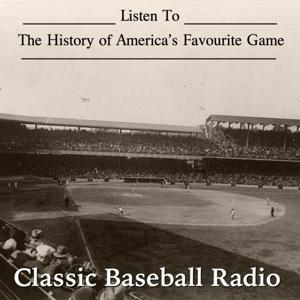
Classic radio broadcasts of baseball and football games and interviews from the past 100 years in sports history. Hear the greats like Vin Scully, Ernie Harwell, Mel Allen, Harry Caray, and Phil…
Full games are published 3 times a week on Sunday, Wednesday, and Friday. Bonus content and interview clips will be published on Mondays.
All of the old-time radio broadcasts distributed in this podcast are either in the public domain, have expired copyright, or are freely available in Creative Commons at various internet sources.
Visit RetroSeasons for more sports history.
28,979 Listeners
30,220 Listeners
660 Listeners

111,845 Listeners
252 Listeners
59,387 Listeners
14,337 Listeners
57,609 Listeners
39,401 Listeners
10,133 Listeners
10,753 Listeners
702 Listeners
1,028 Listeners
15,963 Listeners
10 Listeners