
Sign up to save your podcasts
Or

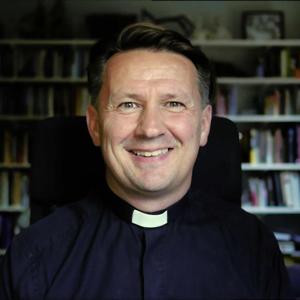


In this podcast, I look carefully at what the House of Bishops is saying as the Living in Love and Faith process comes to a close, what is being concluded, and what is being deferred into future Synods, working groups, and legislation.I explore why a process can end without theological resolution, how that ambiguity travels beyond Synod into parish life, worship, formation, and family conversations, and how faithful Christians can understand the season the Church of England is now entering.I also reflect on what faithfulness looks like in a time of extended discernment and invite clergy and laity to consider standing for General Synod as an act of service and stewardship for the faith entrusted to us.
In 2023, nearly one third of pregnancies in the UK ended in abortion. That single fact should give us pause.In this podcast, I look carefully at the latest abortion figures and ask what they reveal, not just about policy or economics, but about how we now understand life, responsibility, and compassion. This is not a culture-war rant, and it is not aimed at condemning women. It is a pastoral and biblical reflection on a moment that should sober the Church and call us back to faithfulness.I explore the generational cost of abortion, the pressures many women face, the Church’s historic teaching on the sanctity of life, and the need for a response marked by truth, mercy, and real support. Above all, I ask what it means to live faithfully as Christians when something has quietly become normal.
What happens when someone calmly names Jesus in public, and the room shifts?In this video, I reflect on a recent BBC News interview in which 18-year-old rapper DC3 named Jesus Christ as his greatest hero, and the reaction that followed. Not to stir outrage, assign motives, or fuel culture-war narratives, but to ask a deeper question: why are we still surprised when the name of Jesus makes people uncomfortable?Jesus warned his followers that this would happen. The challenge for Christians is not spotting discomfort, but deciding how we respond when it surfaces.
This podcast is for those who feel clear about what is happening in the Church, but also tired by it. It reflects on what faithfulness looks like in seasons of uncertainty — not as withdrawal, but as steadiness rooted in Christ.
I talk about why clarity does not always bring peace, why not everyone is called to fight every battle, and how Scripture gives us permission to remain faithful without becoming brittle, reactive, or exhausted.
This is not a call to disengage. It is a call to attend to the right things: prayer, Scripture, and the responsibilities God has actually given us, in ordinary parishes and ordinary weeks.
The future of the Church will not be decided only in meetings and statements. It will also be shaped by the kind of Christians we become in the meantime.
In this podcast, I examine the House of Bishops’ statement as the Living in Love and Faith process formally closes in February, and I set out plainly what has been decided, what has not, and what this now means for the Church of England.
Many faithful Christians find themselves in a strange place.They still love Jesus. They still trust Scripture. But church no longer feels like home.
In this podcast, Rev Dan gently names what spiritual homelessness is, why it is becoming more common, and how the Bible teaches us to live faithfully, steadily, and without bitterness in confusing times. This is not a rant and not a reaction. It is a pastoral reflection for believers who want to remain rooted in Christ when the ground around them feels uncertain.
We explore Scripture’s long story of exile and faithfulness, the temptation toward cynicism or withdrawal, and what quiet obedience looks like when clarity feels thin. Above all, this is an invitation to keep your heart soft, your convictions clear, and your eyes fixed on Jesus.
Why are more young people saying they believe in God, at a time when church decline feels so familiar?
Recent YouGov data reported by Sky News suggests that Gen Z are more likely than other adult age groups to say they believe in God. In this podcast, I slow the story down and look beneath the headlines to ask what this actually means, what it does not mean, and why this moment may be emerging now.
This is not a revival story in the easy sense, and it is not a culture-war talking point. Instead, we explore how cultural instability, exhaustion with secular promises, and a hunger for meaning may be creating new openness among younger generations, and what responsibility that places on the Church.
This week, the Archbishop of York dismissed a Clergy Discipline Measure complaint against Sarah Mullally. At the same time, the Church of England confirmed that the underlying safeguarding allegations against a priest have now been reopened.
In this podcast, I carefully explain what has been decided, what has not, and why procedural closure does not necessarily restore trust. I distinguish clearly between two separate safeguarding cases, outline what is publicly reported and on the record, and reflect on what faithfulness looks like when safeguarding questions remain unresolved.
What do you do when the church that once strengthened your faith now quietly unsettles it? How do you stay faithful to Jesus without drifting into cynicism or bitterness?
In this podcast, I talk honestly about what happens when a church begins to soften its conviction… when Scripture is treated as optional… when repentance becomes rare… and when Jesus is spoken of more as an example than as Lord. We’ll look at why cynicism can feel like the safer response, and then we’ll walk through a biblical way of staying faithful, tender, prayerful, and anchored in Christ in the middle of it.
This is especially for those of us who want to live as a faithful remnant — not angry, not tribal, not superior — just ordinary Christians trying to hold fast to Jesus with soft hearts and clear convictions.
Church of England weddings have fallen to their lowest level since the 1830s. But the real story isn’t the numbers — it’s how the Church is responding to them.When a senior bishop reassures couples that they don’t need to be churchgoers, baptised, or living as disciples to have a church wedding, it raises a deeper question: have we forgotten what Christian marriage is actually for?Marriage in Scripture is a covenant before God — holy, weighty, and shaped by discipleship. When the Church lowers the bar to stay “welcoming,” it risks losing the very distinctiveness Christ calls us to.
From the publisher's feed