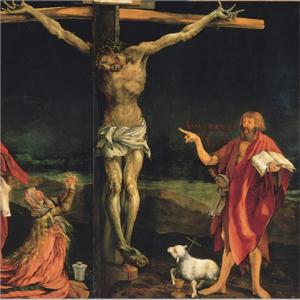
200223 Sermon on Luke 18:31-43 (Quinquagesima) February 23, 2020 Our Gospel reading today takes place right before Palm Sunday. They are on their way, passing through the town of Jericho. At the beginning of our reading Jesus says to his disciples, “Look, we are going up to Jerusalem. Everything that was written about the Son of Man will come to pass. He will be handed over to the Gentiles, mocked, mistreated, spit upon, flogged, and they will kill him. On the third day he will rise again.” In a succinct way Jesus plainly tells them what was going to happen in about a week. This is not the first time that Jesus had told them that this would happen. On at least two other occasions Jesus told them that he would suffer, die, and be resurrected. You already know about one of those other times. It was soon after Peter confessed Jesus to be the Christ, the promised Messiah, when Jesus asked the disciples who they thought he was. Peter said, “You are the Christ, the Son of the living God.” Jesus told Peter that this knowledge did not come from flesh and blood. It came from God. Peter’s confession would stand as a rock, against which the gates of hell would not be able to prevail. That is how Peter gets his name—Peter means rock. His given name was Simon.Right after this Jesus told the disciples what would happen to him as the Christ. He told them what we heard today—Jesus would be betrayed by his people, shamefully treated, killed, and rise on the third day. When Peter heard this he said, “Far be it from you, Lord, that such things should happen to you.” Jesus responds, “Get behind me Satan! You are not thinking the thoughts of God, but the thoughts of men.” Simon quickly went from being called “the rock” to being called “Satan.” The reason why there is the change is because of what he says about Christ’s cross. Peter had different ideas, manmade ideas, about how Jesus should go about being the Christ.Obviously, things didn’t change. I don’t know how Luke, the Gospel writer, could be more emphatic. He says, “They did not understand any of these things. What was said was hidden from them. They did not understand what had been said.” They didn’t get it. They didn’t get it. They didn’t get it. This would be proven by their actions, as well. They were content to be Jesus’s disciples when he rode into Jerusalem with everybody shouting, “Hosanna, blessed is he who comes in the Name of the Lord.” They were content to be Jesus’s disciples when he was driving all the greedy people out of the temple. They were content to be his disciples when he was putting to shame all the Pharisees, Sadducees, and scribes who were trying to catch him in his words during Holy Week. They were not content to be his disciples when he allowed himself to be arrested without even putting up a fight. They were not content to be his disciples when he was mocked and shamefully treated, stripped naked and nailed to a cross. The game was up when Jesus cried out in agony, bowed his head, and breathed his last. There’s no point in being the disciple of a Christ who is dead. On Good Friday it was obvious to them that they had been mistaken. If Christ had not gone out to find his disciples after his resurrection, then they would have remained in their unbelief even though they had been told beforehand. Peter really speaks for all these disciples when he says, “Far be it from you, Lord, that such things should happen to you.” That is not how the disciples wanted the story to go. I think we could go even farther and say that Peter speaks for all of us as Christ’s disciples. The knowledge of Christ’s cross does not come naturally to anybody. There is an old complaint among a certain segment of Christianity about crucifixes. It is said that crucifixes are inappropriate because now Jesus is risen from the dead. Since he has arisen, we should no longer look at this disturbing, shameful episode when he was so weak and despised on the cross.I don’t think it is a coincidence that a