
Sign up to save your podcasts
Or

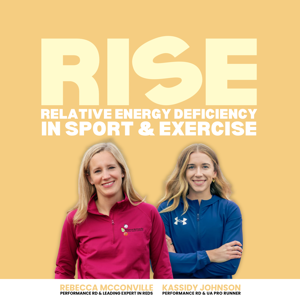


What happens when an athlete is underfueling, but their performance is actually improving?
We often associate Relative Energy Deficiency in Sport (REDs) with declining performance, fatigue, and injury. But what if an athlete is running faster, hitting PRs, and feeling more focused than ever? That's where it gets confusing for providers!
The reality is that performance improvements don't always mean an athlete is healthy, adequately fueled, or adapting well to training. Sometimes, the body's stress response can temporarily help an athlete push harder, even while their recovery capacity and physiological health are declining.
In this episode, Rebecca McConville and Kassidy Johnson unpack why athletes can perform at their best while experiencing REDs, the physiology behind pushing through pain and fatigue, and why short-term success isn't always a reflection of long-term resilience.
They also explore how providers, coaches, and support teams can approach these conversations with athletes who believe their current approach is working, without dismissing their lived experiences or threatening the performance they value.
Because performing well today and having a body capable of sustaining that performance are two very different things.
In this episode, we discuss:
Why athletes can continue to improve performance and hit PRs despite underfueling or experiencing REDs
How the body's stress response, including adrenaline, cortisol, and natural pain-modulating mechanisms, can temporarily help athletes push through fatigue and discomfort
The difference between feeling energized and focused versus actually recovering and adapting to training
Why performance improvements don't always tell the full story of an athlete's physiological health
How to distinguish improvements from training adaptations and peaking versus performance that may be masking underlying REDs concerns
Why athletes may resist changing their fueling or training habits when their current approach appears to be producing results
How providers can use curiosity, performance-focused conversations, and long-term thinking to help athletes prioritize sustainable performance and resilience
Resources:
Free REDs Provider Toolkit: https://rebecca-mcconville.mykajabi.com/free-reds-provider-toolkit
REDs Informed Provider Directory: https://beccamcconville.com/certified-reds-informed-provider-directory/
Follow Jessica Knurick on Instagram: https://www.instagram.com/drjessicaknurick/
Connect with us:
Rebecca McConville
LinkedIn: https://www.linkedin.com/in/rebecca-mcconville-21551748/
Website: https://beccamcconville.com/
Kassidy Johnson
LinkedIn: https://www.linkedin.com/in/kassidy-johnson/
40% off first order at The Feed: https://rstr.co/the-feed/kj40
What happens when you can see the warning signs… but the athlete still thinks they're fine?
Their labs are "normal." They're still performing. They're eating more than their teammates. Their period came back. They haven't lost that much weight. From their perspective, nothing feels serious enough to warrant concern.
But when an athlete has been underfueled or struggling for a long time, their version of "normal" may not actually reflect health or what their body needs to thrive.
In this episode, Rebecca McConville and Kassidy Johnson unpack the complicated idea of being "sick enough" and the gap that can exist between clinician concern and athlete perception. They discuss why comparison and objective markers can sometimes create a false sense of reassurance, how providers can hold two truths at once, and why athletes don't need to hit rock bottom before they deserve support.
There is NO threshold an athlete has to cross before they're allowed to ask for help.
In this episode, we discuss:
Why athletes may not recognize underfueling or disordered behaviors as a problem when those behaviors have become normalized
Why "normal" lab values don't always tell the full story, especially when evaluating health and performance in athletes
How comparison to teammates, other athletes, social media, body size, training, and food intake can reinforce the belief that someone isn't "sick enough"
Why an athlete can still be performing well while experiencing REDs, underfueling, or other health concerns
How providers can validate an athlete's perspective while still expressing concern and why two truths can exist at the same time
Why improvements like weight restoration, better labs, injury recovery, or the return of a menstrual cycle don't necessarily mean the recovery process is complete
Why athletes don't have to wait for an injury, performance decline, or "rock bottom" before seeking nutrition and health support
Resources:
Free REDs Provider Toolkit: https://rebecca-mcconville.mykajabi.com/free-reds-provider-toolkit
REDs Informed Provider Directory: https://beccamcconville.com/certified-reds-informed-provider-directory/
Connect with us:
Rebecca McConville
LinkedIn: https://www.linkedin.com/in/rebecca-mcconville-21551748/
Website: https://beccamcconville.com/
Kassidy Johnson
LinkedIn: https://www.linkedin.com/in/kassidy-johnson/
40% off first order at The Feed: https://rstr.co/the-feed/kj40
"It's just REDs."
It sounds reassuring, but those three words can cause athletes to fall through the cracks.
REDs and eating disorders can look super similar on the surface. Both may involve underfueling, fatigue, hormonal changes, impaired recovery, recurrent injuries, changes in performance, and other consequences of low energy availability. But what's driving that underfueling can be very different, and understanding that difference matters when determining what kind of support an athlete actually needs.
In this episode, Rebecca McConville and Kassidy Johnson unpack the overlap between REDs and eating disorders, why REDs shouldn't be treated as the end of the diagnostic conversation, and the questions providers can ask to better understand what's happening beneath an athlete's symptoms.
They also explore why an athlete's response to fueling recommendations can provide important clues, how eating disorder behaviors can exist even when an athlete is meeting their energy needs, and why weight alone tells us very little about whether an athlete is adequately fueled.
Ultimately, the question isn't simply, "Is this REDs or an eating disorder?" It's "What's driving this athlete's low energy availability, and what support do they need to recover?"
In this episode, we discuss:
Why saying "it's just REDs" can minimize what's actually happening and potentially delay appropriate treatment
What REDs and eating disorders have in common and why their physical symptoms can be difficult to distinguish
Why understanding the why behind an athlete's underfueling is essential for determining the right treatment approach
How an athlete's anxiety, distress, rigidity, or resistance around fueling and rest can signal that something more may be going on
The different ways REDs and eating disorders can overlap, including REDs without an eating disorder and eating disorder behaviors without current REDs
Questions clinicians can ask to explore food rules, body image, exercise behaviors, social eating, and the psychological drivers behind restriction
Why body weight and BMI cannot tell us whether an athlete has REDs, an eating disorder, or how severe their symptoms may be
Resources:
Free REDs Provider Toolkit: https://rebecca-mcconville.mykajabi.com/free-reds-provider-toolkit
REDs Informed Provider Directory: https://beccamcconville.com/certified-reds-informed-provider-directory/
Connect with us:
Rebecca McConville
LinkedIn: https://www.linkedin.com/in/rebecca-mcconville-21551748/
Website: https://beccamcconville.com/
Kassidy Johnson
LinkedIn: https://www.linkedin.com/in/kassidy-johnson/
10% off all products at The Feed: https://thefeed.com/?rstr=KassidyJeane
What happens when an athlete flags a concern on a screening, but not enough concerns to trigger follow-up?
A screening score may not look alarming on paper, but that doesn't mean everything is okay. Small changes in fueling, sleep, recovery, digestion, or other behaviors can be early warning signs, and when they're normalized or overlooked, they can gradually develop into bigger concerns.
In this episode, Rebecca McConville and Kassidy Johnson discuss why red flags don't clear themselves and why even one flagged response deserves curiosity and conversation. They explore how providers can look beyond screening scores, how athletes can advocate for themselves, and why catching concerns early can help support both long-term health and performance.
In this episode, we discuss:
Why even one red flag on an athlete screening deserves attention and follow-up
How providers can use screening responses as conversation starters instead of relying solely on a score
Why athletes may not recognize REDs warning signs when symptoms have slowly become their "normal"
How context and follow-up questions can uncover concerns that a screening tool alone may miss
Why being able to train or perform without fueling doesn't mean it's optimal for health or performance
How teammates and social media can influence fueling behaviors, body image, and comparison
Why athletes don't need to wait until multiple things are wrong before seeking support
Resources:
Mortal Hydration Electrolyte Products: https://thefeed.com/collections/mortal-hydration
Free REDs Provider Toolkit: https://rebecca-mcconville.mykajabi.com/free-reds-provider-toolkit
REDs Informed Provider Directory: https://beccamcconville.com/certified-reds-informed-provider-directory/
Connect with us:
Rebecca McConville
LinkedIn: https://www.linkedin.com/in/rebecca-mcconville-21551748/
Website: https://beccamcconville.com/
Kassidy Johnson
LinkedIn: https://www.linkedin.com/in/kassidy-johnson/
10% off all products at The Feed: https://thefeed.com/?rstr=KassidyJeane
Episode 1 of the RISE Podcast is here! Join performance Dietitians Rebecca McConville and Kassidy Johnson as they explore why athletes might not always answer nutrition and health screening questions honestly and what those responses may actually be telling us. We discuss how the length and design of assessment tools can influence answers, as well as the concerns athletes may have about what will happen once they complete a screening. If you work with athletes, this conversation offers practical insights to help you build trust and gather more meaningful information from your athletes.
Want to stay up to date on performance and REDs research, new podcast releases, and announcements in the sports nutrition world?
Join my newsletter to get your hands on 3 of my signature handouts to use as tools with athletes for better nutrition and performance. Click the link here and scroll to the bottom of the page to join: https://beccamcconville.com/contact/
Resources:
Finding Your Sweet Spot (book): https://www.amazon.com/Finding-Your-Sweet-Spot
Mortal Hydration Electrolyte Products: https://thefeed.com/collections/mortal-hydration
Free REDs Provider Toolkit: https://rebecca-mcconville.mykajabi.com/free-reds-provider-toolkit
Rice cooker recipes:
Nutrition by Kylie: Entire Meals in Rice Cooker
https://nutritionbykylie.substack.com/p/rice-cooker-meal?utm_source=publication-search
https://nutritionbykylie.substack.com/p/rice-cooker-meal-bibimbap?utm_source=publication-search
https://nutritionbykylie.substack.com/p/rice-cooker-meal-salmon-rice-bowl?utm_source=publication-search
https://nutritionbykylie.substack.com/p/rice-cooker-meal-pepper-lunch?utm_source=publication-search
37 Rice cooker recipes (even pancakes!): https://pickyeaterblog.com/rice-cooker-recipes/
Connect with us:
Rebecca McConville
Kassidy Johnson
From the publisher's feed