
Sign up to save your podcasts
Or

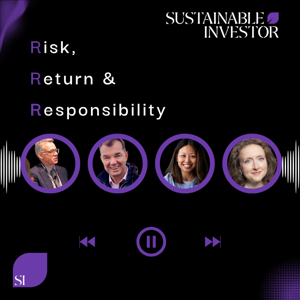

Risk, Return and Responsibility — the monthly podcast from Sustainable Investor — provides institutional asset owners with the news and views shaping the sustainable investment landscape and our wider economic and social systems.
Recorded in the first week of March 2026, this episode features former UK pensions minister Guy Opperman and Sustainable Investor Editorial Director Chris Hall in conversation with Rob Gardner, CEO and Co-founder of Rebalance Earth. Gardner discusses his own transition from traditional investment consulting to becoming a "natural capital champion”, arguing that restoring nature is a matter of economic self-interest. The discussion delves into how nature-based solutions can outperform engineered alternatives in managing physical climate risks, while also delivering returns to institutional portfolios.
With reference to several of Rebalance Earth’s own projects, it outlines how capital flows for nature protection and restoration can be unlocked through aligning shared commercial interests, but does not shy away from the complexity of working with multiple parties, and the need for greater public-private understanding – and action - common challenges.
The conversation concludes with the analogy of the ‘Fosbury Flop’, with Gardner suggesting that the investment industry needs a similar leap in logic to address climate change. By moving away from viewing nature as an "add-on" and instead integrating it into the core definition of infrastructure, he argues the UK can lead the world in nature restoration. With more pension assets in the UK than total GDP, the shift toward a 70% private-capital funding model for landscape recovery offers a clear path toward both national resilience and institutional alpha.
 View all episodes
 By Asset Owner Network
Risk, Return and Responsibility — the monthly podcast from Sustainable Investor — provides institutional asset owners with the news and views shaping the sustainable investment landscape and our wider economic and social systems.
Recorded in the first week of March 2026, this episode features former UK pensions minister Guy Opperman and Sustainable Investor Editorial Director Chris Hall in conversation with Rob Gardner, CEO and Co-founder of Rebalance Earth. Gardner discusses his own transition from traditional investment consulting to becoming a "natural capital champion”, arguing that restoring nature is a matter of economic self-interest. The discussion delves into how nature-based solutions can outperform engineered alternatives in managing physical climate risks, while also delivering returns to institutional portfolios.
With reference to several of Rebalance Earth’s own projects, it outlines how capital flows for nature protection and restoration can be unlocked through aligning shared commercial interests, but does not shy away from the complexity of working with multiple parties, and the need for greater public-private understanding – and action - common challenges.
The conversation concludes with the analogy of the ‘Fosbury Flop’, with Gardner suggesting that the investment industry needs a similar leap in logic to address climate change. By moving away from viewing nature as an "add-on" and instead integrating it into the core definition of infrastructure, he argues the UK can lead the world in nature restoration. With more pension assets in the UK than total GDP, the shift toward a 70% private-capital funding model for landscape recovery offers a clear path toward both national resilience and institutional alpha.