
Sign up to save your podcasts
Or

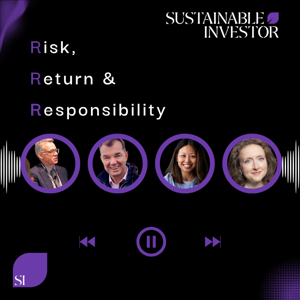


Risk, Return and Responsibility - Episode 10
What if doing the responsible thing with your pension wasn’t about values at all - but about returns, risk, and reality?
Risk, Return and Responsibility, former UK Pensions Minister Guy Opperman and Chris Hall, Editor of Asset Owner Network, sit down with Alex Wright‑Gladstein, Founder and CEO of US fund provider Sphere, to unpack one of the most misunderstood forces in modern finance: why almost all US pensions still fund fossil fuels, and why this is a fiduciary failure, not a moral choice.
Alex explains how a system designed decades ago now traps trillions of dollars into outdated assumptions, why climate‑friendly investing has been framed as “financially irresponsible”, and how lawsuits, not performance - quietly dictate where retirement money flows.
This conversation goes far beyond ESG buzzwords. It’s about risk, power, incentives, and who really decides what “prudent investing” means.
If you’ve ever been told you have to choose between returns and responsibility, this episode challenges that idea entirely.
What You’ll Learn
Stand‑Out Quotes
“You don’t have to choose between doing good and doing well - that choice was manufactured.”
“Most people don’t know what ESG means - but they know they’re worried about their future.”
“The default option quietly decides the fate of trillions of dollars.”
“Climate risk is financial risk. The law just hasn’t caught up yet.”
Why This Episode Matters
Pensions are the largest pool of long‑term capital in the world - and most people never realise where their money ends up.
This episode exposes:
It’s not a debate about politics or ideology.
Who This Episode Is For
Risk, Return and Responsibility — the monthly podcast from Sustainable Investor — provides institutional asset owners with the news and views shaping the sustainable investment landscape and our wider economic and social systems.
Recorded in the first week of March 2026, this episode features former UK pensions minister Guy Opperman and Sustainable Investor Editorial Director Chris Hall in conversation with Rob Gardner, CEO and Co-founder of Rebalance Earth. Gardner discusses his own transition from traditional investment consulting to becoming a "natural capital champion”, arguing that restoring nature is a matter of economic self-interest. The discussion delves into how nature-based solutions can outperform engineered alternatives in managing physical climate risks, while also delivering returns to institutional portfolios.
With reference to several of Rebalance Earth’s own projects, it outlines how capital flows for nature protection and restoration can be unlocked through aligning shared commercial interests, but does not shy away from the complexity of working with multiple parties, and the need for greater public-private understanding – and action - common challenges.
The conversation concludes with the analogy of the ‘Fosbury Flop’, with Gardner suggesting that the investment industry needs a similar leap in logic to address climate change. By moving away from viewing nature as an "add-on" and instead integrating it into the core definition of infrastructure, he argues the UK can lead the world in nature restoration. With more pension assets in the UK than total GDP, the shift toward a 70% private-capital funding model for landscape recovery offers a clear path toward both national resilience and institutional alpha.
Risk, Return and Responsibility—the monthly podcast from Sustainable Investor—provides institutional asset owners with the news and views shaping the sustainable investment landscape and our wider economic and social systems.
In this episode, former UK pensions minister Guy Opperman and Sustainable Investor Editorial Director Chris Hall talk to Marisa Hall, Head of the Thinking Ahead Institute (TAI), about the role of asset owners in the evolving landscape of global capital. As a former actuary and now leader of a global not-for-profit investment network, she provides a unique window into how the world’s most influential asset owners are adapting to a "ruptured" global order. From the findings of the TAI’s latest Asset Owner 100 report to the "Moonshot Challenge" of systemic investing, this conversation delves into why traditional investment "buckets" are being broken down in favour of a more dynamic, holistic approach.
● Marisa Hall: Head of the Thinking Ahead Institute
The conversation concludes with a forward-looking assessment of the "Moonshot Challenge"—the idea that investment organisations must understand and address interconnected and systemic risks at source to thrive in an increasingly complex world. Despite a "plateauing" in the announcement of explicit commitments, there is a growing sense of optimism that major asset owners are becoming smarter, more creative, and more resilient in how they integrate sustainability into their investment decisions. By focusing on stewardship, collaboration, and a reset of how we define risk, the leaders of today’s US$30 trillion capital pool are moving into a position to not just navigate the future, but to actively shape it for the generations to come.
Risk, Return and Responsibility—the monthly podcast from Sustainable Investor—provides institutional asset owners with the news and views shaping the sustainable investment landscape and our wider economic and social systems.
In this latest episode, former UK Pensions Minister Guy Opperman and Sustainable Investor Editorial Director Chris Hall are joined by Mike Ambery, Retirement Savings Director at Standard Life, part of the Phoenix Group.
Together, they explore the seismic shifts facing the UK retirement market as it transitions from a legacy of cost-containment toward a future defined by value, scale, and sustainable outcomes.
The discussion unpicks the upcoming Value for Money (VfM) framework and the Pension Schemes Bill, examining how performance metrics will reshape asset allocation and drive
Guests:
Interview Highlights:
● Why is scale critical for the future of sustainable investment? To effectively deploy capital into private markets and sustainable solutions, Ambery suggests firms need significant scale—pointing to Phoenix Group’s £300 billion capacity as an example of what is required to support dedicated research and impact teams. He identifies A$25 billion as a potential minimum threshold for organisations to operate effectively.
Thanks for joining us: If you like what you hear, you can subscribe to Sustainable Investor and this podcast on Apple Podcasts, Spotify, or your preferred platform.
In 2025’s final episode of Risk, Return and Responsibility, the monthly podcast from Sustainable Investor, former UK Pensions Minister Guy Opperman and Editorial Director Chris Hall are joined for an end-of-year reckoning by Dr Anthony Kirby, ex-Head of Regulation and Risk for Asset Management and Capital Markets in Europe at EY.
Together, they review 2025’s big themes and give their views on the questions that will determine sustainable investment returns and impacts 2026:
Is the ESG backlash gathering speed or petering out? With Donald Trump returning to the White House, new hurdles hampered investor scrutiny, while the Inflation Reduction Act was dismantled alongside many a diversity, equity and inclusion initiative. Meanwhile Europe took a scythe to sustainable investment regulation, as finance sector net zero commitments withered. Asset owners dug in, further integrating sustainability into their investment processes and doubling down on oversight of material financial risks - but do they need to do a better job of explaining and delivering outcomes?
Is the divide between asset owners and managers bigger than the Atlantic? Already under huge political and legal pressure, US asset managers faced even greater difficulties in 2025 - with new rules from the Securities and Exchange Commission making it harder to engage with portfolio companies, just as European asset owners underlined their commitment to climate stewardship. The fallout has been measured in lost mandates, but could litigation and retrenchment be on their way in 2026? Effective stewardship of assets could depend on a closing of gaps in both investment horizons and business cultures.
Can private markets deliver both returns and impact at an attractive cost? Institutional investors are increasingly turning to alternative assets to achieve tangible sustainable outcomes as well as superior returns. In markets such as the UK, governments also expect asset owners to achieve the scale to leverage these channels to drive growth too. In response, managers must deliver clear evidence that sustainable business models are driving value creation at every stage of the investment process. Are their reporting cycles, stewardship capabilities, cost and fund structures up to the job?
Will supply meet demand for nature-positive investment opportunities? Nature became a critical stewardship priority for asset owners in 2025 against a backdrop of mixed policy outcomes across plastic pollution, deforestation, and ocean protection. COP30 helped to put nature-related investments on the agenda as asset owners looked beyond measuring and managing risk to seeking out opportunities for returns. Will we see dedicated nature funds or rather nature being fully embedded into a wider range of investment decisions, with impact investment solutions remaining niche for now?
Can the upsides of the AI boom survive the downsides of a bust? Hopes for transformative productivity gains from AI innovation have allowed markets to face down all headwinds in 2025. Even so, investors wonder when returns will justify capex and whether ESG risks will be addressed. Despite the rising valuations, careful analysis is needed to invest in AI, its infrastructure and supply chain - and to identify the sectors using the technology to deliver higher returns. 2026 could also see more asset owners and managers deploying AI to deliver new insights into sustainability-related risks and opportunities.
What does financial wellbeing really mean for pension members today?
For the latest episode of Sustainable Investor, Stuart Hall, Managing Director of Sustainable Media Group sat down with Blake Allison, founder and CEO of LifeCents, to look beyond the slogans and into the reality of how people behave with money.
Blake has spent more than twenty years working with major US employers and financial institutions on financial wellbeing programmes. What stood out in our discussion is how often the industry focuses on account balances and contribution rates, while members are dealing with day to day pressures that make long term decisions far harder than we admit.
We talked about:
Blake’s perspective is practical and grounded, and it challenges some of the assumptions we make as an industry.
If you work in pensions, asset management or financial wellbeing, this conversation is worth your time.
In this episode, we explore the likely impacts on asset owners’ climate and nature exposures of reforms to the Sustainable Finance Disclosure Regulation and developments at COP30; also looking forward to the next steps for natural capital accounting and universal ownership.
Risk, Return and Responsibility – the monthly podcast from Sustainable Investor - aims to provide institutional asset owners with news and views shaping both the sustainable investment landscape and our wider economic, environmental and social systems. In each episode, Chris Hall, Editorial Director of Sustainable Investor, will be joined by co-hosts to discuss the biggest recent stories, and to round up some you might have missed. We will also be conducting deeper interviews with influential asset owners and others on the practical challenges of balancing risk, return and responsibility. To wrap up each episode, we will look back at some of the bigger stories covered recently by Sustainable Investor, also looking forward to the most significant upcoming developments, again with expert input from our co-hosts.
Co-hosts: Guy Opperman, the UK’s longest-serving Pensions Minister & Chair of Sustainable Investor's editorial board; and Hortense Bioy, Head of Sustainable Investing Research, Morningstar Sustainalytics.
News round-up: Following the release of ‘SFDR 2.0’, Hortense estimates the assets likely to be captured by the new transition fund category and forecasts a potential boost to engagement efforts, while Guy argues that simplification in Brussels should be heeded in Belém and beyond to secure buy-in for essential climate policy shifts. Signs of a greater integration of nature and climate in policy and investment decisions at COP30 are dissected (and broadly welcomed), while the repositioning of the Net Zero Asset Managers initiative - now prioritising transparency, scenario analysis, and engagement frameworks over rigid commitments - are seen as posing challenges for asset owners (Hortense) while reducing legal risk (Guy).
The Three Rs interview: Mark Gough, CEO of the Capitals Coalition, explains why asset owners should consider natural capital a core determinant of long-term value and shares his experiences and takeaways from COP30, outlining why he expects natural capital to be a bigger part of the policy conversation in future. He also highlights why he sees accounting standards as a critical tool for increasing the visibility of nature on the balance sheet.
Review / Preview: Finally Guy and Hortense return to dig a little deeper into some recent reports from leading asset owners on the challenges and opportunities of universal ownership, and the pros and cons of a system-level approach to stewardship. Do asset owners have the resources and data to support their ambitions? What kinds of outcomes and interventions will justify this shift of emphasis away from company-focused engagement?
Thanks for joining us: If you like what you hear, you can also subscribe to Sustainable Investor, subscribe to this podcast and find further information in the show notes, where you can also find our contact details. We'd love to hear your ideas as we plan future episodes.
Links to news items discussed:
Greenwashing Risks Remain Under Europe’s SFDR 2.0
https://sustainableinvestor.online/live/greenwashing-risks-remain-under-europes-sfdr-2-0/
SFDR Expected to Introduce Dedicated Transition Funds
https://sustainableinvestor.online/qa-will-brussels-re-boot-transform-the-transition/
SFDR Challenges Increased by Omnibus Package
https://sustainableinvestor.online/live/omnibus-vote-throws-sfdr-review-into-doubt/
UN Climate Talks Fail to Secure New Fossil Fuel Promises
https://www.bbc.co.uk/news/articles/c75vn7yel73o
COP30 has Racked up an Impressive Scorecard of Real-world Climate Actions
https://unfccc.int/news/cop30-has-racked-up-an-impressive-scorecard-of-real-world-climate-actions-that-will-also-mean
COP30 Approves Belem Package
https://cop30.br/en/news-about-cop30/cop30-approves-belem-package1#
NZAM: Ready for its Next Chapter
https://www.netzeroassetmanagers.org/nzam-ready-for-its-next-chapter/
NZAM Updates Signatory Requirements and Acknowledges “What has Always Been the Case”
https://www.ropesgray.com/en/insights/viewpoints/102lrmz/nzam-updates-signatory-requirements-and-acknowledges-what-has-always-been-the-ca
Net Zero Sometime: NZAM Scraps 2050 Target
https://www.netzeroinvestor.net/news-and-views/net-zero-sometime-nzam-scraps-2050-target
TFFF “an Arrow in the Quiver, not a Silver Bullet”
https://sustainableinvestor.online/tfff-an-arrow-in-the-quiver-not-a-silver-bullet/
MDBs’ New Approach to Financing Nature https://onestopesg.com/esg-news/mdbs-new-approach-to-financing-nature-1763521846737 ISSB to Lead on Nature Reporting, Plans COP17 Release https://sustainableinvestor.online/live/issb-to-lead-on-nature-reporting-plans-cop17-release/ New Sovereign Debt Nature Assessment Model Open for Consultation https://www.financeforbiodiversity.org/publications/new-sovereign-debt-nature-assessment-model-and-a-call-for-feedback/
Reaching $120 Billion in International Adaptation Finance Is Possible
https://www.wri.org/insights/tripling-adaptation-finance-goal
Universal Ownership: From Theory to Practice
https://sustainableinvestor.online/from-theory-to-practice/
What Does it Look Like for Asset Owners to Lead Right Now
https://issuu.com/wespath/docs/system_level_sustainability_opportunity_and_risk_1
In this ‘interview-only’ episode, we explore the role of Australia’s superannuation funds in the country’s embrace of clean energy, with Jeremy Cooper and David Bell of the Conexus Institute.
Risk, Return and Responsibility – the monthly podcast from Sustainable Investor – aims to provide institutional asset owners with news and views shaping both the sustainable investment landscape and our wider economic, environmental and social systems.
In this episode, Guy Opperman, the UK’s longest-serving Pensions Minister & Chair of Sustainable Investor’s editorial board, reports from Sydney, on the barriers facing Australia’s US$2.8 trillion superannuation sector in supporting the country’s net zero transition.
In discussion with David Bell and Jeremy Cooper of the Conexus Institute, Guy finds out whether regulation and policy are giving supers the right incentives to invest sustainably, why so much capital is flowing into overseas infrastructure, and how Australia’s path to net zero could be different from other developed economies.
Guests: David Bell, Executive Director, Conexus Institute, a research organisation focused on improving Australia’s superannuation and retirement systems, and a former CIO of Mine Super. Jeremy Cooper, Chair of the Advisory Board, Conexus Institute, former deputy chair of the Australian Securities and Investments Commission (ASIC), Australia’s financial regulator and author of the government’s review of the super system.
Interview highlights:
Thanks for joining us: If you like what you hear, you can also subscribe to Sustainable Investor, subscribe to this podcast, where you can also find our contact details. We’d love to hear your ideas as we plan future episodes.
For more info or to sponsor contact [email protected]
From the publisher's feed
Risk, Return and Responsibility – the monthly podcast from Asset Owner Network - aims to provide institutional asset owners with news and views shaping both the sustainable investment…