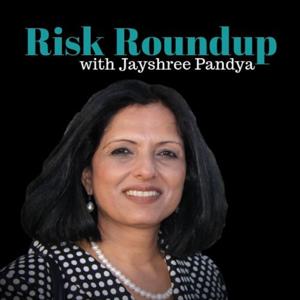
Prof. (Dr.) O. Shawn Cupp, a professor at the US Army with research interests of food and agriculture security and Defense Support to Civil Authorities (DSCA) military operations based in the United States, participates in Risk Roundup to discuss “National Response to COVID-19 Pandemic”.
Risk Roundup Webcast: National Response to COVID 19 Pandemic
National Response To COVID-19 Pandemic
Throughout history, pandemics of infectious diseases
such as cholera, plague, and influenza that have been
triggered by bacteria and viruses have played a significant role in shaping
human civilizations. As nations witness an outbreak of one such infectious
disease that has reached a pandemic level in a very short time period, there
are perhaps more questions than answers.
The world is going through a Coronavirus, COVID 19, pandemic in a short amount of time. Its rapid spread and lethality have become a complex challenge for not only China, where it originated, but for all nations and the entire global community. While the COVID-19 pandemic is in its early stages, it seems that nations are struggling to prevent a rapid spread within their borders. Since the situation is chaotic at all levels and not much data is available for analysis, it is impossible to predict how this will unfold further and what will be its future impact.
January 2020, this novel coronavirus, SARS-CoV-2, was identified as the
causative agent of an outbreak of viral pneumonia centered around Wuhan, Hubei,
China. According to the World Health Organization, that disease outbreak is now
called COVID-19, and it has caused a widespread outbreak. While not much is
clear yet, reports are emerging that SARS CoV-2, the virus that causes
COVID-19, exhibits 80% of the RNA material of the original SARS virus of
Based on the data available currently, many infected individuals can be asymptomatic– that means not having or showing any visible symptoms– and still be spreading the virus to others. However, the common symptoms as witnessed from infected patients from across nations include high fever, dry cough, and shortness of breath. Many other symptoms associated with the infection may include muscle pain, sputum production, diarrhea, sore throat, loss of smell and taste, and abdominal pain. While the majority of cases result in mild symptoms that individuals are able to go through on their own, some progress to viral pneumonia and multi-organ failure and need hospitalization.
As of today, more than 1,000,000 cases of COVID-19
have been reported and the number keeps growing every day. The infection has
spread in more than two hundred countries and territories. This has resulted in
over 52,800 deaths, and our individual efforts to contain it are not proving
successful. As we see, different parts of the world are imposing bans on
travel, movement, and contact restrictions at different times. This will likely
continue for the foreseeable future. Perhaps there is a need to redefine our
Healthcare is on the frontline of this ongoing pandemic war and is under enormous pressure due to the growing needs of ICU beds, ventilators, and healthcare workers. Moreover, the healthcare supply chain is crumbling as the global dependency on China manufacturing is causing unprecedented shortages of masks, gloves, and other healthcare supplies. This is especially problematic when it is hard to predict how many ventilators, how much oxygen, and how many ICU beds nations are going to need throughout the remainder of the pandemic. In the absence of effective preventive and therapeutic approaches, there is also no way to know how long this pandemic will last and whether or not other waves of the virus will continue over the months and years to come.
This is an existential risk that could further be intensified if state and non-state actors try to take advantage of this medical crisis and add to the crisis by launching offensive attacks in cyberspace, aquaspace, geospace, and space. This is a cause of great concern.
Need For A New Way Of Doing Things
tremendous progress in science and technology has advanced the entire human
ecosystem in cyberspace, aquaspace, geospace, and space. In spite of that, we
are in the middle of perhaps one of the most terrifying pandemics that has put
the entire world on a standstill in a matter of months. This is especially
troubling as we have advanced tools and technology on our hands, and our failure
to apply technology to solve the right problems has put us in a precarious
situation. Even in this age of artificial intelligence, the internet of things,
biosensors, and many other technological capabilities, disease outbreaks are
nearly constant as always.
There is no doubt that the very core of humanity is in crisis. The ongoing challenges are unprecedented. They will undoubtedly create upheaval and change the established cultural norms. It is a crucial moment for the transformation to occur for the resilience of the human species. There is a need for new ways of doing things that will bring security for not only the human species but all living things. We cannot continue in the same way anymore. As a result, it is time to shed old models and old ways of doing things. It is time for us to know that we will need to apply emerging technologies for solving critical problems facing humanity. It is time visionaries and innovators begin to use emerging technologies to solve the right problems.
For more, please watch the Risk Roundup Webcast or hear the Risk Roundup Podcast
is a faculty member of a multi-departmental teaching team instructing the
Intermediate Level Education (ILE), including the ILE Core Course and the
Advanced Operational Warfighting Course (AOWC). He is responsible for
presentation, revision, development, and evaluation of graduate-level, force
projection, and maneuver sustainment, resource planning, and force management
instruction to a diverse audience of US and international field grade officers.
Serves as a mentor and coaches 16 operations career field students as their
Staff Group Advisor (ASGA). Educate and counsel officers in a course that
develops and improves their problem solving, critical reasoning and creative
thinking, leadership development, cultural awareness, and military-media
relations. Curriculum, course author, and lesson author duties include A430
Characteristics of Domestic Incidents in the Advance Application Program (AAP)
as part of the Homeland Security Studies Program Track V. Subject matter expert
within the college for adult education, domestic threats, agroterrorism, and
research in homeland security threats.
About The Host of Risk Roundup
Pandya (née Bhatt), Ph.D., is a leading expert at the
intersection of science, technology, and security and is the Founder and Chief
Executive Officer of Risk Group LLC. She has been involved in a wide range of
research, spanning security of and from science and technology domains. Her
work is currently focused on understanding how converging technologies and
their interconnectivity across cyberspace, aquaspace, geospace, and space
(CAGS), as well as individuals and entities across nations: their governments,
industries, organizations, and academia (NGIOA), create survival, security, and
sustainability risks. This research is pursued to provide strategic security
solutions for the future of humanity. From the National Science Foundation to
organizations from across the United States, Europe, and Asia, Dr. Pandya is an
invited speaker on emerging technologies, technology transformation, digital
disruption, and strategic security risks. Her work has contributed to more than
100 publications in the areas of science and commerce. She is the author of the
books, Geopolitics of Cybersecurity
and The Global Age. She writes about Artificial
Roundup, a global initiative launched by Risk Group, is a security risk
reporting for risks emerging from existing and emerging technologies,
technology convergence, and transformation happening across cyberspace,
aquaspace, geospace, and space. Risk Roundup is released in both audio
(Podcast) and video (Webcast) format. It is available for subscription at Risk Group Website, iTunes, Google Play, Stitcher
Radio, Android, and
Risk Group Professional Social Media.
Group is a Strategic Security Risk Research Platform and Community. Risk
Group’s Strategic Security Community and Ecosystem is the first and only
cross-disciplinary and collective community that is made of top scientists,
security professionals, thought leaders, entrepreneurs, philanthropists,
policymakers, and academic institutions from across nations collaborating to
research, review, rate and report strategic security risks to protect the
Copyright Risk Group LLC. All Rights Reserved
The post National Response To COVID-19 Pandemic appeared first on Risk Group.