
Sign up to save your podcasts
Or

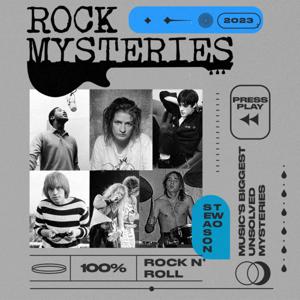


In April 1994, Seattle police found Kurt Cobain dead of a shotgun wound and called it a suicide before the autopsy was finished. More than 30 years later, the questions haven’t gone away.
Rock Mysteries host Scott Gulbransen talks with journalist Max Wallace, co-author of the New York Times bestseller Love & Death: The Murder of Kurt Cobain. Wallace started as a skeptic who figured the murder theory was a crackpot idea. Then he looked at the people making it.
In this episode:
Wallace is clear that there’s no smoking gun, and he doesn’t accuse Courtney Love of murder. He wants the case reopened. The official ruling is still suicide. You decide.
Rock Mysteries is commercial-free. Support the show on Patreon, link below.
https://www.patreon.com/cw/rockmysteries
Max Wallace:
https://www.amazon.com/stores/author/B001IXNTZ6
https://www.amazon.com/Love-Death-Murder-Kurt-Cobain-ebook/dp/B000FC1LNS?ref_=ast_author_mpb
Chapters:
00:00 Cold open: the news of Cobain’s death
01:50 Meet Max Wallace
03:20 Why Cobain mattered to a generation
06:29 How a skeptic got pulled into the case
10:29 Tom Grant, the private investigator
12:08 Rosemary Carroll and the note on tape
15:25 The official story and the missing days
20:00 Inside Seattle’s heroin scene
22:35 Dylan Carlson and the gun
24:21 Why most conspiracy theories fall apart
26:14 The heroin dose that doesn’t add up
31:21 The investigation that never happened
33:36 Norm Stamper wants the case reopened
35:49 Courtney Love, the divorce, and the unsigned will
38:52 The Dylan Carlson theory
43:13 The 68 copycat suicides
46:41 Can the case ever be solved?
49:18 El Duche and the strange cast of characters
51:19 Why Tom Grant is credible
52:29 Cobain vs. other rock conspiracies
54:47 Wallace’s conclusion
58:00 Wrap-up and thanks
The official story says Bon Scott drank too much, passed out in a friend’s car in London on February 18, 1980, and choked on his own vomit. Author Jesse Fink spent two years digging into that story for Bon: The Last Highway, and he came away convinced it doesn’t hold up.
Fink walks through what he found. A woman who was at the flat that night had never spoken about it in 40 years. Two members of UFO told a very different version of the evening in 2005. The investigation and autopsy were wrapped up in a matter of days, with no toxicology report he could locate. He lays out why he believes Bon died of heroin mixed with alcohol, and why he thinks Bon may have been dead before he was left in the car.
We also get into the Back in Black question. Fink points to his time in Miami with a woman Bon knew in 1979, the royalties Bon’s family reportedly receives, and a missing lyric notebook, and makes the case that Bon’s words ended up on the biggest album in the band’s history without credit. We finish with the Young brothers, why Bon was an outsider in his own band, and why Brian Johnson ended up, in Fink’s words, with the golden Wonka ticket.
Fink’s updated edition of Bon: The Last Highway is out now. More at jessefinkbooks.com.
ChaptersOn December 11, 1964, the voice of the Civil Rights movement — the man who wrote “A Change Is Gonna Come” — was gunned down in a $3 Los Angeles motel. The police called it “justifiable homicide.” The newspapers painted Sam Cooke as a drunken, womanizing kidnapper who got what was coming to him.
His family never bought it for a second.
In this explosive Part 2 Rock Mysteries finale, author B.G. Rule (One More River to Cross: The Redemption of Sam Cooke) rips the lid off one of music’s darkest cover-ups:
Sixty-one years later, Sam’s children, grandchildren, and famously tight-knit family still refuse to accept the official lie. They don’t want myths — they want the truth spoken out loud.
This isn’t conspiracy theory. This is the story the industry prayed you’d never hear.
If you love Sam Cooke, you need to hear this episode.
“A Change Is Gonna Come”… but first, justice has to come for the man who sang it.
Subscribe now and join the fight to finally clear Sam Cooke’s name.
#SamCooke #MusicConspiracy #CivilRights #RockMysteries
61 years after soul legend Sam Cooke was found shot dead in a seedy LA motel wearing only a sport coat and one shoe, the official story of “self-defense” and “kidnapping” has never passed the smell test.
In this explosive Part 1 of a two-episode edition of the show, bestselling author B.G. Rule (One More River to Cross: The Redemption of Sam Cooke) reveals never-before-heard evidence that points to a cold-blooded Mafia assassination orchestrated over money, power, and control of Black music.
From corrupt LAPD chief William H. Parker to mobbed-up nightclubs and payola scandals, discover why even as teenage girls in 1964 knew something didn’t add up — and why the truth has been buried for six decades.
If you love unsolved music mysteries like the deaths of Tupac, Biggie, Jimi Hendrix, Otis Redding, or Bobby Fuller, this is the definitive deep dive into one of the biggest cover-ups in rock & soul history.
Subscribe now and don’t miss Part 2 — the conclusion will leave you speechless.
#SamCooke #SamCookeMurder #RockMysteries #UnsolvedMysteries #MobHits #MusicConspiracy #TrueCrimePodcast #SoulMusic #1960sMusic #AllenKlein #BlackMusicHistory
Our latest episode revolves around one of the strangest and most troubling rock mysteries: the murder of former Elf and Rainbow drummer Gary Driscoll. Driscoll first connected with Ronnie James Dio (Rainbow, Black Sabbath, Dio) in 1965 and his career peaked with the first Rainbow album before Ritchie Blackmore fired him after that record's release. He then left the music business and became a working-class tile layer in his hometown of Ithaca, New York. In 1987, he was brutally murdered and the case is unsolved today. We welcome rock-n-roll historian and author Staci Layne Wilson to discuss this mystery and why it remains a cold case today.
Staci Layne Willson Websites:
StaciLayneWilson.com
Rock-N-Roll Nightmares
Podcast
Ventures Documentar
Perhaps one of the most influential musicians of the 1970s and 80s, former New York Doll Johnny Thunders was a textbook rock star. With a biting guitar style and strong songwriting skills, Thunders was everything you could want in a rock star. After the demise of the Dolls, Thunders, and his band, the Heartbreakers, wowed critics and built a cult following. Later, Thunders found fleeting success as a solo artist, seemingly a step behind larger fame. Then, in 1991, it all came to a tragic and troubling end as Thunders died in a hotel room in New Orleans. We explore the life and death of rock legend Johnny Thunders.
Rock Mysteries is BACK with Season 2, and our first episode revolves around one of the strangest and most troubling rock mysteries: the murder of former Elf and Rainbow drummer Gary Driscoll. Driscoll first connected with Ronnie James Dio (Rainbow, Black Sabbath, Dio) in 1965 and his career peaked with the first Rainbow album before Ritchie Blackmore fired him after that record's release. He then left the music business and became a working-class tile layer in his hometown of Ithaca, New York. In 1987, he was brutally murdered and the case is unsolved today. We welcome rock-n-roll historian and author Staci Layne Wilson to discuss this mystery and why it remains a cold case today.
Staci Layne Willson Websites:
StaciLayneWilson.com
Rock-N-Roll Nightmares
Podcast
Ventures Documentary
Support the Show!: https://patreon.com/rockmysteries
See omnystudio.com/listener for privacy information.
Considered one of the most important hip hop artists of all time, Tupac Shakur's influence on modern music is without question. His early gangster persona, coupled with his unbridled talent as a writer and musician, quickly made him a generational talent beloved throughout the world. With a successful and burgeoning acting career also in full swing, Shakur met his end just off the famous Las Vegas Strip - the victim of a drive-by shooting that left him in a coma and then dead just six days later. To this day, his murder remains officially unsolved.
Former newspaper reporter and accomplished true crime author Cathy Scott joins us to talk about who killed Tupac Shakur. Scott, who worked for the Las Vegas Sun on the night Shakur was murdered, investigated the story and wrote the book The Killing of Tupac Shakur. Scott breaks down how the Las Vegas police failed to carry out routine police work that could have quickly identified the killer. She also clears up the rumors and misconceptions about the night of Tupac's murder with eyewitness accounts and information from well-placed law enforcement sources.
Scott tells us who she believes, after years of research, killed Shakur.
Links:
Cathy Scott's Website
Site of Tupac's Murder
Support the Show!: https://patreon.com/rockmysteries
See omnystudio.com/listener for privacy information.
He was the voice of a generation and his death triggered 68 copycat suicides but was his death really by his own hand?
We explore the mystery and unanswered questions concerning the death of rock icon Kurt Cobain. Was Cobain the victim of foul play? Did the Seattle Police bungle the investigation and rule it a suicide despite evidence to the contrary? What role did Cobain's fellow rock star wife Courtney Love play in his demise?
GUEST: Accomplished and respected author Max Wallace joins us to discuss the events and unanswered questions surrounding the death of Nirvana frontman Kurt Cobain. Wallace, and co-author Ian Halperin, investigated Cobain's suspicious death and uncovered a treasure trove of new leads and a trail that indicates Cobain didn't die by suicide but instead by homicide. By working within the local Seattle music and drug scene, Wallace shares with us just how much more there is to the story and why it points toward one conclusion — murder.
Please visit us at rockmysteries.com and help support Season 1 and beyond.
Support the Show!: https://patreon.com/rockmysteries
See omnystudio.com/listener for privacy information.
From the publisher's feed