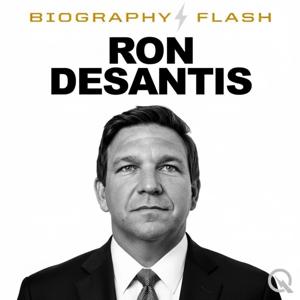
Ron DeSantis Biography Flash a weekly Biography.
Ron DeSantis has had a busy few days that matter for both his current governorship and his long term biography, so let’s run through what he has been up to.
In Tallahassee, DeSantis is doubling down on one of his signature economic messages: tax relief and tightening the reins on local government. According to public radio outlet WLRN, he publicly criticized the Florida Legislature for watering down his proposed property tax cut and vowed to call a special legislative session later this year to restore a key piece of it if voters approve the November constitutional amendment. That amendment would boost the homestead exemption for longtime Florida residents, limit how fast assessments on non homestead property can grow, and further restrict how counties and cities spend property tax revenue. For his biography, this is DeSantis trying to cement a legacy as the governor who locked in long term tax constraints and state control over local budgets.
At the same time, he has been on a bill signing spree. ClickOrlando reports that over Wednesday and Thursday he signed 25 additional bills into law, pushing his 2026 total to more than 160. The measures range from compensating a bus crash victim, to codifying the University of Florida Diabetes Institute as a statewide resource, to creating a pilot program that incentivizes landlords to house veterans. These are modest headlines day to day, but collectively they underline his preference for an activist, detail heavy governorship that shapes everything from health care regulation to building codes and local special districts.
In a more targeted move with clear ideological and legal overtones, Mainstreet Daily News notes that DeSantis signed House Bill 1451, which effectively locks in the state created Gainesville Regional Utilities Authority and preempts local attempts to change its structure. The language is narrow but powerful: it says that regional utility authorities created by the Legislature after January 1, 2023, are expressly preempted to the state. In plain English, DeSantis is writing into law one of his core themes: big fights with left leaning localities and a continuing shift of power from city halls to the governor and Legislature.
On the law and order front, immigration and benefits enforcement continue to be a central part of his brand. WUSF reports that DeSantis and the Florida Cabinet just approved 90 million dollars in grants to local law enforcement agencies for immigration enforcement, paying for everything from radios and body cameras to riot gear and X ray machines. This flows from a 250 million dollar pot the Legislature previously set aside for cracking down on illegal immigration. For his long term profile, this keeps him squarely aligned with the national Republican focus on border security and interior enforcement, even after his presidential run.
Health care fraud was another marquee topic. In a televised press conference carried by outlets including Forbes Breaking News and covered locally by CBS12 in West Palm Beach, DeSantis unveiled a new Medicaid integrity initiative. Standing alongside Agency for Health Care Administration Secretary Shevaun Harris, he highlighted that Florida has already recovered more than 136 million dollars tied to fraud and abuse over the last two years and has terminated or denied enrollment to more than 3,200 providers. The new steps include a pilot program with identity fraud detection firm SentiLink, tougher screening, enrollment moratoriums in high risk categories, and a sweeping revalidation of Medicaid providers over the next one to two years. On social media, including his official Instagram account, he framed it as Florida protecting taxpayer dollars and rooting out fraud wherever it exists. Strategically, this allows him to talk about fiscal conservatism, competence, and accountability rather than culture war alone.
He has also continued the quieter but symbolically important practice of using proclamations to signal values. Local TV station WFLA highlighted that he declared June to be Faith and Family Month in Florida, a move that energized supporters and drew criticism from opponents who see it as exclusionary. For a future biographer, these recurring cultural designations help define his attempt to brand Florida as the Free State of Florida with an overtly conservative moral identity.
There are also signs of DeSantis world setting up the post DeSantis era in state politics. On social media, Lieutenant Governor Jay Collins promoted his own higher profile by stressing that DeSantis chose him not because he was the safest pick, but because he would fight for Florida families and stand up for conservative values. That kind of messaging keeps DeSantis at the center of a growing political network, suggesting that even as his term limits approach, his influence on Florida’s next generation of Republicans is only deepening.
As always, some chatter around DeSantis in conservative media and online punditry ventures into speculation about his future national ambitions, possible roles in a future Republican administration, or a long game for 2032. Those scenarios are unconfirmed and should be treated as informed gossip rather than fact. What is confirmed is that in just the past few days he has worked to lock in policy, power structures, and a value driven narrative that will shape how his governorship is remembered.
Thanks for listening and be sure to subscribe so you never miss an update on Ron DeSantis, and search the term Biography Flash for more great biographies. Thanks for listening. This has been a Quiet Please production.
Get the best deals https://amzn.to/3ODvOta