
Sign up to save your podcasts
Or

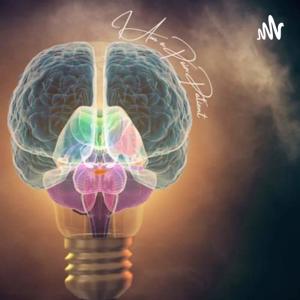


Nervous System 101: Development, Autonomic Regulation and the Ceptions
Development: Efficiency is the goal. In Utero, the brain prepares more pathways (synapses) than it needs. After birth, as we learn and develop unused pathways are retired with efficiency as the goal. Our body is always sending messages, neurons, through myelinated nerve fibers to the dorsal root ganglia, where those messages are deciphered by the parts of our brain.
Unconscious Neurological Input: Autonomic Regulation
Proprioception: Body as a whole: balance, coordination and agility
Nociception: Danger sensors: 'Noci' means pain, and the brain references nociceptors first answering the question, "Am I in Danger?"
Exteroception: Environment, in which our five senses contribute
Interoception: internal systems: digestion, breath regulation, hunber, digestion, acute ailments
So there's me, and the things going on in my body, as they relate to my environment and my body has to occupy a space in that environment. And at all times our brain is asking, "Am I safe?"
Nervous System 101: Today we are diving into the parts of the brain and the systems of our body.
Premotor Cortex: Organizing and preparing for movement
Cingulate Cortex: Concentration and focusing
Prefrontal Cortex: Problem solving and memory
Amygdala: Fear conditioning and addiction
Hypothalamus/Thalamus: Motivation, stress responses and autonomic regulation
Cerebellum: Movement and cognition
Hippocampus: Memory, spatial cognition and fear conditioning
Spinal Cord: Gating from the periphery
Dorsal Root Ganglia: Sensory loading dock
Myleanated Nerve Fibers: Neuron Super Highway
Neuro Tags: Aid in sending messages efficiently
Motor System: Fight or Flight
Endocrine System: Mobilize Energy Stores
Pain Production: Motivate Escape and Seek Help
Immune System: Fight invaders and promote healing
Parasympathetic System: Rest and Digest.
How can we pivot our perspective on our current challenges?
What sustainable changes can we make?
How can we ask our team to support and encourage us?
We spoke yesterday about the importance of Assembling a Team to support and encourage you. It is so important that we are going to dedicate an entire episode to talking about it.
1. Medical Professionals: My team of medical professionals included, a primary care physician, a chiropractor, a massage therapist, a neurologist, and a physical therapist.
2. Self-Advocacy: As you are working with these medical professionals, it is vitally important that you employ self-advocacy. Medical advancements enable us to hope for the potential to bring health and healing into our lives. However, we need accept that sometimes medical professionals make mistakes. They are human, after all. It is important to not only greet yourself with compassion, but your medical team as well.
3. Friends and Family: Begin the road to repair by being open with them about your struggles. What boundaries do you need in place to facilitate further healing? What do you need help with? How can you allow your friends and family to fill you up?
Today, I am going to challenge you to choose the you of today as your starting point. Now that we've addressed the natural boundaries of our memories, the call is to step forward boldly and not allow memories of our glory days to keep us from living our best life right now.
1. Know your "Why". It's the power of a mission statement, of greeting each challenge with a reminder of why this work is so important. Write it down, and repeat it to yourself on hard days.
2. Take an honest inventory of yourself. Humility is knowing things as they are in truth. Knowing yourself in truth, is an important first step.
3. Requires realistic expectations. Use yourself as your own model of true beauty, of true health, and true wellness.
4. Assemble your Team. Root for yourself, and invite others to do so as well. Who can you include in your now, whatever that means, and how can you allow them to support and encourage you?
We will start this week, by addressing the truth about our memories. Memories come with natural boundaries, as our memories are colored by our own perspective. We can only speak to our own experiences, and our own side of the story.
Our memory is directly tied to the virtue of Hope, which is vital to those of us in search of health and wellness. Let's flesh this out then.
1. Emotions can cling to sensory objects
2. Confusion and disturbances caused by our memories.
3. Be open to the Experiences of Others.
4. Confronting your Glory Days.
5. Resolving to Embrace Your Now.
Brene Brown talks about common shields that we use against vulnerability in her book, "Daring Greatly." In the life of a pain patient, or someone suffering with illness, these shields seem very attractive. Here are some of the shields she mentions in this book, if they resonate with you, might be something worth reading.
1. Foreboding Joy: Gratitude
2. Perfectionism: Finding Dignity in the Work
3. Numbing: Lean into Discomfort
4. Viking or Victim: Redefine Success
5. Over Sharing: Setting Boundaries in order to Cultivate Connection
6. Cynicism and Criticism: Reality Check
"Our fight or flight strategies are effective for survival, not for reasoning or connection." Brene Brown, "Daring Greatly."
Guilt: I did something bad.
Shame: I am bad.
Cultivating Shame Resilience:
1. Awareness of Triggers
2. Reality Check
3. Reach Out
4. Wrapping Words Around Shame
Overcoming hardship can only be done when we truthful about our reality. What things can keep us from being vulnerable in this way?
Burden of Reality
Fear of Rejection
Feelings of Shame
Vulnerability Is ______. Vulnerability Feels Like_______.
Building Trust before being vulnerable:
1. Trust is built gradually.
2. Communicate Effectively.
3. Consistency.
4. Be true to your word.
5. Honesty
6. Help Others
7. Show you feelings.
8. Admit Mistakes
From the publisher's feed