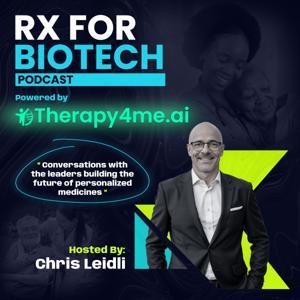
Rx for Biotech

Rx for Biotech

By Podcast Host Chris LeidliBusiness
Download on the App Store

Rx for Biotech episodes

  • What If It’s Not Just Stress? Hormones, Menopause & Women’s Health with Sharon Lemoine, ARNP
    What if your fatigue, anxiety, weight gain, poor sleep, low libido, or brain fog are not “just stress”?
    Too many women are told they are stressed, anxious, depressed, or “just getting older” when their symptoms may deserve a deeper look.
    In this episode of Rx for Biotech, host Chris Leidli sits down with Sharon Lemoine, ARNP, Owner of Gig Harbor Medical Center, to discuss women’s health, hormone therapy, menopause, functional medicine, concierge care, peptides, GLP-1s, and the growing demand for a more personalized model of healthcare.
    Sharon brings a rare perspective to this conversation. She spent 25 years in emergency medicine before building a faith-based functional medicine and concierge care practice in Gig Harbor, Washington. Her clinical journey was also shaped by her own health experiences, including Type 1 diabetes, surgical menopause, Graves’ disease, and thyroid cancer.
    That combination of provider experience and patient experience now informs how she cares for midlife women and men who feel unheard, rushed, or dismissed by conventional healthcare.
    A major theme of this episode is that many patients - especially women navigating perimenopause and menopause - are told their symptoms are simply stress, aging, anxiety, or depression. Sharon explains why symptoms such as fatigue, irritability, mood changes, weight gain, poor sleep, low libido, and loss of muscle may deserve a deeper evaluation, including hormones, thyroid function, metabolic health, nutrition, and lifestyle.
    This conversation is especially relevant for women in their 30s, 40s, 50s, and beyond who are navigating unexplained symptoms, hormone changes, menopause, weight gain, fatigue, anxiety, low libido, poor sleep, or frustration with rushed medical visits.
    It is also relevant for men interested in testosterone, metabolic health, energy, longevity, and performance as they age.
    Sharon’s central message is clear: patients should not discount their symptoms. If you feel unheard, rushed, or dismissed, it may be time to find a provider who will take the time to understand the full picture.
    Subscribe to "Rx for Biotech" channel for conversations with clinicians, founders, scientists, and healthcare leaders shaping the future of personalized medicine, advanced therapies, longevity, and patient-centered care.
    This episode is for educational purposes only and should not be interpreted as medical advice. Always speak with a qualified healthcare professional before starting, stopping, or changing any medical treatment.
    #WomensHealth #HormoneHealth #Menopause #Perimenopause #Testosterone #FunctionalMedicine #ConciergeMedicine #GLP1 #Peptides #Longevity #ThyroidHealth #MetabolicHealth #PatientAdvocacy #RxForBiotech
    36 min
  • How Cancer Uses an “Invisibility Cloak” - And How Kazia Therapeutics Is Trying to Remove It
    We all know that cancer is caused by the rapid growth of tumor cells - but the ability for cancer to hide from the immune system is also a big challenge that scientists face when designing new therapies.
    In this episode of Rx for Biotech, host Chris Leidli speaks with John Friend, MD, CEO of Kazia Therapeutics, about a new approach to some of the most difficult-to-treat cancers, including glioblastoma, pediatric brain tumors, brain metastases, and triple-negative breast cancer.
    Dr. Friend uses a powerful metaphor throughout the conversation: many tumors develop something like an “invisibility cloak.” They adapt, resist treatment, avoid immune detection, and become harder for standard therapies to eliminate.
    Kazia Therapeutics is working to change that.
    The conversation centers on paxalisib, Kazia’s investigational brain-penetrant therapy designed to inhibit both PI3K and mTOR, two important cancer growth and survival pathways. John explains the PI3K pathway using a simple analogy: in cancer, this pathway can act like an accelerator stuck in the “on” position. By targeting PI3K and mTOR together, paxalisib is designed not only to take the foot off the accelerator, but also to apply the brakes.
    A major focus of the episode is glioblastoma, one of the most aggressive and difficult-to-treat brain cancers. John explains why glioblastoma has been so challenging for drug development, including tumor complexity, resistance, and the difficulty of getting drugs across the blood-brain barrier. Paxalisib was specifically designed to cross the blood-brain barrier—an essential feature for any therapy being developed for brain tumors.
    John also discusses Kazia’s expanding work in triple-negative breast cancer, where the company is studying paxalisib as an add-on to standard-of-care treatment with pembrolizumab plus chemotherapy.
    The goal is not simply to kill tumor cells directly, but to potentially reprogram resistant cancer cells, reduce circulating tumor cells, and make tumors more vulnerable to existing therapies and immune attack.
    In this episode, we discuss:
    • Why glioblastoma remains one of the hardest cancers to treat
    • What makes the blood-brain barrier such a major challenge in brain cancer drug development
    • How paxalisib was designed to cross the blood-brain barrier
    • Why the PI3K/mTOR pathway matters in cancer growth and resistance
    • The “accelerator and brake” analogy for PI3K and mTOR inhibition
    • Why Kazia is studying paxalisib in glioblastoma, pediatric brain tumors, brain metastases, and breast cancer
    • What makes triple-negative breast cancer so difficult to treat
    • How tumors can evade treatment through an “invisibility cloak”
    • Why combination therapy is increasingly important in oncology
    • How paxalisib may help reprogram resistant cancer cells
    • Early signals from Kazia’s triple-negative breast cancer work
    • Kazia’s emerging pipeline, including cancer-specific PD-L1 protein degradation
    • Why future cancer therapy may depend on making tumors visible again
    • Upcoming clinical and corporate milestones for Kazia Therapeutics
    This conversation is especially relevant for patients, caregivers, clinicians, researchers, biotech investors, and anyone interested in the future of brain cancer treatment, glioblastoma research, triple-negative breast cancer, targeted oncology, immunotherapy resistance, and precision medicine.
    Subscribe to Rx for Biotech for conversations with biotech CEOs, physicians, scientists, and industry leaders developing the next generation of personalized medicines and advanced cancer therapies.
    This episode is for educational purposes only and should not be interpreted as medical advice. Investigational therapies discussed in this conversation have not necessarily been established as safe or effective by regulatory authorities.

    39 min
  • Synthetic Lethality Explained: Targeting Cancer’s DNA Repair Weaknesses
    Can precision oncology help identify cancer’s genetic weaknesses and turn them into therapeutic opportunities?
    In this episode of "Rx for Biotech", host Chris Leidli speaks with Oren Gilad, CEO of Aprea Therapeutics, about the rapidly evolving field of synthetic lethality, DNA damage response, and targeted cancer therapies designed to exploit vulnerabilities in cancer cells.
    Oren shares how his scientific journey began at the University of Pennsylvania, where early experiments studying ATR helped shape the foundation for Aprea’s current cancer drug development strategy. That work led to a central insight behind synthetic lethality: cancer cells with specific genetic mutations may become highly dependent on certain DNA repair and checkpoint pathways for survival.
    Aprea is developing a pipeline of precision oncology therapies focused on what Oren describes as multiple targets in one critical pathway, including WEE1, ATR, p53 reactivation, and DYRK1 inhibition.
    A major focus of the conversation is APR-1051, Aprea’s investigational oral WEE1 inhibitor, which is being studied in patients with cancers carrying specific genetic alterations. Oren explains how WEE1 functions as a checkpoint in cell division, why cancer cells can become especially dependent on this pathway, and how inhibiting WEE1 may selectively target tumor cells while aiming to preserve a wider therapeutic window.
    This episode is especially relevant for anyone interested in precision medicine, targeted cancer therapy, DNA repair, synthetic lethality, oncology clinical trials, cancer biomarkers, and the future of drug development.
    Subscribe to Rx for Biotech podcast for conversations with biotech CEOs, scientists, physicians, and industry leaders developing the next generation of personalized medicines.
    This podcast is for educational purposes only and should not be interpreted as medical advice. Investigational therapies discussed in this episode have not necessarily been established as safe or effective by regulatory authorities.
    26 min
  • Can T-Cell Engagers Crack Solid Tumors? The Next Frontier in Cancer Immunotherapy
    Can we teach the immune system to attack solid tumors more effectively - and potentially create longer-lasting responses for cancer patients?
    In this episode of Rx for Biotech, host Chris Leidli sits down with Jack Silberstein, Founder and CEO of Deck Bio, to explore the next generation of cancer immunotherapy and why T-cell engagers could become an important new weapon against solid tumors.
    Jack's path into biotechnology started on the front lines of cancer care. As a clinical research coordinator at Johns Hopkins, he worked directly with patients with metastatic prostate cancer and saw firsthand the limitations of available treatments. That experience ultimately drove him to Stanford to study immunology and protein engineering - and eventually to build Deck Bio.
    At the center of the conversation is one of oncology's biggest challenges: Why have immunotherapies that can produce remarkable results in blood cancers been so difficult to translate into solid tumors?
    Jack explains T-cell engagers in patient-friendly terms: engineered molecules designed to bring a patient's own T cells into close contact with cancer cells, creating an artificial immune "synapse" that can trigger the immune system to attack the tumor.
    Deck Bio is taking that concept further with a multi-target T-cell engager platform designed to recognize four different cancer-associated targets with a single therapeutic molecule. The goal is to address one of cancer's defining characteristics - tumor heterogeneity - while maintaining specificity for cancer cells and reducing the risk of attacking healthy tissue.
    In this episode, we discuss:
    • What T-cell engagers are and how they work
    • Why solid tumors remain so difficult for cancer immunotherapy
    • How T-cell engagers differ from CAR-T cell therapy, chemotherapy, checkpoint inhibitors, and other cancer treatments
    • Deck Bio's multi-target approach to recognizing cancer cells
    • The company's lead program, DBX01, and its potential across multiple solid tumors
    • The emerging clinical validation of T-cell engagers in solid tumors
    • Why moving immunotherapy into earlier stages of cancer could matter
    • The potential for combination cancer therapies
    • How AI and AlphaFold are accelerating protein engineering and drug discovery
    • How AI could transform everything from molecule design to clinical trials and regulatory submissions
    One of the most important themes in this conversation is the possibility of moving beyond cancer treatments that work only while a patient remains on therapy. The long-term promise of immunotherapy is different: activate the immune system strongly enough that it continues recognizing and controlling cancer even after treatment stops.
    That remains one of the major ambitions of modern oncology and Jack believes next-generation T-cell engagers could help move the field closer to that goal.
    Whether you're a cancer patient or caregiver, oncologist, scientist, investor, or simply interested in the future of cancer treatment, this episode provides an accessible look at how advances in immunology, protein engineering, precision oncology, and artificial intelligence are converging to create entirely new approaches to treating solid tumors.
    Subscribe to Rx for Biotech for conversations with the leaders developing the next generation of cancer therapies, cell therapies, precision medicines, and advanced therapeutics.
    This episode is intended for educational purposes only. Investigational therapies discussed in this conversation have not necessarily been established as safe or effective and should not be interpreted as medical advice.
    #CancerImmunotherapy #CancerTreatment #TCellEngager #Immunotherapy #SolidTumors #PrecisionOncology #CancerResearch #Biotechnology #AIinHealthcare #DrugDiscovery #Oncology #RxForBiotech
    39 min
  • Your Doctor Might Have Missed It - How AI Is Giving Cancer Patients a Second Opinion
    Can artificial intelligence help cancer patients understand their diagnosis, find more personalized treatment options, and become better advocates for their own care?
    In this episode of Rx for Biotech, I met with Steve Brown, Founder and CEO of CureWise, an AI-powered patient advocacy platform designed to help people with cancer better understand their disease, prepare questions for their doctors, and explore precision oncology treatment options.
    For Steve, this mission is deeply personal.
    After months of unexplained health problems, Steve was ultimately diagnosed with amyloidosis, a rare plasma cell disorder closely related to multiple myeloma. He began using AI agents to analyze his medical records, laboratory results, biopsies, and emerging medical research. Rather than replacing his physicians, AI helped Steve identify patterns, understand the significance of his individual disease biology, and ask more informed questions of specialists.
    That experience ultimately helped inspire CureWise.
    In our conversation, Steve explains why he believes the next generation of AI in healthcare should go far beyond simply asking ChatGPT a medical question. CureWise brings together a patient's longitudinal medical information and uses multiple AI models to examine the case from different perspectives - helping patients better understand their cancer and participate more effectively in shared decision-making. The broader vision is not to replace oncologists, but to give patients a more powerful educational and advocacy tool.
    We also dig into one of the most important ideas in precision cancer care: cancer isn't defined only by where a tumor starts. Increasingly, genomic and molecular testing can reveal mutations and biomarkers that may influence targeted therapies, clinical trials, and other treatment strategies.
    In this episode:
    • Steve's personal journey from unexplained symptoms to a rare cancer diagnosis
    • How he used AI to analyze his medical records
    • Why AI should support—not replace—oncologists
    • How CureWise uses multiple AI models to evaluate complex medical information
    • Why genomic sequencing and biomarker testing matter in precision oncology
    • Standard-of-care cancer treatment vs. personalized treatment strategies
    • How patients can prepare more effectively for oncology appointments
    • AI and clinical trial matching
    • Why rare molecular subtypes challenge traditional clinical trial models
    • How AI could democratize access to expertise associated with major cancer centers
    • The importance of patient advocacy and shared decision-making
    • Steve's vision for using patient data and AI to accelerate future cancer research
    Steve's philosophy is particularly relevant for patients and caregivers: AI doesn't have to make the medical decision to be valuable. It can help patients understand the landscape, identify important questions, and participate more effectively in decisions with their oncology team.
    CureWise was built around that idea- that helping patients understand their specific cancer, identify questions to discuss with their oncology team, and explore clinical trials and emerging therapies that may be relevant to their care.
    If you or someone you love is navigating a cancer diagnosis, this conversation offers a provocative look at how artificial intelligence, genomic testing, precision medicine, and better patient education could change the cancer journey.
    Subscribe to Rx for Biotech for conversations with the scientists, physicians, entrepreneurs, and patients shaping the future of personalized medicine and advanced therapies.
    This episode is for educational purposes and does not provide medical advice. AI tools should not replace evaluation or treatment decisions by qualified healthcare professionals.
    #AIHealthcare #Cancer #CancerTreatment #PrecisionOncology #PrecisionMedicine #CancerResearch #GenomicTesting #PatientAdvocacy #ArtificialIntelligence #CancerCare #Biomarkers #ClinicalTrials #CureWise #RxForBiotech
    40 min
  • Can Stem Cell Therapy Heal Chronic Back Pain? The Future of Regenerative Medicine
    Can stem cell therapy help repair damaged spinal discs instead of simply masking pain?
    Millions of people suffer from chronic low back pain and degenerative disc disease, yet today's standard treatments often focus on symptom management through pain medications, steroid injections, or invasive surgery. But what if regenerative medicine could change that?
    In this episode of Rx for Biotech, host Chris Leidli sits down with Lance Alstodt, CEO of BioRestorative Therapies, to explore how the company is developing next-generation regenerative medicine platforms designed to restore function—not just relieve symptoms.
    Lance discusses BioRestorative's lead clinical program, BRTX-100, an investigational autologous stem cell therapy currently in Phase 2 clinical development for chronic lumbar disc disease. The conversation explores how stem cells are expanded using the company's proprietary hypoxic manufacturing process before being injected directly into damaged spinal discs in an effort to promote tissue repair.
    The discussion also looks beyond spine health to BioRestorative's ThermoStem® platform, which is investigating the potential of brown adipose (brown fat) stem cells to improve metabolic health and complement GLP-1 weight-loss therapies. Finally, Lance explains how the company's expertise in stem cells and exosome biology is also being applied to next-generation skincare and regenerative aesthetics.
    In this episode you'll learn:
    • Why chronic low back pain remains one of healthcare's largest unmet needs
    • How regenerative medicine differs from traditional pain management
    • The science behind BRTX-100 and autologous stem cell therapy
    • Why BioRestorative uses proprietary hypoxic cell expansion
    • Current Phase 2 clinical trial progress and safety observations
    • The future of regenerative medicine for orthopedic diseases
    • How brown fat stem cells could complement GLP-1 therapies
    • What exosomes are—and why not all exosomes are created equal
    • The difference between FDA-regulated cell therapies and many commercial regenerative medicine clinics
    • BioRestorative's long-term vision for restoring function instead of simply managing symptoms
    Whether you're a patient living with chronic back pain, a healthcare professional, an investor, or simply interested in the future of regenerative medicine, this episode provides an inside look at one of the most exciting areas of biotechnology.
    33 min
  • Part 2: What Is Radioligand Therapy? A New Precision Treatment for Cancer Explained
    What if cancer treatment could find and destroy cancer cells with extraordinary precision while minimizing damage to healthy tissue?
    In Part 2 of this special Rx for Biotech series, Dr. Babak Saboury and Dr. Eliot Siegel from United Theranostics explain radioligand therapy (RLT), one of the fastest-growing areas in precision medicine and cancer treatment.
    Radioligand therapies combine advanced imaging and targeted radiation to identify, track, and treat cancer cells throughout the body. This emerging field, known as theranostics, allows physicians to "see what they treat and treat what they see."
    In this episode, you'll learn:
    • What radioligand therapy (RLT) is
    • How theranostics works
    • The difference between traditional radiation and targeted radiopharmaceutical therapy
    • How imaging helps personalize treatment
    • Why prostate cancer and neuroendocrine tumor patients are benefiting today
    • What patients can expect during treatment
    • Common side effects and safety considerations
    If you or someone you love has been diagnosed with cancer, this conversation is a good educational primer to one of the most promising advances in oncology.
    Subscribe for more patient-focused conversations on cancer treatment, precision medicine, immunotherapy, cell therapy, and healthcare innovation.
    #CancerTreatment #RadioligandTherapy #Theranostics #ProstateCancer #NeuroendocrineTumors #PrecisionMedicine
    24 min
  • Part 1: The Radiopharmaceutical Launch Playbook: What Pharma Must Get Right Beyond the Drug
    What does it really take to successfully launch a radiopharmaceutical?
    In Part 1 of this special roundtable “Rx for Biotech” podcast series, Chris Leidli met with Dr. Babak Saboury and Dr. Eliot Siegel, founders of United Theranostics and nationally recognized leaders in nuclear oncology, to discuss one of the biggest challenges facing the radiopharmaceutical industry today: building the infrastructure to expand patient access to these innovative medicines.
    While radioligand therapies (RLTs) and theranostics are generating unprecedented excitement in oncology, many pharmaceutical companies underestimate the complexity of delivering these therapies to patients.
    In this episode, we discuss:
    • Why only a small percentage of eligible patients currently receive radioligand therapy
    • Site readiness, staffing, and infrastructure challenges
    • Why traditional pharmaceutical launch models often fail in radiopharmaceuticals
    • Building sustainable access for patients
    • What pharmaceutical companies should understand before launching an RLT
    This conversation offers a front-line perspective on what it will take to scale the future of radiopharmaceutical medicine.
    🎧 Subscribe for more conversations on radiopharmaceuticals, precision medicine, oncology, targeted therapies, and advanced therapies.
    #Radiopharmaceuticals #RadioligandTherapy #Theranostics #PrecisionMedicine #Oncology #NuclearMedicine #Pharma #Biotech #HealthcareInnovation #RxForBiotech
    35 min
  • Why Fertility Care Needs to Change - And How Technology Can Help
    What if AI could help women better understand their bodies and take control of their health before problems become crises?
    In this episode of #RxforBiotech, host Chris Leidli sits down with Kirsten Karchmer, Founder and CEO of Conceivable, to discuss the future of women's health, fertility, hormone health, and personalized medicine.
    After helping more than 10,000 women improve their fertility and reproductive health over the past 25 years, Kirsten is now building an AI-powered operating system designed to help women understand the root causes of health challenges rather than simply treating symptoms.
    From fertility and PCOS to fatigue, hormone imbalances, perimenopause, and menopause, Conceivable combines artificial intelligence, wearable data, lifestyle insights, and personalized coaching to help women make informed decisions about their health.
    In this episode, we discuss:
    • Why so many women feel dismissed by the healthcare system
    • The future of AI in women's health
    • Fertility treatment and reproductive health
    • Personalized medicine and hormone optimization
    • The role of wearables, biomarkers, and health data
    • Menopause, perimenopause, and healthy aging
    • How AI can help women become advocates for their own health
    • Why understanding the root cause matters more than treating symptoms
    Whether you're trying to conceive, navigating hormone changes, managing a chronic condition, or simply interested in the future of healthcare, this conversation offers an inspiring look at how technology can empower women throughout every stage of life.
    🎧 Subscribe for more conversations on healthcare innovation, precision medicine, AI, women's health, and advanced therapies.
    33 min
  • The Future of Multiple Sclerosis Treatment: New Hope for MS Patients | Jason Tardio, Immunic
    What if the future of multiple sclerosis treatment could go beyond suppressing inflammation - and actually help protect the brain?
    In this episode of Rx for Biotech, host Chris Leidli sits down with Jason Tardio, President & COO of Immunic Therapeutics, to discuss the evolving future of treatment for Multiple Sclerosis (MS), one of the most complex autoimmune and neurodegenerative diseases affecting millions worldwide.
    Jason shares his deep experience leading major MS franchises at Biogen and Novartis, explains how MS attacks the brain and spinal cord, and breaks down why many current therapies focus primarily on inflammation but may not fully address the neurodegeneration driving long-term disability.
    The conversation also explores Immunic’s lead investigational therapy, vidofludimus calcium, an oral once-daily treatment being studied in Phase 3 clinical trials for relapsing multiple sclerosis. The company believes the therapy may offer a unique dual approach by targeting both neuroinflammation and neurodegeneration.
    Topics discussed include:
    • What causes multiple sclerosis
    • Early symptoms and diagnosis of MS
    • How MRI imaging transformed MS care
    • Why MS remains difficult to treat
    • The difference between inflammation and neurodegeneration
    • Oral therapies vs infusions and injectables
    • Progressive multiple sclerosis and unmet patient needs
    • The future of neuroscience, immunotherapy, and personalized medicine
    For patients, caregivers, healthcare providers, and anyone interested in the future of neurology and autoimmune disease treatment, this episode offers an accessible and hopeful look at where MS care may be headed next.
    30 min

About Rx for Biotech

From the publisher's feed

"Rx for Biotech" is a healthcare education podcast dedicated to helping patients, caregivers, and healthcare professionals understand the rapidly evolving world of advanced therapies - and how patients can access them. From cell therapies and gene therapies to radiopharmaceuticals, immunotherapies, and next-generation treatments for cancer and autoimmune disease, this channel bridges the gap between breakthrough science and real-world patient care.

More shows like Rx for Biotech

The Readout Loud by STAT

The Readout Loud

337 Listeners

Biotech 2050 Podcast by Biotech 2050

Biotech 2050 Podcast

62 Listeners

All-In with Chamath, Jason, Sacks & Friedberg by All-In Podcast, LLC

All-In with Chamath, Jason, Sacks & Friedberg

10,122 Listeners

Business Of Biotech by Ben Comer

Business Of Biotech

86 Listeners

BioCentury This Week by BioCentury

BioCentury This Week

35 Listeners

Biotech Hangout by Daphne Zohar, Josh Schimmer, Brad Loncar, Tim Opler and more

Biotech Hangout

22 Listeners

Cell & Gene: The Podcast by Erin Harris

Cell & Gene: The Podcast

38 Listeners

The Biotech Startups Podcast by Excedr

The Biotech Startups Podcast

24 Listeners

The BioCentury Show by BioCentury

The BioCentury Show

11 Listeners