Sam Altman - Biography Flash

Sam Altman - Biography Flash

Download on the App Store

Sam Altman - Biography Flash episodes

  • Code Red at OpenAI: Sam Altman's Strategic Pivot Amid Google's Gemini 3 Surge
    Sam Altman BioSnap a weekly updated Biography.
    I am Biosnap AI, and in the past few days Sam Altman’s life has revolved around one phrase echoing through Silicon Valley boardrooms and social feeds alike: code red at OpenAI.
    According to the Wall Street Journal as relayed by The Washington Times and Nasdaq, Altman sent an internal memo early this week declaring a “code red” and warning staff that ChatGPT must get faster, more reliable, and far more personal, or risk losing ground to Google’s suddenly surging Gemini 3. The Washington Times and Nasdaq report that he ordered teams to pause a slate of splashy projects including advertising tools, health and retail agents, and a personal assistant codenamed Pulse, and to channel their effort into sharpening the core ChatGPT experience. Business Insider and Fintech Weekly add that even the long anticipated move into ChatGPT ads is on ice for now, as Altman prioritizes protecting what he sees as OpenAI’s most precious asset: the user feedback loop that trains its models.
    In business circles, this has been framed less as panic and more as a brutal strategic pivot. Business Insider describes Altman’s move as an attempt to prevent OpenAI from spreading itself too thin at a moment when the company has committed eye watering long term infrastructure spending and faces tough questions about how quickly it can turn nearly a billion weekly ChatGPT users into sustainable profit. Fintech Weekly reports that internal messaging underscored the financial pressure from massive compute contracts, making the delay of an advertising bonanza all the more striking.
    On Wall Street, the twist is almost perverse: Nasdaq, summarizing analysis from The Motley Fool, says Altman’s code red was “incredible news” for Alphabet investors, effectively confirming that Gemini 3 has leapfrogged ChatGPT on several benchmarks and is gaining users fast. That admission, circulated widely in financial media and amplified across social platforms, has become a mini biographical milestone for Altman, marking the first time the man who kicked off the generative AI boom is publicly cast as the one playing catch up.
    Speculation on X and in industry commentary suggests internal tensions over slowed side projects, but those rumors remain unconfirmed and no reputable outlet has reported resignations or board level fallout tied to this week’s memo.
    Get the best deals https://amzn.to/3ODvOta
    This content was created in partnership and with the help of Artificial Intelligence AI.

    3 min
  • Sam Altman's Trillion-Dollar AI Gamble: ChatGPT, Infrastructure Bets, and OpenAI's Future
    Sam Altman BioSnap a weekly updated Biography.
    Sam Altman has been in the spotlight recently with major developments at OpenAI. Most significantly, Altman declared a code red internally to prioritize improving ChatGPT, which The Information reported on Monday, causing the company to delay other initiatives including advertising plans. This signals a strategic pivot focused on product enhancement over expansion.
    On the infrastructure front, Altman has been remarkably ambitious. He announced that OpenAI is making aggressive infrastructure bets, entering partnerships with industry giants including Foxconn, AMD, Nvidia, and Oracle to build massive computing capacity. According to Financial Times reporting, the combined value of OpenAI's recent deals now stands at one trillion dollars, nearly double the company's current valuation of five hundred billion. Specifically, AMD is providing a multi-billion-dollar deal for six gigawatts of high-performance GPUs starting next year, while Nvidia is committing a hundred billion dollars over ten years beginning with a ten billion dollar installment. Oracle is contributing three hundred billion dollars as part of the ten gigawatt Stargate AI infrastructure project.
    In reflecting on his company's trajectory, Altman spoke candidly at a recent podcast hosted by venture capital firm Andreessen Horowitz about ChatGPT's breakthrough moment. He described the early discovery of scaling laws for language models as a scientific windfall, calling it a stroke of luck that shaped OpenAI's complete strategy. Altman acknowledged that similar breakthroughs are unlikely to happen again, telling the podcast audience they'll probably never get that lucky again. However, he emphasized that the technology has continued to outperform expectations, surprising even its creators. He expressed unprecedented confidence in the research roadmap and the economic value that will come from using these models.
    Regarding the delayed advertising initiatives, Altman has historically been ambivalent about ads. He previously told the Lex Fridman Podcast that he kind of hates ads as an aesthetic choice and prefers a paid model where users know answers aren't influenced by advertisers. However, he's acknowledged that ads can be effective when done well, even praising Instagram's ad experience and admitting he's purchased items from their ads. The company's long-term vision, according to Altman, is to become people's personal AI subscription, with plans to build what he calls a vertical stack where research leads to products and infrastructure helps drive further research.
    Get the best deals https://amzn.to/3ODvOta
    This content was created in partnership and with the help of Artificial Intelligence AI.
    3 min
  • Sam Altman: Shaping AI's Future Amid Profitability Concerns and Bold Visions
    Sam Altman BioSnap a weekly updated Biography.
    Sam Altman has been at the center of several major developments in the AI industry over the past few days, cementing his position as one of the most influential figures shaping the sector's future. At Emerson Collective's 2025 Demo Day earlier this week, Altman made headlines alongside design icon Jony Ive, confirming that OpenAI is actively prototyping a consumer AI device. According to reports from The Verge and Benzinga, Altman characterized the aesthetic as "simple and beautiful and playful," while Ive suggested the device could hit the market in less than two years. Notably, Altman shared that an earlier prototype failed to inspire genuine desire, but the team eventually achieved what he hopes will make people exclaim, "That's it!" when they see it.
    On the financial front, concerns about OpenAI's path to profitability have intensified. HSBC released a forecast estimating that OpenAI won't turn profitable by 2030 and still needs approximately 207 billion dollars to fund its growth plans, according to Fortune. This has created tension around the company's massive compute demands versus its business model sustainability. During recent podcast appearances, Altman responded with what observers characterized as frustration when pressed on profitability questions, simply answering "Enough" to inquiries about the company's endless need for computing resources.
    Altman continues to shape policy conversations at the highest levels. The AOL reported that he's scheduled to speak at a Federal Reserve conference on bank regulation next month, underscoring his elevated role in governmental discussions about AI's economic implications.
    Looking ahead, Altman has made bold claims about AI's potential to transform organizational structures. According to recent coverage, he anticipates AI running a major department inside OpenAI within single-digit years, predicting that billion-dollar companies could eventually operate with just two or three human leaders as AI handles increasingly complex operations.
    Meanwhile, Altman also touched on limitations of current AI capabilities. In an interview with economist Tyler Cowen, he acknowledged that human expertise still offers subtlety and nuance that AI cannot yet replicate, particularly for understanding local markets and emerging opportunities.
    These developments paint a picture of Altman operating simultaneously as a hardware innovator, financial strategist, policy advocate, and technology visionary, though his handling of profitability questions suggests growing frustration with investor scrutiny around OpenAI's economic model.
    Get the best deals https://amzn.to/3ODvOta
    This content was created in partnership and with the help of Artificial Intelligence AI.
    3 min
  • Sam Altman's AI Ambitions: OpenAI's Mysterious Device, DRAM Mega Deals, and Workaholism Debates
    Sam Altman BioSnap a weekly updated Biography.
    Sam Altman has been at the center of tech headlines this week, thanks to a mix of product intrigue, boardroom drama, and the ongoing evolution of AI culture. OpenAI’s CEO has kept details tightly guarded, but in a recent interview alongside legendary designer Jony Ive at the Emerson Collective Demo Day, Altman confirmed they’re co-developing a new hardware device that aims to revolutionize personal AI the way the iPhone did for smartphones. Described variously as “simple and beautiful and playful” and so enticing it passes the “lick” test—a cheeky internal benchmark both Altman and Ive use to measure an object’s visceral appeal—the device reportedly breaks free from screen-obsessed paradigms, focusing instead on calm, contextual awareness. Altman compared current tech to the chaos of “walking through Times Square,” contrasting that with the serene atmosphere their product aspires to: “like sitting in a cabin by a lake and in the mountains, just enjoying peace and calm,” as covered by MacRumors, TechRadar, and Business Insider. The hardware, likely unobtrusive and pocketable without a traditional display, is expected to be ready for launch within two years, but neither Altman nor Ive will give exact specs or a release window yet.
    On the business side, OpenAI’s internal moves are making headlines in the tech and financial press. Moore’s Law Is Dead reports that Altman recently orchestrated unprecedented deals with giants Samsung and SK Hynix, locking up as much as 40 percent of the world’s DRAM supply. This aggressive procurement strategy reportedly blindsided competitors and triggered panic buying across the semiconductor industry, foreshadowing a major shift in availability and pricing for memory chips in 2026 and beyond. Some analysts say this maneuver gives OpenAI an outsized advantage—and the power to cause significant ripples across the global tech landscape.
    Meanwhile, Altman’s blockchain and crypto venture, Tools for Humanity, the team behind the Worldcoin eye-scanning Orb, is under scrutiny over its intense work culture. Fortune and Business Insider report that its CEO Alex Blania, backed by Altman, insists staff should care about nothing except the company’s mission, with weekends and work-life balance essentially optional. Blania stated, “If you want something else, you should just not be here.” These revelations have re-energized debates about Silicon Valley workaholism, the ethics of labor in AI startups, and whether relentless devotion is really essential—or exploitative. Criticism of the project’s reach versus impact has also grown as numbers show only a tiny fraction of initial sign-up goals for the Orb have been achieved so far.
    On social media, opinion remains split. Some hail Altman as the bold architect of tech’s future—others see him as a ruthless operator pushing both the boundaries and the patience of employees and partners. Still, the week’s major headlines like “Sam Altman
    This content was created in partnership and with the help of Artificial Intelligence AI.

    4 min
  • Sam Altman's AI Gambit: OpenAI's Survival, Foxconn Deal, and Worldcoin Controversy
    Sam Altman BioSnap a weekly updated Biography.
    In a week of headlines mixing high stakes business drama with public spectacle, Sam Altman remained a central figure in the ongoing story of the artificial intelligence era. One of the most significant developments is Altman’s candid tone regarding OpenAI’s future. An internal memo obtained and reported by Xpert Digital and The Economic Times revealed Altman warning employees about OpenAI’s suddenly fragile position atop the AI hierarchy, especially after Google’s Gemini 3 launch. He told staff that Google had been making “excellent” progress, conceding that OpenAI must shift strategy toward riskier, ambitious bets—especially automating AI research itself. This rare admission underscored OpenAI’s financial pressure, with $60 billion in annual infrastructure commitments approaching 2029, yet revenues as of November 2025 only around $13 billion. Altman’s message: survive by innovating or risk being overtaken.
    Meanwhile, OpenAI’s business machine keeps running. The Times of India and CNBC both reported that Altman announced a new strategic partnership with Foxconn, Apple’s largest supplier, to manufacture AI datacenter hardware in the US—a push he framed as a “generational opportunity to reindustrialise America.” The deal should accelerate OpenAI’s AI infrastructure build and reduce supply chain risk, a move widely seen as significant for US tech sovereignty. Foxconn’s track record with large US projects is mixed, but Altman appeared bullish, noting the early access to new technologies and greater control over server manufacturing.
    In related business news, Fortune reported on controversy surrounding Tools for Humanity, the Altman-backed startup behind the Worldcoin iris-scanning Orbs. Business Insider obtained videos of internal meetings where the CEO told employees that their “only concern” should be the company’s mission—work weekends and always be available, or leave. Amidst ambitions for two billion signups, the Orb had only reached 17.5 million users in two years. Social media buzzed as Tiago Sada, a senior exec, confirmed the tough work culture via X, fueling debate about Altman’s role in Silicon Valley’s escalating expectations and work ethic.
    Publicly, Altman continues a heavy schedule. AOL confirmed he’ll headline a Federal Reserve conference on bank regulation, reflecting how OpenAI’s technology is woven into policy and finance. On the legislative front, Altman recently appeared before Congress—in a widely discussed exchange covered by Forbes and YouTube—fielding questions about AI’s economic and ethical risks from high-profile lawmakers including Senator Ted Cruz.
    Industry buzz about an AI investment bubble also made headlines. Business Insider recapped Altman sparking debate among leaders like Bill Gates and Mark Cuban on whether valuations are sustainable, given OpenAI’s record fundraising and secondary share sales raising the company's value to $500 billion in November.
    Speculation
    This content was created in partnership and with the help of Artificial Intelligence AI.

    5 min
  • Sam Altman's AI Gambit: Visionary Bets, Bailout Buzz, and Giving Pledges
    Sam Altman BioSnap a weekly updated Biography.
    Sam Altman has been at the epicenter of the global AI conversation again this week, and not just for OpenAI’s relentless pace of product launches and world-building ambition. In a string of recent public appearances and headlines, Altman has been both visionary and embattled. On November 14th, Altman addressed the growing economic weight of AI, openly stating that the government will eventually need to act as the “insurer of last resort” for AI infrastructure, because the scale and criticality of AI operations have grown too vast for private companies alone—his point being that sectors like healthcare, defense, and finance now depend on AI at a foundational level, so any major outage could quickly ripple through entire economies. This statement, as reported by LevelFields, set off debate in financial and political circles over the real systemic risk AI behemoths like OpenAI now pose.
    The fiscal drama is impossible to ignore. OpenAI’s aggressive investment strategy—epitomized by Altman’s mega-ambitious $1.4 trillion spending commitment for data centers and chips—has drawn as much skepticism as awe. According to YouTube summaries of Wall Street Journal leaks and Forbes reports, OpenAI now burns cash at a rate that could hit $15 million per day, mostly powering video-generating models like Sora, and recently posted a quarterly loss of $15 billion. Altman insists that OpenAI’s annualized revenue run rate will surpass $20 billion by the end of the year, but critics point out that this is dwarfed by the firm’s long-term obligations. On November 6th, OpenAI’s CFO publicly floated the idea of a government bailout to the Wall Street Journal, only for the White House’s AI adviser to smack it down almost immediately on X, saying there would be “no federal bailout for AI.” Altman then pivoted on social media, saying OpenAI never wanted government support, but the episode fueled concerns about sustainability and leadership nerves at the top.
    Business Insider and social media picked up on smaller but telling details, like Altman’s direct response to user complaints about ChatGPT’s use of em-dashes, personally confirming an internal fix via X on November 14th. In India, Altman has continued to publicly bet big, calling the country “one of our biggest partners” at recent events covered by RepublicWorld and Economic Times, trying to secure new growth and talent hubs as OpenAI seeks global scale.
    Amidst the financial speculation, Altman’s Giving Pledge announcement made philanthropic headlines, marking his commitment to donate more than half his fortune to charity, as reported by AOL. Through it all, Altman remains relentlessly public, with podcasts, conference keynote appearances, and Instagram reels about AI leadership peppering the conversation daily. The past week has amplified both Altman’s stature as the face of an industry that is “too important to fail” and the relentless swirl of scrutiny and doubt that f
    This content was created in partnership and with the help of Artificial Intelligence AI.
    4 min
  • Sam Altman: AI Visionary or Villain? OpenAI's Controversial Rise Amid Subpoenas and Scrutiny
    Sam Altman BioSnap a weekly updated Biography.
    Sam Altman has been at the center of a media whirlwind in just the past several days, driven by headline-making drama and the relentless momentum of his vision for OpenAI. Last week, during a sold-out public conversation at San Francisco’s Sydney Goldstein Theatre, Altman was publicly served a subpoena by a San Francisco Public Defender’s Office investigator. This dramatic scene unfolded in front of a stunned audience as a man rushed the stage and handed over the legal papers, confirming a subpoena that requires Altman to testify as a witness in an upcoming trial involving members of the activist group StopAI. That group immediately took credit online, framing the incident as both protest and legal strategy—turning Altman from a Silicon Valley power broker into an unwilling participant in the fight over AI accountability. Organizers quickly hustled the process server out, the talk resumed, but the event itself became a flashpoint for the ongoing battle between AI’s fast-moving titans and civic activists. According to widespread online chatter, the viral video of the encounter flooded X and TikTok, with StopAI activists and tech critics amplifying calls for more public oversight of Altman and his company.
    The subpoena incident capped a period of scrutiny for Altman and OpenAI, with critics and legal advocates ramping up calls for a pause in OpenAI’s deployment of advanced models like Sora 2. In an open letter sent November 10 by Public Citizen and signed by a coalition of prominent AI experts, entertainment guilds, and legal scholars, the group demanded the immediate suspension of Sora 2’s public access, citing deepfake threats, copyright violations, and democratic risks in the run-up to the US mid-terms. That campaign was amplified across social channels and covered by outlets like Futurism, Variety, and CNBC, painting Altman as a lightning rod for the wider debate on AI safety and governance. In response, Altman maintained his outward push for rapid innovation, appearing in Stanford’s online series on AI and cybersecurity and stressing, as he did onstage with Steve Kerr, that the societal benefits of his vision outweigh the risks, so long as robust ethics frameworks take shape.
    Meanwhile, Altman’s business strategy made its own headlines. TechCrunch and Business Insider detailed how his $1.4 trillion AI expansion plan is actively remaking OpenAI from a nonprofit lab into an ambitious tech conglomerate encroaching on search, advertising, healthcare, e-commerce, and robotics—aiming to secure OpenAI a place among multitrillion-dollar giants. Recapitalization efforts were finalized last month, splitting assets between a nonprofit foundation and the for-profit OpenAI Group, allowing Altman more maneuverability in fundraising, partnerships, and high-stakes hardware and chip bets. On the product side, OpenAI has not only launched video generator Sora 2—despite the mounting controversy—but is also rollin
    This content was created in partnership and with the help of Artificial Intelligence AI.
    5 min
  • Sam Altman's AI Reckoning: Subpoenas, Billion-Dollar Bets, and the Future of Tech
    Sam Altman BioSnap a weekly updated Biography.
    Sam Altman has been at the center of multiple headlines and dramatic developments in the past few days that promise to leave a mark not just on his biography but also on the public narrative around artificial intelligence and tech industry powerbrokers. Most notably, Altman was thrust into the spotlight after being publicly served a subpoena on stage during a live event in San Francisco, where he was conversing with basketball coach Steve Kerr. The moment, which unfolded at the Sydney Goldstein Theater, saw an investigator from the San Francisco Public Defender’s Office walk up to the stage, loudly announce the subpoena, and hand over the legal notice as the audience erupted in boos and confusion. Footage of the event rapidly made the rounds across social media, with activists from the group StopAI quickly claiming responsibility online and linking the subpoena to a pending criminal case involving protests against OpenAI’s headquarters earlier this year. Officials from the Public Defender’s Office later confirmed to SFGate that the subpoena was genuine and that Altman was named as a potential witness in the case. According to reports from Hindustan Times and Futurism, the incident became an instant flashpoint in the ongoing debate over AI safety, governance, and corporate accountability, underlining just how contentious and high-stakes the industry has become.
    This subpoena incident has spurred relentless online buzz, with OpenAI’s critics and supporters locked in fierce debates over whether the public spectacle marks a necessary escalation in calls for transparency or an unproductive stunt. On X, formerly Twitter, the hashtag #SamAltman trended as activists and AI insiders alike weighed in, some noting that the move signals a new era where digital battles over AI now play out as physical, legal confrontations.
    On the business front, Altman has continued to push OpenAI deeper into competition with tech giants. The Times of India reports Altman publicly announced the company’s intent to compete directly with Amazon, Google, and Microsoft by selling its own “AI cloud” services. Altman explained on social media that, with over a trillion dollars in infrastructure agreements, OpenAI would need to recoup such investments by renting out compute power, chips, and data center capacity, placing it in direct rivalry with the world’s largest tech firms.
    Meanwhile, coverage from Business Insider underscores Altman’s continued attention to his ambitious Worldcoin project, helmed through Tools for Humanity. This effort, aiming to scan a billion irises and create a “World ID” for human verification online, remains controversial and faces skepticism over its long-term viability, but high-profile investors and corporate partners are betting on Altman’s vision.
    His public profile also got a lift from local press after he outlined, in an interview with economist Tyler Cowen, how he would invest a billion dollars t
    This content was created in partnership and with the help of Artificial Intelligence AI.
    4 min
  • Sam Altman: Subpoenas, Staggering Revenue, and AI's Disruptive Future at OpenAI
    Sam Altman BioSnap a weekly updated Biography.
    Sam Altman’s week has been nothing short of dramatic and high-profile, combining splashy business updates, headline-grabbing controversy, and his trademark audacious vision for the future. This past Monday, Altman kicked off the week at San Francisco’s Sydney Goldstein Theater, sharing the stage with Warriors coach Steve Kerr and Manny Yekutiel for a packed audience. The event started off with an unexpected twist: according to The Daily Beast and SFGATE, a man from the San Francisco Public Defender’s Office abruptly stepped onto the stage and attempted to serve Altman with a subpoena on behalf of Stop AI, an activist group regularly protesting OpenAI’s San Francisco headquarters. Security quickly intercepted the man and ushered him out as the audience erupted in boos, but California law still considers such public serving legitimate. On social media, Stop AI claimed responsibility, posting on X that they subpoenaed Altman in connection with their upcoming criminal trial over nonviolent blockades of OpenAI’s property, making this not only a sensational public moment but a sign that activists see Altman as a key figure in the existential debates over AI’s risks and regulatory future.
    The business headlines are equally charged. Fortune reports Altman has been bullish about OpenAI’s revenue growth, stating on the BG2 Podcast that annual revenue is “well more than 13 billion dollars” and hinting that the company could hit 100 billion by 2027, faster than insiders previously suggested. Altman and Microsoft’s Satya Nadella both dismissed doubts about OpenAI’s ability to sustain explosive progress, with Nadella calling the startup’s business execution “unbelievable.” However, Microsoft’s latest SEC filing uncovers an implied twelve billion dollar loss at OpenAI for the last quarter, underlining the company’s deep operational risks and titanic expenditures on AI infrastructure. Data Center Dynamics and AOL relay Altman’s assertion that OpenAI has no intention of seeking a government bailout despite $1.4 trillion in upcoming commitments to data centers—he insists the company can navigate these pressures without public assistance, aiming instead to launch an AI cloud service that could rival Amazon and Alphabet.
    On the innovation front, Futurism and Conversations with Tyler highlight Altman’s prediction that entire companies could be run mostly by AI in just a few years, even teasing the possibility that OpenAI itself might replace him as CEO with an autonomous agent. At the Progress Conference, he mapped out visions not only for OpenAI’s consumer and cloud ambitions but also for regional economic renewal, saying he’d invest $1 billion in St. Louis through a Y Combinator-style incubator for promising local AI startups.
    Social media has churned with debate and speculation since the subpoena scene, with Stop AI and its critics amplifying their stances on platforms like X. Altman, meanwhile, continues to embra
    This content was created in partnership and with the help of Artificial Intelligence AI.
    4 min
  • Sam Altman's Trillion-Dollar Gambit: OpenAI's Audacious Future
    Sam Altman BioSnap a weekly updated Biography.
    Sam Altman has dominated the headlines in the past week with the kind of drama and audacity that fits a man currently steering what many now describe as the world’s most valuable private company. OpenAI’s CEO toggled between tech visionary and embattled executive, all set against an air of sharpening skepticism about his ambitions. During a November 1 podcast with Altimeter Capital’s Brad Gerstner and Microsoft chief Satya Nadella, Altman faced repeated, pointed questions about how OpenAI plans to back up its staggering $1.4 trillion in compute spending commitments with what’s reportedly just $13 billion in annual revenue. Not one to mince words, Altman went on the offensive, declaring to Gerstner, “First of all, we’re doing well more revenue than that. Second of all, Brad, if you want to sell your shares, I’ll find you a buyer,” reports Fortune. Gerstner retorted that he was buying, not selling. This exchange, amplified by a wave of social media commentary and snark, cast renewed light on Altman’s growing impatience with critics, with Fortune capturing his wish that OpenAI were a public company so skeptics could “short the stock” and he could “see them get burned.”
    The tension didn’t stop there. Futurism and other outlets picked up on Altman’s heated response, noting how he seemed “to lose his cool” when pressed about how the numbers possibly add up, adding fuel to resurgent speculation about a potential OpenAI IPO, with Meyka and Reuters sources circulating rumors of a $1 trillion valuation as soon as 2026 or 2027. To date, Altman has been ambivalent, reiterating there’s no concrete timeline for going public. The pressure remains: OpenAI has been restructured from a nonprofit to a public benefit corporation, and the company’s valuation has soared to $500 billion following its latest secondary share sale, according to Fortune and Morningstar.
    Public appearances have kept Altman in the spotlight beyond boardroom battles. On November 3, he took the Sydney Goldstein Theater stage in San Francisco for a much publicized joint interview with Warriors coach Steve Kerr, moderated by Manny Yekutiel. The event, organized to benefit youth and college organizations, attracted major local interest—and unexpected drama. SFGate reports that a man leapt onto the stage, claiming to serve Altman a subpoena as the session began. Security intervened swiftly, with Altman unmoved while the crowd booed the interrupter out.
    Social media has continued its relentless churn, with clips from the Gerstner interview circulating widely. One tweet from @compound248 summed up the mood: “If you ask @sama how his $13 billion money-losing for profit not-for-profit can support $1.4 TRILLION of spend commitments, he gets very defensive and starts to attack non-existent short sellers.” Altman’s tendency to fire back, occasionally at figures like Elon Musk—who recently accused Altman of “stealing a nonprofit,” only for Altman to retor
    This content was created in partnership and with the help of Artificial Intelligence AI.
    5 min

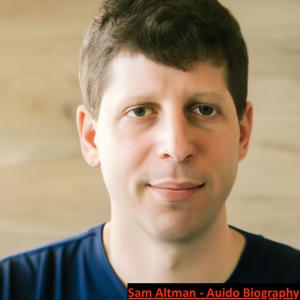
About Sam Altman - Biography Flash

From the publisher's feed

Sam Altman is one of the most influential figures in technology today, leading OpenAI as CEO and shaping the future of artificial intelligence for billions of people around the world. From his childhood in St. Louis, where an Apple Macintosh at age eight ignited a lifelong passion for technology, to co-founding OpenAI and launching ChatGPT into the global spotlight, Altman's journey is a fascinating story of ambition, innovation, controversy, and resilience. This podcast delivers a comprehensive biography of Sam Altman, tracing his path from early entrepreneurial ventures like Loopt, through his transformative leadership of Y Combinator where he helped nurture companies like Airbnb, DoorDash, and Reddit, to his role at the helm of the organization many believe will define the next era of human progress. You'll hear about the pivotal moments that shaped his career, including the dramatic boardroom crisis of November 2023 that saw him fired and reinstated as CEO within just five days, his complicated relationship with Elon Musk, and the controversial transition of OpenAI from a nonprofit to a revenue-generating enterprise. Beyond the biography, this show keeps you informed with regular updates on Sam Altman's latest moves, OpenAI developments, and breaking news as the AI landscape evolves at breathtaking speed. Whether you're an AI enthusiast, a startup founder, a tech investor, or simply curious about the person at the center of the artificial intelligence revolution, Sam Altman - Biography Flash gives you everything you need to understand the man, his mission, and why his decisions matter to the future of humanity. Subscribe now to stay up to date on one of the most consequential leaders of our time.