
Sign up to save your podcasts
Or

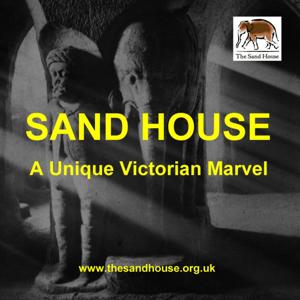


This 9th episode begins by covering the debate about what would happen to the Sand House and its tunnels, once Doncaster Corporation had ceased to have a practical use for them. We hear how the site became a landfill site, with the destruction of the house as a consequence. However, the tunnels survived and were a magnet for the local children looking for adventure... and sometimes getting more than they bargained for.
This episode focuses on the people who lived in the Sand House during the 77 years in which it was occupied. After the 43-year tenure of the Senior family, the house ownership transferred to Doncaster Corporation. From that point on, the head of each family to reside there was a Corporation employee, with the house coming with the job. Meet the Lumbys, the Hagues and, finally, the Briggses.
The 7th episode in our Sand House history season focusses on what is almost certainly the best known feature of the place. Few people who have heard of the Sand House will be unaware of its carvings and sculptures. They decorated both the house and part of the tunnel network. We take the listener on a virtual tour of the carvings, explaining where they each were, who created them, and what we know about the subjects.
Episode 6 takes us on a detailed exploration of the tunnels that ran through the ground next to the quarry in which the Sand House stood. They are, perhaps, the most engaging part of the whole Sand House story. You'll find out about the layout of what were referred to as the Catacombs and the Cloisters, as well as other proven tunnelling. We also explain what we know about other potential tunnels linked to the network. The carvings and sculptures that decorated the Cloisters will be dealt with in the next episode.
In this fifth episode of the Sand House history season, we take the listener on a tour of the Sand House's gardens, along with the streets immediately adjacent to the grounds. We hear about not only about the garden's layout and what could be encountered in it, but also significant events that took place there.
With the help of recordings of three people who had first-hand knowledge of Doncaster's former Sand House, this episode provides a comprehensive description if what its interior was like. From the entrance doors, to the staircases and including all the rooms, one can imagine actually being inside the house and seeing what our audio contributors saw around a century ago.
In this episode, William Senior's son, Henry, becomes the main figure in our story. We hear how he creates the first phase of the Sand House itself and moves in there with his family. Later, he extends the house, to become the well-appointed and imposing dwelling in which he lived for the rest of his life.
In this first full episode of the Sand House's history, we hear about the purchase of a parcel of land by William Senior, in 1832, initially as a market garden. We reveal how a sand pit within that land takes on great significance, as Doncaster expands with the arrival of the railways. Then, a major drainage scheme through his land inspires Senior to begin creating something amazing.
This trailer launches our season of episodes uncovering the history of Doncaster's lost Victorian marvel, the Sand House: a unique dwelling carved from solid sandstone in the mid-nineteenth century by businessman, Henry Senior.
This episode is a recording of an interview on BBC Radio Sheffield, on 30th January 2025, when the writer of the Sand House audio drama, Peter Spafford, spoke to presenter Paulette Edwards.
From the publisher's feed
Standing not far from the centre of Doncaster, South Yorkshire, UK for 80 years, the Sand House was a mansion-sized, private dwelling whose walls were carved from solid rock. It stood within a…