Sargon
Download on the App Store

Sargon episodes

  • The Code of Ur-Nammu (Full Text)
    The Code of Ur-Nammu is the oldest surviving code of laws.
    Written in Sumerian in cuneiform and dating from around 2100 BC, what remains of the code of laws gives us an insight into Mesopotamian life around fifty years after the fall of the Akkadian Empire.
    Ur-Nammu's code was written in what is now known as the "Sumerian Renaissance" or the Third Dynasty of Ur.
    Commentary on this recitation: https://www.youtube.com/watch?v=NZcTZonjHKw
    Follow Ancient Recitations for extra content on Facebook:
    https://www.facebook.com/AncientRecitations

    Source: http://realhistoryww.com/world_history/ancient/Misc/Sumer/ur_nammu_law.htm
    6 min
  • The White Man's Burden by Rudyard Kipling
    The White Man's Burden is Kipling's stark warning about the dangers of colonialism from the perspective of the coloniser.
    Source: http://www.kiplingsociety.co.uk/poems_burden.htm
    Follow Ancient Recitations for extra content on Facebook:
    https://www.facebook.com/AncientRecitations
    3 min
  • The Curse of Akkad
    The Curse of Agade is a lamentation for the collapse and fall of the Akkadian Empire, written within a hundred years of the event.
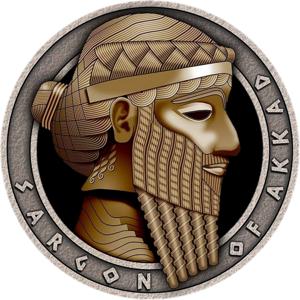
    The story tells of how the great city of Akkad (Agade in Sumerian) rose to its pre-eminent height and empire until Naram-Suen, the grandson of Sargon of Akkad, was given unfavourable omens and so desecrated the temple of Enlil, which caused the gods to ravage Akkad and it's lands by famine and invasion by the "monkey-faced" barbarians known as the Gutians.
    The text details the terrible calamities that befell the lands controlled by Akkad and the suffering of their peoples, and attributes the eventual devastation to the goddess Innana.
    Follow Ancient Recitations for extra content on Facebook:
    https://www.facebook.com/AncientRecitations
    Source: http://etcsl.orinst.ox.ac.uk/section2/tr215.htm
    20 min
  • Ozymandias
    The works of man are fleeting.
    Follow Ancient Recitations for extra content on Facebook:
    https://www.facebook.com/AncientRecitations

    Source: http://www.potw.org/archive/potw46.html
    2 min
  • Ishtar Will Not Tire - An Akkadian Erotic Hymn
    Ishtar was the Akkadian goddess of fertility and sexuality. Her temples often maintained sacred prostitutes that provided a lucrative source of income.
    They often advertised their services by means of erotic hymns which would be chanted at the entrance to the temple to entice passers-by.
    Follow Ancient Recitations for extra content on Facebook:
    https://www.facebook.com/AncientRecitations

    Source: https://books.google.co.uk/books?id=spJbp4bu9lIC&pg=PA87&lpg=PA87&dq=ishtar+will+not+tire+full+text&source=bl&ots=Du_6qaGAOU&sig=YHPrdZiwKdLl4iuOJ2LLo1nw2V8&hl=en&sa=X&ved=0CCEQ6AEwAGoVChMIktKamc6mxwIVJSvbCh056AOk#v=onepage&q&f=false
    More information about sacred prostitutes in the ancient Near East: http://www.academia.edu/2360254/Temple_Sacred_Prostitution_in_Ancient_Mesopotamia_Revisited
    2 min
  • Enmerkar and the Lord of Aratta (Full Text)
    Enmerkar and the Lord of Aratta is an interesting tale about a diplomatic exchange and prelude to war between Enmerkar, the king of Uruk, and the unnamed Lord of Aratta, from around 2100 BC.
    Enmerkar wants precious stones for a new temple, Aratta wants barley as his people are under a famine. Enmerkar begins negotiations belligerently, but Aratta does not fear Uruk's military might, and thus begins the conflict between the two cities.
    The text is notable for being a very early version of the "Confusion of Tongues" narrative, in addition to including a story about the invention of writing on clay tablets.
    Extra Ancient Recitations content/links on Facebook:
    https://www.facebook.com/AncientRecitations
    Source: http://etcsl.orinst.ox.ac.uk/section1/tr1823.htm
    41 min
  • The Prince by Niccolò Machiavelli (Complete Audiobook, Unabridged)
    The Prince is a look at power politics and statecraft from the perspective of the sovereign.
    Within the book are timeless principles of leadership, what a ruler must and must not do to secure their place as the prince of their dominions.
    The Prince is the most famous work from Medieval Italian political theorist Niccolo Machiavelli, and was the text from which the word "Machiavellian" was coined.
    Follow Ancient Recitations for extra content on Facebook:
    https://www.facebook.com/AncientRecitations
    Source: http://www.gutenberg.org/files/1232/1232-h/1232-h.htm#link2H_4_0007
    3 hr 5 min
  • Ancient Exploration: Old Sarum
    Old Sarum was the original site of the cathedral city of Sailsbury, that began life in around 400 BC as a vast Celtic Iron-Age fort.
    Following the Norman Conquest, William the Conqueror created an inner motte and castle, transforming it into a nigh-impregnable fortress, with its own city and cathedral.
    However, Old Sarum was not a good site for a city, and after the clergy demanded the cathedral moved to the site of New Sarum (modern Sailsbury) the site was eventually abandoned to become a rotten borough, until 1832, when the Reform Act was passed.
    Location
    https://www.google.com/maps/d/u/0/viewer?mid=zeFjKTSyb0Bg.k-Twczr5u4bM&hl=en
    Sources:
    A booklet from the English Heritage
    http://basementgeographer.com/old-sarum-and-rotten-boroughs/
    Follow Ancient Recitations for extra content on Facebook:
    https://www.facebook.com/AncientRecitations
    26 min

About Sargon

From the publisher's feed

This feed was created by mixing existing feeds from various sources.