
Sign up to save your podcasts
Or



My guest this week is Lindsey Criswell, who was recently named the director of the National Institute of Arthritis and Musculoskeletal and Skin Diseases. Lindsey has deep experience in clinical rheumatology and human genetics. She talks about the intricacies of medical training and practice, then explains the history and importance of genome-wide association studies and how they set the stage for her current focus on epigenetics.
Welcome back! After an easy start with Oren last July, I was able to catch a big fish - a world-renowned UCSF faculty member in our Diabetes Center, Jeff Bluestone. Jeff has made remarkable contributions to our understanding of T-cell activation, co-stimulation, and immune tolerance including >400 peer-reviewed publications. He shares his passion for collaborative science, including his leadership roles at UCSF, the Immune Tolerance Network, the Parker Institute for Cancer Immunotherapy, and more. Despite these "big science" projects, Jeff remains closely involved in his lab's research and is a committed mentor.
Dr. Lynch is the Director of the UCSF Benioff Center for Microbiome Medicine and exemplifies the benefits of studying human biology at a range of scales, from "ecosystems to molecules." Her translational research program has deepened our understanding of the role of the microbiome in allergy and asthma with a particular focus on the establishment of the microbiome early in life. Her team has identified microbes that could be administered to high-risk infants for prevention of childhood allergy and asthma, leading to a spin-off company. She talks about the importance of microbiology for understanding human biology and her path from environmental microbial ecology to the human microbiome.
Oren, my friend and colleague at UCSF, got an MD and a PhD from Yale and has deep expertise in structural biology. This includes using all sorts of fancy techniques that I don't understand: crystallography, electron microscopy, and small-angle x-ray scattering. After cutting his teeth on eukaryotes, he joined the dark side (microbiology) focusing on tuberculosis and other infectious diseases. His lab continues to push the field of structural biology forward into new and exciting areas, while also developing innovative new genetic techniques like a mobile CRISPR-Cas system that can be used to study diverse pathogenic and commensal bacteria. Hear how he made the shift from art (sculpture) to science and his remarkable journey from the ivy league, to Africa, and beyond.
My guest this week is Zena Werb, whose research has had a profound impact on our understanding of development, cancer, and the epithelial microenvironment. Her publication list is truly inspiring with >500 papers and counting, including multiple seminal manuscripts. Despite this rich history, I was struck by how deeply involved she still was in her active projects and her infectious passion for scientific discovery. Many senior faculty go the administrative route, spending more and more time leading large projects and campus initiatives. In contrast, Zena proves that it is possible to stay focused on the science and that there's always something new and exciting to work on. Finally, Zena received the UCSF Lifetime Achievement in Mentoring Award in 2015 and shares her pro tips for how to train students and postdocs.
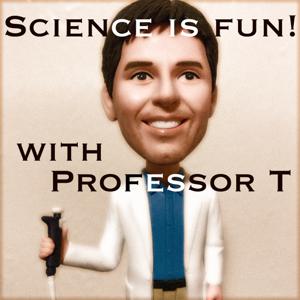
Welcome to Science is Fun! I hope you enjoy our first ever episode. Episodes will drop weekly, possibly less frequently due to COVID-19 and my general lack of expertise. Visit www.scienceisfuncast.com for more information.
My guest this week is Richard Locksley, who is a remarkable and quite accomplished immunologist who has made seminal contributions to our understanding of T cells, innate lymphoid cells, and Tuft cells. He is an investigator with HHMI, a full Professor at UCSF, and the Director of the Sandler Asthma Basic Research Center.
Rich was actually one of the more recent interviews I did for this show, but I thought that his comments on COVID-19 and infectious disease would be of interest right now. A word of warning, it has been a couple months and the science on COVID-19 is always changing, so some of what we discussed is likely out of date. I hope to have Rich and other guests on in the near future to bring you up to date.
In addition to COVID-19, Rich and I discussed all sorts of equally pressing topics like video games, finance, aging, publishing, why cardiology can be boring, and a lot more. I think you're really going to like it and hope that you'll stick around for the next episode.
From the publisher's feed