
Sign up to save your podcasts
Or

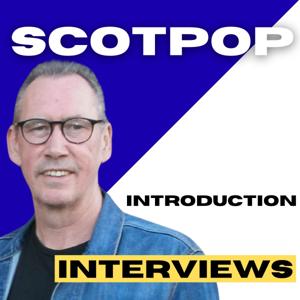
By Allan Glen


The podcast currently has 19 episodes available.
The most played episodes among Podcast App listeners.
In the summer of 1981, Altered Images exploded on to the post-punk scene in the UK in a blaze of chutzpah, charm and chisseled cheekbones – and that was just the boys. That posters of the band’s frontwoman Clare Grogan were already pinned on bedroom walls following her breakthrough performance in Bill Forsyth’s classic growing-up movie Gregory’s Girl the previous year seemed to seal their fate as the nation’s favourite new band; even the London-based, hypercritical NME loved their briliantly bright pop tunes and street-urchin antics. (Well, for a bit anyway …) For many, the arrival of the Glaswegian punk upstarts on Top of the Pops looking like the ultimate gatecrashers – with Clare wearing a bamboo hat the size of a small country – signalled the moment pop switched from black and white to colour. The 80s had arrived. On this week’s episode of Scotpop, Clare relives the highs and lows of being in Altered Images, who are back on tour in the UK. She also talks about: - Travelling the world with “the boys- which was fun. Until it wasn’t.” - Recording with superstar producer Mike Chapman (Suzi Quatro/Smokie/Sweet/Blondie) in America. “Were we subservient? Nah. We were a bunch of gobby Glaswegians.” - Her blossoming friendship with [future husband and MMMBop producer] Stephen Lironi who joined Altered Images for third album Bite. - And - it’s TRUE - what it REALLY feels like when you inspire one of the biggest hits of the 80s. (Altogether now: ‘Ah, ha ha, hahhh … ha”.) - Plus, so much more. Don't forget you can sign up for the Scotpop newsletter on Substack - featuring extended shownotes, behind the scenes info, Scottish music news stories and the best new bands. For the latest news on the podcast and music updates, make sure to follow Scotpop on: Instagram LinkedIn Facebook X TikTok https://www.tiktok.com/@scotpoppodcast If you have any queries about sponsorship opportunities, you can email me at [email protected].

Everyone loves a music business survivor – and few have survived the vicissitudes of the exploitative music business quite like this week’s guest. Dumped by his friends and former Friends Again bandmates when they decamped to form Love and Money in the mid-80s, Chris Thomson thought he had had weathered that perfect storm with a new Phonogram record deal. Until it was pulled. (The more observant listener may hazard a guess at who may have been behind that particularly ruthless move.) Undeterred, he later released several albums as The Bathers - including the implausibly perfect Kelvingrove Baby; all of them signalling the revival of a rare talent; all of them failing to “do the units”. Then came the bailiffs. “They were a couple of friendly bailiffs, lovely, “ he tells me at one point in our interview. “Nevertheless, they asked if I had 30 grand in my bank account. I said, ‘I’m overdrawn by about a thousand’.” Huge thanks to Chris for this interview. It really is a tale like no other. Don't forget you can sign up for the Scotpop newsletter on Substack - featuring extended shownotes, behind the scenes info, Scottish music news stories and the best new bands. For the latest news on the podcast and music updates, make sure to follow Scotpop on: Instagram LinkedIn Facebook X TikTok https://www.tiktok.com/@scotpoppodcast If you have any queries about sponsorship opportunities, you can email me at [email protected].
As anecdote-tellers go, few can match Davy Henderson. This week’s podcast picks up where we left off last time with the Scottish cult hero talking about his band Win, which he formed after splitting Edinburgh-based act Fire Engines. If you heard the first part, you’ll know Davy called time on Fire Engines after he accepted a publishing deal – with an advance of £2,000 – from Pop:Aural label boss Bob Last. As Davy candidly explained in last week’s interview, the split – and the way he handled it at the time – remains one of his major regrets. What I enjoyed about interviewing Davy is he offers a fascinating insight into the mind of a songwriter in a way that many are unable to articulate (at one point in Pt 2, in an attempt to explain why he loves music and the art of songwriting he flip flops between the genius of Miles Davis and – oh yes! – the wigs of Carl Perkins). Fascinating stuff. I hope you enjoy listening to it as much as I enjoyed putting it together. Don't forget you can sign up for the Scotpop newsletter on Substack - featuring extended shownotes, behind the scenes info, Scottish music news stories and the best new bands. For the latest news on the podcast and music updates, make sure to follow Scotpop on: Instagram LinkedIn Facebook X TikTok https://www.tiktok.com/@scotpoppodcast If you have any queries about sponsorship opportunities, you can email me at [email protected].
There’s, rightly, been a lot of attention on Stuart Adamson in recent months with the publication of another biography on the Skids and Big Country legend and news of a forthcoming documentary that will hopefully bury for ever the image of the band as merely “bagpipe guitars and checked shirts”. For now, though, it’s time to hear Bruce Watson’s side of the story – and it’s not always an easy listen. Success, failure, alcoholism, suicide, redemption and resurrection all feature in a 45-year career that spawned three classic albums, including, arguably, the best album and single of the 80s (East of Eden and Steeltown, if you’re asking). As a teenager – and fan of Stuart’s punk band the Skids – Bruce had a major part to play in the development of Big Country, who sold more than 2 million copies of their debut album, The Crossing, and influenced a new generation of songwriters such as the Manic Street Preachers, Blur, Oasis, Arcade Fire and Kings of Leon. In a brutally frank two-part interview, he talks about dealing with Stuart’s alcoholism and the disintegration of the band. But first, we go back to the beginning: Dunfermline, 1977, and a band called The Delinquents. You can sign up here for the new Scotpop newsletter on Substack - featuring extended shownotes, behind the scenes info, Scottish music news stories and the best new bands. For the latest news on the podcast and music updates, make sure to follow Scotpop on: Instagram LinkedIn Facebook X Have any feedback, guest suggestions, general comments or queries about sponsorship opportunities? Great; you can email me at [email protected]. Cheers.
The Beta Band. Big Country. The Skids. Friends Again. The Rezillos. The Bluebells. The list of recently reformed Scottish bands goes on and on. As fans, we’re excited to have these bands back, of course, but having worked on music business magazines for 15 years, one thing I learned was promoters and venues like safe bets. Increasingly, with record sales collapsing, the music business is the live music industry. Yet as more and more bands who had their heyday in the 70, 80s and 90s reform to play live where does that leave Scottish music industry today? It’s a question I put to Sir Ian Rankin in the second part of our interview (the full interview will be coming shortly). It’s also a subject I discussed with James Grant (Friends Again/Love and Money) and Douglas MacIntyre, boss of the Creeping Bent record label. All three guests offer great insight and analysis into what is going on in Scottish music today. The importance of the live music industry on new music acts is also a subject I discuss this week with Erin Reidy, guitarist with Brontës, one of the most talked-about emerging bands in Scotland. This episode also features an introduction to four new bands you’re going to be hearing a lot of in the next year (and, yes, the Brontës are one of them). It would be great to hear what you think of the current state of music in Scotland; those who susbcribe to the Substack newsletter will be able to read about reports this week of the “deepening crisis” in the Scottish festival scene, with six promoters postponing or pausing their events this year. Add in the cultural evisceration with music programming at BBC Radio Scotland - Nicola Meighan is just the latest presenter to be axed – and suddenly the idea of a “crisis” in Scotttish music doesn’t seem so wide of the mark. Let me know what you think. You can sign up here for the new Scotpop newsletter on Substack - featuring extended shownotes, behind the scenes info, Scottish music news stories and the best new bands. For the latest news on the podcast and music updates, make sure to follow Scotpop on: Instagram LinkedIn Facebook X Have any feedback, guest suggestions or general comments? Great - I’d love to hear from you at the links above, or you can email me at [email protected]. Cheers.
The podcast currently has 19 episodes available.