
Sign up to save your podcasts
Or



What does it mean that Jesus fulfilled the Law and the Prophets? Or is it better to say that Jesus is the fulfillment of the Law of the Prophets? We look to Scripture into the Old and into the New Testament and consider the commentary from Curtis Mitch and Dr. Edward Sri, St. Jerome, Rabanus Maurus, Archbishop of Mayence, A.D. 847, and St. John Chrysostom in how Jesus is the fulfillment of the Law and the Prophets. Is the Kingdom only Heaven or does God's kingdom include Heaven and Hell, Purgatory and the Earth? "Was it not necessary that the Christ should suffer these things to enter into his glory?" We explore these questions in this episode.
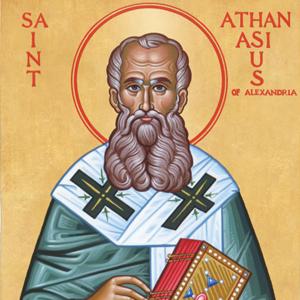
We hear from St. Cyril of Alexandria breaking down Chapter 37 with a look forward to Christ. We look to the Psalms, Jeremiah, Isaiah and St. Matthew in the writing of St. Cyril. Because God doesn't waste words, we see much in all the details.
We continue with The Sermon of the Mount and discuss how the Fathers, Chrysostom, Hilary and Augustine give us insight into why Jesus is using these themes of Salt and Light. Why Salt and Light? We also see in the prophet and in the Catechism of the Catholic Church this theme of Salt and Light.
In this episode we cover the last four of the beatitudes 6-9 and hear from St. Ambrose, St. Jerome, St. John Chrysostom, St. Augustine and St. Gregory the Great. St. Augustine breaks out for us the Beatitudes in the hierarchy of the beatitudes and how they bring us to peace within in the integration of the soul and then that allows us to bring peace to others and strength us to be able to withstand the onslaught of persecution to eventually gain merit and achieve the kingdom of heaven.
We begin in this episode the "Joseph Cycle" that will continue to the end of Genesis. Was Joseph purley innocent in being put upon by his brothers? We hear from Dr. Bergsma and Dr. Pitre to give us the genre of Genesis and in particular, the Joseph cycle. We also hear from St. Cyril of Alexandria. The Joseph Cycle opens with the narrative of Joseph's brothers intending to kill him, that is mitigated by Ruben. Why?
Jacob's meekness and wisdom is displayed once again.
In this episode we look at the Beatitudes individually from the perspective of Ambrose, Jerome, Augustine and Chrysostom. When Jesus takes His seat on the mountain and preaches the Sermon on the Mount, was he saying anything brand new, or was He teaching that which He had spoken before in the law, the prophets, and the writings? Was Jesus simply fulfilling the prophecy that God Himself would teach and shepherd His people?
Was Job a real person? Esau makes peace with Jacob and peoples the lands around Canaan. Like Lot and Abraham, Jacob and Esau separate, Jacob remains in the land of the promise while Esau settles in the surrounding areas.
Why is Jesus sitting while teaching? Can we find anything in Scripture to give us an indication of why and what it might mean? Is "seeing the crowds, just seeing, or is that a weak English words that sort of translates from the original Greek? We look to St. Augustine and St. John Chrysostom to gain some insight.
The little gems in this Chapter foreshadow the death of the Holy Innocents. The Chapter gives us a quick summary of God's promise to Abraham, Isaac and now with Jacob. St. Cyril of Alexandria gives us the keys to understand this Chapter in light of the Gospel of Jesus Christ. Rachel and the prophet of Jeremiah are heard from as well.
Why did Jesus begin his ministry in Capernaum? Was this just a random luck of the draw or was there a purpose in Jesus using Capernaum as his home base at Peter's home? We look to the Old Testament to gain insight to why Jesus is where He is and why He goes to where He goes.
From the publisher's feed