
Sign up to save your podcasts
Or

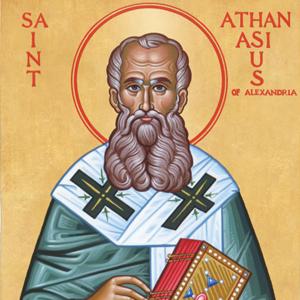


We hear from St. John Chrysostom and Cyril of Alexandria regarding the son of the promise and the son of the flesh. The older son is sent away, but not without provision, and the younger is the one to inherit the priestly blessing from the Father. Abel the just, Abraham our Father in Faith and the High Priest are invoked in the Roman Canon at the Holy Sacrifice of the Mass, remembering the priestly role and faith necessary to be a son of God.
Finally the son long promised to Abraham is born of Sarah and the family tensions reach a breaking point. Why this discord between Sarah and Hagar and Ishmael and Isaac? We look to St. Augustine and St. Paul for the answer and explore archeological evidence for the historicity of the Genesis narrative.
In unpacking Chapter 20 of Genesis we find Abraham's faith well founded, God's designation of Abraham as a prophet, what it means to be a prophet, Abimelech's sin and how he is restored and blessed. Why was it ok for Abraham to be wed to his half sister?
The epilogue of Chapter 19 of Genesis and the immoral generation of two enemies of Israel, the Moabites and Ammonites. Woman, fruit, sin; seems to be a theme. In Chapter 20, we travel with Abraham to Gerar and meet Abimelech.
Sodom and Gomorrah experience Divine judgment as a result of their wickedness. Archaeological evidence is clear that the description in Genesis is accurately describing a historical event that destroyed the city in the middle bronze age, about 2100 B.C., the time that is congruent with the Biblical Account.
What were the sins of Sodom and Gomorrah? Was it inhospitality? Was it homosexual activity? Was it something else? Was Sodom and Gomorrah actual places? Is it just myth to instill a moral standard against homosexuality?
Unpacking Augustine's commentary of the "Three Men whom Abraham hosts. Later Abraham negotiates with God for the sake of Sodom and Gomorrah. We begin to see generally the general nature of Sodom and Gomorrah.
The Trinity is revealed is a veiled form and we look at commentary from Sts. Athanasius, Ambrose and Augustine. We explore the "three men" and the one Lord. But there is sooo much more to uncover in this Chapter.
Abram's errors is an echo of Adam's error of listening to his wife, and not that of God. The correction from God, "Walk before me and be blameless." Abram, by the suggestion of his wife, fails to trust in God's providence and takes matters into his own hands. The result is 430 years of his descendants into slavery.
Abram listens to his wife and takes matters into his own hands to bring about the covenantal promise to have descendants in a natural way by taking Sari's maid-servant to wife. God recalls Abram to "walk before me, and be blameless." God renames Abram, Abraham and Sari, Sarah.
From the publisher's feed