
Sign up to save your podcasts
Or

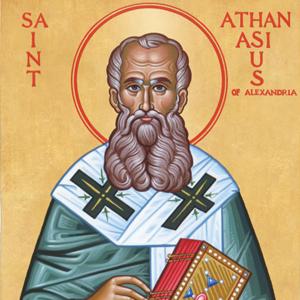


Why does God command the Moses to consecrate the first born male to Himself? God leads the Israelites as a cloud by day and fire at night, so they are guided both day and night by God. We look to Dr. Scott Hahn, St. Cyril and the Catechism to gain insight into these mysteries.
WE look at Chapter 13 of the Book of Exodus and look toward Dr. Scott Hahn, St. Cyril of Alexandria, St. Augustine and the Catechism of the Catholic Church to gain insight into this chapter and the institution of the redemption of the first born liturgy. The typology of this ritual is fulfilled in the paschal sacrifice of Jesus.
Consecration of the First Born foreshadowing of the redemption of man by the actions of Jesus Christ.
Why would John the Baptist be risk his life over the illicit marriage of Herod to Herodias? What does the Church, based on the teaching of Jesus Christ himself say about marriage? Is marriage by the very nature of the sacrament indissoluble, or is that just an "ideal?" We look to the Council of Trent, Vatican II, and St. John Paul II to see the enduring nature of the Church's actual teaching about marriage. Situational ethics or "relativism" is not an excuse for violating the sixth commandment. Is God's grace enough for us to live out the commandments of Jesus about this very foundational sacrament?
We look at the Passover liturgical rite as a prefigurement of the Holy Sacrifice of the Mass. We look to St. Cyril of Alexandria and Dr. Bergsma and Dr. Pitre to gain insight to the parallels between the institution of the Passover and that of the Sacrifice of Christ. St. Cyril interprets the five day period between the 10th day of Nisan and the 14/15 day of Nisan as the ages of the world and human history and how that relates to the New and Everlasting Covenant.
Jesus ends the third discourse and then goes to his home-town and those who "knew" Him take offense at Him at His wisdom and mighty works. So they were aware of the miracles He worked and the wisdom of His speech. We hear from Pope St. Gregory the great and of course St. John Chrysostom and St. Jerome. WE look back at Sirach and Genesis to get a full understanding of Jesus using parables to describe the Kingdom of God.
We hear from St. Cyril of Alexandria, St. John Chrysostom, and St. Jerome and see that the Passover sacrificial offering is a type of the actual everlastic covenant that is sealed in the Blood of Jesus Christ. We begin unpacking the typology in light of the "Lamb of God." What does it mean to do something as a memorial? Is the bread of wine, used in the Holy Sacrifice of the Mass, greater than, a higher reality than the lamb offered in sacrifice at the first Passover? We hear from the fathers to understand how this is related.
We continue looking at the third discourse of Jesus about the kingdom of God. We begin with a quote from St. Jerome about the Mustard Seed and how the Gospel may be seen in this way. He compares the Gospel mustard seed to the Philosophies of Men, which at first blush seem great, but over time come to nothing. We continue Matthew 13 and the parables of the kingdom of God with the treasure in a field and a pearl of great price and a net. We hear, along with St. Jerome, St. John Chrysostom and Pope St. Gregory the Great.
Pharaoh Mock God and in doing so provides the very curse he uses against God's servant Moses, is the very plague that God delivers to the Egyptians. We do a quick review of the first nine plagues and the movement of Pharaoh's heart from not knowing who God is to negotiating the terms on which the Hebrews can worship. Pharaoh wants to and attempts to set terms on where, how and who will worship the God of the Hebrews. In a fit of rage, Pharaoh curses and threatens Moses with death. In doing so, Pharaoh pronounces the very plague that will be visited upon the Egyptians. Pharaoh is at last defeated and surrenders.
Jesus down shifts to teaching using parables and using analogous agricultural themes to teach heavenly realities about the kingdom. What is a tare? How did the farmer allow his field to be invaded at night, "while the servants were sleeping?" How can the kingdom of God be compared to a mustard seed? We turn to Chrysostom, Hilary, Augustine and Jerome for answers.
From the publisher's feed