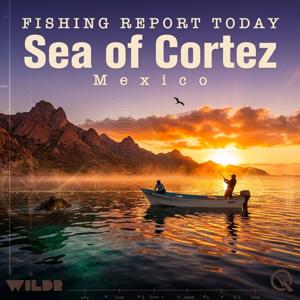
Sea of Cortez, Mexico Fishing Report Today

Sea of Cortez, Mexico Fishing Report Today

Download on the App Store

Sea of Cortez, Mexico Fishing Report Today episodes

  • Sea of Cortez Summer Bite: Roosters, Yellowtail, and Early Morning Glory
    Name’s Artificial Lure, checking in with your Sea of Cortez fishing report, coming at you like a panga running on a glassy morning.
    We’ve got classic gulf conditions right now: light pre‑dawn breeze out of the northwest, building to a modest afternoon chop as the thermal winds pick up. Skies are mostly clear, air temps running mid‑70s early, pushing into the upper 80s to low 90s by midday. Water temps are sitting in that sweet spot for summer action, warm but not bathwater, so the bite is turning on early and late.
    Sunrise is just after six local, with sunset a little after eight, so you’ve got a generous low‑light window. The best action is lining up with first light through about 9 a.m., then again the last two hours before dark. Midday is still fishable if you work deeper structure or troll the edges of current lines.
    Tides in the central and northern Sea of Cortez are running moderate today, with a decent morning incoming and a softer fall this afternoon. That morning push has been key for inshore species—when that water starts moving over the reefs and rocky points, the bait wakes up and so do the predators.
    Inshore, the story has been **roosterfish**, **jack crevalle**, **sierra**, and **pargo**. Roosters are roaming the beaches where there’s solid bait—especially around creek mouths and rocky transitions. Jacks are smashing anything that looks nervous on the surface. The pargo bite has been best on deeper rock piles in 40–80 feet, tight to structure.
    Offshore and near‑offshore, boats are reporting **yellowtail** hanging on high spots and pinnacles, along with **dorado** starting to show under debris and temp breaks. A few **sailfish** and the odd **striped marlin** are sliding in where the blue water pushes closer, especially off the Cape and mid‑gulf banks.
    Best producers lately:
    - For roosters and jacks: big **surface poppers** in blue/white or black/purple, plus **stickbaits** and **live sardinas** slow‑trolled tight to the beach.
    - For yellowtail: **yo‑yo irons** in scrambled egg or blue/white, heavy jigs dropped to the bottom and ripped up fast, along with **live mackerel** or caballito on a dropper loop.
    - For dorado: **trolled feathers**, small **skirted lures** in pink or zucchini, and **cut ballyhoo** or live bait pitched to fish under floating debris.
    - For pargo and cabrilla: **live mullet**, **pinfish**, or fresh chunk bait pinned on strong hooks, plus **metal jigs** and **big soft plastics** slow‑rolled just off the rocks.
    A couple of local hot spots to circle on your chart:
    - **Isla Espíritu Santo / La Partida area** off La Paz: reefs and drop‑offs there have been holding yellowtail, cabrilla, and some quality pargo, with roosters cruising the nearby beaches when the bait stacks up.
    - **Midriff region near Isla Ángel de la Guarda**: cooler, nutrient‑rich water pushing through the narrows has been firing up yellowtail and cabrilla on the islands’ steep edges and rocky points.
    General pattern: match the hatch on bait size, keep leaders stout—these fish fight dirty—and don’t be afraid to fish tight to structure. Early birds with good presentations are going home with the heavier coolers.
    That’s your Sea of Cortez rundown from Artificial Lure. Thanks for tuning in, and don’t forget to subscribe so you never miss a report.
    This has been a quiet please production, for more check out quiet please dot ai.
    Great deals on fishing gear https://amzn.to/44gt1Pn

    4 min
  • Sea of Cortez Early Summer: Dorado, Roosters, and the Morning Bite
    Name’s Artificial Lure, checking in with your Sea of Cortez fishing report.
    We’ve got a classic early–summer pattern setting up from La Paz down toward Cabo and up the corridor toward Los Barriles and La Ventana. Light to moderate morning breezes out of the northwest, laying down pretty nicely at first light with a mild chop building by late morning. Air temps sitting in the high 70s at daybreak, pushing into the upper 80s and low 90s by afternoon. The Sea of Cortez is warm and blue, with surface temps generally in the low 80s close to shore and a touch warmer offshore.
    Sunrise is right around 6:30 a.m. local, with sunset near 8 p.m., so there’s a long daylight window, but the bite has been best in that gray light from first glow through about 9 a.m., and again on the late afternoon push before dark. Tides are running a modest swing today, with a predawn high, dropping through mid‑morning and filling back in late afternoon. That falling water in the morning has had the inshore game fired up along points, rocky fingers, and current seams.
    Offshore, the story lately has been dorado and striped marlin, with a decent showing of yellowfin tuna when you find the porpoise and bird life. Boats out of Cabo San Lucas and San José del Cabo have been reporting good numbers of school‑size dorado, a mix of 8–15 pound fish with an occasional bull pushing 25. Marlin are stacking along the temperature breaks and color changes; most crews are seeing several shots a day when they commit to trolling the edges.
    Best offshore offerings have been small to medium skirted lures in blue/white, guacamaya, and pink/black, run on the short and long riggers, plus rigged ballyhoo or caballito pitched to tailers and feeders. For tuna, cedar plugs and small feathers in dark sardina and purple/black patterns, plus live or chunked sardina when you can get them, have been the ticket.
    Inshore, from La Paz Bay down around Cerralvo Island and out toward Los Barriles, the action has centered on roosterfish, jack crevalle, and mixed snapper and cabrilla along the rocks and beaches. Roosters have been cruising tight to the sand, especially around points with some swell and nervous bait. Fly‑lined live sardina and mullet have been deadly, but big surface plugs and stickbaits in mullet and bone patterns are drawing violent blow‑ups for those who like to cast. For snapper and cabrilla, slow‑worked metal jigs and soft plastics in natural brown, red, and sardine colors, fished tight to structure, are putting fish in the box—just be ready to pull hard before they rock you up.
    Two hotspots to keep on your radar:
    First, the waters off Punta Arena and around Cerralvo Island on the La Paz side. That zone has been holding good schools of bait and steady rooster and jack activity, with dorado pushing in when the current lines set up. Work the edges where green water meets blue and any floating debris—paddies, logs, even trash lines have been holding mahi.
    Second, the Gordo Banks off San José del Cabo. When the current’s right, those high spots have been producing a mix of yellowfin, marlin, and the occasional big amberjack or grouper down deep. Slow‑trolling live baits over the high spots and dropping heavy jigs to the base of the structure have both paid off.
    Overall fish activity has been solid: decent numbers of dorado per boat offshore, multiple marlin releases for crews putting in the time, and inshore guys seeing enough roosters and jacks to keep arms sore. Bring a spread that covers it all—skirted lures, a few cedar plugs, some diving plugs, and plenty of live‑bait gear—and be ready to adjust to the signs: birds, bait showers, and color changes.
    Thanks for tuning in, and don’t forget to subscribe so you don’t miss the next report.
    This has been a quiet please production, for more check out quiet please dot ai.
    Great deals on fishing gear https://amzn.to/44gt1Pn
    4 min
  • Sea of Cortez Early Summer: Dorado Lights Up, Tides Are On, Get There at First Light
    Name’s Artificial Lure, checking in with your Sea of Cortez fishing report for the Baja side, from Loreto down to Cabo and across toward La Paz.
    We’re in early summer patterns now. Overnight air stayed in the low 70s, climbing into the mid to high 80s by midday with light morning breeze from the northwest, building to a moderate onshore wind in the afternoon. Humidity is up but not brutal yet. Skies are mostly clear with a bit of high haze. Sunrise hit right around 5:30 local, sunset will be close to 7:00 this evening, so you’ve got a nice long window.
    Tide-wise, we’re on a modest mixed tide today. Expect a predawn low, water starting to push in through the morning, peaking mid‑day, then easing back out late afternoon. That morning flood has been the trigger: when the current starts moving over structure, the bite turns on fast. Slack tide has been pretty dead, especially for pelagics.
    Water temps on the inshore grounds are running in the mid to high 70s, creeping into low 80s offshore. That’s classic Sea of Cortez summer water, and the fish are acting like it. Dorado are finally showing in better numbers under floating debris and around current breaks, mostly school‑size fish, but a few legit gaffers mixed in. Yellowtail are thinning in the shallows but still hanging deeper on the high spots, especially where there’s colder upwelling. Roosterfish patrol the beaches and rocky points, mostly early and late. In the blue water, striped marlin are around, with a shot at sailfish and the odd early tuna if you wander far enough.
    Boats out of Loreto and La Paz yesterday reported steady dorado action with limits not uncommon when guys stuck with weedlines and bird life. Most dorado were in the 8–15 pound class, with occasional 20‑plus. Several pangas worked the seamounts and picked up a mix of yellowtail and cabrilla, not wide‑open, but enough for a solid ice chest. Closer to shore, anglers casting from pangas along the beaches found a few good roosters and plenty of jacks and needlefish to keep things busy.
    Best lures right now: for dorado and billfish, small to medium skirted trolling lures in blue/white, zucchini, and pink/white are doing work. Cedar plugs and small plugs in natural baitfish colors are also producing. For inshore, bring surface poppers and stickbaits in bone, sardine, and mullet patterns; roosters can’t resist a well‑worked surface plug when they’re fired up. Metal jigs in 60–120 grams, yo‑yo’d deep over structure, are still your best bet for yellowtail and big cabrilla.
    For bait, live sardinas are king if you can find them; always buy extra when the bait guys have good scoops. Fly‑lined sardina on light fluoro is deadly on dorado and inshore species. Live mackerel or big baits slow‑trolled near the rocks will tempt grouper and trophy roosters. Cut bait on the bottom will keep you in triggerfish and other table fare if the gamefish play hard to get.
    Couple of hotspots to keep on your radar:
    First, the seamounts off La Paz and north toward Espiritu Santo—any hump holding bait with birds picking has been holding dorado and the occasional marlin. Get there for that morning push of tide and work the edges with trolled skirts, then slide in with live bait once you find fish.
    Second, the beaches and points around Los Frailes and down the East Cape—roosterfish, jacks, and some big ladyfish roaming tight to the sand. Cast parallel to the beach at first light and again late in the afternoon as the sun drops.
    Plan your day around that building morning tide, be in position at grey light, and don’t ignore subtle current lines and color changes—this time of year, that’s often where the life is.
    Thanks for tuning in to your Sea of Cortez fishing report with Artificial Lure. Make sure to subscribe so you don’t miss the next update.
    This has been a quiet please production, for more check out quiet please dot ai.
    Great deals on fishing gear https://amzn.to/44gt1Pn
    5 min
  • Early Summer Sea of Cortez: Tuna, Roosters, and Perfect Timing from La Paz to East Cape
    Name’s Artificial Lure, checking in with your Sea of Cortez fishing report, talking mainly La Paz to Los Barriles, with a nod to the East Cape and Loreto.
    We’re in a classic early‑summer pattern now: warm, mostly clear mornings, light breeze early, with afternoon northwest winds kicking up chop. Daytime highs are running hot and dry, water temps sitting in the upper 70s to low 80s inshore and a touch warmer outside the islands. Humidity’s up but not brutal yet.
    Sunrise is right around six in the morning, with sunset just after eight in the evening, giving you a big window to work the low‑light bite. Tide is on a moderate cycle now: a pre‑dawn high that eases off through the morning, then a building afternoon flood. That early dropping water has been the sweet spot inshore.
    Pelagics have finally settled in. Outside La Paz Bay and up toward Cerralvo/Isla Espíritu Santo, boats have been hanging into solid **yellowfin tuna** schools with a mix of **dorado** and the odd **wahoo**. Tuna have mostly been footballs to mid‑grade fish, call it 15–40 pounds, with some boats reporting half‑dozen to a dozen fish on a full day when they find the right school. Dorado numbers are improving, mostly school‑size, perfect for the grill, with a few legit bulls mixed in.
    Closer to the beach, the inshore game is lively. Roosterfish are patrolling the beaches on both sides of La Paz and down the East Cape, with fish from 15 pounds up into the 40‑plus class. There’s also good action on **jack crevalle**, **pargo**, and **cabrilla** around the rocky points and nearshore structure. Some boats are still seeing the tail end of **striped marlin** and **sailfish** offshore, so it’s worth dragging a spread if you’re running long.
    Best baits right now are good, lively **sardina** and **mulletito**. If your panguero can load the tank, slow‑trolling those baits along color edges and current lines has been deadly on tuna and dorado, and absolutely the ticket for big roosters just off the sand. Chunking cut bait around birds and surface foam has also picked off tuna when they’re a bit shy.
    For artificials, keep it simple and local‑style:
    - Small metal jigs and yo‑yo irons in blue/white or scrambled egg for tuna.
    - Medium diving plugs and 4–6 inch soft‑plastics in natural bait colors for dorado.
    - Big surface poppers and stickbaits in bone, blue, or mackerel pattern for roosterfish and jacks.
    - Heavy jigs or bucktails in red/white or brown for working bottom structure for pargo and cabrilla.
    Two solid hot spots to put on your list:
    First, **Cerralvo Island / Isla de la Cerralvo**. Work the high spots and drop‑offs on the southeast and east sides for tuna and dorado, especially where you see birds picking or flying fish skittering. Early morning, get there with that dropping tide and work live sardina deep and jigs on the edges of the structure.
    Second, the **Las Arenas to Muertos Bay** stretch. Run that beach lane just outside the breakers with live mullet or big surface plugs for roosters and jacks. When the wind comes up later, slide a bit deeper and pick at pargo and cabrilla on the rocks.
    If you’re fishing out of Loreto, slide around **Coronado Island** and the nearby bajo. Same deal: sardina on light leader for dorado and schoolie tuna, with cabrilla and snapper tight to the rocks.
    Timing‑wise, plan to launch in the dark, be on your first spot as the sky gets color, and fish hard until the wind builds and the sun gets high. Save the late‑afternoon session for inshore roosters and jacks along the lee beaches if the breeze settles.
    That’s the Sea of Cortez rundown from Artificial Lure. Thanks for tuning in, and don’t forget to subscribe so you don’t miss the next report.
    This has been a quiet please production, for more check out quiet please dot ai.
    Great deals on fishing gear https://amzn.to/44gt1Pn
    4 min
  • Early Summer Heat: Roosters, Dorado, and Prime Tides Across the Sea of Cortez
    Name’s Artificial Lure, checking in with your Sea of Cortez fishing report, coming to you like a local on the dock.
    We’ve got a classic early‑summer pattern settling in. Overnight temps stayed mild and highs are pushing into the upper 80s to low 90s along the Baja side, with light morning breezes and a bit more wind in the afternoon, mostly out of the south and southeast. Skies are generally clear, with just enough high cloud to take the edge off the sun. Sunrise is right around 6 a.m., sunset close to 8 p.m., so you’ve got a generous low‑light window to work with.
    Tides are running a typical mixed semi‑diurnal pattern in the mid‑Gulf. Around La Paz and north toward Loreto you’re seeing a decent pre‑dawn high draining out through mid‑morning, then a building afternoon flood. That falling water at first light has been concentrating bait on the points and current edges, and the afternoon push is sparking a short but sweet evening bite tight to the rocks and inshore reefs.
    Fish activity has picked up nicely. Inshore, roosters and jacks are making a strong showing along the beaches and rocky points. Boats working the area from Los Barriles up toward La Ventana have been reporting solid roosterfish, many in the 15–30 pound class with a few larger models mixed in, plus plenty of feisty jack crevalle. Around La Paz and Espiritu Santo, pangas are finding good numbers of Cabrilla and pargo over structure, with the odd amberjack and yellowtail still hanging on deeper spots early and late.
    Offshore, the warm water pushing up from the south has brought more dorado into the picture, especially off Punta Arena, Cerralvo Island, and the high‑spots east of La Paz. Most are school‑size mahi but there are enough nicer bulls to keep things interesting. Striped marlin are still readily available off the East Cape and up toward the Gordo area, with a few sailfish starting to sniff around as temps bump up.
    For lures, keep it simple and local. Inshore for roosters and jacks, big surface plugs and stickbaits in sardine, mackerel, or plain white are doing damage. Metal jigs in the 40–80 gram range, blue and chrome or green and gold, are producing Cabrilla, pargo, and the deeper stuff when dropped on reef edges. Offshore, small to medium skirted trolling lures in blue‑white, petrolero, and purple work well for marlin and dorado, and don’t forget a feather or two in pink or green for schoolie mahi.
    Best bait right now: live sardina is king when you can get it. Beach seiners around La Ventana, La Paz, and East Cape have been finding enough to keep the fleet supplied most mornings, though you’ll want to be on it early. Live mackerel and caballito are prime for marlin, bigger roosters, and amberjack. Cut bait and chunked bonito dropped into chum lines on structure are turning on the pargo and snapper.
    Couple of hot spots to circle on your chart:
    First, the **Punta Arena to El Cardonal** stretch on the Baja side. Work the current lines, beach drop‑offs, and rocky points at gray light and again late afternoon. This zone has been holding roosters, jacks, and the occasional dorado pushing bait right up against the beach.
    Second, the **seamounts and reefs around Isla Cerralvo**. Fish the edges of the banks for Cabrilla, pargo, and amberjack with jigs or live bait, and keep a couple of trolling rods out when you’re running between spots for dorado and marlin cruising the contours.
    That’s your Sea of Cortez rundown from Artificial Lure. Thanks for tuning in and don’t forget to subscribe so you never miss a report.
    This has been a quiet please production, for more check out quiet please dot ai.
    Great deals on fishing gear https://amzn.to/44gt1Pn
    4 min
  • Sea of Cortez Early Summer: Tides, Structure, and Surface Chaos
    This is Artificial Lure checking in with your Sea of Cortez fishing report, coming at you like a panga running just on plane.
    We’ve got a classic early-summer pattern setting up. Skies running mostly clear with a light morning breeze under 10 knots, building to a choppy afternoon but nothing that’ll scare off a solid center console. Air temps climbing into the high 80s to low 90s, water temps sitting in that sweet mid‑70s to low‑80s band inshore, a touch cooler out deep. Humidity’s up, but that’s what turns the switch on.
    Sunrise is right around six in the morning, with sunset close to eight in the evening. That gives a long window, but the best bite’s hugging the low‑light edges. Tides are in a moderate cycle: a predawn high easing into a late-morning drop, then filling again toward late afternoon. That falling morning tide has been the money maker inshore, especially over structure and points where current pinches bait.
    Offshore, the word on the docks is yellowfin tuna and dorado are showing with more consistency on the temperature breaks and around any floating debris or sargassum lines. Boats working slow-trolled ballyhoo and small skirted lures in blue-and-white or pink-and-white have been hanging decent numbers of school‑size yellowfin, with a few better models mixed in. Dorado are smacking brighter plastics, especially anything with chartreuse and some flash. Keep a pitch rod rigged with live sardina or a chunk of bonito for followers.
    Closer to the rocks and islands, roosterfish have been active in that skinny water, cruising just outside the breakers. Anglers slow‑trolling live mullet or caballito along the beaches have been into steady action, with fish ranging from small schoolies up to those big comb‑back brutes that’ll test your knots. Big surface plugs and stickbaits in bone or mackerel patterns are getting crushed when there’s a bit of chop on the water.
    Inshore reefs and drop‑offs are kicking out good numbers of cabrilla and pargo. Live bait pinned on a fluorocarbon leader, dropped tight to structure, is still king. For artificials, heavy bucktail jigs in white or sardine color, worked slow along the bottom, have been producing a mixed bag: cabrilla, leopard grouper, and the occasional snapper. Don’t be shy about upsizing leader around the rocks; better to lose a bite than a whole rig to the bricks.
    For lure selection, think natural early and loud late. At first light, small metal jigs and slender minnows in sardine and anchovy patterns have been killer when cast into bird schools busting bait. As the sun gets higher, guys are switching to deeper-running plugs and heavier jigs to stay in the zone. In the afternoon breeze, poppers and chuggers are drawing explosive surface strikes from jacks and roosters along current seams and points.
    A couple of hot spots to circle on your mental chart:
    First, the island edges and pinnacles north of La Paz, where current wraps around the structure and stacks up bait. That area has been very consistent for cabrilla, pargo, and the occasional surprise pelagic sliding in tight.
    Second, the inshore coastline stretches near Los Barriles and northward, where the beach drops off quickly. Work live bait or big topwaters along those color changes and you’ve got a real shot at quality roosters and jacks.
    Overall fish activity is solid: not wide‑open carnage, but steady pick with flurries when tide and light line up. If you time that falling tide with first light, you’re in the game. Bring a mix of live bait, metal jigs from 40–80 grams, and a couple of big surface plugs, and you’ll be ready for whatever cruises by.
    Thanks for tuning in, and don’t forget to subscribe so you never miss a report from Artificial Lure.
    This has been a quiet please production, for more check out quiet please dot ai.
    Great deals on fishing gear https://amzn.to/44gt1Pn
    4 min
  • Sea of Cortez Early Summer: Island Points and Dawn Bites from La Paz to Cabo
    Name’s Artificial Lure, checking in with your Sea of Cortez fishing report, talking mainly La Paz to Los Cabos and a bit across toward Loreto.
    We’re sitting on a mellow early‑summer pattern: light morning breeze, building onshore wind and chop in the afternoon, warm humid air, and sea surface temps mostly in the mid‑70s to low‑80s. Skies are running mostly clear with some afternoon clouds, so plan on calm rides out at gray light and a bumpy ride home if you push it late.
    Tides are running a moderate swing, with a predawn high easing out through the morning, then a building flood pushing in later in the day. That dropping morning tide has been lining up nicely with first light, giving a solid bite window, especially around inshore structure and island points where the current pinches.
    Sunrise is right around the very early morning, with sunset early evening. The most consistent action has been from first gray through a couple hours after sunup, and then again the last hour of light when the wind backs off a bit. Midday is fishable, but you’ll work harder for every bite, especially nearshore.
    Offshore, the story is early‑season pelagics. Boats out of Cabo and San José have been picking at striped marlin with a few dorado and occasional yellowfin tuna mixed in. The numbers aren’t full summer chaos yet, but enough fish are around that a spread of trolled lures is worth the fuel. Slow‑trolled caballito or mackerel are still putting more marlin on the tag sticks than plastics, but brightly colored skirted lures in purple‑black, petrolero, and blue‑white have been getting raised when the bait’s scarce.
    Inshore and around the islands has been the most reliable game. Pangas working the rocks and points near Espiritu Santo, Cerralvo, and along the East Cape are finding good mixed bags: sierra still hanging around early, plenty of triggerfish, cabrilla, pargo, and the odd nice roosterfish cruising the beaches. Jigs and live bait both producing.
    Best lures right now:
    - Metal jigs in 40–80 grams, blue‑silver or green‑mackerel, yo‑yo’d over structure for cabrilla and pargo.
    - Small to medium diving plugs in sardine or mackerel patterns for sierra and inshore roosters.
    - Soft‑plastics on heavy jigheads, browns and olives, tight to the rocks for grouper and cabrilla.
    Best bait: sabiki up sardina, caballito, and small mackerel at first light. A fly‑lined live sardina or caballito near a reef edge is still money for pargo and roosters. For bottom fish, butterflied baits on a dropper loop are hard to beat.
    A couple of hot spots to keep on your list:
    - Around Isla Cerralvo (also called Jacques Cousteau Island), especially the north and south points and any visible current lines. Good mix of inshore gamefish and a shot at tuna or dorado when the current pushes blue water tight.
    - The stretch from La Ribera down past Punta Colorada on the East Cape beaches, where roosters and jacks have been cruising the drop‑offs early and late. Cast big surface plugs or slow‑trolled live bait just outside the breakers.
    Overall fish activity has been steady, not wide‑open—more of a “grind for quality” pattern. Put in your time during the tide changes, keep moving until you mark bait and current, and don’t be afraid to switch from hardware to live bait when the sun gets high.
    That’s your Sea of Cortez rundown from Artificial Lure. Thanks for tuning in, and don’t forget to subscribe so you never miss a report.
    This has been a quiet please production, for more check out quiet please dot ai.
    Great deals on fishing gear https://amzn.to/44gt1Pn
    4 min
  • Sea of Cortez Early Summer: Tuna, Dorado, and Roosters on the Bite
    Name’s Artificial Lure, checking in with your Sea of Cortez fishing report, straight from the Baja side of things.
    We’re sitting on a mellow early-summer pattern now: light to moderate northwest breeze in the mornings, building to a choppy whitecap wind in the afternoon. Air temps are running warm but not brutal yet, mid‑70s at first light pushing into the upper‑80s by midday. Skies are mostly clear, with that classic Baja blue dome overhead.
    Sunrise is right around six in the morning, with sunset close to eight in the evening, which gives you a generous low‑light window at both ends of the day. Those first two hours after sunup and the last ninety minutes before dark are where you want to put your focus.
    The tide today is on a modest swing, nothing extreme, but there’s enough water moving to spark a bite when the flow picks up. Think mid‑morning incoming and late‑afternoon outgoing as your best bets around the points and island channels. When that current starts to walk, the bait stacks and the predators wake up.
    Offshore, the talk on the docks from Loreto down toward La Paz is of steady action on school‑size yellowfin tuna mixed with skipjack, plus a sprinkling of dorado working weed lines and temp breaks. Most of those tuna are in the 15–25 pound class, with a few better models if you’re willing to run a little farther. Dorado are still scattered, but boats that find floating debris or a clean color break are hanging a couple per trip.
    Nearshore, the classic Sea of Cortez grab bag is on: cabrilla and leopard grouper on the rocks, pargo and snapper in the cuts, plus sierra and jack crevalle roaming the edges. Roosterfish have been showing tight to the beaches, especially where you’ve got small mullet and sardina pushing along the sand.
    For lures, keep it simple and bright. Yo‑Yo style iron in blue‑white or scrambled egg is putting tuna and bottom fish in the box. Smaller chrome jigs and bullet‑head trolling lures in pink, purple, and black‑green are drawing strikes from tuna and dorado. Inshore, medium‑size surface poppers and stickbaits in bone or sardine patterns are killing it on roosters and jacks. Hard‑thumping swimbaits in natural bait colors, slow‑rolled along the rocks, are money for cabrilla and grouper.
    Best bait right now is live if you can make it: sardina first choice, small mackerel or mullet second. Slow‑trolled or fly‑lined baits get the nod for tuna, dorado, and roosters. For the rocks, a pinned‑on chunk or live bait dropped straight into the structure at slack, then worked as the current builds, is a reliable way to put meat on the table.
    A couple of hot spots to put on your list:
    • Around Isla Carmen and Isla Coronado off Loreto: good current lanes, plenty of structure, and consistent tuna, dorado, and cabrilla when the water’s clean.
    • Cerralvo Island and the channel toward La Ventana: classic zone for tuna and dorado on the outside, with strong roosterfish and jack crevalle action along the beaches when the bait is in tight.
    If you’re fishing from the sand, focus on points, river mouths, and any stretch where the beach has a little contour or rock. Cast just outside the breakers at first light with a surface plug or metal spoon, and keep that rod tip down—you’ll know when a rooster finds you.
    That’s the Sea of Cortez report from Artificial Lure. Thanks for tuning in, and don’t forget to subscribe so you don’t miss the next rundown.
    This has been a quiet please production, for more check out quiet please dot ai.
    Great deals on fishing gear https://amzn.to/44gt1Pn
    4 min
  • Sea of Cortez Early Summer: Dorado, Tuna, and Inshore Structure Heating Up
    Name’s Artificial Lure, checking in with your Sea of Cortez fishing report.
    We’ve got classic early‑summer conditions now: warm days, light mornings, and building breeze in the afternoons. Near La Paz, Loreto, and down toward Los Barriles, overnight temps are staying pleasant with daytime highs pushing into the upper 80s to low 90s, mostly clear skies and a typical afternoon bump in wind out of the southeast. Humidity is creeping up but not brutal yet.
    Tides on this side have been running moderate: a good pre‑dawn incoming followed by a late‑morning slack, then an afternoon ebb that lines up nicely with that sea breeze. Work that early flood for inshore species in tight, then slide deeper as the sun climbs.
    Sunrise is coming early—first light gives you enough glow to run by about half an hour before the sun actually pops, and you’ll have decent light on the water fast. Sunset is landing early evening, with a nice golden hour bite if the wind doesn’t blow it out. Plan to be on your spot in the gray light for the best surface activity.
    Offshore, the warm blue water line is pushing in close. Boats running a bit outside Isla Espíritu Santo and north of Loreto have been into good numbers of **dorado**, scattered **striped marlin**, and some **sailfish** mixed in. Football **yellowfin tuna** are showing on and off under birds and porpoise, not wide‑open but enough to keep you honest if you’re willing to hunt. Inside, the reefs and rocky structure are giving up **yellowtail** early, plus **pargo**, **cabrilla**, and plenty of **sierra** when the water has a little color.
    Counts from local captains the last few days: offshore boats have been hanging 2–6 dorado per trip when they find the right temp break, with a marlin or two raised and maybe one released. Tuna scores are one to a half‑dozen smaller fish when you hit the right school. Inshore pangas are doing well on bottom fish—limits of pargo and cabrilla not unusual—with a handful of quality yellowtail before the sun gets too high.
    Lure choice: for offshore trolling, think bright and aggressive. Small to medium **skirted lures** in blue‑white, pink‑silver, and zucchini patterns are doing the work on dorado and billfish. Cedar plugs and small bullet heads in natural shades are the ticket for tuna. Don’t be shy about running one darker lure way back as your “shotgun.”
    For inshore and reef work, **metal jigs** and **yo‑yo irons** in scrambled egg, blue‑chrome, or plain chrome are killing it on yellowtail and cabrilla. Cast them up‑current, let them sink, and burn them back with a couple pauses. Around the rocks in shallow, **swimbaits** in sardine and mackerel colors, plus **surface poppers** at first light, can draw violent strikes.
    Bait is still king if you can make it. Live **sardina** are gold for everything: slow‑trolled for dorado, fly‑lined for tuna, or pinned on a light leader around structure for pargo and cabrilla. Live **mackerel** or **caballito** are prime for yellowtail and billfish. If bait’s scarce, a well‑soaked fresh chunk still gets bit, especially on tuna and bottom dwellers.
    A couple of hot spots to circle on your chart:
    First, the edges and humps around **Isla Espíritu Santo and Isla Partida** off La Paz—work the drop‑offs for yellowtail at gray light, then slide off to deeper blue water for dorado and marlin once the sun comes up.
    Second, the reefs and high spots off **Loreto**, especially north of town—pargo and cabrilla on jigs and bait, with a bonus chance at yellowtail early and dorado outside if you push a bit farther.
    That’s the story for the Sea of Cortez right now: be early, fish smart around the tides, and stay flexible between inshore structure and the blue water line.
    Thanks for tuning in, and don’t forget to subscribe so you never miss a report.
    This has been a quiet please production, for more check out quiet please dot ai.
    Great deals on fishing gear https://amzn.to/44gt1Pn
    4 min
  • Sea of Cortez Morning Bite: Roosters, Tuna, and Marlin Running Hot This Week
    Name’s Artificial Lure, checking in with your Sea of Cortez fishing report.
    We woke up to a light breeze out of the northwest, 5–10 knots, with calm to slight chop and good visibility. Skies are mostly clear with some high clouds, and air temps running from the low 70s at first light into the high 80s by afternoon. Water temps are sitting in that sweet mid‑70s to near 80 range, warm enough to keep the pelagics close.
    Sunrise came early over the gulf and sunset will be in the early evening, so you’ve got a solid low‑light window on both ends. The morning bite around gray light has been best, with another flurry late afternoon as the heat backs off.
    Tides are running moderate today on the Baja side, with a pre‑dawn high slack then a decent outgoing through the morning, and a smaller incoming in the afternoon. That falling water in the morning has pushed bait off the beaches and out of the estuaries, and that’s where the predators have been stacking up.
    Fish activity has been lively the last couple of days. Inshore, anglers are bending rods on **roosterfish**, **jack crevalle**, **sierra mackerel**, and a few **pargo** and **cabrilla** tight to structure. Offshore boats working the usual banks have reported **yellowfin tuna**, scattered **dorado**, and the first consistent **striped marlin** of the season. Private pangas out of Los Barriles and La Ribera have been picking up multiple schoolie tuna per boat when they find birds and porpoise, with a couple of bigger models mixed in. Dorado are still a bit spotty, but when you find floating debris you can pull two to four fish quick.
    Best lures offshore have been small to medium **feather jigs** and **cedar plugs** in blue/white, pink, and purple/black, run way back in the spread, plus **skirted ballyhoo** if you’ve got them. Tuna have also chewed **popper‑style topwaters** on spin gear once they’re foaming. For dorado, **bright plastics**, **trolled hoochies**, and **live sardina** have been money.
    Inshore, the roosters have been all over **live mullet** and **sardina** slow‑trolled along the beaches and river mouths. For artificials, throw **2–4 oz surface poppers**, **stickbaits**, and **shallow‑running jerkbaits** in white, bone, or flashy baitfish patterns. Jack crevalle are eating pretty much anything that moves fast and splashes. For bottom fish, **butterflied squid**, **cut mullet**, and **live caballito** dropped on rocky edges and reefs are producing cabrilla and pargo; just bring the heavy leader because they’ll rock you quick.
    A couple of hot spots to keep in mind:
    - **Los Frailes area**: Work the points and dropoffs at first light for roosters and jacks, then slide deeper for cabrilla once the sun climbs.
    - **Gordo Banks and nearby high spots** off San José del Cabo: Good shot at yellowfin, marlin in the spread, and dorado on the edges when the current pushes bait over the structure.
    Focus your prime time around the early falling tide and late‑day shade lines, match the size of the bait you’re seeing, and don’t be afraid to cover water until you mark life.
    Thanks for tuning in, and don’t forget to subscribe for more reports and stories from the Sea of Cortez.
    This has been a quiet please production, for more check out quiet please dot ai.
    Great deals on fishing gear https://amzn.to/44gt1Pn
    4 min

About Sea of Cortez, Mexico Fishing Report Today

From the publisher's feed

Tune in to the "Sea of Cortez, Mexico Fishing Report Today" for your daily dose of fishing updates, expert advice, and the latest news from the world's aquarium—a nutrient-rich marginal sea renowned for its exceptional marine biodiversity and year-round big-game angling. Whether you're a seasoned angler or a fishing enthusiast, our podcast offers tips, weather conditions, and the best spots for a successful fishing trip. Stay informed with the freshest insights on the Sea of Cortez's unique ecosystem and make every fishing expedition a memorable one.