
Sign up to save your podcasts
Or

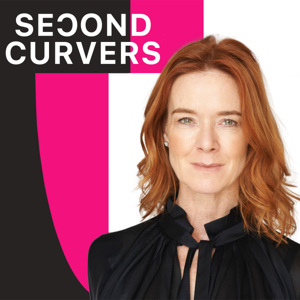


The story of how extreme health issues led to a life-changing epiphany Today I am happy to welcome Christine Handy, mother, model, humanitarian, cancer survivor, and author of "Walk with me," a novel based on her experiences of dealing with multiple cancers and soon to be made into a film. Today she devotes her life and energy to supporting, helping and motivating others.
Christine told us the story of her health challenges right from the moment they started. After her first surgery, it took her a year to recover. She realised her illness was a wake-up call.
After her second surgery, Christine had a complication and noone, including doctors and family believed that she was unwell. She shared with us how this impacted her emotionally. When she finally got a second medical opinion, the infection was so bad that she needed urgent surgery.
Christine also shared the story of how she first discovered she had breast cancer and fell into deep despair. Her life and her career as a model had been built on how she looked and external considerations. With the passing of time, she found courage and rebuilt her trust in others and started to have self-esteem for the first time. She also realised that her life purpose was to help others.
After all of the hardships she went through, Christine wrote a book about her experiences which is being made into a film and became a motivational speaker. Her trauma transformed into creative fuel. Among many inspiring projects she is working on, Christine designed a swimsuit line for women that had mastectomies.
Points of Discussion:
Additional Resources:
Follow Christine on Instagram
Follow us on Instagram
Visit our website
Zee is a British-born Ghanaian, a wife, and a mother of three very young children. After her career playing rugby and working at night full-time as an intensive care neonatal nurse, she is now focused on rugby full-time, playing for Richmond, and aspiring to represent her country.
She has gone through much change and seeks to be an agent of change, breaking through stereotypes in the world of competitive sport and beyond.
Zee fell in love with rugby at the age of 14, when she didn't even know women played rugby. She has played ever since, with highs and lows along the way.
She was different from her teammates and at times felt lonely, so she nearly quit, but knowing that there are other black female rugby players in the world, such as Maggie Alphonsi, helped her keep going and move forward.
Zee shared with us how she managed to create her own path, the one that no one took before her. Today things have changed and she plays in the most diverse team she has ever played.
We talked about the importance of Ghanaian culture to Zee and how it adds another dimension to her identity. She explained her nickname Bulldozer, both as a rugby position and a metaphor for her ability to smash stereotypes.
Zee also shared her biggest challenges and how she managed to find the balance in her life. Currently, she is working on her dream of playing for England, whilst inspiring many people of different colours, cultures and beliefs to chase their dreams as well.
Points of discussion:
Introduction (01:25)
The moment you fell in love with rugby (01:55)
Almost giving up at University (03:06)
How did you find the physicality of being on the pitch? (05:38)
Did you ever want to no longer wear the headscarf in order to fit in? (08:13)
What sort of reception did you get as a young person on the field? (10:40)
Are people more inclusive and accepting today? (13:37)
Ghanaian tradition and background (15:31)
About smashing stereotypes (17:22)
Do you think you are re-inventing rugby? (20:06)
How do you feel when you are on the pitch? (21:45)
What was the biggest challenge for you? (22:18)
About balance (23:17)
What have you brought from your nursing career to the pitch? (25:16)
Being a role model (26:29)
Dream of playing for England (28:12)
How do you think taking the leap has changed you? (32:55)
Where do you think you will be in 5 years? (36:59)
Do we need more change? (38:50)
A piece of advice (41:20)
Key takeaways from the interview by Dee (43:00)
Additional Resources:
Follow Zee on Linkedin
Learn more about Studs in the Mud
Follow us on Instagram
Visit our website
'm delighted to introduce you to season 3 of the show - Change Sessions. In this season I will talk to incredible people who've experienced huge pivotal moments of real change, by choice or by circumstance. From stories of reinvention and inspiring career pivots to the dramatic shifts that happen in moments of crisis. These sessions on change will explore how we feel at that crucial point of creating new lives for ourselves, and what we can learn from the experiences of others. I will be speaking to everyone from Buddhist nuns and Bollywood actresses to CEOs, adventurers, and authors. I'm excited and inspired to hear and share their stories. Together we will uncover the truth about what it takes to make a change and hopefully paint a picture for you of how we feel when our lives experience a transition. However big or small. The overwhelming message from everybody is that no matter what, keep walking, keep moving. Keep doing, keep changing. As we know, nothing happens if it remains an idea in your head. "For what it's worth, it's never too late, or in my case too early to be whoever you want to be. There's no time limit. Stop whenever you want, you can change or stay the same. There are no rules to this thing. We can make the best or the worst of it. I hope you make the best of it. And I hope you see things that startle you. I hope you feel things that you've never felt before. I hope you meet people with a different point of view. I hope you live a life you're proud of. If you find that you're not, I hope you have the courage to start all over again." - Eric Roth
Additional Resources:
Follow Dee on Linkedin
Follow me on Instagram
Visit our website
Today I am excited to welcome a scientist and marine conservation specialist Dr Tessa Hempson. She is an ecologist, a coral reefs specialist, and a writer. She studied botany and zoology, conservation biology, and worked extensively across Africa. Today she is the Principal Scientist and Program Manager of Oceans Without Borders and at the same time an Adjunct Researcher at the ARC Centre of Excellence for Coral Reef Studies at James Cook University in Australia.
During her PhD studies in coral ecology, Tessa even worked as a helicopter underwater evacuation instructor for the Australian Defence Force. She told us about this extraordinary experience and what she learned from it.
We reflected on last year's challenges, especially those regarding connection with the community, which is crucial for Tessa's work. She emphasized the importance of building strong local capacities and shared how special it was to return to Africa after the lockdown.
Tessa took us back to her childhood, the experience of growing up in nature, and the moment she realized that studying oceans is her call.
In the ocean space, little things civilians can do to preserve nature can really make a difference. There are so many simple things we do in our daily lives, choices we make about tiny things that can make a huge impact. For example, reducing plastic usage, recycling, and being informed where our food comes from. Every time we spend money, we are creating a statement on creating consumer demand. So if we demand local products, we are directly impacting the amounts of carbon in the atmosphere. And there is, of course, voting and making your voice heard in the political space.
Tessa shared her views on seafood consumption in western, privileged societies where there is a choice. Her advice is to get informed, eat less, and try to eat those lower species on the food chain, such as sardine, instead of predators such as tuna.
She told us about her life-changing experience of diving deep into the ocean in the Mozambique area, but also the terrifying one of witnessing the coral bleaching.
A lot of environmental problems come from ignorance, and that is something we can deal with. Tessa is sure that there is always hope and that we have the power to make the change.
Key Takeaways:
Introducing (00:23)
Experience of working as a helicopter underwater evacuation instructor (02:20)
Over the past year, who would you have loved to have had coffee with and why? (04:46)
How has this last year been for you? (07:00)
What are the childhood memories that made you who you are today? (11:47)
When did you decide to focus on oceans? (15:44)
Where are you today in terms of your approach to environmental issues? (18:45)
What is your view on consuming fish? (22:53)
Hopes and concerns (27:46)
Experiences that changed you (32:28)
Swimming with sharks (36:42)
The most terrifying experience (41:50)
How hopeful are you about slowing the process of coral bleaching? (44:17)
Where is home for you? (48:46)
What is your big focus in the next few years? (51:47)
Additional Resources:
Follow Tessa on Linkedin
Learn more about Oceans Without Borders
Follow us on Instagram
Visit our website
I am delighted to have Tom Mustill as my guest today. He is an environmental director, producer, writer, the founder of Gripping Films. He creates stories, connects people with the world and some of the burning issues around climate. He made films for BBC, Channel 4, Channel 5, National Geographic, won many awards and worked with many pioneering environmentalists and scientists of our days and some of the legends like David Attenborough himself.
Tom shared the story of how he became a filmmaker. He is a conservational biologist who always loved documentaries about nature. So he decided to use storytelling as a conservation tool and started making films in 2006, first as a producer and later as a director. The first film he directed was Inside Nature's Giants for Channel 4.
We talked about challenges Tom faced during filming and how he chooses projects that move him and that can move other people as well. He shared feelings he had when his films reached millions of viewers and described their impact on decision-makers and the general public. A story can be impactful in loads of different formats, and there doesn't have to be a call to action for people to actually take action.
As we were wrapping up for today, Tom explained how the filmmaking industry can reduce carbon and plastic waste to become more sustainable and told us what film he would make if he knew it is his last one.
Right now, Tom is finishing his book, and soon it will be available for readers.
Key points of discussion:
When did it all start for you? (01:17)
What was the first film that you put together? (03:24)
What have you seen that changed you as a person? How do you choose your projects? (08:40)
About the starting concept and the impact of Tom's films today (13:26)
Have you seen any changes in people as a consequence of your work? (23:09)
The most impactful films (31:10)
Sustainable filmmaking (34:44)
Who would you have coffee with if you could have it with anyone? (39:07)
If you were going to make one last film, what would it be about? (40:33)
Additional Resources:
Follow Tom on Linkedin
Learn more about Gripping Films
Follow us on Instagram
Visit our website
Today it is my great pleasure to introduce Bianca Rangecroft, the founder and CEO of Whering, the fashion tech app that allows you to digitise your wardrobe and see and style what you own.
Bianca spent the first 4.5 years of her career in Banking at Barclays and Goldman Sachs in London. She worked on two big fashion IPOs, which is how she got a feel for this industry and began exploring demographics and how the sustainability pain point was evolving. While working on the Stitch Fix IPO, she started thinking about how she could harness machine learning to democratize the personal styling landscape. Bianca explained that her route into the sustainable fashion space really stemmed from being a frustrated consumer: "I wanted to help Millennial and Gen Z users, like myself, escape the buy-use-dispose model, but I had a hard time finding access to sustainable styling advice."
She decided to resolve the "I have nothing to wear" dilemma and took the leap and started her entrepreneurial journey in 2020. Her app, Whering is designed to help people rediscover what they already own and empower conscientious consumers to do better with their wardrobe and buy in a way that is more eco friendly.
Key points of discussion:
Introduction (00:32)
If you could have coffee with anyone, who would it be and why? (00:53)
Why Bianca decided to build a fashion tech app (02:11)
Why clothes are so fundamental (04:57)
How is the Whering app empowering conscientious consumers to do better with their wardrobe (06:11)
The effect of fast fashion and our societies' desire to consume (10:35)
Sustainable innovations in fashion(13:43)
What have been the biggest challenges in building a sustainable brand? (17:59)
Bianca's hardest moment in the business (24:27)
The biggest challenge in the sustainability entrepreneurship journey so far (30:31)
What was the greatest piece of advice you have been given (33:56)
Additional Resources:
Follow Bianca on Linkedin and Instagram
Learn more about Whering
Follow us on Instagram
Visit our website
In this week's episode, I had the pleasure to talk with Robert (Bob) Blake. He is a tribal citizen of the Red Lake Nation of Ojibwe Indians and the founder and CEO of Solar Bear, a solar installation company based in the US, in Minnesota.
Bob shared with us how he got inspired to start the company after a personal family tragedy that profoundly changed his life. Like every great entrepreneur, he identified a problem and went about finding the solution. He decided to combat climate change by creating renewable energy microgrids and harvesting solar power.Once he started the business, Bob engaged the community through non-profit projects and youth education programmes. He provides previously incarcerated citizens with training and a chance for a second act in their lives, engaging solar energy and a goal of fighting climate change with an opportunity to start a new life. We talked about his circular approach and commitment to a circular economy - he believes that healing is in the environment and that saving our planet is also saving our people.
Robert is a passionate, knowledgeable pioneer and a true advocate of changing our children's future. "The kids are going to have to be prepared for the climate crisis and we don't want them to feel like they don't have the tools to deal with it," he said.
He inspired me and I hope he will do the same for you!
Key points of discussion:
Introduction (00:32)
Key facts about fossil fuels and renewable energy (02:50)
The genesis of Solar Bear - How and why Bob started his company (05:00)
How did the renewable energy industry evolve and what was the response of your community? (09:15)
Bob's circular approach - Healing is in the environment (11:04)
Non-profit work with former inmates - saving the planet by saving people (16:56)
How have Bob's origins formed him and made him who he is today (20:12)
What was the biggest influence on you from being in the Native Nation while growing up? (25:28)
Have you experienced the "American dream"? (27:29)
What are the things you are excited about? (29:10)
If you could have coffee with anyone, who would it be and why? (31:50)
Additional Resources:
Follow Bob on Linkedin
Learn more about Solar Bear
Follow us on Instagram
Visit our website
I am so happy today to have an incredible guest, Amani Kiflemariam. At an early age, she came from Ethiopia to the UK. She finished university to become a lawyer and spent years working in banking including ESG (environmental, social and governance strategy), before launching Amatte, a premium eco-friendly business.
The first brand she launched is Amatte coffee, a premium brand recognized by the London Coffee Festival, Sunday Times Caffeine Magazine and many others.
Amani shared with us the story of how she came up with the idea to start a business in the coffee industry. Coffee has a special place in her African heritage and family history, so creating the Amatte coffee brand also meant reconnecting with her roots and the land she came from. After extensive research on the ground, she mapped all issues in the supply chain process, such as actively supporting biodiversity, land protection and making a change in terms of compensating fairly, (typically in Ethiopia women working in the coffee industry earn less than a dollar a day). From this she created a sustainable business model.
It wasn't easy for her to give up her job in finance and become a full-time entrepreneur, but her passion made her take the leap. The situation with Covid actually gave her the courage to do so and create a more significant impact.
At Amatte they make an impact by communicating and working directly with farmers (both female and male) and focus on regenerative farming and looking after the land. The business also ensures fair payment and has set up a fund to invest in the local community, developing skills, employment and education.
Key Takeaways:
Introducing (00:44)
How and when did you come up with the idea? (03:28)
Revisiting Ethiopia (07:50)
How did you start your entrepreneurial path? (11:00)
Developing business while still holding a full-time job (14:58)
When did you decide to reveal your idea to others? (16:25)
How Covid affected your business (18:07)
What was the biggest setback for you so far? (24:40)
The story behind the brand (26:40)
The most significant influence in your life (30:57)
If you could have coffee with anyone, who would it be and why? (33:00)
Additional Resources:
Follow Amani on Linkedin
Learn more about Amatte
Follow me on Instagram
Visit my website
Today I am beyond happy to welcome Veronica Chou, a businesswoman, an entrepreneur, an environmentalist, and my dear friend. She has seen every aspect and angle of the fashion industry. Today, she is the founder of Everybody & Everyone, an eco-innovative and size inclusive sustainable fashion brand.
To start, we talked about the major issues around the fashion industry that led Victoria to the launch of Everybody & Everyone, such as textile dyeing, water contamination, fossil fuels, microfibers, and plastic in clothing. She shared a story about how she noticed something wrong in the industry when she was just a teenager and how it made her discover her purpose in sustainability.
Before launching a sustainable fashion brand, Victoria was excited about the material science and digitalization of the process. After detailed research, she made decisions and choices about recycled materials and alternatives, such as food waste-based materials.
Her collections are inspired by the mission to design evergreen, long-lasting fashion items one can wear in different styles and occasions. They also use 3D technology to facilitate the design process and cut down wastage.
We discussed regenerative agriculture as the most hopeful technology we could use in the future. It will have a great impact on the sustainability of the textile industry, among others.
Victoria shared with us what she learned from her experience. It is essential to follow your interests and to choose the right people to work with. And, of course, the pandemic taught us to be ready to pivot and adapt.
Key points of discussion:
Introduction (01:12)
Issues around the fashion industry and the environment (02:11)
How to bring innovation to life (06:55)
Using food waste-based materials (09:55)
Innovative eco-technology in sustainable fashion (11:15)
Using 3D technology in fashion design (17:37)
Other innovations on the horizon (18:27)
Biggest hopes and concerns (22:22)
About beginnings and influences (26:59)
What was the biggest learning for you? (28:34)
Where would you like your business to be in the next two or three years? (33:17)
If you could have a coffee with anyone, who would it be? (34:22)
Additional Resources:
Follow Veronica on Linkedin
Learn more about Everybody & Everyone
Follow us on Instagram
Visit our website
Meet Entrepreneur
Hi everyone, we have already reached the end of season one. I hope you've enjoyed hearing about the incredible journeys and stories of my guests, entrepreneurs of all ages and stages. They shared great insights on how to be a better leader, a more efficient manager, a more determined businessman, and how to create meaningful products and businesses. They also examined how business can help motivate social change. We discussed topics such as leadership, trust, communication, reinvention, ideas, motivation, delegation.
In today's episode, I wanted to share some of my personal highlights which I hope you will love listening to.
Thank you for listening and stay tuned, next week we will start with season two "Meet the Environmentalist". Additional Resources:
Follow Dee on Linkedin
Follow us on Instagram
Visit our website
From the publisher's feed