
Sign up to save your podcasts
Or

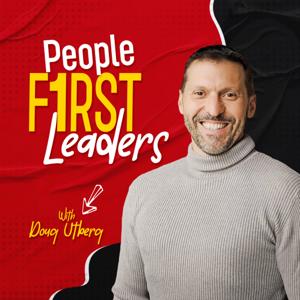


Executive leader and transformation strategist Victoria Pelletier joins me to talk about what happens when success stops feeling like success — and why growth requires stepping into discomfort intentionally.
Most career narratives celebrate upward mobility, titles, and financial wins. This episode looks underneath that surface. Victoria and I unpack the transition from chasing validation and status to building a life anchored in meaning, resilience, and conscious choice.
Victoria shares how a traumatic childhood, adoption, and early exposure to scarcity drove her relentless pursuit of achievement. Becoming an executive at 24, climbing the corporate ladder, accumulating status and material markers of success — all of it was within her control. And all of it was tied to external validation.
Then life intervened.
Motherhood shifted priorities. Loss reshaped perspective. Reflection redefined what mattered.
From there, our conversation expands into resilience, self-awareness, and the uncomfortable but necessary process of recalibrating identity. We talk about bankruptcy, layoffs, corporate politics, performative leadership, toxic top performers, and why discomfort — when processed deliberately — becomes a catalyst instead of a crisis.
This isn’t a motivational episode about “pushing through.”It’s a conversation about processing adversity, choosing discomfort strategically, and designing growth rather than defaulting to reaction.
The lesson isn’t to reject ambition.It’s to anchor it in alignment rather than approval.
TL;DR
* External validation can masquerade as success.
* Trauma often fuels achievement — but doesn’t define fulfillment.
* Resilience isn’t brute force; it requires reflection and processing.
* Discomfort is where growth happens — if approached consciously.
* Surround yourself with people who challenge without destabilizing.
* Toxic top performers erode culture, even if they hit numbers.
* Performative leadership creates long-term organizational decay.
* Real reinvention begins when identity shifts, not just strategy.
Memorable Lines
* “Everything you’ve ever wanted lives on the other side of fear.”
* “Resilience isn’t shouldering everything — it’s processing it.”
* “Discomfort is the price of clarity.”
* “Validation can look like success — until it doesn’t.”
* “If you want growth, step into the room that scares you.”
Guest
Victoria Pelletier — Executive leader and transformation strategistSpecializing in the intersection of human performance, leadership, and technology-driven transformation. Known for candid conversations around resilience, culture, and creating environments where people actually thrive.
🔗 https://victoria-pelletier.com
🔗 LinkedIn: Victoria Pelletier
Why This Matters
Modern leadership isn’t about projecting certainty. It’s about regulating yourself under pressure.
Many high performers live in quiet dissatisfaction — accomplished, visible, compensated — yet misaligned. The cost of staying comfortable becomes stagnation.
Discomfort, when chosen deliberately, becomes leverage. It reveals blind spots, reshapes identity, and forces honest recalibration.
For founders, operators, and executives rebuilding after setbacks or reassessing what success means, this episode reframes discomfort not as danger — but as design.
The future won’t reward those who avoid fear.It will reward those who step through it deliberately.
Speaker, author, and entrepreneur Danny Brassell joins me to unpack what happens when collapse isn’t theoretical — it’s personal.
Most conversations about success start at the breakthrough. This one starts at the bottom.
After falling victim to a real estate scam that wiped him out financially, Danny had two options: define himself by the loss or rebuild from it. What followed wasn’t a cinematic overnight comeback. It was constraint, recalibration, and a deliberate decision not to declare bankruptcy — paired with an aggressive income target that forced reinvention.
During one of the worst economic downturns in modern history, Danny built a speaking business that not only restored stability but opened entirely new doors — eventually leading to coaching high-performing entrepreneurs and executives.
But this episode isn’t just about financial recovery.
It’s about identity.
We explore what failure does to ego, how embarrassment can paralyze growth, why traditional “safe” career paths quietly manufacture risk aversion, and why studying biographies reveals patterns most people overlook.
We also get honest about tradeoffs — money versus meaning, ambition versus family, hyper-growth versus presence — and the uncomfortable truth that success always extracts a price.
This isn’t a highlight reel conversation.It’s about grit, humility, pattern recognition, and the discipline of getting up again.
The lesson isn’t blind optimism.It’s resilience anchored to clarity and action.
TL;DR
Reputation can collapse overnight. Character compounds over time.Failure builds empathy and pattern recognition.Safe career paths often breed hidden fragility.Success always carries tradeoffs.Study the dark chapters of biographies, not just the victories.Income targets create forced innovation.You don’t rebuild by feeling motivated — you rebuild by executing weekly.Vulnerability creates connection; polished perfection creates distance.
Memorable Lines
“It’s not about avoiding the hit — it’s about getting back up.”“Success leaves clues, but so does failure.”“You fall down seven times, you get up eight.”“Money isn’t everything — but pretending it doesn’t matter is naive.”“If you close the show, you deny the world your gift.”“Safe careers can quietly make you risk-averse.”“Enjoying the journey usually happens in hindsight.”
Guest
Danny Brassell — Speaker, author, and storytelling coach
Former journalist and educator turned high-performance communication coach working with entrepreneurs, executives, and organizations worldwide.
🔗 Free story blueprint: https://freestoryguide.com🔗 https://www.dannybrassell.com
Why This Matters
Modern careers don’t unfold in straight lines.
They reset. They stall. They collapse. They force pivots.
For founders, operators, and executives navigating layoffs, divorce, bankruptcy, burnout, or failed ventures — the skill that matters most isn’t optimization.
It’s recovery speed.
This episode reframes failure not as shame, but as leverage — if you’re willing to study it, own it, and build from it.
The real credential isn’t an unbroken track record.It’s proof that you can take a hit — and rebuild with more clarity than before.
Leadership advisor and author Greg Morley joins me to unpack what it actually takes to rebound from setbacks—and why resilience isn’t an individual trait as much as a relational one.
Most conversations about adversity focus on grit, mindset, or personal toughness. This episode doesn’t. Greg and I explore what happens after layoffs, career pivots, health crises, and identity shifts—and why the people who rally fastest are rarely the ones who go it alone.
Drawing from over 30 years in global HR leadership, and from interviews conducted for his upcoming book Rally, Greg shares lessons from individuals who endured job loss, serious illness, organizational upheaval, and even genocide. The common thread isn’t bravado. It’s perspective, learning velocity, and community depth.
We discuss why layoffs feel existential, how high burn rates trap professionals in fragile career paths, and why optionality comes from lowering fixed costs—both financial and psychological. We also examine the hidden tension between success and validation, and why redefining what “winning” means is often the first step toward rebuilding.
This isn’t a conversation about avoiding setbacks. It’s about designing a life resilient enough to absorb them.
The lesson isn’t endurance for its own sake.It’s adaptability, self-reflection, and tending the relationships that hold when titles fall away.
TL;DR
* Resilience is less about toughness and more about future orientation
* Recovery speed determines long-term trajectory
* Community acts as long-term insurance against career shocks
* High fixed costs limit professional flexibility
* Continuous learning expands rebound opportunities
* Validation through status or possessions creates fragile identity
* Simplicity increases adaptability
* Listening across differences builds durable relationships
Memorable Lines
* “Rally isn’t about pretending nothing happened—it’s about moving forward with what you learned.”
* “Your network is a long-term investment, not a short-term transaction.”
* “Lower the bar you have to step over, and the world opens up.”
* “You can’t control the shock—but you can control the response.”
* “Resilience lives in community, not isolation.”
Guest
Greg Morley — Leadership advisor, former global HR executive, and author
Author of Bond: Belonging and the Keys to Inclusion and Connection and the forthcoming Rally, focused on resilience, recovery, and leadership through adversity.
🔗 https://www.gregmorley.com🔗 LinkedIn: Greg Morley
Why This Matters
Modern careers don’t unfold in straight lines. They fracture.
Layoffs happen. Industries shift. Identity gets tied too tightly to role and income. What determines who recovers isn’t optimism—it’s preparation. Financial flexibility. Learning agility. Community strength.
For founders, operators, and executives navigating volatility, this episode reframes adversity as an inevitable chapter—not a verdict.
The real edge isn’t avoiding the fall.It’s building the relationships, habits, and perspective that let you rise again with clarity.
Physician, healthcare entrepreneur, and founder Dr. Vivek Aranki joins me to unpack why most real success is built through failure—and why the willingness to iterate beats chasing innovation for its own sake.
Most business conversations treat failure as something to avoid, minimize, or hide. This episode reframes it as a required feedback loop. Vivek and I explore how meaningful progress—especially in regulated, high-stakes industries—comes from repeated trial, error, and disciplined correction.
Vivek shares his transition from practicing physician to building one of Australia’s largest non-corporate cosmetic medicine groups, now spanning 20 clinics nationwide and expanding through franchising. We examine how affordability, quality, and safety are often positioned as trade-offs—and how those assumptions break down when systems are designed intentionally.
The conversation moves into franchising ethics, brand trust, and why extraction-based models collapse over time. Vivek explains why their organization prioritizes long-term brand credibility over franchise fees, why lead generation must sit centrally in regulated industries, and how franchising only works when incentives are aligned.
From there, we widen the lens to healthcare economics, preventative care, food systems, regulation, and why “move fast and break things” is a catastrophic mindset when human health is involved. We contrast tech’s tolerance for failure with healthcare’s need for boring, proven reliability—and why lagging the cutting edge can actually be the strategic advantage.
This isn’t a conversation about avoiding risk.It’s about understanding where risk belongs—and where it doesn’t.
TL;DR
* Failure is a necessary feedback loop, not a personal flaw
* Businesses fail when they copy instead of creating real value
* In healthcare, innovation without evidence is dangerous—not disruptive
* Franchising only works when value flows to franchisees, not out of them
* “Boring” systems outperform cutting-edge ones in regulated environments
* Affordability, safety, and quality can coexist with disciplined execution
* Healthcare costs are driven by bureaucracy more than care delivery
* Preventative care has the highest value-to-cost leverage—but the weakest incentives
* Sustainable systems must be able to self-correct over time
Memorable Lines
* “Failure isn’t a setback—it’s a feedback loop.”
* “Boring is good when people’s health is on the line.”
* “If innovation lacks evidence, it’s not innovation—it’s experimentation.”
* “You can’t ‘move fast and break things’ when the thing is a human being.”
* “Long-term value dies the moment extraction becomes the strategy.”
Guest
Dr. Vivek Aranki — Physician, healthcare entrepreneur, and founderFounder of a national cosmetic medicine group with 20 clinics across Australia, specializing in scalable, safety-first healthcare delivery and ethical franchising within highly regulated environments.
Why This Matters
Modern business culture glorifies disruption without consequence.
But in real systems—healthcare, regulation, food, human safety—failure has a cost. Understanding where experimentation belongs and where discipline must prevail is a leadership skill few master.
For founders, operators, and executives navigating regulated industries or complex systems, this episode offers a sober counterweight to startup mythology: progress comes from feedback, restraint, and building structures that correct themselves before damage compounds.
Success isn’t about avoiding failure.It’s about learning faster—without breaking what matters.
After losing his business in the 2008 financial collapse, Doug Thorpe didn’t pivot to another startup or chase the next trend. He went bankrupt — and then built a nonprofit to help hundreds of people find jobs in one of the worst labor markets in modern history.
In this episode of Second Life Leader, Doug Thorpe joins Doug Utberg to unpack what actually happens after economic collapse — personally, professionally, and psychologically. From running a mortgage-services company wiped out in a 45-day window to navigating unemployment, identity loss, and reinvention, this conversation strips away the sanitized version of resilience.
This isn’t motivational theater. It’s a practical, honest discussion about recovery speed, burn rate, relevance, and why old playbooks fail during systemic change. The conversation expands into modern job searching, why relationships still matter more than applications, and how platforms like Reddit are quietly reshaping how people connect, hire, and rebuild outside traditional corporate channels.
If you’re facing layoffs, career resets, business volatility, or the uncomfortable question of “what now?”, this episode offers clarity — not comfort.
What We Explore
• What it actually feels like to lose everything after long-term success• Why bankruptcy doesn’t end careers — denial does• How Doug built a nonprofit during peak unemployment• Why most job applications go nowhere (and what works instead)• The role of relationships versus platforms in modern hiring• Why Reddit is emerging as a raw, trust-driven alternative to LinkedIn• How anonymity changes real conversation and opportunity• Using AI to surface real-time market signals instead of chasing noise• Why reinvention is a permanent requirement, not a phase
TL;DR
Reinvention isn’t optional in volatile economies.Bankruptcy is an event — not an identity.Burn rate determines freedom more than revenue.Applications don’t get jobs — relationships do.Platforms change, but trust remains the currency.Adaptability beats stability every time.
Memorable Lines
“It’s not the collapse that defines you — it’s what you build after.”“Burn rate is destiny when markets turn.”“You don’t pitch your way to trust — you earn it.”“Applications are noise; conversations are leverage.”“Reinvention isn’t reactive — it’s strategic.”
Guest
Doug ThorpeEntrepreneur, nonprofit founder, executive coach, and business advisor
Doug Thorpe is a former mortgage-industry entrepreneur whose company was wiped out during the 2008 financial crash. He went on to found a nonprofit that helped hundreds of job seekers navigate unemployment and career transition during the recession. Today, Doug advises business owners and leaders on growth, reinvention, and navigating volatility without losing clarity or integrity.
Why This Matters
The modern economy doesn’t reward loyalty or linear careers. It rewards people who can recalibrate quickly, stay relevant, and rebuild without clinging to outdated identities.
For founders, operators, executives, and job seekers navigating uncertainty, this episode reframes failure as information — not judgment. The edge isn’t avoiding collapse. It’s shortening the distance between setback and meaningful forward motion.
Entrepreneur, author, and former telecom executive Roy Osing joins me to talk about what it really means to survive getting the s**t kicked out of you—and why meaningful differentiation is the only durable way back.
Most business conversations focus on growth tactics or recovery platitudes. This episode doesn’t. Roy and I walk through the reality of being demoted, sidelined, and underestimated—then rebuilding leverage not through ego or exits, but through performance, patience, and strategic clarity.
Roy shares how he helped grow an early-stage data and internet company to over a billion dollars in revenue, not by following playbooks, but by rejecting them. We break down why “blue ocean” thinking fails in the real world, how copying successful companies turns you into a commodity, and why differentiation only matters if customers actually care.
The conversation moves from corporate power dynamics to entrepreneurship, where Roy dismantles the myth that success comes from speed, scale, or selling quickly. Instead, he argues for building an “only” value proposition—one that satisfies customer cravings, not abstract needs—and for staying in the fight long enough to earn trust, credibility, and leverage.
This isn’t a story about avoiding failure. It’s about what to do after you hit the wall: when titles disappear, leverage evaporates, and the only thing left is how you perform when no one owes you anything.
The lesson isn’t bravado or revenge.It’s humility, focus, and building something that can’t be copied.
TL;DR
* Everyone who builds something meaningful gets knocked down eventually
* Differentiation only works if customers actually care about it
* Copying winners turns businesses into commodities with shrinking margins
* “Blue oceans” are academic fantasies without practical execution
* Real leverage comes from performance after setbacks, not ego or exits
* Customers buy based on emotional cravings, not rational needs
* Being “different” without value is just narcissism
* The goal isn’t to stand out—it’s to be the only one who does what you do
Memorable Lines
* “Be different or be dead.”
* “Copying success is a form of insanity.”
* “What you think of yourself doesn’t matter—what customers crave does.”
* “If you stay after the demotion, you earn leverage through performance.”
* “Differentiation without value is just narcissism.”
Guest
Roy Osing — Entrepreneur, author, and former telecom executiveAuthor of Be Different or Be Dead and six other books on practical business differentiation. Former senior executive who helped scale a data and internet company to over $1B in revenue, now advising leaders on building category-of-one strategies.
🔗 Website: https://www.roosing.com🔗 LinkedIn: Roy Osing
Why This Matters
Modern careers don’t fail cleanly. They fracture.
Titles vanish. Strategies stop working. The market stops caring. What determines who survives isn’t confidence or speed—it’s whether you can perform, adapt, and rebuild value when your leverage is gone.
This episode reframes failure not as a personal flaw, but as an inevitable checkpoint. For founders, operators, and executives navigating volatility, Roy’s story offers a sober alternative to hustle myths: build something people crave, stay useful when it hurts, and let performance—not narratives—restore power.
Reinvention isn’t about starting over.It’s about becoming impossible to ignore.
Entrepreneur and martial arts instructor Gary Engels joins me to unpack what it really means to rebuild when everything is stripped away—and why modern resilience requires more than grit.
Most stories about reinvention soften the edges. This episode doesn’t. Gary and I walk through what happens when loss is not metaphorical but literal: a house fire that destroyed everything he owned while raising three children under five, leaving him with nothing but insurance paperwork, a hotel room, and the responsibility to keep going.
Gary shares how that moment forced a recalibration of risk, preparedness, and identity. From running a martial arts school for over two decades to building and exiting businesses across marketing, gig work, corporate networks, and professional services, his story is less about hustle and more about designing a life that doesn’t collapse under stress.
We explore how personal catastrophe reshapes perspective on money, why low burn rates matter more than high incomes, and how the gig economy has quietly become a resilience layer—not a side hustle—for over half of the U.S. workforce. Gary explains why independence isn’t about chasing upside, but about reducing fragility.
The conversation spans entrepreneurship, minimalism, family pressure, leadership, and the illusion of security in both “safe” careers and high-status wealth. We dig into why many high earners are more trapped than free, how possessions quietly tax attention and energy, and why preparedness—financial and psychological—is a leadership skill, not paranoia.
This is not a motivational comeback story. It’s a sober conversation about optionality, responsibility, and how repeated resets—business failures, market shifts, personal loss—can either hollow you out or harden your foundations.
The lesson isn’t optimism.It’s realism: life will break your plans.Your job is to build systems that still function when it does.
TL;DR
* Total loss reframes what actually matters faster than success ever does
* Low burn rates increase options more than high income
* Gig work isn’t instability—it’s distributed resilience
* Independence starts with expense control, not income growth
* Every possession adds hidden management cost and stress
* Most “security” is illusionary and fragile
* Leadership is about preparedness, not bravado
* You either win or you learn—but both require staying in the fight
Memorable Lines
* “I’d rather be a warrior in a garden than a gardener in a war.”
* “Everything you own becomes a job.”
* “Most people don’t lose because they fail—they lose because they’re unprepared.”
* “Freedom comes from lowering the rock before trying to lift it.”
* “It doesn’t matter what happens to you. What matters is what you do next.”
Guest
Gary Engels — Entrepreneur, CEO, and martial arts instructorCEO of MyGig, focused on helping independent workers and businesses access professional-grade services without corporate dependency. Veteran founder across brick-and-mortar, marketing, corporate networks, and gig economy platforms.
Why This Matters
The modern economy rewards flexibility, not loyalty.
Jobs disappear. Businesses reset. Income streams vanish overnight—sometimes literally in flames. Most people are taught to optimize for growth without understanding fragility.
This episode reframes resilience as a design problem, not a personality trait.
For founders, operators, and executives navigating volatility, this conversation offers a clearer lens: success isn’t avoiding collapse—it’s building systems that let you recover quickly without sacrificing family, health, or identity.
Stability doesn’t come from comfort.It comes from preparedness, discipline, and the willingness to rethink everything when the ground gives way.
Healthcare innovator Neal Shah joins me to unpack how artificial intelligence is being used against patients—and how it can be used to fight back.
Most conversations about AI in healthcare focus on efficiency, cost savings, or shiny tools. This episode goes deeper. Neal Shah and I examine how insurers have quietly weaponized AI to deny care at scale—and why patients are losing not because they’re wrong, but because the system is asymmetrically stacked against them.
Neal shares how caregiving for his grandfather with dementia and his wife through years of cancer exposed the realities of denial letters, administrative friction, and time-based exhaustion. We explore how claim denials jumped from 1.2% to nearly 20% nationwide, why most patients never appeal, and how insurers exploit the fact that appeals take hours while denials take seconds.
From there, we dig into how AI—trained on successful appeals, billing codes, medical research, and insurer coverage policies—can flip that imbalance. Not by gaming the system, but by restoring access to evidence, speed, and leverage for people who don’t have legal teams or financial backstops.
The conversation widens into elder care, end-of-life costs, administrative bloat, and why healthcare outcomes don’t justify 20% of U.S. GDP. This isn’t an anti-technology episode. It’s a clear-eyed look at incentives, power, and how tools can either centralize control—or return it to individuals.
The lesson isn’t blind optimism about AI. It’s discernment: knowing where technology helps, where regulation lags, and how ordinary people can protect themselves inside systems that weren’t designed for fairness.
TL;DR
* Insurers now programmatically deny ~20% of claims—up from 1.2% fifteen years ago
* 99% of denied patients never appeal, despite high reversal rates
* Of those who appeal, ~40% win; with AI support, success jumps to ~73%
* Most denials stem from billing errors or weak documentation—not medical necessity
* State insurance regulators provide external review boards most patients don’t know exist
* AI can restore speed and evidence access—but doesn’t fix broken incentives alone
* Healthcare costs are driven by administrative bloat, not clinical care
* Elder care is optimized for real estate returns, not human outcomes
* The real crisis isn’t technology—it’s confusion, exhaustion, and lack of agency
Memorable Lines
* “A denial letter is the shadow of a gun.”
* “Insurers deny care in seconds—patients are expected to respond in hours.”
* “Most people lose not because they’re wrong, but because they’re tired.”
* “AI didn’t break healthcare—it just exposed where power already lived.”
* “Care is relational, but the system is designed to prevent relationships.”
Guest
Neal Shah — Healthcare innovator, author, and caregiver advocateFounder of Counterforce Health and Carriya, focused on patient empowerment, insurance accountability, and improving elder care through technology and workforce redesign.
🔗 https://counterforcehealth.org🔗 https://www.carriya.com
Why This Matters
Healthcare isn’t just expensive—it’s adversarial.
As AI accelerates denial systems faster than regulation can respond, patients are increasingly left alone inside bureaucracies they don’t understand, don’t control, and can’t afford to fight.
This episode reframes AI not as a threat or a cure-all, but as a leverage tool—one that can either deepen inequality or help ordinary people reclaim agency inside broken systems.
For founders, operators, and executives, this conversation mirrors a broader truth: when systems scale faster than ethics, responsibility shifts to individuals who understand how power actually works.
Stability isn’t restored by nostalgia or outrage.It’s rebuilt by clarity, tools, and the willingness to confront reality head-on.
Executive coach Tracy Meyer joins me for a conversation most leadership shows avoid: what happens when life doesn’t politely wait for your business calendar.
After losing her father shortly before our originally scheduled recording, Tracy and I talk openly about grief, disruption, and how leaders navigate loss without retreating into performance, denial, or toxic professionalism. This episode isn’t about Instagram resilience or “powering through.” It’s about what loss actually does to people—and how it reshapes priorities, identity, presence, and leadership capacity.
We explore why disruption often exposes the false stability we cling to, how entrepreneurs confuse emotional suppression with maturity, and why being “authentic” doesn’t mean being unfiltered—or dishonest. From end-of-life care to creative practice, from business pressure to personal presence, this is a raw conversation about perspective, responsibility, and what matters when the noise drops away.
The takeaway isn’t grief as productivity fuel.It’s learning how to hold responsibility without abandoning humanity.
TL;DR
* Loss dismantles false stability—and reveals what was imaginary all along
* Grief and leadership aren’t opposites; avoidance is the real risk
* Authenticity means integration, not emotional dumping or repression
* Business can pause without collapsing—identity doesn’t have to
* Presence during transitions creates meaning that outlasts outcomes
* Maturity lives between brutal honesty and emotional containment
* Perspective, not optimization, is the real leadership upgrade
Memorable Lines
* “A lot of the stability we cling to was never real—it just lived in our heads.”
* “There doesn’t have to be an objective ROI for something to matter.”
* “Being authentic doesn’t mean being unregulated.”
* “Loss doesn’t end leadership—it clarifies it.”
* “Perspective isn’t found in performance; it’s found in presence.”
Guest
Tracy Meyer — Executive coach, keynote speaker, authorCredentialed through UC Berkeley and ICF, Tracy brings over 40 years of leadership experience across coaching, speaking, and organizational development. Her work focuses on authenticity, perspective, and navigating leadership through life transitions.
🔗
https://beuleadership.com
Why This Matters
Most leadership content assumes emotional stability as a prerequisite.Real life doesn’t.
People lose parents. Partners. Health. Identity. Certainty.And still have teams, businesses, responsibilities, and expectations.
This episode reframes leadership not as emotional suppression, but as integration—learning how to carry responsibility without abandoning humanity. For founders, operators, and executives navigating grief, burnout, or major life transitions, this conversation offers permission to stop performing resilience—and start practicing it.
Not everything needs fixing.Some things need honoring before you can move forward.
Staffing entrepreneur Bill Kasko joins me to unpack what it actually takes to survive—and adapt—through decades of economic shocks, technology shifts, and human volatility.
Most business stories compress time and smooth the edges. This one doesn’t. Bill and I walk through his 21-year journey building Frontline Source Group across recessions, oil crashes, collapsing hiring markets, pandemic shutdowns, and now AI-driven disruption. From the early days of gratitude-driven work to the bitterness of 2008, from physical offices and gas-price friction to video interviews and remote work, this episode traces how survival depends less on foresight—and more on the ability to pivot without losing your core.
We talk about why “vision” is overrated without execution, how every crisis quietly trains you for the next one, and why technological change today moves in minutes—not years. Bill shares hard-earned lessons on empathy, honesty, and when to say no, even when it costs money. The thread running through it all: businesses don’t fail because things change—they fail because leaders refuse to adapt fast enough.
This isn’t a growth story. It’s a durability story.
TL;DR
* You only truly “start over” once—experience compounds even after failure
* Gratitude fades; resilience must replace validation
* Technology shifts now happen in minutes, not years
* Vision is easy—execution from where you are is the real work
* Low adaptability, not bad luck, kills businesses
* Remote work, automation, and AI reward speed—not certainty
* Empathy scales better than ego in volatile systems
Memorable Lines
* “Vision is easy—getting from here to there is what nobody talks about.”
* “Every crisis trains you for the next one, whether you want it to or not.”
* “Technology didn’t kill businesses—refusal to adapt did.”
* “You don’t start over empty-handed; you start over with scar tissue.”
* “AI can answer questions—but it can’t replace empathy.”
Guest
Bill Kasko — Founder & CEO, Frontline Source Group Staffing and executive search entrepreneur with over two decades navigating recessions, workforce revolutions, and technological disruption.
Why This Matters
The modern business environment doesn’t offer long plateaus—it delivers repeated shocks. Recessions, pandemics, automation, and shifting labor power structures are no longer anomalies; they’re the operating system.
For founders, operators, and executives rebuilding after disruption, this episode reframes survival not as toughness—but as adaptability with integrity. The future doesn’t belong to the most confident leaders. It belongs to those who can absorb impact, adjust quickly, and keep the human core intact while everything else changes.
Reinvention isn’t optional anymore. It’s the job.
From the publisher's feed