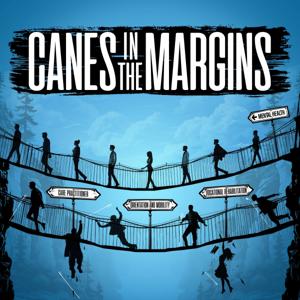
In this episode, join host Clairissa Richardson as she critically examines the concept of self-efficacy as a psychological construct in the lives of people with blindness or visual impairment. Clairissa utilizes self-efficacy and choice theory as a lens by which the expectations of health rehabilitation are deconstructed as limiting perceptions of self-efficacy targets for people with BVI. Clairissa uses a combination of research, narrative storytelling, and audio oral history to re-energize the concept of self-efficacy for people with BVI as a powerful tool to disrupt control based deficits and redistribute power in clinical settings. The use of reality therapy as a treatment modality and self-developed non-empirical scale are also introduced in this episode.
Bandura, A. (1977). Self-efficacy: Toward a unifying theory of behavioral change. Psychological Review, 84(2), 191–215. https://doi.org/10.1037/0033-295X.84.2.191
Bandura, A. (2006). Guide for constructing self-efficacy scales. In F. Pajares & T. Urdan (Eds.), Self-efficacy beliefs of adolescents (pp. 307–337). Information Age Publishing.
Crudden, A., & Steverson, A. (2022). Job retention:
Perspectives of individuals with blindness and low vision. Journal of Vocational Rehabilitation, 57(2), 127–140. https://doi.org/10.3233/jvr-221204
Demmin, D. L., & Silverstein, S. M. (2020). Visual impairment and mental health: Unmet needs and treatment options. Clinical Ophthalmology,
Volume 14, 4229–4251. https://doi.org/10.2147/opth.s258783
Giesen, J. M., & Hierholzer, A. (2016). Vocational
rehabilitation services and employment for social security disability income beneficiaries with visual impairments. Journal of Vocational Rehabilitation,
44(2), 175–189. https://doi.org/10.3233/jvr-150789
Kelley, S. D. M., & Moore, J. E. (2000). Abuse and violence in the lives of people with low vision: A national survey. Re:view, 31(4), 155-165. https://eric.ed.gov/?id=EJ603347
Siegel, D. (2012). Pocket guide to interpersonal neurobiology. New York, NY: Norton.
Sobsey, D., & Doe, T. (1991). Patterns of sexual abuse and
assault. Sexuality & Disability, 9(3), 243-259. https://doi.org/10.1007/BF01102395
Watson-Armstrong, L. A., O'Rourke, B., & Schatzlein, J.
(1994). Sexual abuse and persons with disabilities: A call for awareness. Journal of Applied Rehabilitation Counseling, 25(1), 36-42. https://psycnet.apa.org/record/1994-41479-001
Wubbolding R. (2017). Reality therapy and self-evaluation:
The key to client change. American Counseling Association.
Zapata, M. A. (2020a). An exploratory study of general
self-efficacy and employment in adults with retinitis pigmentosa. Journal of Visual Impairment and Blindness,
114(1), 18–30. https://doi.org/10.1177/0145482x19900715
Zapata, M. A. (2020b). Disability affirmation predicts employment among adults with visual impairment and blindness. Rehabilitation Counseling Bulletin, 65(2), 120–128. https://doi.org/10.1177/0034355220957107
Zapata, M. A. (2021). Mobility tool use relates to disability
affirmation among adults with visual impairments. Journal of Visual Impairment and Blindness, 115(5), 382–392. https://doi.org/10.1177/0145482x211046684
Zapata, M. A. (2022). Group identity in blindness groups predicts life satisfaction and lower anxiety and depression. Rehabilitation Psychology, 67(1),
42–52. https://doi.org/10.1037/rep0000432
Zapata, M. A., & Pearlstein, J. G. (2022). Disability
self‐worth relates to lower anxiety and depression in people with visual impairment. Journal of Clinical
Psychology, 78(7), 1491–1499. https://doi.org/10.1002/jclp.23308
Blindness, Visual Impairment Self-Efficacy Scale: Non-empirical https://docs.google.com/document/d/17mKok7iUF8TPWhOqNDPMFPxur9HT-6gx/edit?usp=sharing&ouid=106882557158309973692&rtpof=true&sd=true



 View all episodes
