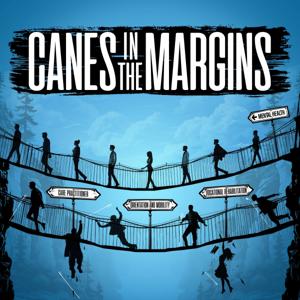
In this episode, we are joined by Ashley Townsend as she takes us on a self-reflexive journey into her blindness as an identity. Ashley speaks candidly and with critical emphasis on the disability related socialization experiences that have orchestrated much of her beliefs about blindness. Ashley shares her liberatory approach to reconnecting and redefining blindness as an adult. Join us as we unpack this topic!
Ashley Townsend is a licensed clinical social
worker in private practice and business owner of Phoenix Therapy LLC. Ashley specializes in trauma-based and relational approaches that emphasize client multiplicity, internal healing, and recovery.
Adams, M., Castañeda, C., Hackman, H., Peters, M., Zúñiga, X., & Blumenfeld, W. (2010). Readings for diversity and social
justice. New York: Routledge.
Belkin-Martinez, D. (2014). The liberation health model: Theory and practice. In D. Belkin Martinez & A. Fleck-Henderson (Eds.), Social justice in clinical practice: A liberation health framework for social work (pp. 9–28). Routledge.
Beresford, P. (2011). Radical social work and service users: A crucial connection. In M. Lavalette (Ed.), Radical social work today: Social work at the Crossroads
(pp. 95–114). Policy Press.
Clapp, C. M., Pepper, J. V., Schmidt, R., & Stern, S. (2020). Overview of vocational rehabilitation data about people with visual impairments: Demographics,
services, and long-run labor market trends. Journal
of Visual Impairment and Blindness, 114(1),
43–56. https://doi.org/10.1177/0145482x20901380
Dean, D., Pepper, J. V., Schmidt, R., & Stern, S. (2017). The effects of vocational rehabilitation services for people with mental illness. Journal of Human Resources, 52(3), 826–858. https://doi.org/10.3368/jhr.52.3.0114-6111r1
Demmin, D. L., & Silverstein, S. M. (2020). Visual impairment and mental health: Unmet
needs and treatment options. Clinical
Ophthalmology, Volume 14,
4229–4251. https://doi.org/10.2147/opth.s258783
Freire, P. (1974). Education as the practice of freedom. In P. Freire (Ed.), Education for critical consciousness (pp. 1–78). Continuum.
Harro, B. (2010). The cycle of socialization. In M. Adams, C. Castañeda, H. Hackman, M. Peters, X. Zuniga, & W. Blumenfeld (Eds.), Readings for diversity and social justice (pp. 45–51). essay, New York: Routledge.
Keay, L. J., Chang, K. J., Angell, B., Rogers, K., & Jan, S. (2022). Cost–benefit analysis of orientation and mobility programs for adults with vision
disability: A contingent valuation study. Disability
and Rehabilitation, 45(5),
857–865. https://doi.org/10.1080/09638288.2022.2044523
National Federation of the Blind. (2023). Blindness Statistics. https://nfb.org/resources/blindness-statistics
Oliver, M., & Barnes, C. (2012). The new politics of disablement.
Workforce Innovation and Opportunity Act of 2014, 29 U.S.C. § 3101 et seq. (2014).
Welch, J. (2017). All Too Human: Conflict and Common Ground in Interdisciplinary Research
and Complex Problem Solving. Issues in Interdisciplinary Studies, 35, 88-112. https://files.eric.ed.gov/fulltext/EJ1193608.pdf
Zapata, M. A. (2020a). An exploratory study of general self-efficacy and employment in adults
with retinitis pigmentosa. Journal of
Visual Impairment and Blindness, 114(1),
18–30. https://doi.org/10.1177/0145482x19900715
Zapata, M. A. (2020b). Disability affirmation predicts employment among adults with visual
impairment and blindness. Rehabilitation
Counseling Bulletin, 65(2),
120–128. https://doi.org/10.1177/0034355220957107
Zapata, M. A. (2021). Mobility tool use relates to disability affirmation among adults with
visual impairments. Journal of Visual
Impairment and Blindness, 115(5),
382–392. https://doi.org/10.1177/0145482x211046684
Zapata, M. A. (2022). Group identity in blindness groups predicts life satisfaction and lower
anxiety and depression. Rehabilitation
Psychology, 67(1), 42–52. https://doi.org/10.1037/rep0000432