
Sign up to save your podcasts
Or

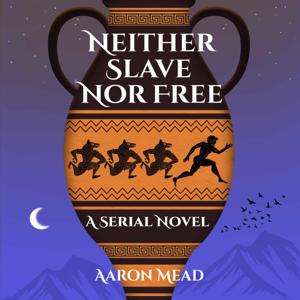


This post is a chapter of Neither Slave nor Free, a serial novel that tells a literary-fictional, historically-plausible backstory to the New Testament letter, Philemon. New chapter every Sunday.
Risking crucifixion, Onesimus, an enslaved shepherd, flees his bitter half-brother and master, Philemon, only to find that freedom requires more than mere escape.
“. . . a masterful grasp of the cultural, political and spiritual context of the time . . . The heart of the novel beats for hope, and asks one essential question: what does it mean to truly be free?” —Claire Gibson, author of Beyond the Point: A Novel
“. . . one of the best historical novels I’ve ever read on a New Testament figure . . . Mead’s novel utilizes cutting edge scholarship as he weaves a beautiful and inspiring story of hope and faith.” —Demetrius K. Williams, Professor of Comparative Literature and Religious Studies, University of Wisconsin-Milwaukie; Editor of Onesimus Our Brother: Reading Religion, Race and Slavery in Philemon
“Through characters that are vividly complex, defying any easy, moralizing categorization, Mead delivers a thrilling piece of historical fiction that sheds needed light on a tiny letter whose controversial impact has been, and remains, gargantuan.” —Tommy Givens, Associate Professor of New Testament Studies, Fuller Theological Seminary
From the publisher's feed