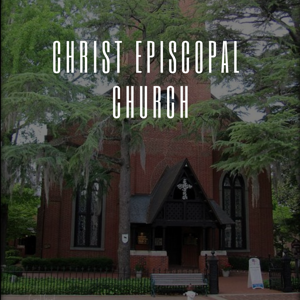
A sermon by the Rev. H. Paul Canady III
Rector of Christ Church, New Bern, NC, on October 13, 2019
http://lectionarypage.net/YearC_RCL/Pentecost/CProp23_RCL.html
If I could only have one genre of movie in my home collection, besides Star Wars, of course, it would be baseball movies. There have been more movies about baseball than almost any other sports-themed movie. Basketball, football, and hockey movies are fine, and certainly take a high level of choreography to film all the plays involved. And there are plenty of movies with soccer, gymnastics, and even dodgeball that make for good movies, but there is something about baseball movies. And I should note that I originally had this part about baseball movies written before my Washington Nationals beat the Dodgers on a grand slam in the top of the 10th inning the other night to win the division series, and I was fully prepared to say how much baseball has broken my heart over the years. It probably will again, but not this week. But if I had to narrow down my two favorite baseball movies, they would be Field of Dreams and The Sandlot. You don’t even have to be a baseball fan to love these two films. There is something about the innocence and pure love of the sport that is at the center of both of those movies that’s hard to turn away from. There are two other things that make these movies my favorite. And one of them has to do with our Gospel reading today. The first is that both movies feature James Earl Jones as a key actor in the on-going story. In Field of Dreams, he plays a reclusive author named Terrance Mann, and he reminds the main character, Ray Kinsella (played by Kevin Costner), about the importance of baseball in America. He says,
The one constant through all the years, Ray, has been baseball.
America has rolled by like an army of steamrollers. It's been erased like a blackboard, rebuilt, and erased again. But baseball has marked the time.
This field, this game -- it's a part of our past, Ray. It reminds us of all that once was good, and it could be again.
Ohhhhhhhh, people will come, Ray. People will most definitely come.
Which leads me to the other thing both of these movies have in common: past baseball heroes make timely appearances to change the course of the life of those in the movie. In Field of Dreams, baseball players from the 19-teens and 20s, including Shoeless Joe Jackson and Moonlight Graham, come walking out of a cornfield in Dyersville, Iowa, to a makeshift baseball field. In The Sandlot, Babe Ruth’s ghost says to Benny, “Remember kid, there are heroes and legends. Heroes get remembered; legends never die.” And in both movies, baseball is the medium which allows for growth and healing of relationships both past and present.
I can not fathom an existence or a God who would not have Babe Ruth, Shoeless Joe Jackson, or Archibald “Moonlight” Graham or even baseball itself in heaven. That’s not what this is about. This is about something larger than baseball and cornfields and sandlots. It’s about the divine intersecting with the ordinary. It’s about the holy and the sacred disrupting our lives and making them better.
And it’s about our ability in all times and places to give thanks to God.
In the Episcopal Church we believe that we are shaped by how we pray. At the beginning of those most central prayer in our Sunday worship, the Eucharistic prayer, the priest says, “Let us give thanks to the Lord our God, and the people respond, “It is right to give God/him thanks and praise.” This is a line that gets repeated at Christ Church at least 5 times per week, and sometimes more if we have weddings, funerals, or another special service. The importance of naming our thanks to God is so key to what we do, that all of us, both priest and congregation say out loud, that it’s not only the right thing to do, but it is a good and joyful thing to give thanks to God. And not just on Sunday morning, but when? Always. And when? Everywhere. (SQUINTS: FOR-EV-ER)
We call this prayer, the Great Thanksgiving. Not the good thanksgiving or the prayer of thanksgiving. But the Great Thanksgiving. And in the midst of that Great Thanksgiving, we invite the Holy Spirit to make this bread and this wine holy, to be the body and blood of Jesus, whether figuratively or literally is up to some interpretation. But we have invoked the Holy, the sacred, to be among the ordinary. To take the bread and the wine and remind us of God’s power and presence in our lives.
Our Gospel lesson from Luke this morning is about living a life of thankfulness. It’s about 10 people with a devastating, stigma-filled disease that casts them to the margins of society. They cry out to Jesus who simply says, “Go and show yourselves to the priest.” Not ‘get a doctor to check you out’ or ‘go look in the mirror.’ Because it was the priest who determined if you were clean enough to be in the temple or the synagogue and rejoin society. We could get into a whole thing about how the one leper who turned back was a Samaritan and what a shot across the bow that was to those listening. But the point is that this one guy came running back to Jesus and he didn’t high-five him and say, “Thanks, Jesus. That was cool of you.” He falls at his feet and thanks him. And the word that Luke wrote is eucharisto. It’s the Greek word to mean a thankfulness that goes beyond duty and responsibility. It is a word to express a thankfulness that goes even beyond words. And we celebrate that thankfulness three times on Sunday and twice during the week at the Eucharist. And when we pause to give thanks to God, we can see the divine interacting with the ordinary and lives changing.
There was an article making the rounds this week on social media about a guy named Sheldon Yellen. He’s the CEO of Belfor Holdings. They buy and sell stuff, mainly companies. He has about 7,000 employees under him, and he handwrites each of them a note for their birthday every year. His last question when he’s team is negotiating a take over is “how many cards am I doing this year?” He also writes get well cards for employee’s children, congratulations notes when people get married or have big anniversaries, and thank-you notes when employees go above and beyond. Yellen says it has created a more compassionate and caring workplace because everyone is invested in the well-being of everyone else. That sounds an awful lot like the Kingdom of God in action.
Thankfulness is key to our well-being, physically, emotionally, and spiritually. Thankfulness and holiness feed on each other. When we can give thanks not only for a string of green lights, but for the red lights, too, when we can give thanks not only for our player hitting the grand slam, but also when the Mighty Casey strikes out, we will see the divine intersecting the ordinary. And the more we look for it, the more we will see it. And the more we see it, the more our lives will be forever changed.
###
Also check out James Earl Jones reading “Casey at the Bat” by Earnest Lawrence Thayer https://www.youtube.com/watch?v=1xWtysMlrcA