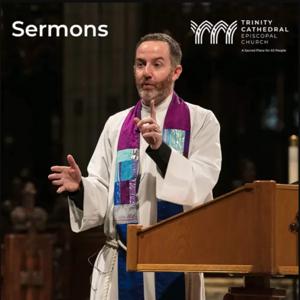
On the Occasion of Trinity Cathedral’s Bicentennial
A Sermon Preached by The Very Rev. Tracey Lind
11th Dean of Trinity Cathedral
Sunday, November 6, 2016
Two Sundays ago, I walked through a portion of Central, the neighborhood just south of us where Marion Sterling School and Trinity’s Urban Farm are located. Accompanied by an organizer from Greater Cleveland Congregations and a journalist from the Swiss Broadcasting Corporation, I talked with residents about criminal justice reform, neighborhood concerns, and the importance of voting. It was a great experience, and every person with whom I spoke knew of Trinity Cathedral and our long-standing commitment to this city. As I walked and talked, this morning’s words from the 58th chapter of the prophet Isaiah reverberated in my heart.
For two hundred years, Trinity has been a beacon of God’s justice, love and mercy in the city of Cleveland, the Diocese of Ohio and the wider church and community. For two centuries, Trinity has raised up many generations, repaired many breaches, and restored hope on many streets. Since the early 1800’s, Trinity and its members have strived to remove the yoke of oppression, share food with the hungry, and satisfy the needs of the afflicted.
Most of us know the story of our humble beginnings. On November 9, 1816, one year after the incorporation of the village of Cleveland, Phineas Shepherd and a small but faithful group of settlers – members of the newly formed Episcopal Church in America - enlivened by the Gospel, organized a small congregation in a log cabin near the banks of the Cuyahoga River. Worshipping at what is now the corner of Detroit Avenue and West 25th Street, the church’s initial membership included Cleveland’s first doctor, lawyer, banker, innkeeper, librarian, shopkeeper, and village trustee.
Nearly 100 years later, Trinity’s leadership – industrial, commercial and civic magnets of the early 20th century – demonstrated the vision and generosity to build a grand Gothic cathedral at the corner of Euclid and East 22nd Street. They constructed a magnificent landmark that, in the words of Bishop William Andrew Leonard, was intended to be a church for the masses that would inspire the social, economic and spiritual development of a great American city.
At the beginning of the 21st century, Trinity Cathedral joined forces with our diocese to create Trinity Commons, a piazza – sacred pubic space - in the middle of what was a distressed urban neighborhood. It was an effort that launched the green building movement in Cleveland and stimulated the revitalization of both the Campus District and Euclid Avenue.
Here we are today, Cleveland’s oldest congregation celebrating our 200th birthday. What a great year in which to mark this occasion. The Cavs won the NBA Championships, The Indians won the American League Title and almost won the World Series. The Republican National Convention came to town. Movies and television shows were filmed in our neighborhoods. The inner belt bridge was finally completed. Amidst the orange cones and construction cranes, new buildings, roads, bike paths, and parks are emerging. And yes, Cleveland is once again at the epicenter of electing a president to lead this great but divided nation.
It’s also been a challenging year in Cleveland. Public schools continue to struggle; gun and gang violence is still on the rise; community police relations remain very complicated; local infant mortality rates outpace that of the nation; opiate addiction has become a serious public health crisis; the lake continues to be vulnerable; and racism, sexism, homophobia, and xenophobia still rear their ugly heads.
Trinity Cathedral sits – a beacon of hope and light – right in the middle of it all. I love walking through the Euclid Avenue doors with the light streaming through the stained glass wind...