
Sign up to save your podcasts
Or

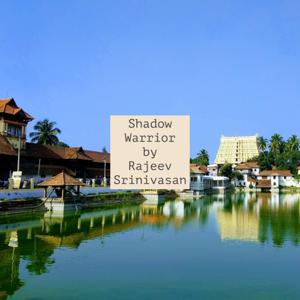


From the transcript:
Today for Episode 28, I’m delighted to have with me Dr Naras Eechambadi, who’s an expert in the use of data science and analytics to drive marketing. This is relevant because the majority of startups fail not because of poor or inappropriate technology but lack of innovative and creative marketing. But Naras’ personal journey through management consulting and the two startups he founded, grew and exited honorably from, is also very interesting.
Let me quickly go through his bio: engineering at IIT Madras to a doctorate in marketing at UT Austin to a leading ad agency (BBDO) to management consulting at Booz Allen and McKinsey; a senior executive at First Union, and then a successful serial entrepreneur. And an adjunct faculty at Berkeley, U Connecticut, Yale, Duke, North Carolina.
On his career journey, the importance of networking, and the common thread
My network has always been invaluable in helping me either find opportunities or have the opportunities find me… At UT, Austin I made friends with a number of doctoral students and faculty in the marketing department and they convinced me to change my major from Operations Research to Marketing. I am really glad I made that shift. I love analytics and marketing and that has indeed been a common thread throughout my varied career and roles.
How companies are making the transition from services to products/platforms
Two great examples of companies right here in Chennai that have done [that] successfully are Zoho and FreshDesk. I think we will see more of these in the future.
How he managed good exits from both the startups be founded
Fortunately for us, the acquiring company was not impacted by the financial crisis and they felt our company fit a strategic need. So the acquisition driven by strategic rather than financial considerations. They made us a very generous offer and stuck with it even while the markets were imploding all around us [in 2008] …
The second company i built was in the same space but it was a software platform. The pandemic hit some of our clients hard right at the beginning, which impacted our business. Fortunately, we were in a very attractive space and were able to generate multiple offers to buy the company and manage a decent exit [in 2020].
On consumer-centered marketing in India
Because this is still an emerging, growth market most companies are still riding the wave through traditional mass marketing and mass media approaches. Most B2C companies in this market are still not data savvy. They really do not know who their best customers are, so do not really treat them differently. Their knowledge is often limited to mobile phone numbers and email addresses. They use these channels to bombard their customers and prospects alike with often irrelevant offers and messages. Data and customer insight are still an afterthought. Companies that decide to take it seriously will be able to build great businesses in the future.
On prospects in India, and Asia more broadly
There is a palpable energy, positive attitude and infectious optimism among people here, not just in tech but across the board India and Asia are still at the initial stages of a broader renaissance.
On his immediate future plans
I do enjoy mentoring and advising entrepreneurs and senior executives in larger companies. I am starting to connect with the local startup ecosystem in Chennai, particularly those linked to IITM Research Park. I look forward to engaging actively with them.
Dr K V Bapa Rao from Los Angeles and I discuss the current situation in India-US relations.
Excerpt from the transcript:
We have had a little time to explore what the Biden presidency means in practice for India and more broadly for Asia, in the last few weeks. I don’t know about you, but I am severely underwhelmed, because I see the US blowing hot and cold towards India, while it is being sandbagged and humiliated by China, for instance in the Alaska encounter. As a life-long supporter of an India-US rapprochement, I must say I am disappointed.
On the Wuhanvirus vaccine imbroglio
For instance there was a lot of noise about vaccine cooperation in the Quad, but the reality is that Biden has used his war powers under the Defense Procurement Act in February to deny vaccine components to Indian manufacturers. Serum Institute of India made a public request to the White House to stop the embargo, and the way Press Secretary Psaki and the State Department guy sidestepped this issue altogether makes it sound like a punishment, an actual undeclared sanction. All this is not exactly confidence-inducing about the reliability of the US as an ally.
It’s complicated, as they say. About the Covid situation. It is heartbreaking, and even as we are speaking, the Biden administration’s response seems to be shifting somewhat. The story has dominated the headlines, and there is some pressure from the public on them to shed their earlier callous attitude… low-profile articles have appeared from sources that are presumably US pharma lobby mouthpieces, urging Biden to curb competition from the Indian Pharma industry, specifically to not make the vaccine inputs available to India. I don’t think this is a coincidence.
On the soft demonization of Modi
The Biden administration has bought into the prevailing facile global perception of India under Modi becoming authoritarian or majoritarian or something of that nature, and has plugged this perception into its formula to have, and keep the upper hand in the relationship with India. The relationship itself, though, hasn’t gone anywhere, and it’s largely positive and will stay that way.
Is Biden continuing down the Obama route?
I think Biden wants a legacy of having forged his own path, he has had enough of Obama’s shadow. As of now, I see elements of both Trump and Obama paradigms in his policy, when we subtract the question of personal style. We see the Obama paradigm in speaking softly and carrying a tiny stick.
On Afghanistan
Afghanistan is the nadir of American foreign policy because they refuse to see the obvious truth, that Pakistan is running with the hares and hunting with the hounds. Basically Pakistan defeated the Soviets with American help, and now have defeated the Americans with Chinese help. Can you see any logical reason why the Deep State has sacrificed American lives and money, all for… basically nothing?
We could have asked the same question about the Vietnam war, and would have come up with the same answer: the US military-industrial complex--the long-form name for the Deep State--is not particularly interested in the welfare of the American people or the lowly soldiers who fight in these wars. Let alone the welfare the people of the countries in which the wars are waged.
On China
The US public, despite the resonating effect of Trump’s anti-China rhetoric, is not all that keen on stopping cheap Chinese imports, and the corporate sector is not ready to give up its profitable engagement. So, there is no constituency there to make Biden take real steps on China. Even outside of politics, the China problem is hard for the US to really solve, due to the hardness of the problem itself, and also due to the intellectual limitations and timidity of the US policy establishment. They simply have no idea what to do about China, which is defiant, is a threat, and has a credible capability to severely hurt America.
I don’t believe any time is too late to build a more “atma-nirbhar America”, but that’s provided there is political intent, clarity vision and goals, willingness and capability to manage the process, and above all, readiness to take risks and bear the costs.
On FONOPS and other irritants
Their world view includes, as I mentioned earlier, the default idea that Modi is rebuilding India as an oppressive Hindu tyranny with the trappings of democracy. I believe that his administration has plugged this idea into its India-China strategy: India as a useful chess piece to keep China moderately in check, but a chess piece that cannot be allowed to have too much volition; and this is to be achieved by keeping India under pressure and keep it anxious about the relationship.
On climate change
In any case, if you look at the official US statement on the Kerry visit, it has only positive things to say about India’s role in climate change mitigation and its adherence to the Paris accords, and why not? India has more than kept its commitments. Again, keep in mind that the climate change constituency is one that Biden has to keep appeased, and that means sounding tough on China and India; China pushed back rudely in Alaska, and that leaves polite and diplomatic India as the whipping boy.
On neo-colonialism
And that is something that has continued from the old colonial-era vision, which of course relegates, as you said, the blacks and browns to a secondary, and maybe even dispensable position. This is of course not going to work as it did in the colonial era, hence the continuous string of failures in Vietnam, Iraq, Syria, Afghanistan, and even with India, which has pretty much done whatever it needed to do for its national security, regardless of Western browbeating.
On the core US-India relationship: good despite irritants
To be a little less flippant, I think we are seeing a mild chill in the relationship, but that’s a good thing. It is a shift towards the natural equilibrium between the US and India, with less empty rhetoric. I think South Block, under Jaishankar, understands this, and is not too worried. it’ll be good if the Indian public also learns to get away from pegging its emotions to every shift in US rhetoric, swooning with delight when Trump says nice things, and fainting with shock when Biden says not-so-nice things. All the while, the core relationship is more or less the same, and pretty stable, as we discussed here.
The late Christopher Hitchens once wrote a book titled “The Ghoul of Calcutta”: it was about those profiting from deaths in that city. I looked up the term, and it means a monstrous being associated with graveyards and consuming human flesh. I was struck by how appropriate that term was when I saw the following tweet. Note the use of the term ‘stunning’. It implies that the pain of hundreds of families of the dead is a spectator sport for this woman, a former WaPo reporter in India. Isn’t that the very definition of ‘pandemic porn’?
Can you condemn a person for the use of a single word? Yes, if it is consistent with a series of actions. Besides, remember how in ‘Z’, the greatest political thriller of all time, the single phrase “lithe and fierce like a tiger” was the smoking gun. It’s hard to give Gowen the benefit of the doubt as she was a repeat offender in her days in Delhi, as I pointed out in 2018.
It is a pattern repeated by almost every foreign correspondent in India, as I said. My ‘favorites’ in this regard are Amy Kazmin of the FT and Max Rodenbeck of the Economist. Their outlets’ coverage of the recent Wuhavirus panic in India is illuminating. The crocodile tears don’t quite cover up the pure gloating:
It is remarkable that all of the ‘seven districts’ that the FT reporter has allegedly studied (“collated local news reports”) are in BJP ruled-states, whereas the epidemic is considerably worse in Congress-ruled states. It seems to be an attempt to discredit the official numbers. And why only cremation numbers? Why not burial numbers as well? Can we say “selective cherry picking”?
In this more detailed screenshot, see the districts, as well as the sources of data (yes, such neutral sources as scroll.in and NDTV). Why not Maharashtra, Rajasthan, Punjab, Chhattisgarh?
The fact is that this coverage is essentially the same -- intended to distort, cause mass hysteria, and, presumably, lead to regime change -- as the #toolkit vendors’ tweets exposed in the following: there is obviously an agenda, and disinformation, and possibly taqiyya too. Swati Maliwal is an AAP politician:
The breathlessly negative coverage of India contrasts with any number of earlier western articles that wondered why Indians were not dying like flies in the streets (while citizens of developed nations were) as in this image from New York of mass graves of unclaimed bodies a year ago. Nobody in India called these ‘stunning’, nor did we do that when 9/11 happened: we sympathized and empathized with the Americans then, but clearly, that’s not reciprocated.
Now that Indians are in fact dying in droves, all’s well with the world according to these people. Vasudhaiva kudumbakam, it ain’t.
Today, the world-famously liberal Biden-Harris administration in the US is withholding essential raw materials, which will prevent Indian vaccine maker Serum Institute from producing vaccines not only for India, but for the entire developing world: it is the largest producer globally, and has supplied 60 million Astra Zeneca doses around the world, much of which was donated by the Indian government, and some under Covax contracts.
Unbelievably, the US is hoarding 45 million Astra Zeneca doses. They cannot be used for vaccinating US citizens, because the product is not approved by the US FDA. So why doesn’t the US donate the doses to India and others at this crunch time? Maybe Annie Gowen has an answer? This is classic ‘dog in the manger’ syndrome.
In addition, rich countries have emphatically nixed a call by India and South Africa to suspend TRIPS (Trade Related Intellectual Property Rights) provisions: that simply means that during the emergency, licenses to patents and other intellectual property will be provided at a nominal price so that poor countries can produce generic vaccines for their use.
I am also reminded of the pneumonic plague scare in Surat a few years ago. The media (both Indian and western) painted a grotesque picture of negativity that led to mass hysteria and panic. The same thing is happening today in regards to panic buying and shortages of oxygen, Remdesivir (a drug that has been proven to do virtually nothing for virus patients: this is on authority of the WHO; although, admittedly, WHO fiats are a bit dicey) and so on.
Why? You might legitimately ask. I have one, somewhat lame, answer: persistent racism. Here’s another example of that in breaking news on April 23rd. They used Indian and African troops as cannon fodder in WW1, but never acknowledged their sacrifice, as they were untermenschen. This is from the British media, https://www.bbc.com/news/uk-56840131
But there is more: pervasive contempt for India. See this verbatim report of what the sainted Angela Merkel said in the context of Indian vaccine production: they have “allowed” India to produce vaccines. Now, now, little doggie, you get your biscuit, coz you’ve been a good little doggie, but understand your limits, ok?
There is more, much more, that hints darkly at sinister intent: and we have seen glimpses of this in the past, in the cavalier disregard for the lives of people from the global South. Usually, the perpetrators also benefit monetarily. Today, a perfect storm is developing, of technology, climate change and balance of power. The Wuhanvirus pandemic fits neatly into a Final Solution, the kind that an impersonal Artificial Intelligence might produce.
For the last few years, the idea that “Smart Cities” were the inevitable next stage in the evolution of urban spaces has been the consensus among policy buffs. It stands to reason: city-based clusters are where creativity and innovation have always flourished, because of the collision and co-operation between diverse viewpoints and diverse backgrounds of densely-packed residents.
In fact, chance meetings of people with different interests (sometimes called water-cooler conversations) were encouraged in some of the most innovative places in the world. I worked at Bell Labs, arguably then the most intellectually stimulating environment anywhere, and the deliberately long corridors to the cafeteria meant physicists, material scientists, electrical engineers, mathematicians and so on rubbed shoulders. The long-running games of Go in the cafeteria also encouraged random encounters among kibitzers.
When you added Big Data and Machine Learning into the mix, it sounded logical that a heavily networked Smart City would be increasingly efficient, and could be optimized for smart mobility, zero carbon emissions, resilience, digital transformation, and so on. All this is quite true.
But this vision struck me, as an observer at the UNESCO Netexplo Smart Cities Forum 2019, as overly skewed towards developed nations, as well as soul-less and clinical. From the point of view of a resident like me of a mid-sized city in a developing nation, these objectives were not very relevant to the issues that we faced, which are more elemental and basic:
* the preservation of heritage buildings and water bodies
* providing drinking water, reliable electricity and internet access
* hygienic waste management and recycling/upcycling
* the husbanding of animal and bird populations
* managing marginalized populations of migrants and the indigent
* disaster mitigation and recovery
* and the provision of traditional public transport such as buses and metros.
So it was not a great surprise to me that Smart Cities failed the “crash test” provided without warning by the Wuhan Coronavirus pandemic, as described by Bernard Cathelat, eminent sociologist. Says he, further:
Reading the conclusions of a CEPESS (Economic and Social Studies Centre) symposium (held in November 2016 in Louvain), we encountered the pioneering concept of ville réliante, which we borrowed to develop and model as Linking Cities.
“Smart cities bring a technological dimension to sustainable cities associated with innovation and digital solutions [...] But in our opinion, Eco-cities and smart cities do not sufficiently take into account human, cultural and political dimensions [...] The CEPESS wishes to make its contribution by proposing a new vision of the city, that of connecting cities, of linking cities: a model which places the development of links at the heart of the urban project.” (Jérémy Dagnies and Antoine de Borman, CEPESS.)
Furthemore, Cathelat (ibid, pg. 10) summarizes what might make a city more human-scale:
* more vegetation
* reduced concentration and decentralization
* the stimulation of social interaction… and solidarity initiatives
* more interactive governance.
In other words, a departure from the Cartesian, mechanistic point of view, and a call to a more humane perspective. I have written about the inadequacy of Cartesian thought and especially about the issue of emergent intelligence that arises from social interactions. We do need a more holistic perspective.
What did surprise me upon listening in detail to Bernard Cathelet’s excellent presentation in April 2021 was that I had encountered in my own village and small-city life elements of what he described as Linking Cities: a human rather than a technology focus, which make them more responsive/resilient to shocks. Somehow, I had overlooked them, in the headlong rush towards ‘modernity’.
Earlier, I had presented, at the conference on Disaster-Resilient Smart Cities at Jawaharlal Nehru University in Delhi in 2019, a case study of the Smart Cities project where I live, Trivandrum, in southwestern India. It is a Tier-2 city with a population of about 2.5 million, the capital of coastal Kerala State, blessed with natural beauty and centered around an 1,800 year old Hindu temple, a grand historical monument.
The official Smart City Trivandrum list of objectives is as follows:
This bears little resemblance to the futuristic utopian vision typical of a Western Smart City. Furthermore, developing nation cities cannot afford the investments needed to get to the Western level. Surely their citizenry would protest at what they considered frivolous, ivory-tower expenditure while their real, day-to-day needs were not being met.
My conclusion was that cities evolved to be Smart Cities, and it was not one-size-fits-all. This distinction has to be recognized, and a simple way would be to acknowledge that there were several levels to which a city could aspire, and be certified. The analog I used was the Capability Maturity Model (CMM) for software developers, which has several levels.
I thought a typical developing country city should aspire to Level 0 first, which would meet the basic needs of its citizens; once that had been achieved, it could move up to the next levels.
What the 2021 definition of Linking Cities has given me, though, is a greater appreciation for the many things that my city and my village have (or had), which would handily allow them to be much better Linking Cities. In other words, we have, in the recent past, lost many good things, and pushed ourselves into urban dystopias in the single-minded pursuit of economic growth.
“Prosperity comes with three terminal diseases: debt, obesity, and tourism”: according to public intellectual Nassim Nicholas Taleb, in Bed of Procrustes. To that, one could add, ‘anonymity’ and ‘modernity’. I can remember in my own lifetime how there were working farms and paddy fields within a mile of any point in Trivandrum; instead of high-rise apartment buildings, most of the pleasantly undulating city had neighborhoods of single-family homes.
Linking Cities: Social Interaction and Solidarity
I grew up in a cul-de-sac of about 20 homes (new ones were built over time), and every one of them had a small yard and a profusion of trees and vegetable gardens. Over time, the plot sizes grew smaller (initially most of them were 6 to 10 cents (ie. 6%-10% of an acre), later they were as small as 3 cents, more crowded and cheek-by-jowl with the neighbors. Some homes were turned into rentals, one tenant on each of two floors (there is only one three-floored structure, which is three flats).
There was a community; it had a Residents’ Association, and every month the secretary would visit every house to collect the small dues, and that was an occasion to discuss any concerns the residents had. If there were major issues, a petition would be drafted and submitted to be municipal authorities. So there was a measure of self-governance and a sense of togetherness.
Periodically, there were get-togethers on somebody’s rooftop terrace or yard, where children would demonstrate their skills at song or dance; a guest might deliver a lecture on household finance or the medical problems of women. Everybody knew everybody else, including the transient renters.
In this enclave, only one household had a car; another household had a phone. All of us gave that single phone number to our friends and relatives in case of emergency, and it was a chore for the poor man with the phone to despatch his kids to the neighbors’ houses whenever someone called.
In the evenings, the children would gather on the street and play cricket or run around in the vacant lots. A particular favorite was the haystack that would appear after the paddy harvest: it was a pleasure to inhale the fragrance and feel the rough rice-stalks on one’s face. Periodically a few wild rhesus monkeys from the nearby large Palace compound would traverse the tree-tops and wreak havoc on houses with unguarded windows, or on the fruit-bearing mango or coconut trees.
The women would chat over their walls with their neighbors until it was dusk, and thus time to prepare the evening meal. Empathy and conviviality. There was no TV (literally), and this was their best form of entertainment.
All this has changed now. Every house has a couple of cars; every individual has a mobile phone. The children are busy with their tablets; the men with their social media or cricket. Women watch soap-operas on broadcast TV, or Netflix or Amazon Prime. People know each other vaguely, but there is no intimacy or sense of community; everyone is wrapped up in their own little cocoons.
Another aspect of urban blight is plastic waste. We simply didn’t have packaging when I was a child. Instead of cereals or vegetables packed in plastic in a supermarket, in the old-fashioned bazaar or corner grocery store they used to wrap up our purchases of lentils or tomatoes in old newspaper cones or pages ripped out of school exercise books. Meat was packed in banana or other leaves. Everything was biodegradable.
Even the unglazed clay cups used to serve tea in trains were biodegradable: tossed out on the tracks, they degraded into mud shortly.
Today our roadsides and especially railroad tracks are covered with plastic waste. Even worse, so are our urban water bodies: people unthinkingly throw trash into water, resulting in the gumming up of streams into fetid, disgusting pools which then overflow during the monsoons onto the streets. Plastic packaging is a curse, and whenever I segregate garbage, I am astonished at how much of it I have to haul to the recycler.
And there is no guarantee that any of this is recycled. Given the unscrupulous nature of petty traders and corruption in local government, it is entirely possible that the waste that I have laboriously sorted is just dumped into some hole in the ground, to leach everything from heavy metals to other toxic waste into the groundwater.
Without being mistily romantic about a past fifty years ago that definitely had its share of human suffering and environmental degradation, it is worth considering the hugely negative effects of the hydrocarbon economy: in climate change, in the proliferation of plastics, and the health effects.
Earlier, the newspaper boy, the milkman, the postman, and the fish vendor, among others, used to ride their bicycles, with their goods strapped to the ‘carrier’. Today, every one of them uses mechanized transport, either a two-wheeler or a three-wheeler. It is likely that their health has suffered from the reduced exercise.
There was ‘smart transportation’ then too, of a different sort. The produce from distant suburbs used to come by bullock cart: convoys would unhurriedly travel through the night, with the tinkle of a bell and a circle of light from their hurricane lamps. The bullocks knew the way, and the drivers would nod off. Now there are mini-trucks, often with loud two-stroke engines, that do the job: the bullocks are gone. They are no longer in much use in paddy fields, either.
Linking Cities: Vegetation
In fact, the paddy fields are gone, too. Every one of them within city limits has been paved over and turned into residential land, as demand soared with migration. In addition, well-meaning but highly damaging economic policies under left-leaning governments destroyed the very rationale for paddy cultivation. This is a warning for overly intrusive governments as in the San Francisco Bay Area: you can easily drive business away, as is already happening.
When I was a child, my great-uncle made good money from farming a few acres of land in our home village about two hours away. Later, my uncle, who was an agricultural scientist, made decent money running his father’s fields that surrounded his beautiful house with an interior courtyard open to the heavens. But over time, he told me, he was forced to subsidize his rice cultivation with his salary as a scientist. So he stopped farming; and others had similar stories.
Governments, with the intention of improving the incomes of agricultural laborers, pushed up minimum wages to the point it simply became uneconomical. Labor militancy meant that mechanisation was also not possible. Paradoxically, the end result was not that laborers got good wages: it was that agriculture disappeared. The laborers ended up migrating, and coincidentally, there was the post-1973 Persian Gulf oil boom: they became, in effect, slaves there with virtually no rights, toiling away in the blazing desert heat.
Well-meaning Western commentators were impressed by the high quality of life in our villages but their extrapolations may not have anticipated the downsides of “radical reform as development” as they put it. The delicate equilibrium that had sustained some of the best, well-watered, fertile, rice-growing land in the world for millennia came to an abrupt end in the 20th century.
The idea in Linking Cities of bringing vegetation and urban farming to cities, albeit with vertical farms or hydroponics, is appealing, because there’s something very old and deep in the human psyche that responds to crops, economics aside.
There are two other aspects of village life in Kerala worth noting: community and health.
Linking Cities: Family-centric Communities
There has traditionally been a matrilineal system of inheritance in the area among Hindus (though not among Christians or Muslims). Descent was through the women, and therefore property also passed down the female side, and a child belonged to one’s mother’s family, not father’s. The sisters in a family would live together in a joint family, and that would be matriarchal as well: women gained power as they aged. The husband moved in with the wife’s joint family.
This construct was particularly suited to an agrarian setup, because it ensured that landholdings remained intact with the joint family, and were not atomized through nuclear families splitting away. It was an economically sensible protocol, and women in Kerala were more equal than their sisters elsewhere in the country: they had economic freedom, and were not dependent on their husbands.
My late mother, a professor, remembered with fondness the joint family she grew up in: there was always some aunt to take care of the children even if the parents were busy; and the old people in the household had children to spoil and pass on religious and cultural values to. Somehow, everybody was fed and taken care of. My mother was essentially an orphan, as her mother died young and her father had a traveling job, but she, too, was brought up by the family.
Unfortunately, this system broke down when people started moving to the towns in search of non-agricultural jobs, thus setting up nuclear families of their own. Worse, in misguided zeal for ‘reform’, the princely state in the 1920s — possibly influenced by British prejudice, as about half of India was colonized by Britain at the time — abolished the matrilineal joint family.
As Nobel laureate Mohammed Yunus of the Grameen Bank of Bangladesh has demonstrated, women are far more careful and sensible users of money for the welfare of their families than men are. Men, on average, spend a large portion of their earnings on themselves, including in gambling, drinking and other vices.
This phenomenon is widely seen to this day. Every maid-servant in Trivandrum has the same story: they take an hour-long bus trip from the exurbs, and work for 2-3 hours cooking, cleaning, and washing clothes for middle class families. They might do this for two or three families, perhaps visiting them twice a week. It is a hard life, but it is one way to earn a living.
Every one of them complains about their lazy, no-good husbands, and often, alas, their layabout sons, who are casual day laborers or workers without steady jobs, and it is up to the women to maintain the household.
The woman-led joint family is far removed from single-mother-led nuclear families, and the sense of community and loyalty it engenders may have lessons for a world in which atomization, angst and anomie are major problems. How can that sense of togetherness be re-created?
Linking Cities: Decentralization
One of the consequences of the pandemic has been the increasingly tenuous links between geography and work. It turns out you can work — at least a lot of things can be done — remotely from anywhere. This is likely to be a lasting change. There are those who view this as an opportunity. For instance, there’s self-made technology billionaire Sridhar Vembu, CEO of Zoho, sitting on a verandah (thinnai in Tamil) in a small village, from where he directs his global business.
This trend is likely to become more widespread, as ‘digital nomads’ build up their ‘network states’, as articulated in a wide-ranging podcast by Balaji Srinivasan, a respected Silicon Valley venture capitalist, who himself has migrated to Singapore and India, reasoning that the future of technology will be in Asia.
Similarly, a number of technology workers have moved from the crowded Silicon Valley, to Austin, TX, or Miami, FL, to remote Montana or Colorado where they could enjoy nature, or to places like Estonia or Bali.
This, then, is the competition for Linking Cities: the good life is no longer confined to certain parts of rich countries. The truly global worker is now (almost) a reality. The age of decentralization is here; distributed systems, more robust and resilient, can now become part of de-globalization, and paired with blockchain and perhaps cryptocurrencies, can create an alternative model.
Linking Cities: Health
Finally, on to health. The pandemic has shown the limitations of technological solutions of monitoring or surveilling the population. Track-and-trace systems, including the vaunted Apple/Google cooperative venture, did not prove up to the task of predicting, isolating, or directing resources to the worst-hit areas.
Says Bernard Cathelat (ibid, pg. 40):
“Smarter city” professionals have to look at the issue of the balance between the cold logic and phenomenal computational ability of artificial intelligence, and another type of intelligence, a human one, whose talents lie more in the “right brain” of intuition, imagination, creativity and improvisation.
There is more. We may be reaching the limits of industrial medicine. Once again, the mechanistic Cartesian vanity of Western Science is reflected in the elaborate and expensive paraphernalia of the drug industry, although fundamentally its output is stochastic and not deterministic. There is only a certain probability of a medicine working on a particular person, and the gold standard, the Randomized Controlled Trial, is purely about correlation, and not about causation.
There simply isn’t a Theory of Disease in Western medicine, or, as it is called in India, allopathy. Whereas traditional Indian medicine, Ayurveda, does have a theory of disease, which is about the balance among three doshas: vata, pitta and kapha. When an individual loses the natural equilibrium amongst these, diseases emerge; thus Ayurveda has a causal effect for systemic, long-term illnesses, and a physician provides customized health care that is unique to the individual.
There is evidence, for example from the gut biome, that it is the disturbance of a balance (in this case between benign bacteria and malign bacteria) that causes much diseases.
An Ayurvedic physician spends time with a patient, understanding his family history, his work stress, his food habits and his hobbies, because all that goes into a gestalt of what he is all about. The physician then prescribes a treatment which includes herbal medicines, diet restrictions, yoga and meditation. Sometimes all that the patient needs is a two-week course of rejuvenation.
Can technology help in this personalized medicine? Of course, it can. An AI that can sift the Big Data about the individual and correlate his actions to his personality can help guide the physician. Tracking the effects of the course of treatment over time can also help.
But most of all, what can help is that there is a system of medicine that treats you as a human being with emotions and a certain personal history, rather than a Cartesian machine. Ayurveda has dealt with pandemics in its millennia-old history, and baked into its protocols are insights on how to improve immunity to fend off pathogens. Unfortunately, in the mad rush towards vaccines and anti-viral drugs, even the Indian Government has paid little heed to Ayurvedic formulations, even those that have shown efficacy against the SARS-COV-2 virus.
To sum it up, Linking Cities can indeed provide for better diagnostics and better healthcare especially if it takes into consideration traditional knowledge in medicine.
Nobel laureate Octavio Paz once said of his country, Mexico, that it was “condemned to modernize”. Linking Cities suggests that there doesn’t need to be either-or. You can modernize, but also retain that which is valuable from the past. Japan, for instance, has modernized without losing its core values. Linking Cities give us hope that we can, globally, do the same. Those who manage them have to think deeply about the Ethics of Linking Cities, and ask “Whose cities are these?”
April 19, 2021
A wide-ranging chat with Dr Uday Balakrishnan (retired from the Indian Postal Service as a Member of its Board), currently teaching governance at IISc Bangalore, who has seen the beast from the inside, warts and all. We discuss:
Can the bureaucracy be reformed? What are its biggest problems and sins? Is it attitude, perhaps unchanged from James Mill’s time, ie 1817? Is it the way they are recruited and trained? Does the problem lie in the way there’s a brutal hierarchy in place where lesser babus are humiliated and treated as sub-humans while the elites play God? What about the way babudom is not accountable for results achieved (or not)? Why do they have no skin in the game? How can evaluation be made more rigorous? Do they stick up for each other to the detriment of the national interest? What about all the little jaunts to Harvard etc that they go on: are these useful to India or to someone else? Are they giving away Big Data about India to possibly malign outsiders? A no-holds-barred critique of what’s good and what’s bad with India’s fabled babus.
Can babudom be salvaged? The answer: a big ‘Maybe’.
And here’s a companion look at the Judiciary, from 2018: Can We Fix The Deeply Troubled Judiciary?
Excerpts from Uday’s Bio:
Dr. Uday Balakrishnan belongs to the 1975 batch of the Indian Postal Service the world’s most extensive. He has worked across India in areas of logistics, banking, insurance, financial inclusion, child, women and unorganized labour, human resource development, as well as vigilance and anticorruption in the postal services and in the larger Government of India.
He has headed two large staff training centres and also served as the administrative head of the Indian Institute of Science (IISc.) –Bengaluru. To pursue his other interests, Dr. Balakrishnan retired voluntarily in 2010 as Member of the Postal Services Board & Chairman of the Investment Board.
Dr Balakrishnan’s academic interests include modern history, International Relations and public policy. Dr. Balakrishnan has been a visiting fellow at prestigious institutions like the Centre for Contemporary Studies-IISc, National Institute of Advanced Study (NIAS) and the Central European University (CEU) Budapest.
Dr. Balakrishnan has been teaching a popular public policy and contemporary history course, developed by him, titled ‘Introduction to Governance in India,’ for undergraduate science students at IISc since 2014. It is the only one of its kind in India.
Dr. Balakirshnan is a prolific columnist and reviewer of books for ‘The Hindu,’ and the ‘BusinessLine’.
podcast above
a version is published at https://chintan.indiafoundation.in/articles/artificial-intelligence-2-0-the-language-wars-are-coming/
There have been major technological breakthroughs recently, such as CRISPR-cas9 in gene-editing, AlphaFold2 in protein-folding, and the spread of blockchains and cryptocurrency. But it’s a fair bet that natural language processing via AI and Deep Learning will have the most impact on the most people. For, advances like GPT neural networks mean that machines can process language in ways practically indistinguishable from the way humans do.
These language systems give us the first glimpse of Artificial General Intelligence, something that broadly comprehends the real world, as opposed to domain-specific systems (e.g. AlphaGo) that are competent only in narrow domains. This is, literally, AI 2.0.
Language can be dangerous. We have heard of Deep Fakes, fake videos that look like the real thing, but fake text is equally, if not even more, frightening. Some of the scenarios Rajiv Malhotra outlines in Artificial Intelligence and the Future of Power show how the destructive capacity of AI is being harnessed by certain nations and companies, and their impact is already overwhelming. India’s very sovereignty may be in jeopardy.
The rapid evolution of GPTs
The non-profit research entity OpenAI of San Francisco started its development of a series of GPTs (Generative Pre-trained Transformers) a few years ago. These are Neural Networks that don’t need human training but use Deep Learning techniques to crunch gigantic amounts of content to discover their own rules of, in this case, language.
… deleted, please listen to the podcast above
Five Problems with GPT-3
There are, however, at least five huge problems with something like GPT-3.
… deleted, please listen to the podcast above
Can these problems be fixed?
Is there a way of alleviating concerns about the five above-mentioned problems?
… deleted, please listen to the podcast above
The fourth problem is related, and it is sociological. We tend to trust anything the computers spew out, and more worryingly, anything that comes from the West. India is a country that has been gaslighted so much already that we willingly put our faith in charlatans of all sorts: politicians, epidemic experts, economists, et al. The Cambridge Analytica scandal showed how it is possible to sway sentiments; with Deep Fake text it is possible to misdirect people to astonishing levels. Is any kind of oversight or regulation even possible?
The fifth problem is perhaps a little theoretical. It goes to the question of whether computers have consciousness, and whether they can ever become conscious. Subhash Kak has suggested they cannot, in Why a computer will never be truly conscious; but can they appear to be conscious to the extent that they can be malicious? The Skynet of the Terminator series comes to mind; so do the machines of the Matrix series. But if computers can never become conscious, can they ever be truly creative? We don’t know the answer.
The arrival of natural-language processing models appears to be a significant breakthrough in Artificial Intelligence. Whether it will fulfill its promise, or fall by the wayside as earlier revolutions did, is not known at the moment.
What is known is that once again India finds itself on the back foot when a new technology appears. We have neither the trained people nor the hardware infrastructure to play more than a bit part here. And that means almost certainly that the technology will be weaponized against us, as previous technologies were, by previous invaders.
It hit 41.5 degrees Celsius in Palakkad this week. In the blistering heat, there is an 89-year old man campaigning for the post of MLA from this storied town that sits in a gap in the Western Ghats between Tamil Nadu and Kerala. He is the legendary Dr Elattuvalappil Sreedharan, India’s most accomplished engineer.
At his age, he has no need to prove anything to anybody. He has been awarded India’s second-highest civilian honor, the Padma Vibhushan, as well as the French Legion d’Honneur. I have suggested that he should be made President of India, because he would be a fantastic role model, and an inspiration to youth.
Dr Sreedharan has frequently faced long odds in his engineering career spanning seven decades, and defeated them. There are very good reasons to honor him with a Bharat Ratna, the highest civilian award, as well, as argued delightfully by kaipullai who recounts the herculean tasks that Dr Sreedharan set himself. To take just three: the Pamban sea bridge, the monumental Konkan Railway and the Delhi Metro — all bhagiratha prayatnams.
At the age of almost 90, when most people prefer to take it easy, he has taken on another huge challenge: he is on a mission to revive the BJP’s chances in Kerala. In 2016, after a fine campaign, the BJP had to be content with just one seat in the legislature. Conventional wisdom is that it will not get much more in 2021.
There are several reasons for this grim forecast. One is the entrenched nature of the two fronts (LDF led by the CPI(M) and the UDF led by the INC) which have alternated in power for a long time. Another is the highly polarized nature of the electorate, where ideological metastasis has set in. The third is demography: Abrahamics, who tend to form vote-banks, make up more than half the voters.
The Hindu vote has been fragmented. The numerically largest group, the OBC Ezhavas, have long been the backbone of the Communists. The next largest group, the FC Nairs, have been Congress supporters, but have moved somewhat to the BJP. Other groups, including SC, have been wooed by the BJP with little effect.
In 2016, the BJP made an explicit call for Hindu unity by headlining their campaign around Sri Narayana Guru, Chattampi Swamikal, and Mahatma Ayyankali, who were respectively from the three groups mentioned above. However, groupism and internecine warfare especially among the Ezhavas and Nairs, along with tactical voting by both LDF and UDF, buried its chances.
Several things have changed since then, though. See articles in the Indian Express and the Hindu about a consolidation of Hindu votes (although the articles may also represent the respective biases of the two newspapers).
One big difference is that the Indian National Congress seems to be running a lackluster campaign. So much so that typical alternation every five years between the Communists and the Congress (much as between the DMK and the ADMK in neighboring Tamil Nadu) may not happen this time.
The second is the changes in the previously monolithic Abrahamic vote. Christians of all stripes have viewed the Congress (and allies) as their own party. But now some of them, especially some Eastern Orthodox groups (as compared to the dominant Vatican-affiliated groups) seem to be vacillating a bit.
The Muslim League has been a Congress ally, but this time they are being challenged by the more radical SDPI, which has made a strong alliance with the CPI(M). So the Congress, despite their safe Parliamentary seat in Wayanad for the current Nehru dynasty scion, can no longer count on the Muslim vote.
There are also allegations that there are lakhs of illegal alien Bangladeshis and Rohingyas in the Kerala voters’ list. There are many lakhs of them working in Kerala doing everything from construction to plucking coconuts. It is not hard to believe that ruling parties (both LDF and UDF) have stuffed the rolls with them.
There are regional differences too: Northern Kerala is Marxist and Muslim dominated; Central Kerala is Christian and Congress dominated; Southern Kerala is where Hindus may have a chance: and indeed the one seat the BJP captured in 2016 is Nemom, south of Trivandrum.
The state has also been wracked with stories and rumors of large-scale corruption, including gold and dollar smuggling, scams in construction, deep-sea fishing boats, the sale of coronavirus patient data, and a whole lot more. Whether these have an impact on the ruling LDF’s chances remains to be seen.
There are interesting twists. It is said that in 2016, the BJP spent 64 crore rupees, while the LDF spent only 14 crores, and the UDF somewhere in between. But there appear to be other, hidden factors. On March 25th, three boats with alleged Pakistan links were captured off Minicoy. So there could be unaccounted sources of money and muscle in the fray.
There was also a tweet from Kanchan Gupta about what has happened in his native West Bengal, and, well, much of the same is applicable to Kerala as well.
The only difference in Kerala is that there has not been a TMC here. However, the explicitly anti-Hindu nature of those in power is exactly the same. We saw this in the Sabarimala agitation, which brought tens of thousands of apolitical Hindu women on to the streets with lamps, to protest the desecration of their temple. People4Dharma (led by Shilpa Nair, Padma Pillai, and Anjali George) and Indic Collective (led by Adv J Sai Deepak) were able to arouse the silent majority out of their lethargy.
There is also the fact that two of the most striking modern Hindu artifacts in the country are in southern Kerala: the Gangadhareswar murti at Aazhimala, and the Jatayu sculpture at Chadayamangalam, both in the suburbs of Trivandrum.
This possibly means that if the NDA is able to energize injured Hindu sentiment, based on the continuous hostility of the LDF (e.g. contemptuous statements about Hindus by their leaders) and the UDF (e.g. an ostentatious slaughter of a calf and a beef fest conducted by their leaders), there is a possibility that the BJP may yet do better in Kerala than we think.
If that happens, Dr Sreedharan may have pulled off yet another impossible dream.
The most vivid analogy for the latest crisis in global supply chains, the Suez Canal blocking by a grounded super-container ship, is that of a heart attack. Just as a block in an artery can lead to disastrous consequences for a human, the blockage of an arterial waterway can disrupt global trade. The Suez accounts for 12% of the world’s total cargo movement because it is a key transit route between Asia and Europe.
There are ways to mitigate, and, even better, to prevent heart attacks. It is necessary to consider how to do the same for supply chain disruptions. The simplest mitigation is bypass surgery (or in this case, taking the long route around the Cape of Good Hope, or the more tentative Arctic Route made possible by global warming). Putting in a stent is another (which translates to widening Suez to be, say, two-lane, which has happened, in parts).
Preventing heart attacks altogether would be the other approach (say, exercise, better diet/lifestyle, drugs). In logistics terms, this means reducing the amount of cargo that is being shipped long distance. That is to say, avoid the tyranny of the supply chain by shortening it. Build near where you sell. In fact, the very antithesis of globalization.
That is paradoxical, considering how very global the ship in question is. MV EverGiven is Japanese-owned, managed by a Taiwanese company named Evergreen, operated by a German company, has a 25-member crew that is fully Indian, and had on board 2 (mandatory) Egyptian pilots whose job it is to shepherd vessels through the canal without incident.
Before the usual suspects start to lay the blame on the Indian crew, it is worth pointing out that in the canal, the local pilots are, by law, in charge of the ship. The captain and crew defer to them. So human error probably has to be attributed to them; in addition, there was apparently a severe dust-storm that may have affected the ship’s movements.
A retired marine engineer in who has traversed the Suez many times confirmed the above. He also said:
There could be problems with engine maintenance. If there were attempts to finely position the vessel in the wake of the storm, that would depend on how well the engine starts, stops, reverses, etc. Managements want to keep the boats running, not in drydock; sometimes necessary repairs and maintenance get postponed for too long.
Thus there might be several causes behind the mishap. But squeezing out maximum profits while keeping costs down is something that not only ship managers do (the ship earns money only when it is moving; repair or drydock time is dead time). This sentiment is what has driven the entire thrust towards supply-chain efficiency, and methodologies like just-in-time that minimize inventory and thus carrying cost.
Perhaps Toyota could do JIT because of Japanese exceptionalism, whereby the suppliers were next door and felt honor-bound to meet their commitments. That is not true in the real world. For instance, see the vaccine wars: the EU, the US, the UK, etc. are hoarding units, and India is cutting supplies, for various reasons. In any case, it is illusory to think that inventory disappeared: it was sitting on a ship instead of in your warehouse.
However, Soren Skou, the CEO of Maersk, the largest shipping company in the world, now says the world is moving to “just-in-case”, and multiple suppliers:
We are moving towards a just-in-case supply chain, not just-in-time. This incident [in the Suez Canal] will make people think more about their supply chains…
How much just-in-time do you want to be? It’s great when it works but when it doesn’t, you lose sales. There’s no just-in-time cost savings that can outweigh the negative of losing sales…
We clearly see our customers saying we need to have multiple suppliers to make sure that one small sub-supplier can’t close us down.
It is possible to argue that efficiency is the antithesis of strategy. Extreme efficiency brings risk. There is no Plan B; there is no slack in the process. Engineers typically overdesign, and leave a large margin of error to account for unforeseen circumstances. Over the past couple of decades, managers, especially in America, have thrown this sensible caution to the winds, leaving their companies on a knife-edge, subject to geopolitical and technical risk, in the pursuit of (relatively small) increases in profitability.
The change has even been visible in personnel. Once upon a time, the smartest young MBAs were hired into sales or finance jobs; but more recently, many have gravitated to being purchasing managers. They have been ruthless in pruning costs; but they have been unmindful of the risks they are taking. These are now coming back to haunt them.
A generation of management consultants and ambitious young MBAs in effect conspired to move the world’s production to China. There was a supply chain tyranny of groupthink. Oil was cheap so shipping costs were low; China was efficient and skilled at scaling up; thus production was moved offshore. An extreme case was where chickens reared in the US were slaughtered and shipped to China for processing, and shipped back as packaged food.
But there were unintended consequences. China moved up the experience curve, getting better and better at manufacturing. Conversely, it hollowed out not only production jobs, but also the knowledge of design for manufacturing back in the consuming countries. Thus, not only did the jobs migrate, entire industries did, and they are not going back.
This is a double blow: both to developed economies where workers will become permanently unemployable, and to developing economies that will never be able to get a foothold in some industries. The latter case is the Cargo Cult of today: countries completely dependent on the container ships that bring them what they want.
The old David Ricardo theory of comparative advantage, which has been the theoretical basis for offshoring, is now passe. It has become important for large economies like India to be able to depend on local production. Otherwise, you are subject to crazy geopolitical risk with no warning. For instance, the Japanese were sandbagged by the Chinese when the latter simply stopped outbound customs clearance of rare earths products, bringing some electronics manufacturers to their knees some years ago.
Chinese can and will use every trick in the book. They view trade as part of “unrestricted warfare”. This risk must be mitigated: for instance, India must produce its own Active Pharmaceutical Ingredients so that the pharma industry is vertically integrated and not subject to a potential Chinese veto. The same is true of shipping too: India has to move its container shipping from Colombo (where the Chinese run part of the facilities under long lease) to the under-construction port at Vizhinjam as soon as possible.
The larger picture is that the Suez incident is going to make more nations wary of China, if the pandemic hadn’t already done so. This also makes marine choke points more interesting: most notably the Straits of Malacca. An EverGiven-style accident (or more ominously, a military blockade) there would bring the Chinese economy to its knees -- and so would similar action in the Straits of Hormuz off Iran. There were threats earlier that Iran might deliberately sink ships to impede the flow of oil from the Persian Gulf.
China is painfully aware of this, and it partly explains their debt-trap diplomacy habit of acquiring port assets all over the world, and their focus on Gwadar in Baluchistan, and the proposed Isthmus of Kra canal in Thailand: these are ways to bypass Malacca (and so is much of the Belt and Road Initiative). Incidentally, India with its Andaman and Nicobar command can keep a close eye on Malacca.
China is in fact the ultimate loser in the Suez incident, because it makes it difficult for other nations like India to ignore the elephant in the room: their vulnerability and therefore the need to decouple China from their supply chains. Autarky is no longer a bad word. But we also have to be realistic about our lack of certain capabilities or resources.
Even though we tend to blame the Chinese for the theft of intellectual property and reverse-engineering, other capabilities have been less visible: on the one hand, government mercantilism such as in hidden financing (often at rates that approach 0%) and in cornering strategic resources (eg. lithium, cobalt, rare earths). On the other, in tooling.
A mechanical engineer who runs a robotics company in Bangalore told me the following when I asked him what his main challenge from the Chinese was:
It’s definitely tooling. It takes me maybe 18 months to get the product all tooled up; but when I start shipping it, the Chinese guy will reverse-engineer and tool it up in 2-3 months. So he will have a product competing directly with mine within 3-4 months, at a lower cost. So I am desperately running as fast as I can just to stay ahead for that short window of opportunity.
In a sense, India has lost an entire generation of mechanical engineers (and civil engineers) because they were all absorbed by the IT industry to do offshored services work. This, in a larger national sense, has been a tragedy. We now have to painstakingly build that capability up all over again.
But this is literally the best time to do that; in fact, we do not have a choice. In the most strategic industries, India is far behind; in some cases, so far behind as to be non-existent. For instance, consider semiconductors. It is imperative that India not be dependent on anybody else for chips. There’s a global shortage of chips now, and there is not a single semiconductor fabrication plant in India. This is a critical deficiency. Today, yes, India can do chip designs and get them fabricated by merchant foundries such as TSMC. Tomorrow?
Taiwan’s TSMC is dominant in the most advanced chips, ie those under 10-nanometers, and is currently building a next-generation 3-nanometer plant. It has overtaken the US’s Intel and Korea’s Samsung. Intel is now forced to respond with a $20 billion investment in two fabs in the US. There are huge geopolitical risks for India (and the rest of the world) from various issues. What if the Chinese invade Taiwan? They are threatening every day to do so: the latest is an incursion of 20 Chinese planes into Taiwanese air space.
There is another, unforeseen problem: water. Taiwan is going through a bad drought, and fabs are facing a big problem with not enough clean water. A chip engineer told me:
Clean room setup and many gallons of clean water are needed. Some years back, there was this push to set up a fab in Hyderabad; and it went nowhere because of water requirements. We have to fix that problem as well.
The Taiwanese are quite aware of the dangers from a potential Chinese invasion, or even of a blockade. This is the best time for India to put on a hard sell to attract TSMC to set up a fab in some part of India which has sufficient water and the requisite other infrastructure.
If the almost literally heart-stopping Suez block has any positive outcome, it is to be hoped that it will accelerate the setting up of a fab (perhaps Taiwanese) in India.
(UPDATE: As of March 29th, the MV EverGiven has been floated free after a 6 day-long emergency operation).
Due to widespread Anglophilia, there is a benign image of Britain with memes like “the sceptr’d isle”, “home of Shakespeare, the Knights of the Round Table”, “Oh, to be in England now that spring is in the air!”, the Battle of Britain” and so on. But is the reality a little different? The experiences of three women there recently suggest that something is not right. Racism, bigotry, and vicious intolerance against women are common, especially if they are non-white.
The three are Rashmi Samant, a young Indian graduate student at Oxford, who was bullied and canceled essentially because she’s a brown Hindu; Meghan Markle, an American who married into the British royal family and complains of intolerance and racism against her because of her part-black ancestry; and Sarah Everard, a 30-year-old Londoner who was abducted and murdered, possibly by a police officer, while walking home one night.
Rashmi Samant, studying engineering, was elected by a record margin as the president of the Oxford student union: the first Indian woman to do so. What followed was vicious online trolling and bullying (in which, sadly, Indian-origin faculty took part) to humiliate her based on allegedly anti-Jew and anti-East Asian comments by her which they dug up from her social media accounts from years ago. To the impartial observer, these comments don’t seem nasty, only slightly tasteless: normal for a 17-year-old.
The reality, though, was inadvertently exposed by Abhijit Sarkar, the post-doc faculty whose involvement in the lynch mob is inexcusable. He said, “Oxford student union is not ready for a ‘Sanatani’ president”. In other words, there was a religious bias behind the attack on her, and it was specifically because she is a Hindu. We can imagine what is behind this religious bigotry, but worryingly, Oxford and Sarkar have offered neither explanation nor apology.
In the meantime, Rashmi felt forced to resign from her student union presidency, and, possibly fearing physical assaults on her, a lone young woman in an alien country, she has returned to her native Udipi in Karnataka. Let us remember that in 1976, a brown Pakistani Muslim woman, Benazir Bhutto, had been elected president of the same student union. A clear indication that racial and religious animosity has become far worse since then?
The revered royal family of Britain has many skeletons in its closet, and it may be a dangerous place for women. We remember the sad, brutal, and mysterious death of Princess Diana (and her apparently miserable life too, and rumors of affairs). Her son, Prince Harry, is obviously dominated by his upwardly mobile, commoner wife, Meghan Markle, but her explanation that she was hounded and humiliated for her black ancestry may not be untrue.
A Charlie Hebdo cartoon captured it perfectly, situating it in the context of the murder of George Floyd (black) by a policeman (white) choking him with his knee in Minneapolis last year. A rude (as usual for the magazine) but insightful perspective. Meghan too couldn’t breathe?
Sarah Everard’s case is obviously the most tragic. Her disappearance and murder have provoked a national outcry in Britain. The police were also brutal in breaking up the protest by women: there were viral images of a red-headed woman, a student named Patsy Stevenson, being pinned to the ground roughly, according to her for doing nothing more than being a bystander.
Britain’s police have a nice friendly image, with the unarmed bobby saying, “Now, now, what’s all this then?”, but maybe this is passe. There have been longstanding accusations of incompetence, for instance regarding the grooming cases of Rotherham, where hundreds of young white girls were turned into sex slaves and prostitutes by Pakistani-Britons.
But the accusation of police involvement in Sarah’s abduction and murder is more serious. I think it’s time the BBC, which assumes the air of being the world’s conscience keeper, did a penetrating investigation into what ails Scotland Yard, the home of the British police.
I suggest Israeli-British filmmaker Leslie Udwin be pressed into service to make an in-depth film “Britain's Daughters” to understand what ails women there. She was quick to make the accusatory “India’s Daughter” that blamed the Jyoti Singh Pandey murder on India’s religion, culture, and ethics: quite the hatchet job. I thought it was a vile, poisonous film then, and said as much.
My hunch is that Sarah Everard’s murder (and the bullying of Meghan Markle and Rashmi Samant) has everything to with Abrahamic patriarchy, notions of the inferiority of women and non-whites, an old-boy culture that tolerates bigotry and insensitivity, and an insularity sharpened by Brexit.
And that’s not all. Leicester University, which I understand is rather well-thought-of, has an official toolkit on student sex work. (h/t to Bimal Trivedi for finding this). As much as you spin it as benign recognition of diversity, and even if it is not gender-specific, this is a smoking gun: it suggests that young women are far more at risk in the leafy halls of academia than we assume.
British Prime Minister Boris Johnson is due to visit India shortly. He’s a rather decent sort, but he should be grilled mercilessly about the Rashmi Samant case. He is coming as a supplicant, as post-Brexit Britain needs trade with India more badly than vice versa. Nothing less than the dismissal of Abhijit Sarkar, and the censuring of lax Oxford officials should be considered satisfactory. It is a legitimate expression of concern for Indian citizens and women and minority populations in Britain.
Did Pratap Bhanu Mehta jump from Ashoka University? Or was he pushed? This seems to be the Hamlet-esque “to-be-or-not-to-be” question of the day in the Indian media. The simple answer is that it is very good if he was pushed. And it’s even better if he jumped.
That of course needs an explanation. The push option is if the Government of India made an offer to the trustees of Ashoka that they couldn’t refuse: get rid of the fellow, or else! That, of course, would be Godfather-esque, and it would mark a welcome change from the pusillanimity that India has traditionally exhibited. Soft States don’t work, which should have been abundantly clear to us all along.
If it wasn’t clear, the antics of Xi Jinping’s minions in Alaska just a few days ago should have been enough to convince the most obtuse among us. They calculate that Biden is soft (we can speculate as to why they are so confident about that), so they humiliated the US side as is their wolf-warrior habit. Xi is broadcasting loudly that Biden’s US is a Soft State and that he pwns Biden. Whether this is true remains to be seen, but it is a good opening gambit.
India has been the ultimate Soft State, mouthing meaningless platitudes and cringe-inducing homilies while spectators roll their eyes and silently pray: “Just kill me now!”. Hark back to V K Krishna Menon delivering marathon lectures at the UN General Assembly or J Nehru turning down the offer of the Security Council Seat “because China deserves it more”. (By the way, I can quote chapter and verse: no, it is not an urban myth).
So if there is — finally — a change of heart, and India does stand up for its interests, then it would be welcome news. Doing tejovadham to undesirables is part of what governments are supposed to do. This was visible in the case of yesterday’s cause celebre as well, the mop-haired Disha Ravi. The fact that she was arrested is important. She herself is unimportant, but it sends a message to other wannabe Urban Naxals: “Your ass is on the line, kid!”, pardon the French.
For a long time, secessionists have labored under the illusion that they were immune to the power of the State. They have seen overground and underground purveyors of sedition treated with kid gloves, and they got used to thinking that this is the natural order of things. Not quite. They should look up Julius and Ethel Rosenberg, Julian Assange, and Edward Snowden.
The human rights of outlaws or insurgents or their middle-class supporters are not — and they cannot be — greater than those of the average, law-abiding citizen. That is an axiom, and all the billions of the Open Society Foundation and #DeepState are not going to change that very easily.
The alternative in Pratap Bhanu Mehta’s case, the jump option, is even better because it means he had no option but to fall on the sword. In other words, the Government didn’t do anything, but out of enlightened self-interest, the trustees of Ashoka informed him that he should resign, or else they would have to fire him: Because he was causing real damage to the Ashoka brand.
Of course, Mehta has friends, powerful and shadowy friends. Within 24 hours, there was a letter written by 150 professors from “Harvard, MIT, Yale, Columbia, Oxford, Cambridge” and so on, in his support. Commendably swift. The Ecosystem has its act together to protect its own.
The letter also means… exactly nothing.
It is precisely like the letter signed by 22 (or was it 35?) Nobel laureates supporting a Naxalite doctor some years ago. I would wager that none of these worthies could even spell that man’s name, or pick him out in a police lineup of suspects. They just blindly signed a piece of paper somebody put in front of their noses.
There was also the petition signed by 47.5 “ancient India scholars” some years ago regarding the Aryan Invasion Mythology and related stories in the California Textbook Case. I wrote an unpublished piece then where I pointed out that these alleged “scholars” included people who can’t read Sanskrit or Tamil, urban planners, astrophysicists, economists, sociologists, linguists in unrelated languages, deconstructionists, etc. The one person who had the requisite background in both ancient history and languages retracted her support.
In other words, these letters are part of a “toolkit”, a term immortalized by Disha Ravi in her 15 minutes of fame.
The same worthies crying about Mehta’s “freedom of expression” or whatever chose to ignore the fact that a young, brown, foreign, racial/religious minority Hindu woman, Rashmi Samant, was cyber-bullied, trolled, terrorized, and forced to resign from her post as elected president of the Oxford Student Union, just days ago. Why? That was a rhetorical question. We know the answer.
The same worthies have also ignored a vile campaign by a foul-mouthed assistant professor at Rutgers University to demonize a small racial and religious minority, Hindus, mostly Asian Americans.
Tulsi Gabbard, a Hindu though not Asian (she’s a Pacific Islander), has been attacked directly for her faith. Although the hate campaign against her was utterly horrifying, not a single academic bothered to condemn it. Here is an actual campaign poster against Gabbard. (Hat tip to Sheenie Ambardar for this).
No, none of this bothers the 150 letter writers. That means they have no moral leg to stand on: they are hypocrites.
But they make it sound like Mehta was subjected to something akin to what Hypatia, the foremost woman scholar of her time, and a philosopher and mathematician of repute, experienced in Rome around 300CE. They dragged her out of her chariot and into a church, stripped her naked, gouged out her eyeballs while she was still alive, slashed her to pieces with broken tiles, then cut her body up, dragged the pieces through the streets, and burned them: all because newly-ascendant Christians hated pagans.
In fact, it was Rashmi Sawant who was treated a bit like Hypatia, not Pratap Bhanu Mehta; and explicitly for the same reason: she is a Hindu. Abrahamics have a serious problem with Hindus and others of the Old Religions. As described in the fascinating book The Darkening Age: The Christian Destruction of the Classical World, majoritarian rule by Christians meant the total destruction of the old Roman religion around 400-500 CE.
Majoritarian rule by Abrahamics almost inevitably means religious minorities are oppressed, and frequently they are wiped out, exterminated. So there is good reason to fear majoritarian Abrahamic rule, as freedoms will be curtailed.
However, by sleight of hand, this Abrahamic technique is ascribed to Hindus, and the likes of Mehta talk up a storm about ‘fascistic’, ‘majoritarian Hindu nationalist’ rule! This sells well to the Deep State and Christian fundamentalists and regime-change enthusiasts in the West, but is entirely without basis. It is a gigantic fraud that ordinary Indians have also been gaslighted into.
Hindu rule is demonstrably benign and liberal. Look at the classical Chanakya niti: he advocates sama, dana, bheda and only when other avenues are explored and fruitless, danda. The Pandavas give the Kauravas innumerable opportunities to negotiate a settlement without bloodshed, even willing to accept merely five villages for themselves, while the empire went to the Kauravas.
Then there’s the Sisupala story, where Lord Krishna forgives 99 transgressions before slaying him.
And look at India today. It may have a large numerical majority of Hindus, but it is a Minoritarian State, as interpreted by the Executive and Judiciary and enshrined in the Constitution. Religious minorities get all sorts of privileges not available to Hindus, most distressingly the fact that Hindu temples are captured by the State. Just two days ago, government bureaucrats were selling off 35,000 acres of land belonging to the Lord Jagannath temple.
The vast holdings of churches (the #2 land-owner in the country, after the government), much of it expired 99-year-leases that they squat on illegally as though they were land grants, are never touched. Waqf properties, that is Muslim community properties, are also left alone.
There are special provisions for all sorts of things for minorities. Kerala’s government has posted employment advertisements that are reserved for converts to Christianity! There are schemes to pay Muslim priests salaries and Christian priests pensions and to greatly subsidize Muslim pilgrimage to Mecca and Christian pilgrimage to Jerusalem, while Hindus have to pay for their pilgrimages out of their own pockets.
And the Modi government, accused of ‘majoritarianism’ has itself rolled out goodies like scholarship schemes, even entire universities and schemes for women, explicitly for non-Hindus! In other words, extreme liberalism is being painted as fascism! How very predictable! How very Orwellian!
All the breast-beating by Mehta and friends about ‘majoritarianism’ boils down to a concern that Hindus will get equality. That’s right: any attempt by Hindus to merely demand equality under the law is treated as ‘fascism’. This is the kind of extreme rhetoric that the malcontents in India espouse.
For instance, they made a godawful fuss about the badly-named Citizenship Amendment Act (CAA), which merely provides non-Muslim minorities being genocided in Pakistan and Afghanistan fast-track access to Indian citizenship. This was portrayed as a grave offense: why? Because the Pak and Afghan Muslims doing the genocide would not gain Indian citizenship! That is utterly absurd!
The genocide is not theoretical, either. Just two days ago, there was news of Ajay Lalwani, a Hindu journalist in Pakistan, being shot dead by a gunman. His crime: he had reported on how underage Hindu girls in Pakistan suffer regular kidnap, rape, conversion to Islam, and forced marriage to Muslims. This happens on average to three teenage girls a day, every day. That is explicit Abrahamic majoritarianism. And that is precisely why CAA is an utterly liberal law, protecting the victims of religious apartheid and genocide.
Nevertheless, here is Pratap Bhanu Mehta fulminating against the CAA, passed into law by the elected Indian parliament, and suggesting in so many words that the way to challenge it was not to use the Judiciary, but to riot in the streets.
But we should recognise that this direction is not going to be set through the nice formalisms of law, or the contrived conventions we can adhere to in normal times. The direction is going to be set by the mob, by brute power, by mobilisation.
This is outrageous. Some might call it seditious. If there were McCarthyites in India, they would nail Mehta. There aren’t, so he gets cushy sinecures, while spearheading a reverse-McCarthyite movement to blackball anybody who is not part of his cohort’s Big Brother thought control!
What explains this strange power Mehta has to keep an entire country in thrall to his views? It couldn’t possibly be his regular op-eds in the Indian Express. I have been surprised by the drivel he churns out. It is verbose and prolix, full of the turgid and impenetrable vocabulary of the cultural Marxist. He writes 3,000-word essays that say… exactly nothing.
That is, of course, when he’s not inciting people to riot, as above. On second thoughts, maybe it is better that he not use many verbs, unlike this famous Doonesbury strip from 1980 lampooning Ted Kennedy.
Pratap Bhanu Mehta remains an enigma; nay, a mystery wrapped in a conundrum. What is the source of his influence? How does he regularly end up in prestigious positions for which he may or may not be qualified or competent? Is he an outstanding scholar who has produced great work? Why is he the darling of the Ecosystem?
The blurb on Mehta says this:
His areas of research include political theory, constitutional law, society and politics in India, governance and political economy, and international affairs.
Not being in that business, I have no idea what his contribution is. I used to think he must be a globally-renowned scholar. But so far as I can tell, he has not done any path-breaking, seminal work. The only awards on his blurb are from India. So why is there such a fuss about him from Anglosphere friends? Mehta sounds rather like Yogendra Yadav, who is famous only for being famous.
It would also be interesting to see if any of those worthies from Columbia, Yale, Harvard, MIT, Oxford, etc. actually invites Mehta to a position in their home institutions. Somehow I doubt that, because they have their own bailiwicks to protect, and anyway he’s probably more useful to them if he is in India.
But it is not unknown for washed-up Ecosystem journalists (I can name at least two) to be given cushy slots in the Deep State newspapers of the West. There was also a journalist who said she was an Associate Professor at Harvard, until it crashed and burned and she made (hard to believe) excuses about mail fraud.
So I for one would not be surprised if Mehta were to turn up at some university that is friendly to the Deep State and Atlanticism.
Don’t cry for Pratap Bhanu Mehta, Argentina. Or Lutyens, or Khan Market. I am pretty sure he’ll pop up somewhere, being hailed as the new Solzhenitsyn. The real Aleksandr Solzhenitsyn, poor guy, will turn over in his grave.
POSTSCRIPT: Gurcharan Das confirms that Mehta jumped, and was not pushed. Somehow that is a little disappointing. So we are still a Soft State? Sigh. https://timesofindia.indiatimes.com/blogs/toi-edit-page/a-tale-of-two-heroes-tragedy-at-ashoka-university-shows-the-difficulty-of-doing-good-in-todays-world/
From the publisher's feed