
Sign up to save your podcasts
Or



1987 television looks different when you remember which shows you wouldn’t admit watching. Writer Ed Conroy gives you a fresh way to revisit the favourites that followed you home from school, starting with the gap between enjoying Star Trek and openly calling yourself a fan.
The Next Generation eventually became comfort viewing, but what made that crew worth returning to? Ed’s take on its appeal and Shane’s unlikely sitcom argument offer two very different tests of a show’s staying power. Does either match what kept you watching?
There’s also a Toronto finale celebration with details you might never have heard, alongside television families whose arrival challenged expectations. Come for the nostalgia; reconsider how yesterday’s awkward interests became today’s shared culture.
Topics: 1987 television, Star Trek fandom, The Big Bang Theory, Toronto television, Sitcom controversies
GUEST: Ed Conroy | http://retrontario.com | @retrontario
Originally aired on 2026-10-08
Moviegoing offers something a familiar story alone might not explain. Richard Crouse brings firsthand theatre experiences and a new review to help weigh what makes a film worth a night out. The conversation moves from a room laughing together to a social-media story with recognisable stakes.
Who’s laughing with John Cleese?
A Holy Grail screening leads into an onstage conversation that changes every night. Richard’s encounters with the audience raise questions about comedy across generations, while Marvel and Digger bring star power and theatrical appeal into the picture.
Facebook on screen, the internet in the glass
The Social Reckoning turns a whistleblower’s story into a legal thriller. Does its treatment offer a fresh perspective? Booze and Reviews adds viral cocktails, including one combination that puts an unexpected mixer beside red wine.
Topics: moviegoing, John Cleese, theatrical audiences, The Social Reckoning, viral cocktails
GUEST: Richard Crouse | http://richardcrouse.ca
Originally aired on 2026-10-08
Community connection should not make someone wonder whether a greeting was meant for them. Tony Chapman helps put words to what a simple hello can offer: the feeling of being acknowledged. Why does something so ordinary sometimes catch people off guard?
A small village makes the question personal, but Tony finds it on Toronto’s boardwalk too. There is a difference between sharing a street and feeling part of a place. Amid work, commitments and the pressure to keep achieving, what makes room for that sense of belonging?
Sometimes recognition asks more than a wave. It asks what someone could accomplish if another person believed in them. Tony tells how one mother’s business ambitions grew into an opportunity for other Indigenous entrepreneurs. Where can encouragement lead when people put something behind it?
Topics: Community connection, belonging, everyday greetings, small-town life, entrepreneurial opportunity
GUEST: Tony Chapman | http://chatterthatmatters.ca
Originally aired on 2026-10-07
Canadian public policy can promise help while leaving difficult questions at the edges. Lindsay Broadhead and Jamie Ellerton offer ways to test the headlines against everyday circumstances. From grocery bills to MAID, who gets recognised by the rules, and who risks being missed?
Still Struggling, Still Outside the Cutoff
A grocery benefit does not make the checkout cheaper for everyone. Lindsay questions short-term relief, while Jamie considers households whose financial pressure does not fit an eligibility threshold. What else belongs in the conversation about making food affordable?
When a Clear Rule Meets a Complicated Life
The MAID debate turns from an announcement to the wording that would put it into practice. Mental illness, overlapping conditions and access to care complicate the boundaries. How can policy protect people while accounting for circumstances that refuse to fit a simple headline?
Topics: Grocery benefit, food affordability, eligibility cutoffs, MAID, mental illness
GUEST: Lindsay Broadhead | http://broadheadcomms.ca
GUEST: Jamie Ellerton | http://conaptus.com
Originally aired on 2026-10-07
MAID and mental illness raise questions that cannot be settled by the word “choice” alone. Bioethicist Kerry Bowman helps distinguish concerns about decision-making capacity from the experience of prolonged suffering. How should protection and autonomy be weighed when someone has lived with illness for decades?
Access to care complicates that question. Kerry challenges the exclusion discussed here, while acknowledging serious gaps in mental health support. What does a meaningful choice look like when treatment and assistance are difficult to obtain, and whose experiences belong in the debate?
Another tension begins inside the medical appointment. Mentioning MAID could sound like recommending it, yet saying nothing could leave a patient unaware of an option. Where is the line between informing someone and influencing them at an exceptionally vulnerable moment?
Topics: MAID and mental illness, patient autonomy, treatment access, family experiences, clinical communication
GUEST: Kerry Bowman
Originally aired on 2026-10-07
A parents’ night out can get a couple away from the house without getting them out of parenting mode. Alyson Schafer helps identify what makes that break an investment in the relationship. When dinner becomes another conversation about the children’s schedules, what has actually changed?
The pressure to give kids every advantage can fill the calendar and squeeze out ordinary family life. Lessons, practices and homework all have their place, but what gets lost between the handoffs? Alyson challenges the idea that enrichment always means another organised activity.
A New York program prompts a question closer to home: who could be part of a family’s village? From other parents to a simple evening together, support does not have to begin with something elaborate. What might become easier when connection gets its own space on the calendar?
Topics: Parents’ night out, couple connection, overscheduling, community support, family play
GUEST: Alyson Schafer | http://alysonschafer.com | @alysonschafer
Originally aired on 2026-10-07
Evidence contamination can turn a sincerely repeated story into something its teller never intended. Nathan Radke offers a way to question extraordinary UFO claims without assuming the person making them is lying. What changes when belief rests on stories someone else supplied?
Aliens at war, recovered spacecraft and secret technology make a compelling picture. But Nathan follows familiar details backward, toward places their modern versions rarely mention. What might a sales pitch, a television program or a prank contribute to something now presented as evidence?
The challenge reaches beyond UFOs. A vivid story can feel easier to believe simply because it is easier to imagine. How can curiosity leave room for astonishing possibilities while keeping a foothold in what can actually be supported? There is a difference between keeping an open mind and being carried away.
Topics: Evidence contamination, UFO claims, secondhand accounts, popular culture, critical thinking
GUEST: Nathan Radke | https://www.amazon.ca/Uncover-Up-Think-Clearly-Conspiracies/dp/1770418873 | @uncoverup
Originally aired on 2026-10-07
AI hype often sells a future free from the supposed weakness of human emotion. Greg Fish offers a reason to question that premise before accepting the next promise of a machine that thinks like us. What happens when a person’s reasoning remains, but their emotional responses change?
A patient’s experience makes that question surprisingly concrete. Ordinary choices become difficult, and situations that look good on paper can hide warning signs. Greg connects that account to a frustration with technology leaders announcing discoveries other fields have studied for decades.
Then the question shifts from what gets built to what gets rewarded. Greg argues that a grand promise can become financially useful long before it becomes a working product. If people can profit from the anticipation, what pressure remains to deliver the future they sold?
Topics: AI hype, emotion and reasoning, human intelligence, established expertise, financial incentives
GUEST: Greg Fish | http://Cyberpunksurvivalguide.com
Originally aired on 2026-10-07
AI marketing can make a small business look polished while leaving its personality out of the picture. Tony Chapman helps identify what deserves attention before another poster or email goes out. When creating content becomes effortless, what keeps a business from looking like everybody else?
A Thanksgiving closure notice becomes the starting point for something more interesting than a smiling digital turkey. There are real people behind the counter, and a reason for customers to join in. What could turn that window sign into a conversation worth having?
The same question follows AI into website planning: what is it actually helping accomplish? From describing a design to figuring out a turkey dinner, the challenge is knowing when a useful starting point needs someone who can judge whether it works.
Topics: AI marketing, small business personality, Thanksgiving campaigns, website briefs, expert judgement
GUEST: Tony Chapman | http://chatterthatmatters.ca
Originally aired on 2026-10-07
Black holes supposedly swallow everything, yet our galaxy has one at its centre and we’re still here. Jesse Rogerson helps you replace that alarming picture with an explanation of what can stay nearby, what gets torn apart and why the difference matters.
A star strays too close and gravity pulls it to pieces. You might expect everything to disappear, but the surrounding material has a much more complicated fate. Jesse studied actively feeding supermassive black holes, where the action extends far beyond the meal itself.
Then comes the question that brings this home: how did our galaxy become a place where the Sun could form? Its central black hole grew alongside it. Jesse explains why astronomers look at that relationship when asking how a galaxy gets built.
Topics: black holes, gravity, quasars, Milky Way, galaxy formation
GUEST: Jesse Rogerson | jesserogerson.ca
Originally aired on 2026-10-07
From the publisher's feed
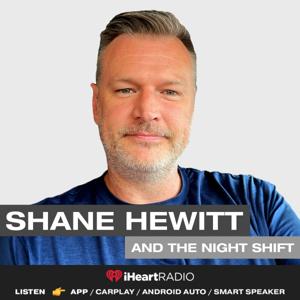
Shane Hewitt & The Nightshift is your late-night companion for real talk, bold ideas, and unfiltered conversations that matter. Hosted by Canadian radio veteran Shane Hewitt, each episode dives into the headlines, human stories, and hidden truths shaping our world—always with curiosity, compassion, and a sharp edge.
From politics and pop culture to mental health, technology, and everyday life, this podcast is where night owls, deep thinkers, and curious minds come to connect. Featuring expert guests, passionate callers, and Shane’s signature style—thoughtful, fearless, and refreshingly real.
If you crave meaningful dialogue, smart perspectives, and late-night radio energy in podcast form, subscribe now and join The Nightshift.