
Sign up to save your podcasts
Or

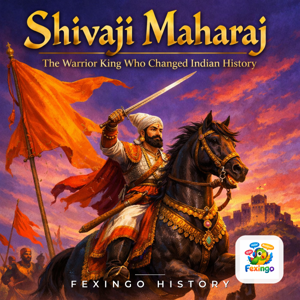


In Episode 73, Lucas and Luna explore an often-overlooked pillar of Shivaji's military success: his cavalry. From the rugged Mavala horsemen to the lightning raids that terrorized Mughal supply lines, discover how Shivaji built a mobile strike force that could outpace and outmaneuver the heavy imperial armies. Lucas breaks down the innovative tactics—like the 'saddle-and-foot' hybrid approach and the use of local horse breeds—and tells the story of key cavalry commanders like Netaji Palkar and Prataprao Gujar. The episode also touches on the tragic betrayal of Palkar and the cavalry's role in the Battle of Nesari. A must-listen for anyone interested in military history and the mechanics of Maratha power.
#ShivajiMaharaj #MarathaCavalry #NetajiPalkar #PratapraoGujar #BattleOfNesari #Mavala #GanimiKava #Swarajya #HindaviSwarajya #Mughal #Aurangzeb #Deccan #17thCentury #MilitaryHistory #IndianHistory #FexingoHistory #SouthAsia #Cavalry
Keep every episode free: buymeacoffee.com/fexingo
In this episode, Lucas and Luna explore the economic underpinnings of Shivaji Maharaj's Swarajya, focusing on the innovative taxation policies of chauth and sardeshmukhi. They discuss how Shivaji implemented a 25% tax on revenue from Mughal and Adil Shahi territories, using it to fund his military campaigns and fortifications without burdening his own subjects. The conversation delves into the origins of these taxes, their collection methods, and the diplomatic leverage they provided. Lucas explains the role of Mavala revenue officers, the use of receipts (kaulnama), and how these funds sustained the guerrilla warfare of ganimi kava. They also touch on the controversy surrounding these levies from both Mughal chroniclers and modern historians, offering a balanced view of this often-overlooked aspect of Shivaji's statecraft.
#ShivajiMaharaj #Chauth #Sardeshmukhi #MarathaTaxation #Swarajya #GanimiKava #MughalEmpire #AdilShahi #Mavala #Kaulnama #HistoryOfTaxation #DeccanHistory #SouthAsia #FexingoHistory #MarathaEmpire #EconomicHistory #ShivajiPolicy #WarFinance
Keep every episode free: buymeacoffee.com/fexingo
Lucas takes Luna inside the heart of Shivaji Maharaj's military revolution: the ganimi kava, or guerrilla warfare tactics, that allowed a small Maratha force to outmaneuver the vast armies of the Mughal Empire and the Adil Shahi Sultanate. They explore the strategic use of the Sahyadri mountains, night raids, supply line disruption, and psychological warfare. Lucas reveals how Shivaji's Mavala infantry, armed with local weapons and intimate knowledge of terrain, could strike and vanish before traditional armies could respond. They discuss key battles like the ambush at Pratapgad and the siege of Panhala, and how these tactics shaped the Maratha Empire. Luna learns why Shivaji never built a standing Mughal-style army, instead relying on a decentralized, mobile force. The episode also touches on the moral and logistical constraints of guerrilla warfare, and how it was financed through chauth and sardeshmukhi. A fresh angle for listeners who know the forts and councils but haven't considered the tactical doctrine.
#ShivajiMaharaj #GanimiKava #MarathaEmpire #GuerrillaWarfare #Mavala #Sahyadri #Pratapgad #Panhala #MughalEmpire #AdilShahi #Chauth #Sardeshmukhi #MilitaryHistory #IndianHistory #SouthAsia #FexingoHistory #History #Warfare
Keep every episode free: buymeacoffee.com/fexingo
In this episode, Lucas and Luna dive into Shivaji Maharaj's often-overlooked naval ambitions, focusing on the 1679 Battle of Khanderi. Shivaji, known for his hill forts and guerrilla tactics, built a formidable navy to challenge the Siddi of Janjira, the Mughals, and even the Portuguese. Learn about Darya Sarang, his naval commander, the construction of the sea fort at Khanderi, and the intense confrontation with the Siddi fleet that nearly killed Shivaji. We explore how Shivaji's maritime strategy was essential for protecting the Konkan coast and securing Swarajya from European and Mughal threats. This episode reveals a lesser-known facet of the warrior king's genius: his vision for a naval force that could project power beyond the Sahyadris.
#ShivajiMaharaj #MarathaNavy #KhanderiBattle #SiddiOfJanjira #DaryaSarang #KonkanCoast #HindaviSwarajya #MarathaEmpire #NavalHistory #IndianHistory #MughalEmpire #PortugueseIndia #SeaFort #BattleOfKhanderi #Swarajya #SouthAsia #History #FexingoHistory
Keep every episode free: buymeacoffee.com/fexingo
In this episode, Lucas and Luna explore the final chapter of Shivaji Maharaj's life — his death in 1680 at Raigad, the succession crisis that followed, and how his legacy shaped the Maratha Empire. They discuss the competing claims of his sons Shambhaji and Rajaram, the role of the Ashta Pradhan council, and the political maneuvering that led to Shambhaji's coronation. The conversation also touches on the controversial death of Shivaji's elder son Shambhaji at the hands of Aurangzeb, and how the Maratha resistance continued under Rajaram and later Tarabai. Specific details include the date of Shivaji's death (April 3, 1680), the funeral rites at Raigad, and the immediate aftermath where the Mughals briefly thought the Maratha threat was over. Lucas and Luna reflect on whether Shivaji had prepared a clear succession plan, and how the movement of 'Hindavi Swarajya' outlived its founder. No clickbait — just a thoughtful look at a pivotal moment in Indian history.
#ShivajiMaharaj #MarathaEmpire #Swarajya #Raigad #Shambhaji #Rajaram #Tarabai #Aurangzeb #Mughal #HindaviSwarajya #SuccessionCrisis #Deccan #IndianHistory #AshtaPradhan #Chhatrapati #History #FexingoHistory #SouthAsia
Keep every episode free: buymeacoffee.com/fexingo
In this episode, Lucas and Luna explore the often-overlooked roles of Shivaji Maharaj's daughters—Sakhubai Nimbalkar, Ranubai Jadhav, Ambikabai Mahadik, and Rajkumari Shivajiraje Bhosale. They discuss how these women navigated political marriages, managed estates, and wielded soft power in the Maratha Empire. Drawing on Marathi bakhars and family letters, the hosts reveal that Shivaji's daughters were not passive pawns but active participants in consolidating Hindavi Swarajya. The episode touches on the strategic alliances forged through marriage, the management of granted villages (mokasa and inam), and the legacy of these women in Maratha history. Unlike previous episodes on battles and forts, this conversation shines a light on the domestic and diplomatic front, showing how Shivaji's family ties strengthened his realm. Listeners will gain a nuanced understanding of gender roles in 17th-century Maharashtra and the real political weight carried by these royal women.
#ShivajiMaharaj #MarathaEmpire #HindaviSwarajya #MarathaHistory #SakhubaiNimbalkar #RanubaiJadhav #AmbikabaiMahadik #RajkumariShivajiraje #WomenInHistory #MarathaWomen #Mokasa #Inam #Bakhar #SouthAsia #17thCentury #GenderHistory #History #FexingoHistory
Keep every episode free: buymeacoffee.com/fexingo
In this episode, Lucas and Luna explore a turning point that many skip over: the Treaty of Purandar in 1665. After Mirza Raja Jai Singh's massive Mughal campaign cornered Shivaji at Purandar, the Maratha king made a calculated decision to surrender 23 forts, including the iconic Purandar itself. We examine the siege, the negotiations, the role of Jai Singh as both enemy and admirer, and the secret clause that allowed Shivaji's eventual escape to Agra. How did a treaty that seemed to end Swarajya actually become its crucible? And what happened to the fort after? Featuring the stories of Murar Baji Deshpande's defense, the "Baji of Purandar," and the fort's later life under the Mughals and the British. A deep dive into the diplomacy and sacrifice behind one of the most misunderstood events in Maratha history.
#TreatyOfPurandar #ShivajiMaharaj #MirzaRajaJaiSingh #PurandarFort #MarathaHistory #Swarajya #Aurangzeb #Deccan #FortSiege #MurarBajiDeshpande #HindaviSwarajya #IndianHistory #FexingoHistory #History #SouthAsia #MughalEmpire #MarathaEmpire #Podcast
Keep every episode free: buymeacoffee.com/fexingo
In this episode, Lucas and Luna explore one of Shivaji Maharaj's most dramatic episodes: the siege of Panhala Fort in 1660. After Afzal Khan's death, the Adil Shahi sultan sent Siddi Jauhar with a massive army to trap Shivaji inside Panhala. Lucas recounts the four-month blockade, the desperate conditions, and the ingenious escape plan involving a palanquin switch and a diversion led by Baji Prabhu Deshpande at Ghod Khind. The episode delves into the geography of Panhala, the politics of the Deccan, and the loyalty of Shivaji's Mavala soldiers. Lucas also discusses the aftermath, including the Treaty of Purandar and the fort's eventual return to Maratha control. Key figures include Shivaji Maharaj, Siddi Jauhar, Baji Prabhu Deshpande, and the Afghan mercenary Fazal Khan. The battle of Ghod Khind is remembered as a defining moment of sacrifice and strategy in Maratha history.
#ShivajiMaharaj #PanhalaFort #GhodKhind #BajiPrabhuDeshpande #SiddiJauhar #MarathaEmpire #Mavala #AdilShahi #Swarajya #DeccanHistory #IndianHistory #Siege #FortEscape #HindaviSwarajya #MarathaWarfare #History #FexingoHistory #SouthAsia
Keep every episode free: buymeacoffee.com/fexingo
In this episode, Lucas and Luna revisit the iconic battle of Pratapgad, where Shivaji Maharaj killed the Adil Shahi general Afzal Khan in 1659. They explore the events leading up to the encounter, the role of Shivaji's spy Bahirji Naik, the use of the wagh nakh (tiger claws), and how this victory cemented Shivaji's reputation and expanded his Swarajya. They also discuss the aftermath, including the Battle of Ghod Khind and the sacrifices of Baji Prabhu Deshpande. The conversation touches on the political context of the Deccan, the rivalry with the Mughals, and the symbolism of Pratapgad as a turning point in Maratha history.
#ShivajiMaharaj #Pratapgad #AfzalKhan #WaghNakh #MarathaEmpire #Swarajya #HindaviSwarajya #BahirjiNaik #BajiPrabhuDeshpande #GhodKhind #AdilShahi #Bijapur #Sahyadri #GanimiKava #Mavala #Chhatrapati #History #FexingoHistory
Keep every episode free: buymeacoffee.com/fexingo
In this episode of Fexingo History, Lucas and Luna explore the engineering marvels and strategic brilliance behind Shivaji Maharaj's lesser-known hill forts in the Sahyadri mountains. Moving beyond the famous Rajgad and Raigad, they delve into the construction and significance of forts like Pratapgad, Sinhagad, and Panhala, focusing on how Shivaji's innovative fort-building techniques shaped the Maratha Empire. They discuss the use of natural terrain, water conservation systems, and the ingenious 'balekilla' (inner citadel) design that made these forts nearly impregnable. The conversation also touches on the role of local materials, the labor force, and the strategic placement of these forts to control trade routes and communication lines. Learn about the unique architectural features such as 'machi' (plateaus), 'buruj' (bastions), and 'darwaza' (gates) that defined Maratha fort architecture. This episode offers a fresh perspective on how Shivaji's forts were not just military assets but symbols of Swarajya and resilience.
#ShivajiMaharaj #MarathaForts #Sahyadri #Pratapgad #Sinhagad #Panhala #Balekilla #FortArchitecture #Swarajya #HindaviSwarajya #Mavala #GanimiKava #Chhatrapati #WesternGhats #MarathaHistory #IndianHistory #History #FexingoHistory
Keep every episode free: buymeacoffee.com/fexingo
From the publisher's feed