
Sign up to save your podcasts
Or

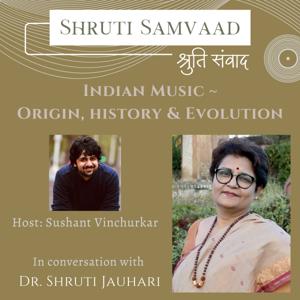


"Khayaal" is a genre of North Indian classical music that originated in the Mughal courts in the 18th century. It involves intricate melodic improvisations and is characterized by its free-flowing structure, allowing performers to showcase their creativity and virtuosity. The word "khayaal" itself means "imagination" or "thought" in Urdu, reflecting the emphasis on improvisation and creative expression in this form of music.
EP 11: Indian Music ~ Origin, History & Evolution (Age of Khayaal Gaayaki) covers the following topics:
During the Mughal period in India (16th to 18th centuries), music flourished as an integral part of courtly culture. It was patronized by emperors like Akbar, who promoted a diverse range of musical styles, including Hindustani classical music and Persian-influenced compositions. Musicians received royal patronage, leading to the development of new musical forms and instruments. Music was not only a form of entertainment but also a means of spiritual expression and cultural identity.
The concept of "thāt" is an important part of Hindustani classical music, which is discussed in "Sangeet Ratnakar." A thāt is a group of seven notes (or swars) forming the basic framework of a raga. It provides a structure for organizing musical compositions and improvisations within a particular raga. Each thāt has its own distinct character and mood, helping musicians understand and navigate the intricate world of Indian classical music.
Ustad Allauddin Khan was a legendary Indian classical musician and multi-instrumentalist who lived from 1862 to 1972. He was a maestro of the sarod, but he also mastered several other instruments including the sitar, violin, and surbahar. Baba, as he was lovingly called, was not only a virtuoso performer but also a highly influential teacher. He founded the Maihar gharana, a school of music that produced many renowned musicians including his own children, Ali Akbar Khan and Annapurna Devi. His contributions to Indian classical music are immense, and he is remembered as one of the most influential figures in the history of Indian music.
EP 10: Indian Music ~ Origin, History & Evolution (The Mughal Period) covers the following topics:
1. Mughal Era & New genres
2. Types of Gaayan: Nibaddh & Anibaddh
3. Prabandh & Composition formats
4. Dhrupad Gayan & Raja Man Singh Tomar
5. Dhrupad singers & instrumentalists
6. Navratna and the prominent musicians
7. Compilation of Dhrupad by Raja Man Singh Tomar
8. Akbar’s patronage of Music & Tansen Ragas
9. Ragas composed by Tansen and his son Bilash Khan
10. Music during Akbar’s reign
11. Music during later Mughal period
12. Significance of Sangeet Ratnakar
13. Classification of Ragas and the concept of thāt
14. Chaturdandi Prakashika and concept of Melkarta
15. Theoretical concept of Melkarta and its application
16. Importance of thāt in understanding Ragas
17. Microtones & the concept of Shruti
18. Seven Shrutis and their importance
19. Distorted forms of notes and & selection of 12 notes
20. Varieties of notes in Indian Classical Music
21. Worldwide acceptance of the 12 notes
22. Simplification of Music with 12 notes
23. Importance of Dhrupad in Ancient Music
24. Evolution of Indian Musical Instruments
25. Fusion of Musical Instruments
26. Rabab & Rampur Gharana
27. Mixing traditional and new instruments
28. Influence of Wazir Khan & Allauddin Khan
29. Introduction to Ustad Allauddin Khan
30. Development of different schools (Gharanas) in Indian Classical Music
31. Decline of Mughal Era and rise of Indian Classical Music
32. The vulnerability & sensitivity of musicians
33. Changes in the profile & lifestyle of musicians
34. Introduction to the topic of thāt
EP09 focuses on the rich musical heritage during the Bhakti Kaal. Bhakti movement around the 14-15-16 century AD had a profound impact not only on the spiritual and philosophy but also in the field of music and literature when saints from different ideologies came together to comfort the grieving society. They did this, not only with simple philosophical essence and discourses but also through “Sankeertan” - mass spiritual calling- through music. Throughout the episode, we'll explore the evolution of music and the profound impact of devotional music on society during this historical period.
In this extremely important episode, we delve into the events that would shape the current Indian music, focusing on its evolution during the period spanning from the 10th to the 14th century AD.
This era marks a significant transition in the development of Indian music, characterized by diverse influences and the emergence of new musical forms and structures. We explore the historical context, key milestones, and the cultural exchanges that shaped this transformative phase in the journey of Indian music.
EP08: Indian Music ~ Origin, History & Evolution (10th to 14th Century AD: The Transition) covers the following topics:
During the Mauryan and Gupta periods in ancient India, there was significant cultural and societal evolution, including in the realm of music. The concept of Raags, or musical modes, began to develop during this time, laying the foundation for classical Indian music as we know it today.
The Brihaddeshi, written by Matanga Muni, is an important treatise on Indian music that dates back to around the 6th century CE, during the Gupta period. It provides insights into various aspects of Indian classical music, including the classification of musical modes (Raags) and musical instruments.
The feudal system in Indian history, which saw the consolidation of power in the hands of monarchs and the establishment of a hierarchical social structure, was the beginning of the degradation of Indian classical art forms. The feudal system involved granting of land and privileges to nobles and landlords in exchange for their loyalty and military service to the ruling kings.
The rise in feudalism was the root cause of not only political and social unrest but also disintegration and cultural decay, including in the field of music, which played a significant role in shaping Indian society and identity.
EP07: Indian Music ~ Origin, History & Evolution (The evolution & Concept of Raags) covers the following topics:
5th century BCE in India (Bharatvarsh) marked a golden age of music, particularly in the context of classical Indian music. This period saw the emergence of significant musical treatises and foundational texts such as the Natya Shastra attributed to Bharata Muni, which not only codified principles of music but also theatre and dance.
Gandharan art refers to a distinctive style of art that flourished in the Gandhara region, which is now part of modern-day Afghanistan and Pakistan. This art form emerged as a result of the cultural exchange between the Hellenistic world and the Indian subcontinent during the time of the Greco-Bactrian and Indo-Greek kingdoms.
Gandharan art not only served as a vehicle for the propagation of Buddhist teachings but also played a significant role in the cultural exchange between East and West, showcasing the cosmopolitan nature of ancient Gandhara. Today, Gandharan art remains an important archaeological and artistic legacy, offering insights into the cross-cultural interactions that shaped the artistic landscape of ancient Central Asia.
EP06: Indian Music ~ Origin, History & Evolution (5th Century BCE, The Golden Age of Indian Music) discusses the following aspects:
1. Bhakti Sangeet during Granth Kal, Mahabharata, Ramayan
2. Music in Mahabharata & Ramayan
3. Singers & Singing Communities
4. Significance of Mahagranth
5. Samajja and freedom to chose partners
6. Celebration & prosperity in ancient Indian text
7. Fusion of Cultures in Gandharan Art
8. The fusion of cultures in Buddhism and Jainism
9. The fusion of cultures in Tibetan Chants
10. The perception of Sound & Music
One of the earliest known treatises on music in India is the Natyashastra, attributed to the sage Bharata Muni, believed to have been written between 200 BCE and 200 CE. This ancient text not only covers aspects of music but also encompasses various performing arts like dance and drama.
Natyashastra outlines the fundamental principles of music, including scales (ragas), rhythms (talas), and aesthetics. It describes the classification of musical instruments, vocal techniques, and the roles of musicians in performances.
Over the centuries, Indian music has evolved through various influences, including cultural exchanges with neighboring regions, invasions, and the patronage of different rulers. This evolution has led to the development of diverse musical styles and genres, each with its own unique characteristics and traditions.
Today, Indian music continues to evolve and adapt to contemporary trends while also preserving its ancient roots and traditions. It remains a vital aspect of Indian culture, with a global presence and influence, captivating audiences worldwide with its melodic richness, rhythmic complexity, and spiritual depth.
EP05: Indian Music ~ Origin, History & Evolution (Natyashastra) discusses the following aspects of Natyashastra:
1. Introduction to Natyashastra
2. Importance of Natyashastra
3. Classification of Musical Instruments
4. Understanding Shruti
5. The concept of Swar
6. The 22 Shrutis
7. Concept of Jati
8. Emotional & Spiritual value of Music
Welcome back to EP04 of our exploration into Indian Music! Continuing our journey through the captivating realms of melody and rhythm, this episode delves deeper into the mesmerizing world of music during the Vedic period. Join us as we unravel the intricate connections between Vedic chants, ancient mantras, and the profound influence they exerted on the evolution of Indian musical traditions. From the enigmatic teachings of Narada to the fascinating insights into microtones, murchanas, and melodic forms, we traverse through the corridors of time to decipher the foundational elements that shaped Indian music as we know it today. Prepare to be enchanted as we uncover the hidden treasures of Narada's Swar Mandal, delve into the nuances of Gram Ragas, and unravel the mysteries behind the development of music notation systems. Let the rhythmic pulse of history guide us as we navigate through the rich tapestry of Indian musical heritage, uncovering its origins, history, and evolution with each melodic revelation.
Welcome to a harmonious exploration of EP04: Indian Music ~ Origin, History & Evolution (Music during Vedic Period - Part 2).
Welcome to Episode 3 of our exploration into the vast tapestry of Indian music. In this episode, we embark on a journey through time to unravel the origins, delve into the history, and witness the evolution of Indian music, focusing specifically on the enchanting melodies of the Vedic period. Join us as we unravel the mystical melodies that echoed through ancient rituals, explore the significance of music in Vedic culture, and trace the seeds of classical Indian music back to its sacred roots. This episode discusses following points:
EP02: Indian Music ~ Origin, History & Evolution (Origin of Sound)
Welcome to the second episode of our podcast series, where we delve into the fascinating world of sound and music throughout human history. In this talk, we embark on a journey through time, exploring the origins of sound and music from the early days of mankind, through the Stone Age, and into the Indus Valley Civilization. Join us as we unravel the science behind sound production and discover what sets musical sounds apart from others. From ancient rituals to modern-day symphonies, we'll uncover the evolution of music and its profound impact on human culture and society. So sit back, relax, and prepare to immerse yourself in the captivating story of sound and music.
This sessions broadly covers the following topics:
From the publisher's feed