
Sign up to save your podcasts
Or

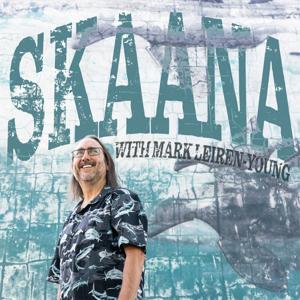


Skaana (@Skaanapod) host Mark Leiren-Young (@leirenyoung) talks sharks, Sharkwater (@teamsharkwater) and politics with Joseph Planta (@Planta) on a special shared episode with Planta On the Line @TheCommentary.ca
**Amazon links are affiliate links and support our podcast, thanks for clicking!
00:21 Introduction
2:51 Joseph Planta introduces Mark Leiren-Young.
4:00 Why Sharks Forever is dedicated to Rob Stewart and meeting Rob in Barcelona
10:45 Why I call sharks “the perfect predator.” “They are eating machines… they look devastating and awesome when you see them hunting.”
12:40 The impact of Jaws “What is baffling to me is that this one movie – released in 1976 – completely defined the way humans see sharks…. every time somebody saw a shark it was reported as if aliens invaded.”
16:41 “One moose hit one person in Jasper? ‘We’re going to shoot every moose in Jasper!' That is the approach to sharks. And I wish I put that analogy in the book… the government does not go, “it’s time for a war on moose.” You get a bear bite you don’t go after every bear.”
17:20 “We’re not food to them. We’re a lousy food source.”
18:00 “Sharks just look scary to us – something about them hits us on a primal level.”
21:18 Shark personalities and shark friendships.
23:40 The dangers of anthropodenial and the term’s creator, Frans de Waal. “When you tickle a monkey it laughs.”
25:47 “Everything is now eating plastics… humans don’t share. Humans just are not good at sharing.”
26:30 “The more environmental stuff that I do, the more astonished I am by nature.”
28:10 “There are almost always sharks fairly close to shore… they’re everywhere. We’ve all been really close to sharks if we’ve been in the water.”
30:00 “Roughly five people are killed by sharks each year… falling bookshelves definitely kill more people each year than sharks. TVs falling on people. Just pick the most random thing and they are all more dangerous than sharks.”
31:10 Running for Saanich council. Why I ran for political office.
36:08 “Joseph – you’re an essential service.”
Hosted on Acast. See acast.com/privacy for more information.
**Amazon links are affiliate links and support our podcast, thanks for clicking!
0:00 – intro
4:37 – There once was a film in Nantucket. . .
6:20 – Working on a whaling ship at age 14.
9:47 – “It was such a cool story that interconnected science and legend and naval stuff. It was such a fascinating journey.”
13:38 – “There’s a mystery here for us to solve.”
13:55 – The first time he saw a whale.
17:18 – Looking at loneliness and why this story became a phenomenon.
19:28 – Explaining the idea of 52 Hertz.
23:12 – Moving from true crime to the mystery of 52 Blue.
24:50 – Catching fire on Kickstarter
28:52 – “Just when you think you’ve had too much devil-worshipping and serial killers you go and you spend a day working on whales and everything’s okay again.”
29:33 – “Understand what your consumerism does.”
Hosted on Acast. See acast.com/privacy for more information.
Filmmaker Nadine Pequeneza talks about meeting and fighting for the North Atlantic Right Whales Right Whales for her award-winning documentary, Last of the Right Whales, with Skaana (@Skaanapod) host Mark Leiren-Young (@leirenyoung).
**Amazon links are affiliate links and support our podcast, thanks for clicking!
Hosted on Acast. See acast.com/privacy for more information.
**Amazon links are affiliate links and support our podcast, thanks for clicking!
Hosted on Acast. See acast.com/privacy for more information.
Author and primatologist Frans de Waal talks about great apes, not-so-great humans, animal emotions and anthropodenial with Skaana (@Skaanapod) host Mark Leiren-Young (@leirenyoung).
Skaana podcasts connect you to news and experts and their discussions about environments, oceans, and orcas.For more on the life and work of Frans de Waal
**Amazon links are affiliate links and support our podcast, thanks for clicking!
Show Notes
1:30 – Intro
3:35 – Defining anthropodenial.
6:05 – Anthropomorphism and primates.
7:02 – “That's the interesting part is we are so human-centric that we can deal with facial expressions, but not with the expressions of an elephant who do a lot of things was their trunk and ears, but their face is not very mobile.”
8:31 – Are humans a “successful” species?
11:05 – On human exceptionalism. “People always want to be special.”
12:40 – “If related species show similar behavior under similar circumstances, you have to use the same terminology because the psychology behind it is probably similar too.”
13:28 – How science’s relationship with anthropomorphism is changing.
14:40 – Laughing chimps.
16:15 -Why primatologists use names for apes not numbers.
17:58 – Animals and grief. “All animals that have attachments can also grieve.”
20:30 -“I'm not against humanizing animals or animalizing humans.”
22:49 – Survival of the kindest versus survival of the fittest.
26:00 – Talking about his book Mama’s Last Hug.
27:40 – Gender roles in bonobos.
30:05 – Bonobos solve problems with sex.
32:46 – Is there resistance to de Waal’s work and theories?
34:27 – His thoughts on animal personhood and the rights of animals.
36:30 – How he became interested in animals and animal behaviour.
42:34 – How he began working with chimpanzees.
46:32 – Becoming friends with apes.
47:25 – Animal communication and “dialect”.
51:12 – On being a cat person. “I consider cats extremely social.”
52:10 – Talking to the Dalai Lama about empathy. “I think empathy is found in all the mammals.”
Subscribe to the Skaana newsletter at Substack: https://skaanapod.substack.com/Support us on Patreon: https://www.patreon.com/skaanaHosted on Acast. See acast.com/privacy for more information.
Sea Shepherd Captain, Paul Watson (@CaptPaulWatson), talks with Mark Leiren-Young (@leirenyoung) about getting political, remembering Rob Stewart, saving salmon with Alexandra Morton and the Sea Shepherd Navy! Part two of our special two-part interview.
Skaana podcasts connect you to news and experts and their discussions about environments, oceans, and orcas.**Amazon links are affiliate links and support our podcast, thanks for clicking!
Hosted on Acast. See acast.com/privacy for more information.
Sea Shepherd Captain, Paul Watson (@CaptPaulWatson), talks with Mark Leiren-Young (@leirenyoung) about Seaspiracy, life as an outlaw and as a movie star, the impact of Covid on life in the oceans and whether whales are more intelligent than we are.
Skaana podcasts connect you to news and experts and their discussions about environments, oceans, and orcas.Berke Breathed's original drawing of Opus, the Penguin – used to illustrate Mark Leiren-Young’s poem Operation Dessert Storm in the Sea Shepherd newsletter.
Excerpts from Orcapedia**Amazon links are affiliate links and support our podcast, thanks for clicking!
Hosted on Acast. See acast.com/privacy for more information.
Killer whales hunting on land? Josh McInnis (scientist) and Justine Buckmaster (naturalist) on their wild discovery that some Salish Sea orcas are hunting seals on the shores of Protection Island and how orcas continue to surprise us.
Skaana shares stories about oceans, eco-ethics and the environment.Photo credits: Justine Buckmaster
Josh McInnes is a marine ecologist and masters candidate at the University of British Columbia's Institute for the Oceans and Fisheries Marine Mammal Research Unit. Josh grew up on Vancouver Island, British Columbia, Canada. For over a decade Josh has studied the ecology and behaviour of transient (Bigg's) killer whales along the Pacific Coast, but has also traveled to remote locations off British Columbia, Washington State, Alaska, California, Australia, and Antarctica to study marine mammal populations.
Justine Buckmaster is a certified Marine Naturalist currently working at Puget Sound Express. She has been working in the Salish Sea region for over ten years as a guide and educator on whale watching ecotours. Justine works with local marine mammal researchers by providing digital photos and sightings data from her encounters to record proof of presence and unique behaviors of the marine mammal species and populations of the Salish Sea. Justine was raised in southern Washington State near the Columbia River and currently resides in the town of Mukilteo in northern Puget Sound.
Books on Amazon and Classes**Amazon links are affiliate links and support our podcast, thanks for clicking!
Please support our guests and our podcast.
Timecodes
Hosted on Acast. See acast.com/privacy for more information.
Eco-warrior, Alexandra Morton, on her fight to save wild salmon, being gaslit by the Canadian government and her adventures in Green politics. She also dares people to sue her over her essential new book – Not On My Watch: How a renegade whale biologist took on governments and industry to save wild salmon.
“The salmon farming industry is harming wild salmon, is harming whales, is causing algae blooms and really needs to be controlled.”Skaana shares stories about oceans, eco-ethics and the environment.Join the Pod…… https://www.patreon.com/skaana
Spotify……………www.bit.ly/spotify-skaana
Apple Podcasts……..www.skaana.ca
The Orca Bites Podcast (on anchor) …….. www.orcabites.com
Skaana home……. skaana.org
Skaana on Medium…. orcatales.com
Our Latest Orca Videos… jpod.news
Facebook…….…..facebook.com/skaanapod
Twitter…………… twitter.com/leirenyoung
Instagram…..…….instagram.com/skaanapod
Books on Amazon and Classes
**Amazon links are affiliate links and support our podcast, thanks for clicking!
Significant Quotes:
“The salmon farming industry is harming wild salmon, is harming whales, is causing algae blooms and really needs to be controlled. I mean, at first I thought they just had to get off the wild salmon migration routes, but now I realize they just have to get out of the ocean completely, and if they want to continue, build a tank and get in it and operate from there.”(8:18)
“Doing all this damage was part of how they were making such a phenomenal amount of money. It’s really insidious.” (12:38)
“I cannot believe I have spent my whole adult life fighting salmon farms. It just seems ridiculous. But when I look at it from a global perspective I realize I’m part of a huge army across the planet that is trying to protect life on earth.” (12:55)
“When you have a corporation involved, they don't really care how many fish there are. They just want that share price to go up. And so this is deadly, because it really is a cancer model. They need to grow, they need to grow, they need to grow, with no mind to the fact that they're killing the very body that they're in, which in this case is the ocean. I mean, they're going to kill themselves off. They are killing themselves off in the process of following their business plan. It's really deranged. It doesn't make sense and it has to stop.” (15:31)
“Nobody wants to buy fish that have killed off whales, never mind everything else.” (19:00)
“There's nobody whose position in DFO is the health of wild salmon. There's no director of wild salmon.” (24:48)
“We have the biggest salmon run in the world on the verge of extinction.” (29:29)
“I saw grizzly bears that no longer looked like Grizzly bears… they were emaciated.” (33:14)
“Alexandra: I have to wonder at some level in government are people saying, “Oh my God, those fish… What?! They're still coming back? There's still 20 of them?! Gosh darn it.” I don't know. I don't think people, I don't think some level of government wants wild salmon at all.
Mark: That just gave me chills because I found myself asking the same question about the Southern residents.
Alexandra: I bet you do. Yep..
Mark: I feel like there are people in the federal government, you are going “Damn, there's still 74 of them…. “
Alexandra: Yeah, and they're having babies. ” (36:07)
“The salmon actually have the whole mating thing down. They can handle that.” (42:30)
“And for the first time last spring, I set my big net and pulled it in and looked at the fish and, oh my gosh, they were fat and sassy. They were sparkly, blues and silvers, deep jet black eyes, not the cloudy film they get when they go by the farms and it was a feeling in my heart that I just really had to sort of stand back a minute and be like, what is that feeling? It was joy. It felt like my heart was ringing.” (48:00)
Launch of Operation Virus Hunter (2016) Photo credits: Mark Leiren-Young
TimecodesHosted on Acast. See acast.com/privacy for more information.
Gavin Hanke Curator of Vertebrate Zoology at the Royal BC Museum (@RoyalBCMuseum) on the life, death and anatomy of Rhapsody – the skeletal star of the museum’s fantastic exhibit Orcas: Our Shared Future #RBCMOrcas – which is open until 2022 before touring the world (and was written by Skaana host, Mark Leiren-Young @leirenyoung).
Rhapsody (J32). Credit: Josh McInnes
Skaana connects you to stories about oceans, eco-ethics and the environment.Photos by Rayne Ellycrys Benu
Books on Amazon and Other Ways to Support Skaana
**Amazon links are affiliate links and support our podcast, thanks for clicking!
• The Killer Whale Who Changed the World… amzn.to/2pRNU1q
• Orcas Everywhere… orcaseverywhere.com
• Paint the Ocean You Wish to See with Rayne Ellycrys Benu…. digital-enlightenment.net
Please support our guests and our podcast.
• https://royalbcmuseum.bc.ca/
• https://www.facebook.com/RoyalBCMuseum
• Twitter @RoyalBCMuseum
• instagram royalbcmuseum
• #RBCMOrcas
Skaana visits Rhapsody @ the Royal BC Museum Photo Credits: Rayne Ellycrys Benu
TimecodesSubscribe to the Skaana newsletter at Substack: https://skaanapod.substack.com/Support us on Patreon: https://www.patreon.com/skaana
Hosted on Acast. See acast.com/privacy for more information.
From the publisher's feed
Skaana - One Ocean — Ocean Life, Eco‑Ethics & the Environment — Interviews for a Changing Planet is a podcast for anyone who loves the…
Host Mark Leiren-Young dives beneath the surface with scientists, authors, activists, and other dolphin-friendly humans for candid conversations about marine life, conservation, eco‑ethics, and the issues shaping our future.
Launched in 2017 with a focus on orcas, Skaana has expanded to explore sharks, octopuses, whales, and the wider web of ocean stories—fact-based, curious, and always grounded in respect for life in the sea. Dive in and make waves with us.
Mark Leiren-Young (Host): Mark is an author, screenwriter, playwright, journalist, performer, and environmentalist. His book The Killer Whale Who Changed the World won the 2016 Science Writers and Communicators Award, and his comic memoir Never Shoot a Stampede Queen won the Stephen Leacock Medal for Humour. Mark also wrote and directed The Hundred-Year-Old Whale, which won the 2018 Writers Guild of Canada Award for Best Documentary.
Bug Lewis (Producer & Audio Engineer): Bug is Skaana’s producer and audio engineer, with a creative background spanning poetry, music, and acting. They were first published as a poet at fifteen (Poetry on Buses) and performed as a musician/actor with the ensemble for Desdemona Chiang’s Measure for Measure at the Seattle Shakespeare Company.
Rayne Ellycrys Benu (Executive Producer): Rayne is an award-winning cinematographer and artist, and a nationally published festival and theatre photographer. Their work spans filmmaking (directing, editing, sound, video), interactive/digital storytelling, and visual art—bringing a creative, multidisciplinary lens to Skaana’s mission and production.
Hosted on Acast. See acast.com/privacy for more information.