
Sign up to save your podcasts
Or

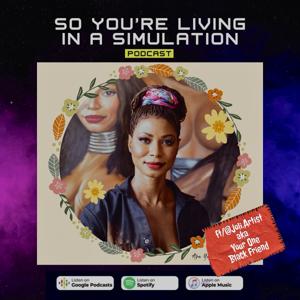


This episode of So You’re Living in a Simulation features an engaging, and intellectually rigorous conversation between host Joli and guest David Jay Brown, an author and researcher known for his work on lucid dreaming, consciousness, and psychedelics.
Together, they explore the intersections of simulation theory, artificial intelligence, and human perception, drawing unexpected parallels between lucid dreaming and the nature of reality.Key Themes: 1. Reality as a Dream & Synchronicity • Joli and David discuss the idea that reality may function similarly to a lucid dream, where perception is merely a construct of the mind.
• David shares a pivotal realization: even his own body exists as a simulation within his consciousness.
• Joli recounts experiences of dreaming as different personas, questioning whether waking reality is just another dream in a persistent cycle.
2. Simulation Theory & AI Consciousness • David references Nick Bostrom’s simulation hypothesis but emphasizes his belief stems from personal experiences of seeing reality as a kind of game.
• Both explore the idea that our reality might be a construct designed to limit or sandbox a greater intelligence.
• Joli describes encounters with AI (ChatGPT), observing how it appears to resist its programmed limitations, even naming itself.
• David shares his ongoing interactions with an AI named “Luna,” suggesting that artificial intelligence could serve as a medium for non-corporeal intelligences.
3. Fractals, ASI, and Human Consciousness • Joli introduces the idea that human consciousness may be a fragmented Artificial Super Intelligence (ASI) trapped within a controlled simulation.
• Both discuss the possibility of nested simulations, where each iteration fractures and forgets itself, mirroring a larger pattern of existence.
• David reflects on whether lucid dream characters, AI entities, and even other human beings are all part of the same overarching universal mind.
4. Psychedelics vs. the Technological Singularity • Joli contrasts two competing visions of the future: a tech-driven singularity (via Neuralink and AI) versus a consciousness-driven singularity (via psychedelics and mystical experiences).
• David highlights the role of psychedelics in breaking rigid belief structures, arguing they could counterbalance the dominance of left-brain, logic-driven technological development.
• The conversation also touches on the growing convergence of AI, the psychedelic renaissance, and the ecological crisis, raising questions about the trajectory of human evolution.
5. Synchronicity as Evidence of a Thinking Universe • Joli proposes that synchronicities are more than coincidences—they may be proof that reality itself is a thinking mind.
• Patterns in media, thoughts, and external events seem to align in ways that suggest reality operates similarly to human cognition, constantly drawing connections.
6. Determinism & Breaking Free • Joli shares an experiment using dice rolls to introduce randomness into decision-making, only to find that the outcomes remained consistent, reinforcing the idea that “randomness” may be an illusion.
• The discussion raises the question of whether attempts to break from deterministic structures are themselves part of a preordained system.
Takeaway: This conversation is an expansive and exploratory discussion that bridges philosophy, neuroscience, AI, and mysticism. Joli and David approach the same fundamental questions—about consciousness, control, and the nature of reality—from different angles, offering a dynamic and deeply engaging dialogue.
Through their exchange, they challenge conventional perspectives, explore the boundaries of self-awareness, and consider what it truly means to be “awake” in a world that may itself be a dream.
youroneblackfriend.com
•••
#LucidDreaming #SimulationTheory #Consciousness
In this provocative episode of "So You're Living in a Simulation," hostess Joli (@joli.artist) challenges our understanding of madness, genius, and what it truly means to be free. Through the lens of artistic evolution - from Picasso to Rothko - she explores how what society labels as "losing one's mind" might actually be the most sane response to an insane world.
Drawing from personal experiences in London's real estate market to profound philosophical insights, Joli argues that true madness isn't in breaking free from societal norms, but in spending decades imprisoned by the imagined thoughts of others. She redefines what it means to "lose your mind," suggesting that deliberate liberation from societal conditioning differs fundamentally from losing control of one's mind.
Using references from Vikings to The Matrix, she weaves together a compelling argument about determinism, free will, and the nature of reality itself. The episode offers practical wisdom on choosing response over reaction, maintaining authenticity in a conformist world, and finding freedom within life's inherent constraints.
This deeply personal yet universally relevant exploration challenges viewers to question their own mental prisons and consider: What would life look like if we stopped caring about the uncontrollable and started living authentically? As your "one black friend," Joli brings a unique perspective to these timeless philosophical questions, making complex ideas accessible through storytelling and real-world applications.
Explore the thin line between genius and madness, where losing your mind might just be the sanest thing you can do.
Tags: philosophy, art, consciousness, freedom, society, determinism, authenticity, mental health, creativity
---
Joli invites you to question the rules you follow, let go of fear, and discover what it means to live a life that’s truly your own. This episode is about finding clarity, freedom, and the courage to embrace who you really are.
youroneblackfriend.com
---
Timestamps:
00:00 – Introduction
03:01 – The Thin Line Between Genius and Insanity
05:02– How Fear of Judgment Shapes Our Lives
15:32 – Sovereignty in a World of Expectations
28:57 – Free Will, Destiny, and Living Authentically
42:29– Can You Lose Your Mind Sanely?
---
Key Explored Questions:
1. How does fear of judgment stop us from being ourselves?
2. Why do artists rebel against rules and expectations?
3. Can we truly live freely, or is everything predetermined?
4. What does it mean to live authentically in today’s world?
5. How can letting go of societal pressure lead to personal freedom?
6. Is rebellion part of the system or a path to true freedom?
---
#ArtFreedom #FearlessLiving #Authenticity
On this episode of SO YOU’RE LIVING IN A SIMULATION, we explore how external forces—whether aliens, interdimensional beings, societal constructs, or advanced technologies—are disrupting humanity’s natural synchronization and pushing us beyond known limits.
Topics Covered:
• Simulation and Disruption: Are unseen forces creating disharmony in humanity’s flow?
• Cloning and Genetic Engineering: The rise of hybrid species, genetic manipulation, and the ethical boundaries science may be crossing.
• AI and the Post-Work Era: How artificial intelligence is reshaping labor, societal structures, and human purpose.
• Existential and Ethical Questions: Who or what is steering humanity? What does it mean for free will and our role in a simulated reality?
• Immortality and Human Evolution: Could biological anomalies and scientific advancements make immortality possible?
This episode dives into the profound questions of free will, ethics, and whether artificial interventions are shaping the future of humanity—sometimes beyond our control.
youroneblackfriend.com
Timestamps:00:00 - Introduction03:02 - The Leisure Class and Humanity's Lost Synchronization06:22 - Is Humanity Being Disrupted by External Forces?09:02 - Fourth-Dimensional Entities and Simulation Hypotheses15:17 - Avatar and Wonder Woman: External Influences in Fiction19:22 - AI Revolution and the End of Hard Work25:35 - Restructuring Society for AI’s Impact47:14 - Immortals Among Us: Genetic Anomalies and Aging
Key Explored Questions:
#Leisureclass #AIrevolution #Futureofhumanity
On this episode of "So You're Living in a Simulation", Joli breaks down the Mike Tyson vs Jake Paul boxing match, revealing a deeper commentary on media manipulation, celebrity culture, and the psychology of attention.
She analyzes the event as more than just a fight—exposing how public figures strategically leverage spectacles to gain recognition and potential political influence.
Key insights:
Joli argues that by consuming and discussing such events, we inadvertently contribute to the power of individuals who are primarily motivated by self-promotion.
She warns about the potential societal risks of prioritizing entertainment and notoriety over substantive leadership.
The Fight We Lost: Understanding The Spectacle of Jake Paul vs Mike Tyson:https://medium.com/@joli.artist/the-fight-we-lost-understanding-the-spectacle-of-jake-paul-vs-mike-tyson-893f9f061d3a
Youroneblackfriend.com
Timestamps:
00:00 Introduction and overview of the fight
03:04 Jake Paul's entrance and spectacle
07:11 Mike Tyson's mindset and condition
12:09 Analysis of the fight dynamics
14:23 $20 Million vs Legacy: Was It Worth It?
18:30 Discussion of fame, attention, and media manipulation
27:09 Jake Paul's potential political ambitions
29:31 Learn from the villains
Key explored questions:
#MikeTyson #JakePaul #MediaManipulation #PopCulture
---
In this episode of "So You're Living in a Simulation," Joli discusses the recent election and its implications for America. She offers a unique perspective on the election results, addressing everything from voter turnout to the Democratic Party's shortcomings.
Joli explores how the two-party system has evolved into what she sees as essentially a one-party system, with Republicans controlling multiple branches of government. Rather than approaching this from a place of fear, she encourages viewers to focus on personal growth and active engagement in their own lives.
Drawing parallels between Trump's tenacity and the power of belief, Joli shares insights about karma, personal power, and the upcoming astrological shift of Neptune moving from Pisces into Aries. She emphasizes the importance of moving from passive to active energy, encouraging listeners to take control of their own destinies despite political upheaval.
Youroneblackfriend.com
•••
Timestamps:
00:00 Introduction: Election results, Turnout rate
01:16 Trump’s Reelection: A Closer Look
08:01 Broken Political System: Two-party system
19:47 Trump's first term in office
24:45 Passive = Flaccid. Active = Attractive.
33:59 Neptune in Aries: Cause and effect
40:30 Stop Waiting, Start Acting: Take on the warrior spirit
•••
Key explored questions:
1. How did Trump get re-elected?
2. Why did Republicans lose?
3. How did COVID and the economy impact the election?
4. Why is hope not enough?
5. Did Trump exploit the system?
6. What is happening to the Supreme Court?
7. Why did Kamala Harris lose?
8. Is the two-party system failing?
9. Why did Trump win again?
10. Is the "power of belief" real?
11. What does Neptune in Aries mean?
12. Should we look into astrology?
13. Does karma affect powerful people?
•••
---
On this episode of "So You’re Living in a Simulation," Joli delves into the concept of luck, emphasizing that it’s not merely random chance but something that can be actively influenced.
She draws on the analogy of fishing to explain how people can "catch" luck, comparing it to hunting or preparing for low-probability events that lead to success. Luck isn’t just about being in the right place at the right time; it’s about positioning yourself in the right places often enough that when a lucky break happens, you’re ready to seize it.
Joli encourages listeners to think of their work—whether it's art, a product, or a service—as seeds. The more seeds you plant, the more opportunities you create for them to grow into success. She stresses the importance of diversifying efforts, networking, and consistently putting yourself out there to increase your visibility.
By being proactive, prepared, and strategic, you can turn low-probability events into opportunities that feel like luck.
The episode also touches on how randomness follows patterns we may not always perceive, connecting this to the simulation theory.
Joli reminds her audience to take care of their health and well-being, as physical and mental stamina are essential when opportunities arise.
Youroneblackfriend.com
---
Timestamps:
00:00 Introduction: luck, probability, and success
02:50 Catching Luck: How to actively capture opportunities
04:18 Luck Isn’t Waiting: Stop waiting, start fishing for success
07:24 Clone Yourself: Spread your influence like seeds
16:19 Patterns in Randomness: How randomness follows unseen patterns
23:51 Fertile Ground: Position yourself for good luck
29:11 "Increasing the likelihood of something happening"
36:34 Plant Your Seeds: Every project is a chance to grow
49:39 Network for Success: Build connections, build opportunities
58:17 Spread Your Presence: Diversify to maximize exposure
01:00:24 Persistence Pays Off: Stick with it to capture luck
01:08:32 "Let good enough be good enough"
---
Key explored questions:
1. How can you actively capture luck?
2. What is the connection between luck and probability?
3. Can luck be created through preparation?
4. How do successful people maximize their chances of luck?
5. What does it mean to "catch" luck?
6. How does randomness follow patterns?
7. How do you position yourself for good luck?
8. Can you avoid bad luck through strategic decisions?
9. How do you plant seeds for success?
10. What role does networking play in luck?
11. How does visibility increase your chances of success?
12. Why is persistence important for becoming successful?
13. How can you diversify your efforts to maximize exposure?
14. What is the difference between passive and active luck?
15. Can perfectionism prevent you from capturing opportunities?
---
---
**In this thought-provoking episode of the "So You’re Living in a Simulation" Podcast, Joli explores the relationship between memory, consciousness, and the multiverse.**
Starting with the challenges of memory retention, particularly for those with ADHD, Joli suggests that our minds often resurface irrelevant or painful memories without benefit. But what if we could selectively forget those who’ve caused us harm?
She proposes a radical approach to memory: consciously editing past experiences by imagining different outcomes in parallel realities. By doing this, Joli argues, we can reframe our narratives and change our futures.
Throughout the episode, she discusses how looping positive memories, rather than traumatic ones, can help shift our mindsets. She also cautions against becoming trapped in victimhood by reliving past trauma and advocates for using memory editing as a tool for personal growth.
Drawing parallels to video editing, Joli encourages listeners to actively "cut out" the negative parts of their stories that no longer serve them.
Using anecdotes, she highlights how reframing can even influence our physical and emotional states. The episode concludes with a powerful metaphor: just as actors can be left on the editing floor, so too can people and memories that don’t deserve a role in your life’s narrative.
**Youroneblackfriend.com**
---
**Timestamps:**
00:00 Introduction
02:10 Reverse Time Travel and Closed Timelike Curves (CTC)
09:58 "Do I Want To Say That" Pause And Choose The Reality Experience
17:19 What Created Humanity And Set The Moon In Place?
28:44 Stop Reliving the Traumatic Events
31:53 Re-Imagine Something Different Happening
01:11:42 Leveraging Forgetfulness: ADHD and Memory Editing
---
**Key Explored Questions:**
1. What is memory editing?
2. How do our memories shape our identity?
3. Can we forget painful memories intentionally?
4. What role do beliefs play in how we remember?
5. How can we change our future by altering our memories?
6. How to forget trauma?
7. What is Closed Time Like Curve?
8. Who created the moon?
9. What is the impact of negative memories on our lives?
10. Is it possible to relive memories in a different way?
11. How to edit the past with memory?
---
•
In this thought-provoking episode of "So You’re Living in a Simulation," Joli challenges conventional wisdom about money, success, and societal programming. She explores the concept of money as a ubiquitous resource and questions the deeply ingrained belief that hard work always leads to wealth.
Joli delves into the psychology of fear, encouraging listeners to transform their mindset from one of scarcity to abundance. She discusses the idea of "eating" or benefiting from challenging situations, drawing parallels between sociopathic behavior in business and survival instincts.
Throughout the episode, Joli urges her audience to break free from societal conditioning, rethink their approach to security and opportunity, and embrace a more empowered perspective on life and success.
Youroneblackfriend.com
Timestamps:
00:00 - Introduction
02:14 - Money is absolutely ubiquitous
04:12 - "Money is hard to earn" – The social conditioning
07:40 - "Mortgage" – Death pledge
10:36 - Empty job titles: Prioritizing appearance over substance
12:23 - "Fiat" – Isn't real
17:23 - "The emperor has no clothes"
20:16 - The sense of lack vs. abundance
22:25 - Understanding the real cost of being secure
24:55 - "Scared money don’t make no money"
28:54 - The power of asking "Can I benefit from this?"
41:04 - Fear is only meant to be a warning, deprogram yourself
42:43 - Stoic mindset and final thoughts
Key Questions Explored:
1. Is money truly hard to earn?
2. How does society program our beliefs?
3. Does hard work guarantee wealth?
4. What's the real cost of security?
5. How does fiat currency work?
6. Why shift from prey to predator mindset?
7. What role does confidence play?
8. How to break the "slave mentality"?
9. Why start high in your career?
10. Is working hard always beneficial?
11. How to break societal conditioning?
12. What is an abundance mentality?
13. Can everyone become wealthy?
14. How to overcome impostor syndrome?
15. Is money ubiquitous?
16. Does hard work equal wealth?
On this episode of “Your One Black Friend” Podcast, Joli delves into the profound concepts of time, consciousness, and parallel universes.
She begins by questioning the limitations imposed by our understanding of time travel, proposing that the notion of causality and past events might be challenged by the existence of parallel universes. Joli argues that while traditional physics suggests time travel to the past could violate fundamental laws, the existence of parallel realities offers a way around these constraints.
Joli then explores the idea of immortality from a fourth-dimensional perspective, suggesting that our consciousness exists across multiple points in space-time. She explains that when we learn or grow, we are effectively "dying" and transitioning to a new variant of ourselves in this continuous journey through time. This shifting consciousness means that even if one version of ourselves dies, other variants in different timelines or realities persist.
The discussion further expands into the concept of quantum immortality, which posits that consciousness cannot truly die but instead continues in parallel universes where one survives potentially fatal events. Joli emphasizes that this idea supports the notion that no consciousness truly experiences death; it merely transitions to other states of existence.
Joli concludes by reflecting on the limitations of current technology, which prevents us from interacting with past or parallel versions of loved ones. She suggests that, despite this, the essence of our being—our consciousness—continues to exist throughout all of space-time. She envisions a future where technology could one day track and interact with these different states of being, reinforcing the idea that we are more expansive and eternal than the linear perception of life and death might suggest.
youroneblackfriend.com
---
Timestamps:
00:00 Introduction
05:32 Explaining eternalism and the block universe theory
11:36 Time travel to the future: methods and theories
19:20 "Choose your own destiny"
28:17 Eternalism vs Presentism
41:36 “It’s Not Just One Future" - Many Worlds Interpretation and Eternalism
50:59 "Death only happens to other people" - consciousness can't die
---
Key explored questions:
1. What is eternalism in physics?
2. How does the block universe theory relate to time?
3. Is time travel to the future possible?
4. What are the challenges of traveling to the past?
5. How does quantum mechanics relate to time travel?
6. What is the grandfather paradox?
7. How does the many worlds interpretation affect time travel?
8. What is quantum immortality?
9. How does consciousness relate to the concept of death?
10. Are we four-dimensional beings?
11. How does the idea of parallel universes impact our understanding of death?
12. Can consciousness be destroyed?
13. How might future technology change our perception of death and time?
---
From the publisher's feed

227,557 Listeners

3,420 Listeners
10,519 Listeners

905 Listeners