
Sign up to save your podcasts
Or

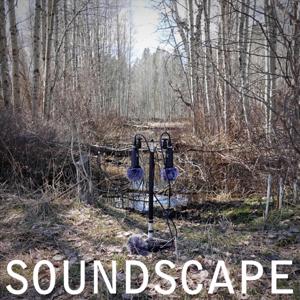


A quick dispatch this week: As a teaser for a short series later this year, I thought I’d share this frog chorus recording from the Dosewallips River Valley in Olympic National Park this past spring. It’s a soothing ten minute listen.
Also, out today under my instrumental-only pseudonym Sleeping Animal is Moss, a ten minute miniature suite for piano and synthesizers. Find it today on all streaming services.
While you’re there, consider listening a companion piece released a fortnight ago. Vim is similar in construction. Both of the works breathe with tension and release. Both have extended pastoral ambient passages. This one clocks in at 11 minutes.
That’s all for this week. Thanks for tuning in!
I love swans. I just do. My heart always skips a beat when I see them on a lake. I love their wild sounds, their warbled cries, whistles, and bugles. This recording was captured today, January 14th, 2025, and is two hours in length (for paid subscribers). It captures the sound of swans, geese and ducks.
Here we have Virgina Lake. Few people know it by name. It’s not listed on most maps. It is the centerpiece of Wapato Access Greenway (or Wapato Park, for short) on Sauvie Island, just north of Portland, Oregon:
In my experience the Tundra Swans settle in here best on foggy winter days. They don’t tolerate noisy humans on the shoreline. It’s hard to get close enough to them to get a photo with good detail.
Juveniles have dusky brown heads and necks:
Tundra swans look very similar to Trumpeter Swans, but are differentiated by their higher pitched bugle calls, and a yellow teardrop on their bill (often hard to spot in the field).
Like almost all of my recordings, this has been edited to sound as pre-industrial as possible, without sacrificing fidelity.
If you like the sound of swans as much as I do, here’s a recommended list of previous recordings:
Oaks to Wetlands Trail Soundwalk
Ridgefield Swans
Swan Songs
That’s all for now. Be well, friends.
Time now for another Sound & Vision; a photo essay with a soundtrack. This time we’re back at my old stomping grounds, Oaks Bottom, with a new mission: keep that shutter clicking! So feel free to click that play button up there and let’s find out what there is to see and hear today.
What a morning! The sun is out after days of rain. It’s mild. And already I hear frogs. The first thing I notice is all the water. It’s pooling up around the path and in the trees.
It’s still dripping from the snowberries.
Light streams over the bluff. The tangled limbs of oaks are golden-hued. I hear a Kingfisher. That’s odd, the pond is a quarter mile away. I hear something else too.
I look closer, and find a couple of squirrels in a spiral chase. Bits of moss fall from the tree as they scratch their way around and around.
They are fast!
But I’m done craning my neck. And I hear something else, very close, very quiet.
The moss on this nurse log hosts a slow-moving streamlet, cascading drip by drip to the soil below. Let’s look at that licorice fern.
And that tiny burst of red! I see these ruby leaves in several places. What are they?
Further along the path I see Traveller’s Joy, also called Old Man’s Beard. It’s a noxious weed, but it’s pretty in the light.
The moon is bright this morning.
Hello moon.
As I approach the pond, the wind picks up. The posts of the split rail fence host a moss that is stretching out for the light.
The spring-fed creek seems to be flowing less than usual, which doesn’t make sense to me, given that the ground is saturated. Maybe it’s just this blanket of leaves that’s muffling its sound.
As I lean over I see a stone that catches my eye. The bluff slope is full of river stones, top to bottom.
I try and picture in my mind the scenario that forms the hole in this one: a little pebble grinding away a pothole under the spell of some current. So many stones around here were deposited in the Missoula Floods that happened at the end of the last ice age. Gravel bars hundreds of feet tall in some places. How far did you travel, little stone?
Along the boardwalk I survey the beaver worksite. Coming along. The downed tree is in the water, now stripped of its bark at the waterline.
Along the way I hear Black-capped Chickadees and Yellow-rumped Warblers. The chickadees start to sound more insistent. They add “dees” to their calls: chick-a-dee-dee-dee-dee-dee. That’s a warning. I hear ducks dash off. Then I hear the telltale squeal: the local apex predator, the Bald Eagle, is making the rounds. It glides by slowly above the trees, catching the upwelling air currents. Do you see it?
At the observation deck I take in the panorama of the pond. The fluffy low-lying clouds look novel to me. Not typical for the season.
And so does this squirrel munching on a samara, a little helicopter seed. Did you know they are a spring delicacy for us humans too? Peel and toss on your salad, says Curious by Nature.
And while I’m out here let’s check on the resident Western Screech Owl. If you didn’t know where to look, you’d never see it. Even with someone telling you where to look, it can take a minute for your eyes and brain to register it. A master of disguise. Snoozing, as per usual.
Back along the boardwalk, I spend a moment with this GBH. (That’s birder speak for Great Blue Heron.) It’s not at all bothered by me.
Such a curious creature. So statuesque. Intense.
Look at its feathers. Such a beautiful color. In fine art paint it’s Paynes Grey. Just mix a little Titanium White. Voila!
Rounding the bend I see this distinguished elder. I frame it with some red leaves in the foreground. Ooh, artsy.
A few paces down the path I see a little spy. So secretive, the Pied-billed Grebe. Always slinking away silently, often submerging like a submarine. It’s the smallest of the waterbirds here.
I decide to scramble down to the shore, to see if I can get a better photo when it comes up for air. It’s smarter than that of course. It can track my movement on the shore, eyeing me from under water. I admire this female Mallard instead.
None of these wildlife photos would generally make the cut, by the way. Poor lighting, and only the squirrel was at eye-level. (You always want your subject at eye level…) Soon enough the grebe comes up with a splash. It’s got a fish.
It takes it a minute to subdue its catch.
A GBH is relocating and it doesn’t sound happy about it. I rattle off some shots. Only one is in focus.
Around the bend I see a photographer friend. He’s looking for a line to frame a shot he wants. I look for a bird and ask, “What do you see?”
“The moon, next to the tower,” he says, and then I see what he’s after.
We both take some photos. I say, “I’m having trouble focusing on the moon.”
“Focus on the tower; it should be at infinity.” Solid advice.
Now, if you’re not up to speed with that lingo, let me just take a second to explain, in the way that I chose to visualize this after we parted ways. “Infinity” here is used to indicate that from the tower and beyond, all the way to the moon, will be in focus. You know the line, “All the world’s a stage…”? It’s a useful metaphor when it comes to the concept of focal planes and focal distance. In this case I imagined seeing a stage in my viewfinder—a little diorama in a shoe box—but with countless imagined curtains and scrims and screens all the way to the moon at the back of the stage. I imagined a size “infinity” shoe box. I visualized the screens lifting in sequence, revealing new backgrounds and lighting scenarios, endlessly. All in focus. An epic play. To the moon.
The sun’s rays, are striking that faraway orb, bringing out the details of its craters on the bottom side. In the same way, the spinning earth is now causing the red-osier of these bottomlands to be illuminated by the light angling in over the bluff.
I walk along and the Pacific tree frogs get louder. I stop and listen to them. They are so close. I’m fully training my ears on them, to try and see one. In all my days—and there have been many here—this approach has never worked for me. Today is no exception. A passerby says, “Do you hear the frogs?”
“Yes, yes!”, I say, thinking, oh I hear them alright!
“So charming,” she says. I wonder if the moon has anything to do with the frogs vocalizing more than usual today? It feels warm and cheery in this imaginary shoebox.
It’s so nice, in fact, that I decide to take the long way back. Before I go, I train my camera on this Song Sparrow. It’s peeking through one of the screens.
The path over to Tadpole Pond is covered with cottonwood leaves. These are the leaves that sang in the trees last spring, in my Cottonwoods Suite recording. Now they lie on the trail like quilt. Saturated, they squish under foot.
At Frog Pond I hear the swish of fine gravel. Someone on a bicycle has joined me here.
Soon enough I realize what I’m witnessing. For many, many years now, someone has been leaving birdseed and suet cakes here in the winter, on the far side of the circle path. I always wondered who, and why? I make my way over, and say hello.
“Is this your personal service project,” I ask, “feeding the birds?”
He chuckles. “They probably appreciate it when it’s cold out here,” he says as he drops lines of seed on the split rail fence. He points to a young tree that usually hosts a little 6” x 6” x 1” cage. A chunk of suet cake is wedged in the crux of a branch. “Someone took the suet feeder…happens once in a while...” Still busy with his routine, he offers, “I guess it’s better to feed them towards the spring…”
And then I detect that maybe I’ve made him a little uncomfortable, or maybe not. But, I don’t want to make him feel scrutinized or questioned. Eventually I just say “Have a great day!” and I take my leave, feeling like I have witnessed something special.
Hello Friends. It’s been a while since I made a Soundscape podcast. I guess I wasn’t feeling the wind in my sails on this particular front.
I found this recording and post in my “drafts” just now, so I’m winging it out there. Maybe it will jumpstart my workflow over here. It’s timely, given we’re still exploring Sauvie Island.
Enjoy!
Here we have a 17 minute soundscape recorded in Jasper, AB, Canada off trail 14a near the Old Fort Point Rd. It captures the sound of the braided, glacial Athabasca River, and various birds along its shores. You’ll hear White-winged Crossbill, Dark-eyed Junco, Spotted Sandpiper, Pine Siskin, Common Raven and more.
A download is offered to paid subscribers below.
This is a nearly hour-long dawn chorus recording I made at Malheur National Wildlife Refuge on May 26th of this year. It captures an expansive sound portrait, positioned at the perimeter of the lake basin, recorded with very low self-noise microphones.
The Malheur basin continues to experience drought conditions but rebounded somewhat in April of this year, with the lake swelling to over 30,000 acres. The water wasn’t really on display in late May. The once glassy surface had subsided below the vegetation in most of the basin, but you could hear its lingering presence of insofar as the wildlife was there, well distributed, greeting the morning sunrise. We hear the sparkling song of the Western Meadowlark, the ecstatic Willet, and a flock of White-faced Ibis fly by in the foreground, along with a panoply of shore birds and grassland migrants in the distance.
Enjoy!
Back on Sauvie’s Island, about 10 miles north of Portland, OR, there’s been a significant turnover. Gone are the water birds; the manifold swans, ducks and geese. Well there’s still some geese, but only a fraction of the number on hand two months ago. And, there’s probably some ducks; Mallards, Wood Ducks, and Gadwall mostly. Many with ducklings in …
Two days ago I was in Austin, TX sitting on a lounge chair looking up into the cloudy sky with my family, moments from totality. We made the trip south for my nephew’s wedding, and stayed in town for the big celestial show. So there we were, observing the moon inching its way—from our perspective—across the face of the sun. The cloud breaks actually enhanced the elongated experience of the partial eclipse phases. The wisps of vapor that floated in the atmosphere between the sun, moon, and us added yet another layer. Here is the scene leading up to totality in a time-lapse:
I had placed two audio recording devices within a couple hundred feet of our viewing spot. One captured a small crowd of 20-or-so people on nearby patio, and the ambient sound all around. Another was trained on the nearby lake and wooded area that played host to an active wildlife population.
The soundscape you are hearing is the blend of the two. I made an effort to keep them discernible: the wildlife signal is dominant in the left stereo channel and the crowd signal is dominant in the right channel. This plays out over 20 minutes with totality occurring at the midpoint (10:00).
Our view of totality was almost entirely obscured by passing low clouds. We got just a brief glimpse of the corona filtering through a small cloud break. Here is a clip of the moments just after totality:
Reflections
* The crowd audio gives a good play-by-play of the climatic surprises and upsets. The wildlife soundscape tracks the stages of the eclipse loosely.
* It is true that birds go quiet in a total eclipse, as do frogs, it seems. Here, an Eastern Phoebe is the last to catch on, and a Canada Goose is the first to break the silence. The goose is followed by tentative Northern Cardinals, White-winged Doves, Carolina Chickadees, crows, and cricket frogs.
* Unbeknownst to me, country music was introduced into to the wildlife soundscape by what I have to guess was the fisherman I observed in a kayak. This was an unwelcome surprise to me, but I find myself warming to it!
* My guess is if you asked anyone in the crowd if they noticed the train or airplane or motorcycle pass by, they wouldn’t be able to recall. As a recordist, hoping to get some special “tape”, I was all-too-aware of these incursions.
* It was impossible for me to conceal my disappointment in not getting a better view of totality, even though the other aspects of the experience (the swift transition to twilight, the dip in temperature, the change in the soundscape, the crescent shaped patterns in the shadows) remained enchanting. Listening back, I hear that I was not alone. Brief squeals of delight are interspersed by chagrined peals of nervous laughter.
* My wife gracefully maintains that the experience was perfect, and she was not the least bit disappointed. What does this say about me, that I was hoping for something more akin to what we witnessed in 2017? I still wonder.
I like to pair my Soundscape programming with my Soundwalk episodes when I can, but a bum XLR cable and an unlucky site choice made my fixed Timothy Lake shore recording last fall a failure. This is common. Most field recordings that I make are unspectacular. That’s why I keep at it. Almost daily.
Another thing I like to do is share something recent. So here’s a recording I made last week in Pacific Beach, WA from the porch of a cottage my family had the pleasure of staying at. It’s a 87 minute dawn chorus audio bouquet of downspout drips, rain showers, frog choruses, Pacific Wrens, Song Sparrows, American Robins, Stellar’s Jays, and the distant Pacific Surf. It evolves pretty nicely, I think. Enjoy!
Recorded with a stereo pair of Rode NT1s in an ORTF array to a Tascam DR-100 mkIII.
And we’re back on the Salmon River. I’m pleased to share this 100 min. (5 min. for free subscribers) soundscape field recording of a tranquil pool on September 16th, 2023. The recording is very serene and subtle. Birdsong is infrequent and offered at a murmur. A breeze rustling nearby foliage comes and goes. The distinctive feature is the sound of spawning salmon. Their splashes are unpredictable, coming in fits and spurts. The effect on the listener is somehow more relaxing for it. Also you’ll hear the tapping of a woodpecker, or possibly a chipmunk—the sound wasn’t as airborne as one would expect from a resonant snag.
This recording was made with a Tascam DR100 mark III recorder, using the onboard directional mics. I left it on the rocky river bank to record this scene while I embarked on my Old Salmon River Trail Soundwalk. While setting up the recorder, I did not see salmon in the pool, so it was a delightful surprise. I hope you enjoy it!
From the publisher's feed