
Sign up to save your podcasts
Or

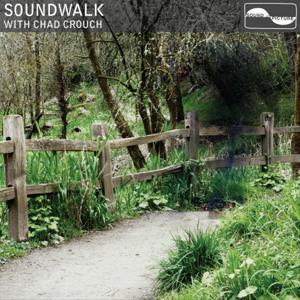


When it comes to soundwalks, it’s unusual for me to let two years go by from the time of capturing audio until release. I had to leave this one alone for a while and come back to it with fresh ears. Dear reader, this is Ecola Soundwalk.
There are a number of hiking routes at Ecola State Park just north of Cannon Beach, Oregon. It’s an astonishingly beautiful headland chock full of seastacks and fog belt Sitka spruce coastal forests. It’s a national treasure really, as far as state parks go.
I went for the Clatsop Loop route, hoping the inland leg would provide for some quiet encounters with wildlife. It was quiet, and this ultimately informed the instrumentation I chose. When I finally came back to it, I realized the whole thing just needed to be softer and quieter. That’s what was missing from my first pass at composing and arranging, over a year before.
Not that any of my soundwalks are recommended for listening in a car or on a plane trip, but Ecola Soundwalk should come with a warning label: Do not attempt to listen outside a quiet environment. It won’t sound good. There are even some passages that might sound experimental with their woozy, threadbare, textured minimalism.
Ruby-crowned Kinglets and Chestnut-backed Chickadees eventually enter the soundscape after the five minute mark, and they come and go through the middle bit. Red Crossbills fly over and Red-breasted Nuthatches move slowly through the upper canopy.
After a Barred Owl sighting, we once again hear the surf about 2/3 of the way through. It’s distant. Below. This is not a beach soundwalk. It’s a moody coastal forest soundwalk.
And, it’s a walk with periodic astonishing vistas. The lonesome Tillamook Rock Lighthouse is a sight to behold.
Well, that’s really all I can think of to say this week. Thanks for reading and listening. Thanks for sticking with me.
Ecola Soundwalk is available on all music streaming services today, September 5th, 2025.
After a few weeks, I’m back, and excited to share something new. Out today is Meadow Showers, an album offering a new twist on the soundwalk form that has given shape to my work over the last three years.
The twist is admittedly a gentle one: In a nutshell, it’s simply less footsteps in the mix. On this soundwalk I’m engaged at intervals in plein air (outdoor) painting using an iPad (or phone), while quietly soaking up the soundscape as I sketch. If you’ve been keeping up, you may recall this post from June 12, introducing the concept:
The soundscape for Meadow Showers was captured on June 20th of this year at the Holman Lane entrance to Forest Park in Portland Oregon. The meadow had already grown tall. Grass cuttings lay on the trail. A squall whipped through the trees.
I took cover across the meadow under a broadleaf tree with a bench underneath it, Looking in the opposite direction, I worked up this image as a summer rain shower passed over.
Eventually other visitors came into the scene. A child squealed with delight. A group of young people walked by speaking Chinese. The birds were temporarily quieted by the weather.
Before long, I ventured out on the Wildwood Trail, stopping to sketch this image of the hillside terrain:
Rain clouds came and went. With another downpour brewing, I found myself taking shelter under a tree overlooking this woodland scene with two snags emerging from the bracken:
The wind massaged the canopy, playing it like an instrument.
In all, Meadow Showers is a postcard-esque series of vignettes, writ in image and sound. It’s a new soundwalk formula that I will revisit through the coming year. The first handful is already on deck and slotted in the release schedule, and I have designs for creating more, with the aim of pushing against some of the self-imposed boundaries of my craft.
I’ve been feeling a little stuck and disaffected lately, I guess. Insofar as this relates to my work, I’m hopeful a new angle can open some doors. What do you do when you feel stuck, alienated, or upset? Feel free to help me brainstorm with a comment.
Thanks for reading and listening. I’m glad to have you along!
Meadow Showers is available on all music streaming services August 29, 2025.
I recorded the environmental sound for Sunset Bay Soundwalk about year ago while meandering over the rocky tidal landscape on a mild summer Sunday morning at Sunset Bay, near the city of Coos Bay, Oregon.
Sunset Bay has a crescent-shaped beach, sheltered by the North Pacific waves. Here, little rollers fan out, lapping against the rocky head outcrops on each side. Acoustically it’s a natural amphitheater. The birds, foraging in the tree canopy on the bluffs sound amplified. A Swainson’s Thrush ethereal song reverberates. The surf sound is a distant murmur. Windstill.
Perhaps the first thing you register though, is the sound of humans. For this edit, I spliced clips that were peppered here and there with human voices. They are largely undecipherable; adding a textural layer in the soundscape.
We hear feet scuffling over rocks, with no rhythm. No urgency.
While there, I gazed into the tide pools, enchanted by the colors. Looking for movement, I was delighted by these little colonies of life adapted to the flushing seawater tides in their dance with the moon.
I did my best to translate the sweetness of the morning in music. Nothing like a morning outside to rinse and reset the mind!
Thanks for listening and reading. As per usual, Sunset Bay Soundwalk is available on all music streaming services today, August 1, 2025.
Out today under my instrumental Sleeping Animal pseudonym is a composition entitled Stream. It’s a measured and minimal eleven minute miniature suite for electric piano and synthesizers. Look for Stream today, July 25, 2025 on all streaming services.
I’m over half way through the release schedule of Sleeping Animal releases that took shape pretty quickly at the beginning of this year. My hope was that they might find an audience outside the niche I’ve cultivated with my penchant for field recording taking a co-equal, or maybe even primary role in my music.
It seems like a fine time to reflect on how the Sleeping Animal experiment is going. If you’re interested in this, by all means read on. If it’s not what you signed up for, feel free to skip it.
Neo-classical, Chilly Gonzales, Mood Music, and What Now?
I’m thinking about an essay by Chilly Gonzales entitled Why I Regret Giving Birth to the Neoclassical Genre that opens with this paragraph:
It’s usually a forest, or a mountainside, or a beach. Ideally, it’s an otherworldly volcanic terrain, maybe in Iceland. A piano sits conspicuously in the middle of this landscape, as a pianist with eyes closed exaggerates the effort required to present some familiar arpeggios on the white keys. This is Neoclassical music, a genre I may have birthed, and I hate myself for it.
I had to laugh. This was accurately calling out Sleeping Animal before it even came to be. It’s usually a forest. Check. Familiar arpeggios on the white keys. Fair enough. I mean, I’m pretty comfortable on the black keys too, but I tend to follow familiar pathways when composing, so touché, and ouch!
In this essay Gonzales reflects on his 2004 solo piano release, aptly entitled Solo Piano, offered up as a curveball to the “electro-hipster” fanbase he garnered in the preceding years.
Back in 2004 my music business contacts saw my Solo Piano transformation as career suicide. Nobody thought of solitary piano music as a potential gravy train. But here we are, the algorithm has spoken and background music is now big business.
Playlists like Peaceful Piano or Music for Studying have turbo-charged the monetisation of functional background music. These playlists pay, albeit badly. And when the playlists pay, the industry pays attention…
The essay was published in September last year. While the Peaceful Piano playlist is still a gravy train for the premiere names of the genre, the chill playlist diaspora have been largely reprogrammed with “ghost artists”. (In a nutshell, ghost artists are fictional artist identities given to tracks created by for-hire studio musicians willing to crank out original songs to fit a mood, all in an obfuscated scheme to cut costs for the platform.) Today, the few high traffic playlist slots that remain for real artists might be the last of the low hanging fruit for the AI-generated music tidal wave that we are being warned about.
I’m not ashamed to say that the invention of Sleeping Animal was in part an experiment to see if I could grow my streaming income by diversifying. I said that much from the get-go, calling it a spin off.
Gonzales relayed an anecdote about the allure of chasing playlists:
A musician friend of mine worked painstakingly for years on a complex and challenging album only to hear from his record label that “we love it but we feel we could invest more of our time, energy and money if you would add something for the fans of Ludovico Einaudi”. In other words, to become Zweinaudi or Dreinaudi.
It’s difficult to resist this pressure. It wasn’t long before my friend went back to the studio and aimed a few more pieces squarely at the “peaceful piano” bullseye. And worst of all, my friend and the label were rewarded mightily for their capitulation.
But really, worst of all? This seems a bit holier than thou, honestly. So, real artists only make complex, challenging music and never think about earning a living?
I watched the 2019 documentary, Shut up and Play the Piano, profiling Gonzales several years ago. He exudes main character energy in the film in a way that’s almost hard to watch: complex, bedeviled, and willing to go to extremes to compensate for something—we’re not sure what. A sibling rivalry? Imposter syndrome from portraying himself as a musical genius, while struggling to read beginner level sheet music? For all the vulnerable sequences and observations in the film, there’s an equal number of clips cultivating a chameleonic chicanery.
I am one of the many devotees to Gonzales’ solo piano works. These albums featured minimalist black and white drawings, evoking the trope of a serious, studied artiste. His cover for Solo Piano III went so far as to insinuate technical prowess: three disembodied hands dancing across the surface of a piano keyboard. I bought it. I thought he was a piano genius. In a way, both he and the movie pulled the rug out from under fans like me. I wasn’t sure how to feel about it.
When I listen to Gonzales’ solo piano pieces, I hear sincerity, depth, melody, sophistication. They want for nothing, to my ear. Did that opening paragraph in his essay ring so true because it cuts close to home?
A lot of ink has been spilled about the dumbing down of musical taste at the hands of tech overlords and opportunistic hacks in service of the playlist era, serving up mood music: frictionless, dull, generic background music to soundtrack one’s aspirational chill. It’s hard to shake the fear that my own catalogue isn’t also being dragged through the mud with this critique.
A lot of hand-wringing and dislocation will certainly play out in the dawning era of AI in the music industry. The neo-classical, and lo-fi beats genres that populate so many chill and focus playlists will almost certainly be inundated. How are artists like myself to navigate the shifting sands?
Ten to twenty years after they were released, Chilly Gonzales’ solo piano albums sound timeless. To me, they are classics. I hope to feel something similar for my own work after the passing of many years. That’s my aim.
The Columbia River basin is roughly the size of France. The Columbia is the fourth-largest river in the United States by flow, and the largest river emptying into the eastern Pacific Ocean. In the last 90 years, this mighty river has been mightily renovated. The multitude of dams (around 150) in the basin now represent 44% of all US hydro-electric power generation.
It all started in the 1930’s with the Bonneville Dam, a signature project of The New Deal. The Bonneville Power Administration (BPA) was created by Congress to market the power generated by the dam. The agency would grow over the years as more and more dams were built in the basin.
My father was hired by BPA around 1970 as an electrical engineer. Within a few short years his salary enabled him to purchase a new home for his young family of four, and a new Ford Mustang for his commute to work from the Portland suburbs.
As the 70’s drew to a close, my father began climbing a managerial ladder at BPA. Visiting his office was exciting for a kid. At one point it was located on the upper floors of the tallest building on Portland’s east side. The cars on the street looked like toys from up there. Elevator rides were a thrill. My sister and I would jump at the first sign its rapid ascent was slowing, elated by the hang time we felt.
In 1984 dad moved to a new office, in an even fancier building with a curved facade overlooking the freeway. I distinctly remember him telling me about a modern white noise system that was built in. It made the office seem quieter, he said, by adding sound; a special sound that made background noise less noticeable. Conversations in far-off cubicles couldn’t be heard. This puzzled me. It sounded like white noise was black magic. Adding sound, in my experience, was a surefire way to make something— someplace—louder.
What exactly he did at work in those years wasn’t obvious to me. His white collar job, in his white noise office wasn’t tangibly connected to the mechanics of hydro-power or the delivery of electricity into our homes in the Pacific Northwest.
Similarly, now a generation removed, my son is both uninterested and unimpressed by my vocation, which amounts to me spending a lot of time in my home office/studio with headphones on, plunking away on a midi keyboard, scrutinizing bands of orange-hued spectrogram stereo files, poking and prodding at them with a mouse in hand.
In the words of Woody Guthrie—who was hired by BPA in 1941 to ennoble the burgeoning hydro-electric empire in song—the Columbia rolls on.
It rolls on four miles north of our home. Electrons arriving in wires from turbines at Bonneville Dam are converted to LCD light and computational power right here in front of me, enabling, in part, the wonderfully complicated but seemingly straightforward task of drafting this post. It rolls on and I take it for granted. Air conditioning requires a great deal many more electrons, which I’m also currently enjoying, with little thought given to it.
While the hydroelectric empire of the Columbia has given the region abundant renewable electricity and supplied it with water to irrigate arid landscapes, it has done so at the cost a once great salmon fishery.
Here BPA would say, no it wasn’t us. We’ve helped Salmon. We’ve spent billions. Look at all our hatcheries and fish ladders. We even transport fish in trucks around our dams. It was the fishermen and canneries who depleted the fishery before the dams were built. On that score, they wouldn’t be entirely mistaken. The early 1900’s Columbia commercial fishery knew no bounds, and within half a century it brought about its own demise. But to say that salmon and dams can get along hunky-dory, well, that’s increasingly hard to fathom.
Less than a year ago, three hundred miles to the south, a campaign of dam removals was concluded on the Klamath River. The basin is still far from its pre-Euro-American state, but it was is a big move for restoration of salmon spawning habitat in the upper Klamath. Within days of the last dam removal, fall run Chinook were observed upriver for the first time in a century. Years from now perhaps stakeholders will look to the Klamath for answers about what to do about the aging infrastructure on the Columbia.
Celilo Falls and the Cascades of the Columbia, once roaring, are but memories of a mighty river that ran wild nearly a century ago. Submerged by slackwater pools, today’s river soundscape is now formed by the wakes created by cargo ships and barges that ply its lower reaches.
This recording is essentially a slice of time on a mild December day in 2024 between two such vessels. Centered on a reach of river absent of shoreline highways, it harkens back to a quieter time. It captures the sound of a great expanse; miles in all directions.
Accordingly, the musical composition and arrangement are imbued with harmonic complexity that I don’t usually reach for: 7th suspended 4th chords, add-9th chords. Delivered in slow, overlapping succession, these unsettled voicings follow each other rhythmically, like waves tumbling ashore.
Small animals scuttle through the brush on the shore while gulls and Bald Eagles cry in the middle distance. Common Mergansers call to each other upriver. Whorls of water formed by the current hint at the great power that lies beneath the placid surface.
Roll on Columbia, roll on…
Thanks for reading and listening, friend. Quiet Columbia Suite is available under the artist name Listening Spot on all streaming platforms today Friday, July 18th.
The environmental recording for Oak Island Rain Soundwalk was recorded April 30th 2024. It’s a really gentle soundscape; dewy and hushed. I chose this photo for the cover because, if you look closely, it captures the fine rain drops that fell that morning. It’s hard to take a picture of rain. I got lucky here.
I’ve gave Oak Island quite a bit of attention last year, initially surveying the soundscape without ornamentation:
Later, I visited the spur road that leads to the area in the winter, basking in the sound of skeins of geese overhead and croaking Sandhill Cranes foraging in fallow fields.
Finally, I used a recording made peering in the heart of the 100 acre Oak Savanna preserved at Oak Island for my sophomore Listening Spot effort:
So we’re back, and even though it captures an out-of-season sound for this part of the world, I thought it might be a soothing addition for summer programming.
The weather here in the Pacific Northwest has been idyllic. Meanwhile, headlines land in my news feed about heat waves on the US East Coast and in Europe. If you're feeling the heat, this one goes out to you.
In this season of open windows and being outside, our cities become a little noisier. Sometimes that can be exciting. Sometimes it can be unwanted.
I make no pretenses about what my soundwalks are for, what purpose they serve, but if this one can quell any thirst for peace, quiet, and tenderness out there, I’m all for it.
In this landscape we hear migratory Bullock’s Oriole, Rufous Hummingbird, Orange-crowned Warbler, Yellow-rumped Warbler, Western Tanager, Purple Finch, Tree Swallow, Black-headed Grosbeak, Savannah Sparrow, Red-wing Blackbird... The interesting thing is they are all singing lowkey, as the kids say, as in quietly. The rain seems to have a subduing effect.
Thanks for listening and reading! I’m making this one available in its entirety here on Substack, because I think there is probably someone new-to-me it could be useful to. If you enjoy what you hear, please consider telling just one person about it. As per usual, Oak Island Rain Soundwalk is available on all music streaming services today, July 4, 2025, Happy Independence Day!
More than once in recent conversations I’ve revealed I’m not all that fond of Summer. The response has been interesting: incredulous laughter; a bemused disbelief. Why? Explain, they seemed to say.
Maybe you recall the sleeper hit “Heatwaves” by Glass Animals that was ubiquitous in the Summer of 2022? There’s a line that I always misheard:
Heat waves been fakin' me out
Can't make you happier now…
Well, I always thought it was heat waves been freakin’ me out, because that made perfect sense to me. The year before, in late June 2021, the US Pacific Northwest experienced a Heat Dome event that shattered all kinds of records. It reached 116 degrees Fahrenheit here in Portland, Oregon. It sparked wildfires, warped train tracks, and contributed to a heat-related death toll of over 1400 people in the greater geographic area including Canada. Over 70 heat-related deaths occurred in the county I live in.
I rarely enjoy feeling hot. The smell of forest fires provokes an adrenaline flight response that requires distinctly modern reasoning to suppress. The cabin fever that settles in after multiple bad air days due to wildfire smoke produces a profound feeling of disassociation. Smoky skies were until recently thought to be a western US state phenomenon, but that seems to up for debate now.
The anticipation of these sensations as markers of Summer, often arriving earlier in the season each year, just makes me wish I could skip to fall. These are a couple of the reasons I don’t entirely look forward to summer.
Nevertheless, apart from two days with temperatures in the 90’s, it’s been a mild and dry June here. Temperature-wise, it’s felt more or less in line with an average end to spring in the Pacific Northwest, which is to say, lovely. Highs have hovered in the low 70’s.
Back in Forest park, baby bird voices can be heard seemingly around every other bend along the trails. Baby bird sounds are imbued with so much joy, new life, and vulnerability. You’ll get better looks at the parents too, as they dart through the shrubs and understory defensively.
American Robins can be seen hopping along the trail in front of you in an apparent defensive distraction behavior to protect a nearby nest. In this way, it is a season of being on guard for the birds too.
The trills of Pacific Wrens overlap at intervals. Their effusive song is sweetened by the columnar structure of the conifer woodlands. I picture the frenetic notes of their song like pinballs bouncing off bumpers, scattering through the understory, arriving at my ears in a wash.
At the 16-minute mark we hear a Stellar’s Jay practicing its Red-tailed Hawk imitation. It must be a youngster because it calls again and again, not quite getting it right.
Summer officially starts on June 21st, the day after this recording is released. All but the deepest creek canyons have already dried up in Forest Park. A wildfire 75 miles east of here destroyed 56 homes in the Columbia Gorge community of Rowena, Oregon last week. As I sit here writing this, it’s 34% contained. This news is just one of many developments in that time span to absorb, consider, and file away in my mental model of the world.
I was out near where this soundscape was recorded last week, doing some plein air sketching and recording. It was so serene. When the world can feel overwhelming, it’s nice to just have something to do with your hands, something to focus on in the present, something to contemplate with a sense of wonder.
Happy Summer Solstice. Thanks for being here; for listening and reading. Forest Spring Suite is available under the artist name Listening Spot on all streaming platforms Friday, June 20th.
I’ve been doing soundwalks for three years now, but it feels like longer. Crane Lake Soundwalk is officially #64.
I remember the day my dad told me he listened to The Beatles’ “When I’m Sixty-Four” on the morning of his 64th birthday. He expressed a certain disbelief that he caught up to the song he first encountered as a twenty-year-old. He didn’t feel sixty-four, he said.
I even remember the day he repurchased the Sgt. Pepper’s Lonely Hearts Club Band album as a CD in his forties. He picked me up at Dudley’s Records in downtown Portland, Oregon, and on a whim did some used CD shopping. In addition to the aforementioned Beatles, he picked up Cat Stevens’ Tea for the Tillerman and James Taylor’s Greatest Hits Vol. 1. Quite the haul, and ultimately not lost on me, even though I was in the thrall of Post New Wave. I spent my money on New Order and The Smiths.
Anyway, I suppose that’s just to say, time has a way of sneaking up on all of us. And it leads me to ask, as one does occasionally, how did I get here?
Luckily I’d been doing some thinking on it recently and I have a few responses in mind. Here is why I’m still making soundwalks:
* These soundwalk environmental recordings—rendered while moving through the landscape at the human scale—possess an intimacy that a fixed position soundscape does not have. In the same way that a human photographed in front of a redwood tree helps communicate the grandeur of the tree, footsteps, and the passing of sounds in and out of the audible horizon lend dimensionality and scale.
* It’s so much easier to get “good tape”, when you just roll all the time.
* It gets me outside.
* There’s room to grow. I’m getting better.
Crane Lake Soundwalk is an interesting addition to the catalog. It’s stimulating. There’s a lot of wildlife to hear.
And if you have the time to spare, you can compare this soundwalk to my debut Listening Spot release, Crane Lake Suite, made on the same day, in the same place, but from a fixed position. It does illustrate differences in the approach.
It’s just not every day you find yourself next to a shallow body of water roiling with carp.
Now, if you just tuned in to the soundwalk without reading this, and didn’t know about the carp, you might think it was me sloshing through the water, before realizing the splashes had a fishiness to them. I can imagine it being a little puzzling to the uninitiated.
To get to Crane Lake you walk down a grassy lane on a seldom visited quarter of Sauvie Island, just north of Portland, Oregon.
Soon enough you come to the lake. There are no official trails. Just slightly trampled lanes in the grass. Here we hear Cedar Waxwing, Black-headed Grosbeak, Tree Swallow, Song Sparrow, Western Wood Pewee, Yellow Warbler, Swainson’s Thrush… We also hear the swish of grass underfoot and the cottonwoods quaking in the breeze.
At the lake Great Blue Herons stand statuesque. They occasionally erupt from the grass thickets with Cretaceous croaks, ranging around for a new fishing spot.
This is like a fast food drive thru for Bald Eagles. Easy pickings in the shallow lake.
Juveniles have dark head feathers. They remain silent for the duration of my visit. You will, however, hear a Stellar’s Jay mimic a Red-tailed hawk call (28:20). The Red-tailed Hawk call has long been a stand-in for an eagle call in Hollywood movie sound design.
Fine sheets of rain fall in waves. The drops sound like little pin pricks, falling on the brim of my recording hat. I walk along the western perimeter of the lake on a little lane. Gentle sounds abound. I walk slowly.
This is not the oldest composition I’m sharing this year, but it was tracked a year ago. It’s a little surprising to me that I’ve stuck with a lot of these instrument voices since then. My general drift, I would say, is toward a more electrified palette. But finding the electric sounds that are expressive is time consuming, so I guess it makes sense that when I find a few, I’m going to use them for a while.
That’s about all I have to say about this one. I hope it adds a little something to your corner of the world. Thanks for listening and reading!
Crane Lake Soundwalk is available on all music streaming services today, June 6. Have a listen, and if you enjoy what you hear, please consider telling just one person about it. Thank you!
This is who we hear at the top of our soundwalk: The Black-headed Grosbeak.
They say it sounds like an operatic American Robin. I can’t say I disagree. Its phrases rise and fall with ebullient fluidity.
This week we are back in Forest Park, in my hometown, Portland, Oregon. It’s the subject of a multifaceted series that is spooling out across all my music pseudonyms throughout the year, and probably into the next here on Substack and on music streaming services. So far we’ve been introduced to Forest Park Rain Suite I & II, The Wildwood Trail in Sound and Vision, and last week’s Ancient Forest Suite. This week it’s Forest Melody Suite.
The first thing I notice is that this breaks the rule I set for Listening Spot releases: no pianos leading the way. Forest Melody Suite has a Wurlitzer electric piano front and center through the whole 17 minute runtime. I love the deep tone of this particular electric piano, and I love the punctuated, syllabic structure of a phrase played on a piano. Maybe hearing all the melodic birdsong made it irresistible to reach for it. Or maybe it was just easier to start with. Honestly, I don’t remember. It was the path of least resistance, one way or another.
The environmental audio we hear was recorded in the Miller Creek watershed on the quiet northern side of Forest Park; definitely a top spot for migratory birds in the vast park. Here you’ll find a healthy fish-bearing creek (the only one in the park to host salmonids) and complex structure in the forest canopy. I kinda took Forest Park for granted, growing up in Portland. But it really is something special!
We hear plenty of Pacific Wren, Wilson’s Warbler, Cordilleran Flycatcher, Downy Woodpecker, Red-breasted Nuthatch, Song Sparrow and some tricky-to-ID baby birds too. The scene was positively alive.
Thanks for being here; for listening and reading. Forest Melody Suite is available under the artist name Listening Spot on all streaming platforms Friday, May 30th.
Renewal
Sometimes my brain wakes up before my body wants to these days. And sometimes, when this occurs, I reach for my earbuds to feed my brain a gentle signal while my body transitions from asleep to awake.
A couple days ago, when this happened, I instinctively decided to cue up the oldest, least recognizable opus in my trove of draft audio files: #2046. (You’re invited to tap that play button at the top if you haven’t already to listen in.)
The tones of a familiar Pianet electric piano trickled into my ears, followed by a tape-delayed synth, an unrecognized electrified piano, then brighter, more kaleidoscopic voices. I had forgotten this piece. I listened, charmed by many things, annoyed by numerous details as well.
Later that day I pulled up the session, noting it was created a year ago, to the day. I massaged it, sanded its rough sonic edges, and came away with something I was happy with. Indeed, I’m eager to share this rediscovered piece. I’ve titled it Renewal. Beyond the preview above, I’m making this another Substack Exclusive. This is the only place you can hear it.
Soundwalk is a reader-supported publication. Paid subscriptions start at less the $3/month. Free subscribers are valued too!
Looking back, it is perhaps one of the earliest harbingers of a new direction that would become my Sleeping Animal oeuvre. Which is to say, it’s the first of a string of impressionistic and atmospheric instrumental suite pieces that do not use environmental recordings to lend atmospheric overtones. Speaking of which, another planned Sleeping Animal release arrives tomorrow, May 22 on all streaming services. Look for Rays, wherever you get your music.
Human Dust, or 50 Times Dumber than a Starfish
This morning I did it again. This time, at 5:30 am I chose to cue up the debut album by Eliana Glass: E. I formed a favorable first impression watching a video clip, so I was hopeful the album would prove out my hunch. Long story short, after a couple listens it largely did. I do like Glass’ unique voice, which according to her blurb, “blends sonorous, androgynous poise with fluttering delicacy.” One track, “Human Dust” piqued my interest as I tried to parse out the lyrics in the dawn light of the bedroom.
The first line grabbed me: “He was an artist. He died of a heart attack. He was born fifty years ago, which means he lived a half century, or 2/3 of his expected lifespan.”
Well that could be me, I thought. Go on.
The nearly eight minute song then lists a number of statistical observations—both private and quotidian—in an attempt to eulogize this man with objective candor, as if from an omniscient point of view. But the tone, if objective, was not empathetic or charitable: “He was unhappy and lonely more often than not, achieved 1/10,000 of his dreams…”
The line that really grabbed me was this:
His work was good but not great,
and the last 10 years of his life he resigned himself to this fact.
Could that also be me? I wondered. In the ranks of all those who self-identify as artists, what percentage are great? And these “great” artists; do they know it, like without a doubt? Padding down the stairs to make the morning coffee I felt a mix of introspection, intrigue and a touch of resentment as I strained to decode all the lyrics.
Later that morning I discovered that the lyrics are a reading from the text of Agnes Denes’ 1969 art installation piece, Human Dust, which features a shallow bowl of cremains on a pedestal, and the text on the wall.
The interesting moments in the song come from misreads. While describing the man’s future offspring, instead of “1 will have an unusual talent, 1 will be a politician, 1 will collect garbage,” Glass sings, “I will have an unusual talent, I will be a politician, I will collect garbage,” forcing a lurch in narrative framing.
Instead of “[He consumed] 140 gallons of wine,” Glass murmurs, “4000-and gallons of wine”. Rather than “moved his bowels 18,548 times,” a mouthful, she abbreviates “384 times” with a cool nonchalance. Lastly, instead of “his brain contained 1010 neurons and it received 109 electrical impulses,” she deadpans “His brain contained 10 neurons and 10 electrical impulses.”
Poor soul. No wonder he never achieved greatness. He was a constipated drunk; 50 times dumber than a starfish!
But, comic reading aside, the heft of the work survives—despite the specifics lost in translation—and one could argue it possesses an impact that the stark bones, dust and text in a museum do not convey.
I ruminated on it all morning.
I could not find the text quoted on the internet. I zoomed in on the gallery photo to read it. ( In all fairness, the “1” in the typeface is mistakable for an “I”.)
His work was good but not great. It struck a nerve. It’s a much more potent insult to an artist, than say, a tradesperson. Good but not great is often too much to hope for, for say, a politician, but will do fine for a garbage collector, waiter, coder, etc… We hold artists to a higher standard, don’t we?
It’s a trap. It’s a wine snob type of thing, I defensively thought. “Great” is just marketing. An illusion. Shoot, even good-but-not-great wine is an order of magnitude more tolerable than good-but-not-great art.
That brings me back to work #2046 / Renewal slumbering a year in digital obscurity. Just yesterday I started in on #2114. In the past year I’ve taken 70 stabs at making audio art. It’s fair to say they can’t all be great. Maybe none can. Fair enough. Whatever.
I’ve always subscribed to the idea that art is not so different from other work. It’s just something you keep doing, especially if you want to do it for a living. There is no one correct way of working as an artist. It takes all kinds. It’s more of a use it or lose it proposition, as far as I’m concerned.
In 1977 Woody Allen offered, “80% of life is showing up.” He went on to say, “Sometimes it’s easier to hide home in bed. I’ve done both,” but that part got lost. So it goes with creative work. You show up. You put in the time. You practice. Hopefully you find ways to evolve and grow. Eventually you revisit old work, and it might inform a new direction. Shoot, some part of the creative process can even happen in bed. But, boil it all down, it’s mostly just showing up, just like any other job. If someone says you’re great, well that’s just a bonus.
Thanks for reading. Thanks for showing up here. I don’t take it for granted.
From the publisher's feed