
Sign up to save your podcasts
Or

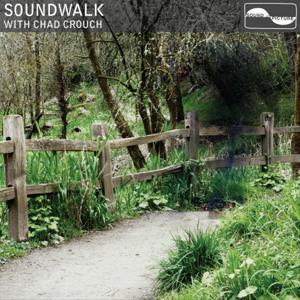


This week we are crossing the river from Sauvie Island in Oregon to Ridgefield National Wildlife Refuge (NWR) in Washington state. The Northern tip of the island is directly across from where we are walking today: on recently restored trail in the refuge known as the Oaks to Wetland Trail.
In 2019 hundreds of Douglas Fir trees were felled and removed from this area to encourage “oak release”. An oak woodland used to reign supreme here, thanks to low-level fires managed by the indigenous people, keeping the land relatively clear for game grazing and promoting berry plants.
Remember how I was complaining Oregon state agencies presently provide almost nothing in terms of education and memorialization on Sauvie Island about what was once may have been the most densely populated area of Native Americans in what is now the United States? Ridgefield NWR has done something pretty remarkable in contrast, by facilitating the construction of the Cathlapotle Plankhouse.
The building is based on more than a decade’s worth of archaeological research at the site, which began in the 1990s where a large village of the Cathlapotle Nation once stood. It took over 100 volunteers two years to complete it, and the official opening ceremony was conducted on March 29, 2005. (nps.gov)
For the past 20 years the Cathlapotle plankhouse has served the modern Chinook Tribe as the site of their annual winter gatherings.
Standing up close to the structure one has to marvel at the sheer density of the plankhouse. The planks for the roof and walls are >2 inches thick, and >2 feet wide old-growth Western redcedar. Both the trees, and 3500 hours of volunteer labor were all donated. If one had to itemize the cost of the project at market prices today, it would likely have a multi-million dollar price tag.
To the layperson it resembles so many old barns that dot the surrounding rural landscape, but to those with an understanding of construction materials, and the added time and cost of working in the old ways, it’s truly a marvel; something the many contributors can be proud of.
Our soundwalk begins more or less here, at the plankhouse among Oregon white oaks, looking out over a landscape of lakes and wetlands. Not far off the remains of Cathlapotle village (numbering fourteen houses with an estimated population of 900 in 1806) slumber in the soil, just out of sight, near the Columbia River shore.
Cathlapotle was one of the largest of the Wapato Valley villages—of at least 16 villages in all—sharing a common dialect, and ways of life. Explorers Lewis & Clark put it this way:
All the tribes in the neighborhood of Wapato island, we have considered as Multnomahs, not because they are in any degree subordinate to that nation; but they all seem to regard the Multnomahs as the most powerful.
Multnomah, on Sauvie Island, as we discovered a few weeks ago had a population of some 2400 in 1806, diminished by the introduction of smallpox in the 1780’s. In the late 1830’s the village was burned to the ground following a devastating malaria epidemic that left too few survivors to tend to the dead.
“River erosion, development and looting have destroyed virtually all of the Chinook town sites. But Cathlapotle was spared,” said Kenneth M. Ames, PSU professor of anthropology who lead the archeological investigation that took place in the 1990’s. Ames’ excavation revealed:
*Radiocarbon dates on charcoal from hearths place occupation from at least 900 years ago to the 1840s.
*Various pieces of evidence indicate possibly two occupations of the site, with the last one having been continuously occupied for 1,500 years by up to 1,400 people, Ames said. He believes there was an earlier occupation as far back as 2,000 years ago. (The Oregonian, Aug 7, 1994)
As I walked the trail beneath a cloudy sky, I tried to imagine the area in that pre-contact state, as I usually do. I think it would have looked similar, but of course it would have sounded much different. There would have been no leaf blowers or dogs barking from the expanding residential areas over the hill. No airplanes overhead. And, perhaps most distinctly for this site, there would have been no trains rumbling past.
Access to this section of the refuge requires a short walk on a pedestrian bridge over train tracks. Trains glide by frequently. My quiet to loud ratio here was about 65 / 35. As usual, I spliced together the quiet sections of my walk to create this idealized pre-industrial soundwalk soundscape. I used my binaural Sennheiser Ambeo Headset for this recording, which performs quite well in the rain, if it’s not too windy. The mics were tucked into the concavity of my ears, sheltered from rain drops. The soundscape is really quiet and tranquil. Tundra Swans and Varied Thrushes sound so reverberant and sweet. My score is textural, spacious, and plaintive, I would say.
It occurred to me that I could chain together the out-takes for an alternate “selectively industrialized” version. Voila: Four Trains Soundwalk was released a couple days ago as a flipside to this one. This was a surprise hit in my own listening habits. I found myself oddly soothed by the low frequency rumbles at bedtime, lulled by the anticipation of the iron beast transits.
That’s it for this week. Once again, thank you for indulging me, for being here, for listening. Oaks to Wetland Trail Soundwalk is available on all streaming platforms (Spotify, Apple, Tidal, Amazon, YouTube…) tomorrow, Friday, November 15th.
Today we have a bit of a departure. This 31 minute soundwalk was recorded at Ridgefield National Wildlife Refuge on January 28th, 2024. It is the flipside—both figuratively and literally—to the upcoming Oaks to Wetland Trail Soundwalk. I’m calling it Four Trains Soundwalk.
Stretches of quiet and stretches of train noise were intertwined in my lived experience, but as always, effectuating a pre-industrial soundscape requires substantial editing in the way of splices and EQ. Rather than let these appealing train recordings become so much digital ash, I’ve compiled them here. Visually speaking, this is what that looks like. The spectrograms below are basically just heat maps for sound. The first image is the natural soundscape—the birds, the creek, and the rain. The second is the four trains. (Not preserved is any aircraft noise.)
Think of this as a trainspotting album. Trainlistening? It’s really quite a treat to have just trains, wildlife and rain sounds. The low frequency hums, the clank-clank, the doppler effects, and the periodic pneumatic “psst” sounds are quite relaxing. The wildlife, creek, and rain sounds soften the industrial edges. It’s a top 3 insomnia / get-to-sleep album for me over the past several months. I’m happy to share it with you finally.
For my instrumental score, I leaned heavily into textural synth drones mirroring the energy of the passing trains.
I hope you enjoy it!
I love oak trees. Here in the Pacific Northwest, our western forests are dominated by conifers, so oaks have something of an exotic look to my eye. It wasn’t always this way.
Here in the Willamette Valley, oaks thrived in the rain shadow of the Coast Range. The entire 1.5 million hectare valley was not long ago dominated by native prairies and oak savannas.
This is one of the most strongly human-modified ecoregions on the continent, with an estimated 99.5% decline of native prairies and oak savannas. Despite this devastating loss, the vegetation of this region and its history are fascinating, and the remaining remnants are often packed with rare and endemic species. (oneearth.org)
In the last 175 years we have lost 98% of the oak savanna habitat here.
(From: Rivers to Ridges Oak Habitat Flyer)
It’s not lost on me that, just a 30 minute trip from my home, a 100 acre oak savanna on Sauvie Island is a pretty special place. Not just because it’s scarce habitat, but also because it’s very tranquil, buffered from road and city noise by placid lakes and distance. So we’re back, visiting Oak Island, the “island” within an island:
This time I pointed my most sensitive mics (a Rode NT-1 stereo pair in ORTF placement) toward the long axis of the woodland, recording a detailed, spacious soundscape. One can walk around the margins of this woodland on the Oak Island Nature Trail, but there are actually no trails through it. It really preserves a sense of mystery about it, I have to say. You are an outsider looking in, here.
Oak Savanna Suite is the second in a new series of more calm, more atmospheric, more classically ambient releases collected under the pseudonym artist name Listening Spot.
As with the first release, Crane Lake Suite, Oak Savanna Suite is a group of self-contained instrumental movements of varying character in the same key. The instrumentation sounds vaguely orchestral, like a pastorale with flowing legato phrasing, but it’s less melodically rigid, and not built up with traditional orchestral instrument sounds.
In fact, in the beginning it’s difficult to discern basic musical patterns: Meter is elastic, melodic phrases are indistinct and unrepeated, and the music barely rises above the soundscape. All this changes by degrees as the suite progresses. I hope you get to spend some quality time with it.
If you enjoy it, please follow Listening Spot wherever you get your music, and consider sharing it with one other person. I’m heartened by the initial response, but also aware of the challenge of building momentum for a new thing, so I’m grateful for any support you can offer.
Oak Savanna Suite is available on all streaming platforms (Spotify, Apple, Tidal, Amazon, YouTube…) tomorrow, Friday, November 8th.
Rentenaar Road is just a flood-prone, gravel road through blackberry briars on the east side the Sauvie Island Wildlife Area. It does not look particularly special or inviting. But it is. It’s a portal to the kingdom of birds that have come to this island every winter for time immemorial. And, unless you’re there to hunt, it’s as close as you can get to the large flocks of Snow Geese, Canada Geese, Tundra Swans, Sandhill Cranes and various ducks and coots.
The sound of these large flocks is visceral.
A tradeoff of coming here though, for the uninitiated, is the manifold shotgun rifle reports that distract from the enjoyment of the natural soundscape. (I’m sure for the hunter it’s an exciting sound, like the chime of a slot machine for a gambler. Tomato, tomawto.) The island is also under a commercial flight corridor; the noise of which is inescapable.
Here’s a tip: Check the hunting season calendar to visit on an off day, or come in February, when there’s still lots of birds and the duck hunting season is concluded. Any reports you hear should be distant and less frequent. And, maybe bring some galoshes.
I came on a gray February day and walked down the lane, until I came to the flooded area, and I just stood there with water all around me, soaking up the wildlife sound until a rain shower came.
You know, I often feel like my soundwalks are kind of like Tootsie Pops; the sweetest part encased inside. You have to spend some time to get to it. That’s the way I feel about the end of Rentenaar Road Soundwalk. I just love the sound of the gentle rain starting, falling on the pond-like puddle; the way the rain seems to calm the thousands of birds nearby. I quietly take off my recording hat, and hold it close to the puddle surface. It’s an entrancing sizzle that concludes the piece. I hope you can spend some time with it.
Rentenaar Road Soundwalk is available on all streaming platforms (Spotify, Apple, Tidal, Amazon, YouTube…) tomorrow, Friday, October 18th.
Two more things:
* Yesterday I offered an amuse-bouche alternate of this walk with galoshes on. Check out Rentenaar Wade Soundwalk here:
* Also this Friday, Nov. 1st, Cultural Norms (20th Anniversary Edition) by my old indie pop band Blanket Music will be released. It features several bonus tracks, with parallels and through-lines to the state of the nation today. Hear it on all streaming platforms. (Spotify, Apple, Tidal, Amazon, and YouTube…)
We’re back on Sauvie Island for a special bonus soundwalk. Or maybe it’s a soundwade. Feel free to play the audio as you read on.
A satellite view of Sauvie Island reveals a squiggly teardrop-shape island about the size of Manhattan. The upper half of that teardrop has an assemblage of lakes that resembles a heart with chambers and valves and arteries. Now look closer; there is a thin straight line running perpendicular on the right side of our view, surrounded by fields, just about where the aorta would emerge. That is Rentenaar Road. If you’re not there to hunt, it’s as close as you can get to see and hear the spectacle.
In a wet year, the road can resemble a canal:
So before I reveal Rentenaar Road Soundwalk tomorrow, let’s throw on some galoshes and wade in! I’m happy to present Rentenaar Wade Soundwalk as an amuse-bouche:
Wapato Park is pretty great, partially because it’s easily overlooked and therefore never crowded. Its full name is Wapato Access Greenway State Park. It’s a sleeper park, the kind you stumble on if you like studying maps. The small gravel parking lot trailhead is on a dead end road, and easy to miss. Interestingly, it’s the only trailhead on Sauvie Island that you don’t have to pay $10 ($30/yr) to park at. In the winter the trail can be quite muddy, in the late spring and summer it can get buggy, and if you’re really unlucky, your car can get busted into. Still, it’s worth a visit.
On a mild February day earlier this year I strolled around its shores, and down to the dock on the river. This soundscape records the wildlife and ambience of winter. You’ll hear Common Raven, spirited and unusual vocalizations from Stellar’s Jays, a Pileated Woodpecker, Ruby-crowned and Golden-crowned Kinglets, and all kinds of water birds. Sometimes you even see Tundra Swans in small numbers here.
Reminiscences of Louis Labonte (1900) recalls life on Scappoose Creek near Sauvie's Island, as a teenage boy, from about 1833 to 1836. Labonte [Jr.] was the son of Astor expedition member Louis Labonte [Sr.] and his native wife, daughter of Clatsop Chief Coboway.
Game on the ponds of the island was very abundant, consisting of deer, bear, and panthers and wildcats; and beaver were still plentiful; but the waterfowl of the most magnificent kind, at their season of passage, and, indeed much of the year, almost forbade the hunter to sleep.
Indeed, the lake was so covered by the flock as almost to conceal the water.
So we can forgive Capt. William Clark for his 1805 journal remark referring to the swans, geese and cranes: “they were emensely numerous and their noise horrid.” Here we have another recollection of wildlife din riotous enough to make sleeping difficult.
And, here I am thinking about this place prior to Euro-American settlement again, prior to industrialization and the inescapable anthropogenic noise coming from the commercial aircraft corridor above, the highway to the west, and the motorboats in the channel.
Now, you might be thinking to yourself, boy Chad sure brings up indigenous people a lot, for being a field recording and music guy. It’s true. I think it’s because I get so tuned into natural soundscape, that I’m curious to imagine all the details of what life was like two hundred-plus years ago. When I’m editing my field recordings with splices and EQ filters and cut & paste techniques to approximate a pre-industrial quietude, I can’t help but think people used to be much more in tune with wildlife and weather.
In the vicinity of Wapato Park, human history goes deeper than is often discussed. According to amateur archeologist Emory Strong, there are three archeological points of interest nearby:
MU 6. Cath-la-nah-qui-ah. six houses and 400 inhabitants. Nathaniel Wyeth built Fort William near this town but the residents had all died in the pestilence by then. Dr. Mclaughlin had all the houses burned. Excavations reveal everything covered with a film of cedar charcoal.
MU 7. The site of Wyeth’s Fort William
MU 8. One of the prehistoric sites that appears to be very old. There are no game or fish bones, and the midden has a different character from the more recent sites. (Stone Age on the Columbia River, 1958)
[“MU” here is just an archeological prefix indicating Multnomah County. The modern trinomial standard now includes a code for Oregon as a prefix: 35 MU 6 and so on.]
Each is an interesting story. Let’s discuss.
(35 MU 6) Cath-la-nah-qui-ah (or Gat-la-na-koa-iq), was a Multnomah tribe village on Multnomah Channel. The size estimate of 400 inhabitants belongs to Lewis and Clark. This would have been about half the size of the main Multnomah village on the other side of the island, in that time period.
This is what that milieu looked like on the day I visited.
This is what the plank houses looked like 200 years ago. They varied in size from 15’ x 30’ all the way up to 30’ x 400’:
This is what the inside of a plankhouse looked like:
Today, if not obliterated by erosion, or dike building, one would only expect to see slight depression in the soil on the site where one of these plankhouses stood. In the early 1800’s there were hundreds of them on the lower Columbia.
The pestilence of the 1830’s is now widely regarded to have been a malaria epidemic. Sauvie Island tribes—perhaps owing to the marshy landscape— were particularly devastated.
The Indians believed it had been introduced by an American ship involved in the salmon trade, the Owyhee, commanded by John Dominis. They may have been right, as the ship had visited malarial ports before sailing to the Columbia.
The impact of fever and ague on Native people in Oregon was earthshaking. In the 1820s, they had been by far the majority population in the region; by the early 1840s, they were in the minority. (Disease Epidemics among Indians, 1770s-1850s)
Dr. McLoughlin was the Chief Factor of Fort Vancouver, upriver about 10 miles. This was the center of operations and trade for the entire Pacific Northwest, on behalf of French-Canadian Hudson’s Bay Co (HBC). In addition to the to the Cath-la-nah-qui-ah village, HBC men also burned the larger Multnomah village (35 MU 2, 800 inhabitants, originally much larger) on the east side of the island, presumably in an effort to curb the epidemic.
In an 1895 article for The Oregonian, pioneer John Minto reminisced about the “old Multnomah nation” and its appearance fifty years before, in 1845.
We landed and camped for the night at the site of the last Multnomah village, but at which that time there were no Indians nor sign of recent Indian life. There was however an extensive city of the dead, a cemetery laid out in streets as wide as the plat of Riverview Cemetery at Portland. The dead were deposited on structures of wide split cedar boards three or more inches thick, set upright; sometimes three tiers of horizontal boards one above the other, mortised into and secured by twisted inner bark of cedar. On these the dead were laid wrapped in cedar bark.
He included this remark about what he heard:
It was rare that a traveller should pass a village at night without hearing at the same time the women wailing for the dead and the monotonous beat of a tom-tom.
Now, I know that maybe this all seems like a tangent. But, these are testimonials both to the look and sound of that time that I think is not just interesting, but worth sharing, particularly on public lands where these events happened. And for my part, why not include them with narratives about my soundscape recordings also bearing witness to the land?
Just 8 years after Minto’s observations of the Multnomah village site, in 1853, Simon Morgan Reeder settled the donation land claim (originally belonging to one N. D. Miller) on which once stood the largest village of the island. Today the main road on the east side of the island, Reeder Road, bears his name.
Now let us turn to (35 MU 7) Fort William, the abandoned effort to set up a trading post on Sauvie Island by Nathaniel J. Wyeth, rivaling HBC, on behalf of American investors in 1834. Two roadside monuments have been erected nearby.
Let’s be clear: these are monuments to a failed business venture. Upon arrival, Wyeth saw opportunity in the Natives’ misfortune, writing in his journals "providence has made room for me and with doing them [Natives] more injury than I should if I had made room for myself viz Killing them off."[3]
Wyeth had many setbacks in his attempt to establish Fort William. In 1835 one of his men was killed at the hands of another. Reading a correspondence from his investors, one might surmise Wyatt was a poor communicator, if not lacking the temperament of a leader.
Finally there is (35 MU 8) “a prehistoric site that appears to be very old. There are no game or fish bones…” Here we are to understand the bones decomposed in the intervening time span. These weren’t the original vegans of the Portland basin. My best attempts to research this further yielded nothing. Were these the ancestors of the Multnomahs, the Chinookan peoples?
The landscape holds a lot of mysteries. I think about them when I listen to it.
Thank you for reading and listening. I hope you enjoy Wapato Park Soundwalk.
Wapato Park Soundwalk is available on all streaming platforms (Spotify, Apple, Tidal, Amazon, YouTube…) tomorrow, Friday, October 18th.
In early 2022, before I adopted the soundwalk form for a my own musical inquiry, I released a recording called Rain Suite. It featured one long field recording—not captured while walking—with a group of self-contained instrumental movements of varying character in the same key. This is the definition of “suite” in music. It was very much a R&D precursor to my soundwalks. Indeed, it inspired my take on the concept of musical soundwalks.
I followed that up with Island Rain Suite a couple years later, which attempted to cultivate a more atmospheric aesthetic; closer to what people probably think of when you say the word ambient. Smoother, peaceful, more ambiguous. I quite liked the former, and found the latter challenging.
Recently I thought I’d take another step in that direction, and I think I’ve finally found my stride. To make the delineation a little stronger I’m going to attempt a “spin off”. Today, I’m introducing a new recording project pseudonym, designed to be a repository for this particular character of recordings: Listening Spot.
I selected this name because, like “soundwalk”, it is a term in the lexicon of folks who think about, and make a practice of, listening. Also, it wasn't already taken. It’s informative, but not prescriptive. The listener can bring many things to it, and make use of it however occurs to them.
Crane Lake Suite is the first in a half dozen on deck, coming to you over the next five months. Here is the similar, but refreshed new look.
Now then, about Crane Lake Suite… I chose this one for the inaugural release for two reasons: first because it’s recorded at Crane Lake on Sauvie Island, the nexus of Wapato Valley (the subject of the current soundwalk series) in one of the least disturbed, least visited corners of the island. Second, because its name nods to perhaps the most recognizable contribution to the suite form in classical music: Swan Lake.
Crane Lake is positively alive in May. The shallow lake itself breathes slowly with the tide. Carp splash, songbirds sing, woodpeckers drum, heron croak, dragonflies buzz. My composition is minimal, ambiguous and orchestral in feel, without having any traditional orchestral instruments as starting points. From a mixing perspective, I’m marinating my contributions much more deeply in reverb than in the past and taking pains to smooth transitions.
If you enjoy it please follow Listening Spot wherever you get your music, and consider sharing it with one other person. It’s really challenging to build momentum for a new thing, so I’m grateful for any support you can offer in this way.
Crane Lake Suite is available on all streaming platforms (Spotify, Apple, Tidal, Amazon, YouTube…) tomorrow, Friday, October 11th.
It’s Oct 2nd as I write. The Oak Island area on Sauvie Island, near Portland, Or., closed to recreational use for the season yesterday. For the coming fall and winter, it will serve as a haven for the birds, save for the occasional hunters.
Last winter, when I brought my Soundwalk podcast to Substack, I embarked on a series touching down at certain points in the greater area I referred to as the Columbia Lowlands. I’m pleased to say I’m taking us back there, covering some spots that I didn’t get to last time through. Lewis and Clark called this area the Wappato Valley, after the edible tuber, Wapato, that the Native Americans harvested here on Sauvie Island. The island was also named Wappato Island, the geographical center of Wappato Valley. (Both the double P spelling and the geographic names didn’t really take.) Today, this area is also referred to as the Portland Basin.
Oak Island in the early 1800s would have looked pretty similar to what it looks like now—only without pastures—and the name would have made more sense than it does today, because the land mass used to be surrounded by shallow lakes. Today it more resembles a peninsula.
Like the lakes of the Columbia Bayou (slough) on north side of Portland, many lakes on Sauvie Island were drained in the early 1900’s, and dikes were built, hardening the river bank.
Now, as far as I know, the only marker honoring the stewardship of this land by Native Americans is found a few steps into the Oak Island Nature Trail. There you will see wood post with a line drawing of a two people in a canoe with a QR code underneath.
Focusing on that QR code with a smartphone will pull up a page, offering the following:
Two hundred years ago, Native Americans walked on this very spot. Each year, just before winter, tribes from up and down the Columbia and Willamette rivers gathered on Oak Island for a trading fair which included dancing and festivities.
I want to know more about that. I want to imagine what that looked like, what that sounded like.
Of the environmental sound, Capt. William Clark leaves only this description on November 5th, 1805, from the vicinity of Sauvie Island:
I could not sleep for the noise kept by the Swans, Geese, white & black brant, Ducks etc. on a opposit base, & Sand hill Crane, they were emensely numerous and their noise horrid.
Immensely numerous and horrid. Ha! We will hear numerous birds soon enough in our extended soundwalk survey. For now, on our Oak Island Road Soundwalk, we hear just a handful of bugling Sandhill Cranes, small flocks of geese, wintering songbirds, Pacific tree frogs and light rain showers. Anything but horrid to my ears.
Dig a little deeper and you’ll discover 200 years ago is just the tip of the iceberg. Native Americans lived in various village sites on the island dating back 2500 years; one thousand generations! (Archeological sites upriver near The Dalles increase that time horizon to human occupation of the area going back well over 10,000 years ago).
And all they got was a QR code.
How do we know Native Americans lived on Sauvie Island so long? Well, less than a mile south of Oak Island is Merrybelle Farm. Several archeological digs occurred here, beginning in 1958. Analyzing the projectile points and found here with others found on the island and throughout the region, Richard Pettigrew points to an estimated timeline of village occupation at the Merrybelle site from 600 BCE to 200 CE.
There were 16 known village sites on Sauvie Island. Several have been the subject of formal archeological excavation. Many were picked over by amateur artifact collectors. Some were buried or partially buried under tons of dike soil. One was “sunken”, preserving woven baskets in the mud for up to 700 years. Today there’s no physical reminder of the civilization that existed here before Euro-American settlers; no formal mention or marker, save for a recently renamed bridge. Wapato Bridge. It’s a start. Scholars believe the Wapato Valley once sustained the highest population density north of Mexico in aboriginal times. Isn’t this a story that should be told?
In fourth grade we had a “Pioneer Day”. We came to school in costume: bonnets for the girls. Cowboy hats for boys. Did some boys bring toy guns? Did anyone dress up as an Indian? Seems plausible. We rolled out pasta from scratch, cutting broad noodles for chicken noodle soup “like the pioneers did”. We pledged allegiance to the flag every morning. We did not learn we were inhabiting what was once the cradle of the largest Native American population center, in the Portland Basin, in the United States.
When I walk around on Sauvie Island, I try to picture the long house villages, and the multitude of dugout canoes. When I went paddleboarding on Sturgeon Lake a month ago my feet sank up to my calves in mud as I clumsily launched my craft. I imagined Wapato growing there, plentifully. I imagined Native Americans loosening the root bulbs with their toes, harvesting them in floating baskets. The land of plenty. People of the river.
This soundwalk was recorded on mild December evening last year, on Oak Island Road, adjacent the Wildlife Area. There are half a dozen farm houses on this quiet spur road. It was very relaxing, and nourishing. I totally recommend this to anyone in the area.
Like last time, the composition is almost entirely solo performances strung together. Four voices: piano, a clean Wurlitzer electric piano, a modified Wurlitzer electric piano, and a piano with heavy tape effects. All taking turns. It won’t always be like this, though. In fact, next week I have a whole new direction I’m excited to unveil! Til then, thanks for reading, for listening, for joining me here.
Oak Island Road Soundwalk is available on all streaming platforms (Spotify, Apple, Tidal, Amazon, YouTube…) today, Friday, October 4th.
And now we return to our soundwalk series on quiet spots in the city. This is part two of two. But before we get to that, I’d just like to take a minute to reflect on my journey to get here.
On April 29, 2022 I released Chapman Beach Soundwalk. It was both extremely simple and, to me, experimental. It was, in a nutshell, a natural soundscape with musical soundtrack. I had no basis to believe that the idea would commercially viable, and to be honest, while it has shown promise, it hasn’t really caught on in a big way either. Still, I persuaded myself to keep doing it, as a practice. And so, here we are, two and a half years on, and we’ve come to soundwalk #50. Let me tell you, it is possible to be both proud and embarrassed at the same time. Proud because, well, fifty! Embarrassed because, well, you know—fifty. A string of 50 non-hits, if you will. At a good clip, too!
So, for #50, we are rediscovering Reed Canyon, another “hidden” natural area near downtown Portland, Oregon. Type it into a mapping app, and it won’t know where to go. This is because is not a nature park and is not public land. It’s on the Reed College campus, and thankfully, the campus welcomes neighbors, near and far, who enjoy walking the trails that wind around the canyon’s lake shore and through a wetland environment on its east end. The canyon was formed by Crystal Springs, which erupts from the broad plane of inner SE Portland next to huddle of buildings forming the Reed College Campus. According to a historical overview, surveys indicate Reed Lake is the oldest naturally occurring lake in Portland. That’s not saying an awful lot, as Portland topography isn’t especially dotted with lakes. It also depends on where you draw the city limits, of course. If anything, the city has filled in most of the lakes it once had, alongside the Willamette and Columbia Rivers.
Let’s go ahead and name those lakes, and when they were filled in, for posterity. I’d estimate Portland lost more than 75% of its total lake surface area in the last century.
Historical Lakes of Portland, Oregon
* Guild’s Lake c. 1913-1926
* Kittridge & Doane Lakes c. 1930
* Mud Lake c. 1930
* Switzler’s Lake & Columbia Slough unnamed lakes c.1930
* Ramsey Lake c. 1964
* Mock’s Bottom c. 1980
So, being able to walk around a natural lake in Portland anymore is a rare thing! And just to be clear, while the basin is natural, the Reed Lake water level has been maintained by a small dam built in 1929.
This walk takes place on a drizzly leap year day—February 29th—of this past year. Winter and Spring are perhaps my favorite seasons here. Waterfowl motor around. Mallards, Buffleheads, Hooded Mergansers, Wigeon, Gadwall, and Canada Geese are all common visitors. Huge flocks of geese sometimes wheel overhead, attracted to the all-you-can-eat lawn buffet the campus provides just over the canyon rim. Songbirds sound so sweet here in this intimate and reverberant canyon; you can easily forget that there’s a city all around you.
My composition features almost all solo performances of piano, unplugged Wurlitzer electric piano, a “soft clarinet” synth pad, and a “bottle” synth sound that I think sounds like droplets. Oh, and zither. All performed unrehearsed, warts and all. Why? Well, because, for now, it conveys what I want to convey; some alchemical expression forged in the naïveté—the grasping.
Part of me thinks I’ll eventually work myself out of a job here. Meaning, my music will become by degrees more spare and quiet and adrift that eventually all that will be left is the natural soundscape.
It reminds me of a trope of architecture writers that goes something like, “The design sought to blend seamlessly with the landscape.” It seems like four out of five articles in Dwell magazine used parade that one out. Meanwhile, walls of glass and rectilinear volumes were de rigueur. There’s a limit to the blending that can occur with that design language, and it’s far from “seamless”.
When you boil it down, I think it’s pretty common to try and convince other people you are doing something thoughtfully, when really we’re all just kind of clunky. Nothing is seamless. So why try and convince? Embrace Your Clunkiness! I say.
Anyway, thanks for reading. I hope you can spend some quiet time with Reed Canyon Soundwalk. Or better, head on over there in real life, if you can. It’s nice. You’ll like it.
Reed Canyon Soundwalk is available on all streaming platforms (Spotify, Apple, Tidal, Amazon, YouTube…) Friday, September 20th.
Welcome back. It’s a new season of Soundwalk, the album series / podcast / newsletter that transports you to sound-rich natural places via roving binaural audio field recordings paired to a melodic, ambient score. In this short two-part season we are discovering serene soundscapes within the city of Portland, Oregon. Thank you for tuning in!
See that dark green canyon in the foreground? That’s where we’re going to escape the sound of the city, within the city.
Every Portlander knows about Forest Park, the forested hillside roughly eight miles long and one mile wide, northwest of the city. Most Portlanders have visited it. In contrast, my guess is less than one in ten would be able to point to Marquam Nature Park on a map, and even less have visited.
Marquam is the “secret” nature park mere minutes from downtown. I’ve posted field recordings from here before, but this is the first soundwalk I’ve shared. What’s most noteworthy about this place to me is how quickly the canyon spirits you away from the hum of the city as you venture in. It’s really quite amazing. The city throbs at full volume just over the hill, and here—provided leaf blowers aren’t in use on residential properties along the bluff— you’ll find serene quiet; the twitter of birds, the murmur of streams.
At the park’s main gateway the visitor is greeted by a tile mosaic that forms an amphitheater. Inscribed in its depiction of park flora and fauna is this message:
Tranquility reminds us that we are a small part of nature in a place where listening and looking inspire us.
Sometimes I wonder if I’ve become a bit extreme about sound. That is, I wonder if I’m peculiarly bothered by city noise or unusually thirsty for quiet refuges. This message hints to me that I’m not alone. “Tranquility” and “listening” strike me as potent and deliberate word choices. Unlike the new Forest Park entrance north of town, this one embraces the visitor and conveys them quickly to a natural, tranquil setting.
Thus, on our soundwalk from Mar 8th of this year, we encounter the sounds of Dark-eyed Junco, Chestnut-backed Chickadee, Pacific Wren, American Robin, Golden-crowned Kinglet and others all rising above the many creeks, streams and seeps we pass by on foot. At the 25 minute mark we come to a trail culvert spitting out water in a rhythm. It’s an unusual and entrancing sound, worth lingering on. A Pacific Wren sings in the distance. Junco trills percolate through the canyon. Synthesizers pulse and sweep in response. It’s a recipe for a reverie, if you’re open to it.
The instrumentation is comprised of piano, zither, and electric piano—all played solo—with occasional woodwind (clarinet & bass clarinet) and synth pad accompaniment. As always, it errs on the side of minimalism.
Marquam Nature Park Soundwalk is available on all streaming platforms (Spotify, Apple, Tidal, Amazon, YouTube…) Friday, September 6th.
From the publisher's feed