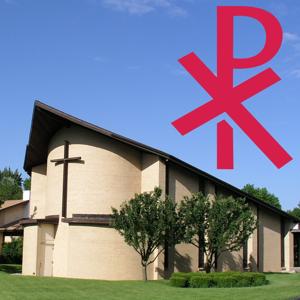
St. Timothy Evangelical Lutheran Church in Lombard Illinois

St. Timothy Evangelical Lutheran Church in Lombard Illinois

By St. Timothy Evangelical Lutheran ChurchReligion & SpiritualityChristianitySpirituality
Download on the App Store

St. Timothy Evangelical Lutheran Church in Lombard Illinois episodes

  • There is no Condemnation for You
    There is no Condemnation for You
    Romans 8:1–10 (ESV) 
    There is therefore now no condemnation for those who are in Christ Jesus. For the law of the Spirit of life has set you free in Christ Jesus from the law of sin and death. For God has done what the law, weakened by the flesh, could not do. By sending his own Son in the likeness of sinful flesh and for sin, he condemned sin in the flesh, in order that the righteous requirement of the law might be fulfilled in us, who walk not according to the flesh but according to the Spirit. For those who live according to the flesh set their minds on the things of the flesh, but those who live according to the Spirit set their minds on the things of the Spirit. For to set the mind on the flesh is death, but to set the mind on the Spirit is life and peace. For the mind that is set on the flesh is hostile to God, for it does not submit to God’s law; indeed, it cannot. Those who are in the flesh cannot please God. 
    You, however, are not in the flesh but in the Spirit, if in fact the Spirit of God dwells in you. Anyone who does not have the Spirit of Christ does not belong to him. But if Christ is in you, although the body is dead because of sin, the Spirit is life because of righteousness. 
    Dear fellow redeemed: Last week we talked about what it means to walk in the light. Walk as children of light  (for the fruit of light is found in all that is good and right and true), and try to discern what is pleasing to the Lord. (Eph. 5 ESV) You have been given perfect righteousness, and a guide to all that is good and right and true. Live like it.
    Now here is where you must understand Scripture according to faith. For if the light of righteousness must come from you, then “Live like it,” is condemnation. But here the verdict is rendered upon you: There is therefore now no condemnation for those who are in Christ Jesus. What better news could there be for us, born sinners, than …
    THERE IS NO CONDEMNATION FOR YOU
    I. Righteousness: God Did It for You
    II. The Spirit Is Where Our Minds Are
    III. Body Dies, Spirit Lives
    I. Righteousness: God Did It for You
    I once read this passage to a person who was in deep despair. His response was, “But that can’t be!” He knew the law and he knew his life; it could not be that he could escape God’s condemnation.
    For the law of the Spirit of life has set you free in Christ Jesus from the law of sin and death. For God has done what the law, weakened by the flesh, could not do. By sending his own Son in the likeness of sinful flesh and for sin, he condemned sin in the flesh, in order that the righteous requirement of the law might be fulfilled in us, who walk not according to the flesh but according to the Spirit.
    The law would seem to make you righteous by saying, “Do this; don’t do that.” But if the law had the power to make you righteous, you would be sinless by now. You are without condemnation because God did what the law couldn’t do. He sent His son into our humanity, our flesh, and while in the flesh HE was condemned for OUR sins. The condemnation fell on Him so that There is therefore now no condemnation for those who are in Christ Jesus. 
    Condemnation fell on Christ, so that the law would be fulfilled in us.
    II. The Spirit Is Where Our Minds Are
    We need to consider how that law is fulfilled in us. The fact is that Christians are different from unbelievers. But let’s distinguish our “differentness” as Scripture presents it from the way people expect it.
    The difference is spiritual. For those who live according to the flesh set their minds on the things of the flesh, but those who live according to the Spirit set their minds on the things of the Spirit. The difference is spiritual, but unbelievers insist upon judging according to the law, according to the flesh, and not according to the spirit.
    [...]

    21 min
  • Righteousness Comes Through Faith
    Righteousness Comes Through Faith
    Romans 4:1–17 (ESV) 
    What then shall we say was gained by Abraham, our forefather according to the flesh? For if Abraham was justified by works, he has something to boast about, but not before God. For what does the Scripture say? “Abraham believed God, and it was counted to him as righteousness.” Now to the one who works, his wages are not counted as a gift but as his due. And to the one who does not work but believes in him who justifies the ungodly, his faith is counted as righteousness, just as David also speaks of the blessing of the one to whom God counts righteousness apart from works: 
    “Blessed are those whose lawless deeds are forgiven, and whose sins are covered; 
    blessed is the man against whom the Lord will not count his sin.” 
    Is this blessing then only for the circumcised, or also for the uncircumcised? For we say that faith was counted to Abraham as righteousness. How then was it counted to him? Was it before or after he had been circumcised? It was not after, but before he was circumcised. He received the sign of circumcision as a seal of the righteousness that he had by faith while he was still uncircumcised. The purpose was to make him the father of all who believe without being circumcised, so that righteousness would be counted to them as well, and to make him the father of the circumcised who are not merely circumcised but who also walk in the footsteps of the faith that our father Abraham had before he was circumcised. 
    For the promise to Abraham and his offspring that he would be heir of the world did not come through the law but through the righteousness of faith. For if it is the adherents of the law who are to be the heirs, faith is null and the promise is void. For the law brings wrath, but where there is no law there is no transgression. 
    That is why it depends on faith, in order that the promise may rest on grace and be guaranteed to all his offspring—not only to the adherent of the law but also to the one who shares the faith of Abraham, who is the father of us all, as it is written, “I have made you the father of many nations”—in the presence of the God in whom he believed, who gives life to the dead and calls into existence the things that do not exist. 
    Dear fellow redeemed: What is the one thing you must do to be part of the Christian church? We know that all Christians receive the forgiveness of sins. But what must we do to receive this gift? What is the “must be done”? Regular church attendance? Baptism? Communion? Witness to our faith? What are the certain things that a real Christian does so that God will forgive?
    What I just said is really outrageous, considering the text we just read. How do I “deserve” and undeserved gift? For that is what grace is. We aren’t Christians because of what we do, but because of what God has given us: Faith, and therefore forgiveness, life, and salvation.
    Remember your catechism question, “What is the Holy Christian Church?” Your answer was “All believers in Christ.” There wasn’t any work or act or behavior there, just faith. 14 For if it is the adherents of the law who are to be the heirs, faith is null and the promise is void.
    God’s word here makes it powerfully clear that
    RIGHTEOUSNESS COMES ONLY THROUGH FAITH
    I. It Is Natural To Think We Work Righteousness
    II. Abraham’s Case Shows That Is Wrong
    III. Righteousness, Salvation, Comes through Faith
     
    I. It Is Natural To Think We Work Righteousness
    But the things that I said sound reasonable to human beings, who by nature judge all things by law. We call this the opinion legis. Paul was dealing with a specific form of it expressed among the Jews. Remember, Christ was sent to the Jews, and the Jews had some very specific laws that identified them as Jews. Anyone who[...]
    27 min