
Sign up to save your podcasts
Or

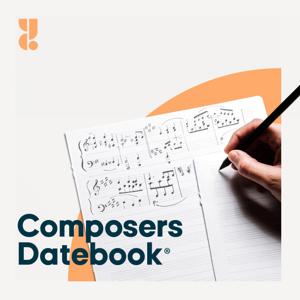

In 1935 Aaron Copland finished a new orchestral work that was to be premiered by the Minneapolis Symphony and its young conductor Eugene Ormandy.
The work, Statements for Orchestra, consisted of six short movements, each with a descriptive title, namely: Militant, Cryptic, Dogmatic, Subjective, Jingo and Prophetic. The Jingo movement alludes to the popular tune Sidewalks of New York — where Copland completed the orchestration of his new score.
The last two movements were premiered by the Minneapolis Symphony early in 1936, first on an NBC radio broadcast, then on one of the orchestra’s subscription concerts. The conductor, however, was not Ormandy but rather Dimitri Mitropoulos, who would become the Music Director of the Minneapolis Symphony the following year. And it was Mitropoulos who would lead the first complete performance of all six of Copland’s Statements on today’s date in 1942 during a concert by the New York Philharmonic.
The new piece got good reviews, and Copland quoted with pride one given by his friend and colleague Virgil Thomson, which called the music “succinct and stylish, cleverly written and very, very personal.”
Much to his surprise this music never really caught on with orchestras or audiences. “To my disappointment, Statements remains one of my lesser-known scores,” Copland wrote.
Aaron Copland (1900-1990): Statements; London Symphony; Aaron Copland, conductor; Sony 47232
 View all episodes
 By American Public Media

4.7
176176 ratings
In 1935 Aaron Copland finished a new orchestral work that was to be premiered by the Minneapolis Symphony and its young conductor Eugene Ormandy.
The work, Statements for Orchestra, consisted of six short movements, each with a descriptive title, namely: Militant, Cryptic, Dogmatic, Subjective, Jingo and Prophetic. The Jingo movement alludes to the popular tune Sidewalks of New York — where Copland completed the orchestration of his new score.
The last two movements were premiered by the Minneapolis Symphony early in 1936, first on an NBC radio broadcast, then on one of the orchestra’s subscription concerts. The conductor, however, was not Ormandy but rather Dimitri Mitropoulos, who would become the Music Director of the Minneapolis Symphony the following year. And it was Mitropoulos who would lead the first complete performance of all six of Copland’s Statements on today’s date in 1942 during a concert by the New York Philharmonic.
The new piece got good reviews, and Copland quoted with pride one given by his friend and colleague Virgil Thomson, which called the music “succinct and stylish, cleverly written and very, very personal.”
Much to his surprise this music never really caught on with orchestras or audiences. “To my disappointment, Statements remains one of my lesser-known scores,” Copland wrote.
Aaron Copland (1900-1990): Statements; London Symphony; Aaron Copland, conductor; Sony 47232

6,752 Listeners

38,872 Listeners

8,770 Listeners

9,196 Listeners
5,780 Listeners

927 Listeners

1,389 Listeners

1,287 Listeners
3,160 Listeners
1,975 Listeners
523 Listeners
183 Listeners
13,768 Listeners
3,082 Listeners

248 Listeners
28,131 Listeners

430 Listeners

5,470 Listeners
2,195 Listeners
14,142 Listeners
6,420 Listeners
2,515 Listeners
4,836 Listeners

575 Listeners
244 Listeners