
Sign up to save your podcasts
Or



Send us Fan Mail
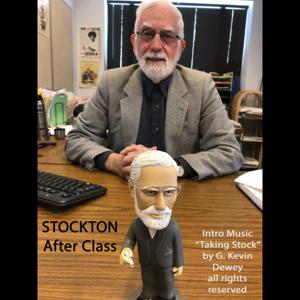
On February 6,2021 I posted my first podcast. As of the morning of February 6, 2022) I have 26,001 downloads in 106 countries and 1,982 different locations around the country and around the world .
This is a short report on what has happened over the last year. I discuss the origin of the podcast, what I hoped to achieve, where the listeners live, the types of topics covered in the podcasts, some of the most popular podcasts, and some feedback.
That first podcast was a introduction to what listeners could expect. I did not anticipate that many people would listen to it, but I was wrong. There were over 300 downloads in 32 countries and 34 different locations. People in that initial download group were from UK, Germany, Ireland, Belgium, New Zealand, Romania, Italy Canada, Australia, Finland, Malaysia Israel, Netherlands, Oman Sweden, Brazil, Thailand, Spain, South Africa, Lebanon, Greece, Qatar, Bahrain, Norway, Zimbabwe, Mexico, Kenya, Palestine, Switzerland, Australia, and Iceland.
When you create a new podcast site, you enter certain subject words. Those are searchable. I guess that may have been the appeal.
Thanks to those of you who have been following these podcasts.
I hope you find this one of interest.
ps. I could be making money off of your interest by allowing commercials but I have decided not to monetize this podcast. It is my gift to you.
Send us Fan Mail
F. W. DeKlerk, the last White President of South Africa.
The Logic of Apartheid, and how De Klerk’s perspective evolved
F. W. De Klerk died in November of 2021. He came out of the very heart of the Afrikaaner establishment, and was firmly entrenched in the secret society known as the Broederbund (brotherhood). Whites were about 15% of the South African population and the Afrikaaners (of Dutch heritage) were about 60% of the white population. They controlled all the major positions of power in the Republic. And yet by the 1980s many Afrikaaners could see that the reality was changing, and they would have to change with it, or be swept away. F. W. De Klerk became the instrument of that change.
This may well be the only place where you will ever hear a sympathetic discussion of the logic of apartheid, which was widely condemned in America, especially among those of us who had studied the South African political system.
Remember that there are other podcasts on Archbishop Tutu and Nelson Mandela.
And one called Thoughts of a Former Terrorist, discussing my activism on this issue.
Names: Botha, Mulder,
Terms used: apartheid, Stellenbosch, verligte, verkrampte, Xhosa, Zulu, Tswana, Ndebele, Swazi. Transkei, Zululand, Professor Jeppe,
Send us Fan Mail
John Paul II
John Paul II was one of the great popes. He is now a saint. As a saint, that means he has intercessory power. Individuals can pray to him and he will take their concerns directly to God. Someone becomes a saint by performing three miracles. We will discuss what those miracles were, at least one of them.
John Paul became pope during a time of significant stress. There was stress within the Church regarding what constitutes official teaching. There was also stress regarding corruption within the church, and corruption and crime outside of the church.
John Paul decided that the church had committed numerous sins over the centuries and it had to clear its soul by acknowledging those sins. He also decided that the church was internally divided by teachings and the lack of obedience among the hierarchy. He became a tough pope. This left the church organizationally disciplined but also divided in a way that caused many Catholics, especially younger Catholics, to walk away.
This was a class zoom lecture in which students could actually see me as I waved my arms around and snapped my fingers and raised an umbrella for them to see. Fortunately, it was far enough into the semester that I had figured out the art of lecturing to a machine so this is relatively smooth.
Glitches: However, I made two verbal glitches during the lecture. I spoke of Saint Patrick’s Square in Rome when I obviously meant St. Peter’s Square. I also referred to the earlier pope as Pius when I obviously meant Paul. (This pope was not called John Pius, as you may have noted). Sorry for those fumbles.
Some names mentioned: John XXIII, Lech Walesa, Hans Kung, Cardinal John O’Connor, Cardinal Dearden, Cardinal Szoka, Father Robert Drinan, Zbigniev Brzezinski, President Brezhnev of the USSR, and General Jaruzelski of Poland.
Terms mentioned: Vatican Bank, Gambino Family, Warsaw Pact, Schism, Orthodoxy, Orthopraxis, mea culpa.
Note two earlier podcasts relevant to this one.
How a Pope is Elected,
Vatican II.
Send us Fan Mail
The Insurrection of 2021, An Anniversary Podcast
On January 6, 2021 there was an attempt by an insurrectionist mob to block the certification of the 2020 Presidential Election. This uprising came within the context of an American political system that had become seriously weakened over the past decades. This weakened political system made it possible for an authoritarian leader to step into the breach. Shockingly, this pattern of the elected autocrat has been seen in other countries.
The book How Democracies Die by Steven Levitsky and Daniel Ziblatt (2019) discusses the phenomenon. In this discussion I use this book as a jumping off point for an analysis of some of the causes and patterns of this frightening new development.
There is also an excellent book by Anne Applebaum, The Twilight of Democracy, 2020, that addresses some of the same issues. This book is interesting because Applebaum is an American with a close connection to Poland, which has its own problems with democratic authoritarianism. I do not discuss this book but you might find it interesting.
I make reference to two previous podcasts which listeners might find of interest , one on Impeachment and one on The Replacement Wars: The Ideology of Radical White Nationalism
At the time of this podcast, I was sniffling so my voice fades at time. Drat!
Also, there were two glitches. The 2020 German state election when Merkel challenged her own party leader was in Thuringia. Sorry about that. And, also, Madison wrote Federalist Ten. Oh, my. Generations of students would turn on me if I did not acknowledge this error.
Send us Fan Mail
Archbishop Desmond Tutu was one of the three indispensable people whose actions saved South Africa from a violent transition when that country went to majority rule. He created the Truth and Reconciliation Commission as an alternative to prosecutions and vengeance. He also believed that the Black struggle in South Africa and the Palestinians struggle were very parallel. He once said, we cannot be free if they are not free.
I hope you will find this podcast to be morally challenging and rewarding.
Note: I have a previous podcast on Nelson Mandela and am working on a podcast on F. W. De Klerk. I also have a podcast entitled Confessions of a Former Terrorist, mentioned during the current podcast.
Send us Fan Mail
Send us Fan Mail
Christmas Songs: Who? What? When? Where?
This is a discussion of the fifty-one most popular Christmas songs, when they were written, what themes they contain, and how the patterns of favorite Christmas songs changed over the centuries.
This is short, but you might find it an interesting approach to Christmas songs. Please remember I am a social scientist. I count things for a living.
I hope you enjoy this.
And don’t forget, “melekelekemaka is the island way . . . “
(And I hope you will forgive my inept efforts to sing a couple of those songs).
Question: Do you wonder what would emerge is someone did this analysis is another country: England, Spain, Brazil, Palestine, Lebanon, Poland, Russia, Serbia, Albania, Nigeria. Hmm.
ps. Someone pointed out that this list skips Carley Simon's song, All I want for Christmas is You. That certainly makes the point, that there are demographic factors at work in this list.
Send us Fan Mail
When John XXIII became pope in 1958, he was a compromise choice. The powerful cardinals who wanted the job figured they could choose the elderly and sickly Cardinal Roncalli of Venice. They suspected he would not last long and then they could step in. Little did they know that he would become one of the most significant popes.
John decided that the church had become stuffy and the windows needed to be opened to let in some fresh air. He convened all the bishops to Rome to began a process of deliberation that would lead to the transformation of the church. He died before that process was finished but his right-hand man, Cardinal Montini, soon to be Pope Paul VI, carried the task to its finish.
This is the story of what happened and what changes were made.
The right wing elements of the hierarchy decided to bite their tongues and bide their time until they could undo what they saw as serious errors. They are the bishops and cardinals who are fighting Pope Francis today.
Curious factoid: The body of John XXIII is on display in the Vatican. It is sitting out where tourists such as myself can take photos. I was a bit shocked at this display until I read the explanation. Because John became a saint, he is now a "relic" so that body on display is not his body but the equivalent of the piece of the cross that I saw in Vienna. (Note: The sign with that piece of wood said that the Church had never been able to verify the authenticity of the splinter but that it has given encouragement to believers over the ages and for that reason the Church is pleased to keep it on display)
Note: You do not have to be a Catholic to find this a fascinating topic.
Note II. This was a zoom lecture in the fall of 2020.
Send us Fan Mail
On December 1, 2021 the Supreme Court heard arguments on the Mississippi law that would effectively gut Roe vs Wade, the 1973 decision that guaranteed a woman’s right to an abortion.
This podcast discusses those arguments and some of the issues surrounding that case. There is a discussion of Roe and also of Casey, the Supreme Court case that allowed modifications of Roe. There is a discussion of some constitutional principles, of data on abortion, and of public opinion on the issues. There is also a summary of the arguments by the two sides and of the political implications of whatever comes next.
Let me say this is the most difficult podcast I have ever prepared. I was very determined to give you an accurate summary of the issues, including the legal terms, the medical terms, and the political arguments. I had read Roe v Wade at least three times in the past (and had made notes in the margins) and had read quite a bit about the broader issues when I had lectured on the topic. I started with a body of knowledge that made me feel confident. But issues kept coming up, and I wanted to get everything right.
I am grateful to my wife Jane for her help with medical terminology, and for her remarkable editing skills. Often the difference between an acceptable talk and a good talk is how carefully words are used. I hope you find this to be a good talk that is informative.
The longer commentary was by Jacob Kahn.
The court will probably hand down its decision in the spring, maybe around June of 2022.
Just as we are gearing up for the 2022 mid-term elections.
Strap on your seat belts.
(Oops. A glitch. I repeated a comment about the derogatory comparison of Roe v Wade with Plessey v Ferguson, the infamous pro-segregation ruling in 1896. Well, the argument is so offensive, and irritated me enough that saying it twice is not really that bad. Anyway, it's only two sentences so it won't slow you down much).
Send us Fan Mail
Littlefield Avenue Presbyterian congregation has existed for 91 years. On November 21, 2021 we closed the church building for good. While the membership was fading, it was really the floods of 2021 that made the decision necessary. In Presbyterian terminology, what happened is called decommissioning. To Presbyterians a building is just a building until it is dedicated for a religious purpose. It remains a religious space until it is decommissioned. Then it is once again just a building. The congregation survives, but it is now a congregation without a building, and without a clear idea of what comes next.
But the purpose of this podcast is really to talk of the history of this congregation, and of the significant role it played in working with the Arab/Muslim community, especially in the 1970s and 1980s. In those decades Lebanon was being torn apart by conflict and refugee were coming to Dearborn in large numbers. Those refugees were traumatized and disorganized and were facing serious resistance from local people. Littlefield decided they would be allies (is that the word?). They would support the Arab community and would help them to build their institutions. They would try to educate the public, and would speak against injustice and hostile stereotyping.
And after September 11, the importance of the congregation became even more significant.
This is the story of that congregation, and what it meant to the members and to the broader community.
This is posted with great appreciation for Reverend Nancy Bass, who came in to help us decide what to do next and then found herself presiding over catastrophic damage to the building itself. She was an indispensable person. We could not have worked through this without her unique skills.
Update: A friend with more experience than I have reminded me that the original name was Littlefield Boulevard Church. It was changed to Littlefield Presbyterian Church in 1983 when the Presbyterian Church reorganized itself.
From the publisher's feed