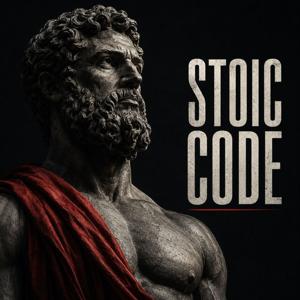
Rejected? Marcus Aurelius Knew This Secret
You know what to do to stay calm, but something keeps pulling you back to old patterns. Marcus Aurelius, the most powerful man on earth for two decades, wrote the same lessons to himself daily, not because he had mastered them, but because mastery is a practice that can be lost. What if the opinions that trigger your automatic responses were installed in childhood and are running on an invisible loop?
In this episode, we explore how Stoic mental training, practiced by figures like Epictetus and Seneca, offers a path to break free from these ingrained reactions. We uncover why transformation is a slow accumulation of chosen responses, not a single event, and how to identify the inherited scripts shaping your behavior without your awareness.
Author: Not specified
Topic: Stoicism, mental training, self-improvement
Period: Ancient Rome
Key Figures: Marcus Aurelius, Epictetus, Seneca
Concept: The gap between stimulus and response
- Marcus Aurelius, who governed millions, wrote private notes daily to avoid arrogance and reactivity.
- Epictetus, who lived enslaved, identified that we are disturbed by opinions, not events themselves.
- Seneca stated that the soul that rises never returns to its original size, emphasizing rising as an act.
- Most automatic opinions are inherited scripts from childhood, shaping behavior below awareness.
- The work of change begins with observing a thought and asking if it is true or just something learned.
To listen to this podcast ad-free and access premium episodes, try our subscription with a 30-day free trial at obomedia.com.
© 2026 OBOMEDIA. All rights reserved.
This episode and its content (audio, text, and related materials) are the exclusive property of OBOMEDIA and are protected by applicable copyright laws. Reproduction, distribution, editing, or commercial use, in whole or in part, without prior written permission from OBOMEDIA is prohibited. For permissions, licensing, and business inquiries:
[email protected].