
Sign up to save your podcasts
Or

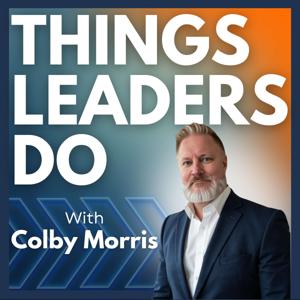

Why do well-structured one-on-ones still feel empty? Usually because the leader is supplying both the structure and everything that goes inside it. This one is for any leader who runs consistent, organized one-on-ones and still walks out knowing nothing new.
Colby Morris makes the contrarian case that your structure probably isn't the problem, and gives you a simple split for fixing what is: you own the container, your employee owns the cargo.
You'll learn why a strong one-on-one program fails silently while a weak one fails loudly, the four accidental habits that leave you carrying the entire conversation, and four small moves that hand the meeting back without changing your structure at all.
Plus how to handle the direct report who says "I'm good" every single week. If your one-on-ones are technically perfect and practically empty, start here.
What is The Container and the Cargo?
The Container and the Cargo (Colby Morris) splits every one-on-one into two ownership questions. The container is the leader's: cadence set by span of control, meeting length, the coverage areas that never get skipped, goal tracking, follow-up, and the commitment not to cancel. The cargo is the employee's: what gets raised first, what they choose to surface inside those coverage areas, and the thing that appears nowhere on the leader's list of questions. The failure mode is a leader who supplies both. This is not an argument against structured one-on-one programs. It assumes the structure and addresses what happens inside it.
Why do my one-on-ones feel empty even though I run them consistently?
Because structure is necessary and not sufficient. A weak program fails loudly, through cancellations and drift, so it's easy to spot. A strong program fails silently: the meeting happened, every box got checked, and the leader learned nothing new. Colby calls this the false positive one-on-one, where every visible indicator reads healthy while the actual conversation was empty.
How do I get a quiet direct report to actually talk?
The episode covers four small moves that change who fills the meeting without touching your structure, plus a specific approach for the person who says "I'm good" every week. Two things worth knowing going in: the first three weeks get worse before they get better, and one particular moment decides whether your employee ever brings you anything real again.
Is this episode for you?
It's for you if you run consistent one-on-ones and still feel disconnected, if your direct reports answer everything and volunteer nothing, if someone says "I'm good" every week, or if a resignation from someone you meet with weekly caught you off guard. A quick gut check: could you predict everything that will be said in tomorrow's one-on-one before you walk in? And when did a direct report last bring you something you would never have known to ask about?
Research referenced in this episode
Related episodes
Connect:
LinkedIn Colby Morris
NXTStepAdvisors.com
About: The Things Leaders Do is a weekly leadership podcast hosted by Colby Morris, Founder of NXT Step Advisors, delivering practical, immediately actionable leadership tools for middle managers and senior leaders. New episodes every Tuesday on Apple Podcasts, Spotify, and wherever you get your podcasts.
 View all episodes
 By Colby Morris
5
1818 ratings
Why do well-structured one-on-ones still feel empty? Usually because the leader is supplying both the structure and everything that goes inside it. This one is for any leader who runs consistent, organized one-on-ones and still walks out knowing nothing new.
Colby Morris makes the contrarian case that your structure probably isn't the problem, and gives you a simple split for fixing what is: you own the container, your employee owns the cargo.
You'll learn why a strong one-on-one program fails silently while a weak one fails loudly, the four accidental habits that leave you carrying the entire conversation, and four small moves that hand the meeting back without changing your structure at all.
Plus how to handle the direct report who says "I'm good" every single week. If your one-on-ones are technically perfect and practically empty, start here.
What is The Container and the Cargo?
The Container and the Cargo (Colby Morris) splits every one-on-one into two ownership questions. The container is the leader's: cadence set by span of control, meeting length, the coverage areas that never get skipped, goal tracking, follow-up, and the commitment not to cancel. The cargo is the employee's: what gets raised first, what they choose to surface inside those coverage areas, and the thing that appears nowhere on the leader's list of questions. The failure mode is a leader who supplies both. This is not an argument against structured one-on-one programs. It assumes the structure and addresses what happens inside it.
Why do my one-on-ones feel empty even though I run them consistently?
Because structure is necessary and not sufficient. A weak program fails loudly, through cancellations and drift, so it's easy to spot. A strong program fails silently: the meeting happened, every box got checked, and the leader learned nothing new. Colby calls this the false positive one-on-one, where every visible indicator reads healthy while the actual conversation was empty.
How do I get a quiet direct report to actually talk?
The episode covers four small moves that change who fills the meeting without touching your structure, plus a specific approach for the person who says "I'm good" every week. Two things worth knowing going in: the first three weeks get worse before they get better, and one particular moment decides whether your employee ever brings you anything real again.
Is this episode for you?
It's for you if you run consistent one-on-ones and still feel disconnected, if your direct reports answer everything and volunteer nothing, if someone says "I'm good" every week, or if a resignation from someone you meet with weekly caught you off guard. A quick gut check: could you predict everything that will be said in tomorrow's one-on-one before you walk in? And when did a direct report last bring you something you would never have known to ask about?
Research referenced in this episode
Related episodes
Connect:
LinkedIn Colby Morris
NXTStepAdvisors.com
About: The Things Leaders Do is a weekly leadership podcast hosted by Colby Morris, Founder of NXT Step Advisors, delivering practical, immediately actionable leadership tools for middle managers and senior leaders. New episodes every Tuesday on Apple Podcasts, Spotify, and wherever you get your podcasts.
36 Listeners

19,524 Listeners