
Sign up to save your podcasts
Or

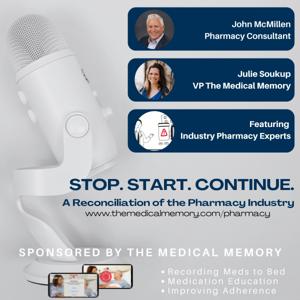


Richard Faris, Chief Strategy and Growth Officer at PANTHERx Rare Specialty Pharmacy, joins John McMillen with The Medical Memory on this episode. The conversation centers around prioritizing patient-centric care in pharmacy practice, shifting away from focusing on lowest cost and reimbursing pharmacies for valuable services such as counseling and medication management. Participants emphasized the importance of adopting a person-centered approach, understanding the whole person beyond their medication use, and addressing adherence problems through education and collaboration. Reducing barriers to access, affordability, and understanding of medications was also crucial to improving patient care.
✨ Key Highlights:
👉 What should we do?
John McMillen from Medical Memory and Dr. Jill Paslier, a Specialty Pharmacy Expert in clinical and operational program development, discuss the importance of actively monitoring and surveilling medication use processes to prevent patient harm. They emphasized the need for robust medication error surveillance programs, targeting high-risk medications, and implementing active monitoring, data analysis, and patient counseling. They also highlighted the significance of a non-punitive culture for reporting errors and the role of medication safety officers and quality and safety teams in implementing medication error surveillance programs.
Stop: Passive waiting for errors to be discovered instead of actively monitoring for potential incidents.
Start: Focus on proactively identifying medication errors and developing a robust surveillance program. There's a need for health systems to continue to track errors and ensure a non-punitive culture for those who make and report errors.
Leverage technology.
Continue: Using a multidisciplinary team, including pharmacists, nurses and quality and safety professionals to identify and address medication errors to improve patient safety
John McMillen and Bill Wolfe discuss the pharmacy industry's ongoing consolidation, focusing on its impact on various stakeholders. Bill Wolfe shares his experience in the industry, highlighting the efficiency and value of the Pharmacist and pharmacy benefit. John McMillen emphasizes the importance of understanding each deal's nuances and possible implications for the broader ecosystem. Later, John McMillen and Bill Wolfe discuss the need to shift the pharmacy practice focus from cost and rebates to efficiency and patient outcomes and the importance of patient engagement and adherence to medication regimens. Bill highlights the need to address high drug costs and promote transparency in pricing. Finally, John McMillen and Bill Wolf advocate recognizing pharmacists as providers and empowering pharmacy technicians to take on more responsibilities.
Start: Expand the definition of "provider" to include pharmacists in more states. Allow pharmacy technicians to take on expanded roles with appropriate training.
Stop: shift the pharmacy practice focus from cost and rebates to efficiency, patient outcomes, and patient engagement and adherence to medication regimens.
Continue: Encourage patients to use digital tools like medical memory to improve medication adherence and engagement. Continue advocating for pharmacists' provider status and reimbursement models that recognize their value.
Medical Memory is a HIPAA Compliant Tool being utilized throughout the Pharmacy practice to support patient education, beds to meds, discharge instructions, specialty medication instructions, and more.
Welcome to "Stop Start Continue: A Reconciliation of the Pharmacy Industry," sponsored by Medical Memory. In each episode, we'll chat with top pharmacy thinkers to discuss what needs to change, what needs to start, and what best practices should continue in the industry. Our guests include industry leaders from all practice sites, regulatory experts, and patient safety advocates. We'll uncover what is propelling pharmacy forward and what obstacles are preventing further progress. Join us on this informative journey. John McMillan Hosts.
Guest featured is Megan Reed is a Program Director of Pharmacy and PCAP at ACHC.
• Her focus area is on compounding pharmacy.
• One thing she wants to stop is the negative perceptions and judgment towards compounders, especially during the pandemic when specialty diseases require compounding treatments.
• She believes that the industry has come a long way in terms of safety and standards since the New England compounding situation.
• She suggests raising the bar for compounding pharmacies by becoming accredited, which shows compliance and sets them apart from competitors.
• Megan encourages collaboration and education within the pharmacy community to continue improving patient safety and outcomes.
• She also mentions the importance of using technology, such as videos or apps like Medical Memory, for training and competency requirements.
• ACHC offers workshops, a compounding manual, and other educational resources to help pharmacies with their accreditation process.
Welcome to "Stop Start Continue: A Reconciliation of the Pharmacy Industry," sponsored by Medical Memory. In each episode, we'll chat with top pharmacy thinkers to discuss what needs to change, what needs to start, and what best practices should continue in the industry. Our guests include industry leaders from all practice sites, regulatory experts, and patient safety advocates. We'll uncover what is propelling pharmacy forward and what obstacles are preventing further progress. Join us on this informative journey
John McMillan is joined by Ronnie Strickland and Rachna Patel from Cardinal Health on their podcast episode.
• Ronnie emphasizes the importance of remote pharmacy services during the COVID-19 pandemic and how it can have a positive impact in hospital and outpatient settings.
• Rachna mentions that remote pharmacy services are not just limited to overnight services, but also provide opportunities for pharmacists to work alongside on-site staff, freeing them up to do more clinical services.
• The group discusses how expanding the use of remote pharmacy services can lead to increased patient education and adherence, ultimately decreasing readmission rates and improving HCAHPS scores.
• Continuation with innovation and collaboration with hospital leadership is key to showing the value of pharmacy as a strategic asset.
• Overall, patient safety remains a top priority for Cardinal Health.
Dr. Al Carter, Executive Director of the National Association of Boards of Pharmacy, discussed what needs to stop, start, and continue in pharmacy.
For stopping, he said negative advocacy against pharmacy as a career needs to end, as it risks worsening workforce shortages.
To start, more needs to be done to educate the public on pharmacists' extensive clinical capabilities and role in healthcare teams.
For continuing, pharmacists should keep stepping up during public health crises by providing services like vaccinations and testing. Their accessibility makes pharmacies vital partners.
From the publisher's feed