
Sign up to save your podcasts
Or

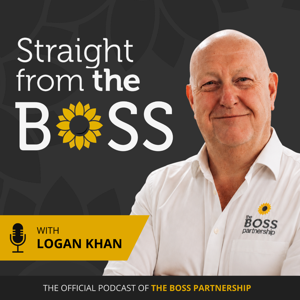


In this episode of Straight from the Boss, Logan Khan speaks with Ben Bradley, founder of Cosmik Carrot, about getting meaningful results from digital marketing without losing the human side of business. Ben shares how his agency began in 2008 and adapted from event-related web development to search engine optimisation and other digital services. They discuss why clicks do not necessarily become customers, the risks of paying for traffic that does not convert, and the opportunities businesses overlook in their Google Business Profile and customer reviews.
The conversation then turns to AI, with Ben distinguishing generic content from useful outputs guided by clear processes, detailed instructions and a recognisable brand voice. Rather than dismissing the technology, he explains why the people directing it still matter. Logan and Ben also explore choosing the right social channels, building relationships and making a business stand out through personality. Ben closes with advice for aspiring marketers: keep learning, understand the value you offer and remember that you are communicating with another human being.
Key Takeaways
Measure customers, not just clicks: Ben challenges businesses to look beyond impressive-looking activity and ask whether their marketing generates leads and revenue. Paying for more traffic does not solve a website’s conversion problem.
Make the most of your Google Business Profile: Ben highlights complete business information, photos, service details, regular posts and customer reviews as important areas that businesses can overlook.
Choose channels around your customers: Logan and Ben discuss why different businesses need different approaches to social media. The relevant question is where your audience is, rather than which platform everyone else is using.
Give AI direction, not control of your identity: Clear processes, detailed input and brand guidelines are central to Ben’s approach. His concern is generic content that loses the business’s voice, not the use of AI itself.
Keep the human connection: Personality, creativity and relationships remain central to the conversation. Ben encourages aspiring marketers to keep learning, develop their individuality and focus on the person they are trying to reach.
Timestamps
(00:36) How Cosmik Carrot began and adapted its business.
(03:13) Why clicks are not the same as customers.
(04:20) Google Business Profile and the value of customer reviews.
(07:24) Choosing the right marketing channels for your business.
(08:58) Using AI without losing your brand’s voice.
(16:03) Why good business still depends on relationships.
(18:18) Advice for aspiring marketers: learning, individuality and value.
Links
Cosmik Carrot:
https://www.cosmikcarrot.com/
Free Website Audit — Cosmik Carrot:
https://www.cosmikcarrot.com/web-design-agency/website-audit/#audit
Straight from the Boss — Martin Hall
Summary
In this episode of Straight from the Boss, Logan Khan speaks with Martin Hall, President of the Lichfield & Tamworth Chamber of Commerce, about the pressures facing local businesses and why solving the skills shortage requires employers to play a more active role in education. They explore low business confidence, rising employment costs, changing consumer behaviour in hospitality, and the need to invest in younger talent. Martin argues that education remains rooted in an outdated academic model and that businesses
should support—not replace—schools by meeting students, working with teachers, offering work experience, mentoring apprentices, and making different career paths more visible. The conversation compares university with apprenticeships, highlights the value of vocational skills and communication, and considers how excessive remote working can limit early-career development. Martin also reflects on his insurance career and current “insurance wingman” role before the discussion closes on social-media
expectations, consistent hard work, resilience, learning from failure, asking for help, and saying yes to opportunities. Overall, the episode calls for stronger cooperation between education and business to prepare young people for the realities of work.
Key Takeaways
Businesses must engage with education: Employers cannot complain about skills shortages without actively supporting schools, meeting students, working with teachers, and demonstrating the opportunities available within their industries.
Education must reflect the modern workplace: Academic achievement remains important, but the education system also needs to recognise skilled trades, vocational careers, practical ability, communication, and the changing needs of employers.
University is not the only route to success: Apprenticeships can allow young people to gain qualifications, valuable experience, and professional confidence without accumulating significant university debt.
Young people need exposure and mentorship: Work experience, client interactions, workplace observation, and guidance from senior colleagues help younger employees build confidence and understand how businesses operate.
Success requires resilience and consistency: Social media can make success appear instant, but meaningful progress usually comes through sustained effort, learning from mistakes, asking for help, and taking opportunities when they arise.
Timestamps
(00:24) Local business confidence and the cost of doing business
(04:23) Hospitality, changing consumer behaviour and local growth
(07:23) Investing in young people and the future workforce
(08:48) Why education and business both need to change
(12:03) University, apprenticeships and vocational career paths
(16:58) Work experience, mentorship and learning in the workplace
(25:45) Hard work, resilience and saying yes to opportunities
Links
Martin Hall — LinkedIn:
https://uk.linkedin.com/in/martin-hall-70258483
The Boss Partnership:
https://www.thebosspartnership.co.uk/
Lichfield & Tamworth Chamber of Commerce:
https://www.greaterbirminghamchambers.com/about/our-network/lichfield-and-tamworth.html
Martin Hall — Chamber Profile:
https://www.greaterbirminghamchambers.com/resource/insurance-expert-takes-reins-as-lichfield-and-tamworth-chamber-president.html
The Careers & Enterprise Company:
https://www.careersandenterprise.co.uk/
The Tamworth Tap:
https://tamworthtap.co.uk/
Summary
In the debut episode of Straight from the Boss, Logan Khan sits down with Kate Gannon, Vice President of the Personal Finance Society and founder of Themis Wealth Management, to discuss her journey from a Barclays bank cashier to becoming one of the UK's leading voices in financial planning.
Kate shares how determination, continuous learning, and a willingness to step outside her comfort zone shaped her career. She reflects on the value of professional qualifications, mentoring, and why soft skills such as communication, empathy, and active listening are just as important as technical expertise.
The conversation explores the growing need to make financial advice more accessible, particularly for younger generations and those who have traditionally believed financial planning is only for the wealthy.
Kate explains the work being done by the Personal Finance Society to bridge the advice gap, encourage new entrants into the profession, and improve financial education across schools and communities.
Logan and Kate also discuss the importance of building healthy financial habits, the impact of mindset on long-term wealth, and why small behavioural changes can make a significant difference over time. The episode concludes with practical career advice for young professionals on the importance of listening, continuous learning, and believing in yourself.
Key Takeaways
1. Success doesn't require a traditional career path
Kate's career demonstrates that university isn't the only route to success. Curiosity, hard work, and continuous professional development can open significant opportunities.
2. Financial planning should be accessible to everyone
Only a small percentage of people currently seek financial advice. Increasing access and improving financial education are key priorities for the profession.
3. Small financial habits create long-term results
Simple changes, such as reducing unnecessary daily spending and saving consistently, can have a meaningful impact on long-term financial security.
4. Soft skills are essential in professional services
Technical knowledge alone isn't enough. Communication, empathy, vulnerability, and knowing when to seek advice all contribute to building stronger client relationships.
5. Invest in lifelong learning
Whether through professional qualifications, mentoring, or learning from younger colleagues, continuous development is a key driver of long-term success.
Timestamps
(00:12) Kate Gannon's journey from Barclays cashier to financial planner
(03:38) Building a career at Barclays and launching Themis Wealth Management
(05:25) Kate's role as Vice President of the Personal Finance Society
(07:02) Why soft skills matter in financial planning
(10:57) Career opportunities beyond university
(11:56) The importance of financial education in schools
(14:16) Closing the financial advice gap
(16:08) Developing better saving habits and financial mindsets
(18:19) Cash flow planning and changing financial behaviours
(21:16) Making financial planning more accessible
(22:04) Advice Kate would give her 20-year-old self
Links
Personal Finance Society (PFS): https://www.thepfs.org/
Themis Wealth Management: https://themiswealthmanagement.com/
Kate Gannon on LinkedIn: https://uk.linkedin.com/in/kate-gannon-fpfs-mcsi-38855033
From the publisher's feed
Every month, we're sitting down with a different guest for honest, unfiltered conversations, real stories, real lessons, and real talk: Straight from the Boss.