
Sign up to save your podcasts
Or



Sometimes life gets so full that even a good schedule isn't enough.
Responsibilities change. Unexpected things need our attention. We don't get enough sleep. Something that matters takes longer than expected. And suddenly we're trying to keep up with everything while running on less energy and a divided mind.
That's real life.
In this video, I'm sitting on my porch instead of in my office because I realized I needed a day—a day to rest, clear my head, take care of some personal things, and reassess what is taking my time, energy, and resources.
I talk about periodically looking at your life and asking:
What needs to be refined?
What needs to be removed?
What needs to be delegated?
What needs to be reset?
And when something important is draining you, instead of immediately deciding you can't do it, asking a different question: How can I do this without it draining me and taking up all my time and energy?
You don't have to have everything perfectly together to have something valuable to offer.
I'd like to hear from you: What is one area of your life right now that feels overwhelming—something you wish you could take off your plate or do without the stress you're experiencing?
Leave it in the comments. I'll respond.
Apply to work with me 1:1:
https://alphaadvancementstrategies.com/apply
How often do we decide we can’t do something simply because we don’t know how?
In this live demonstration, I’m putting together two lamps for my office—something I’ve never done before and something that came with less-than-helpful instructions.
But the lamps aren’t really the point.
This is a practical demonstration of how we approach decisions and problems. We can focus on what we don’t know, what we don’t have, or what might go wrong—or we can start with what we know, assess what’s in front of us, and work through it one step at a time.
You don’t always need to know exactly how something is going to work before you begin. Sometimes you start, evaluate what happens, make adjustments, learn as you go, and get help when you need it.
That same process applies to much bigger decisions in business and life.
Strategic Decision Processing™ with Lori Lynn Greene
Confident decision-making without risking your finances, relationships, or health & well-being.
Learn more or apply to work with me:
AlphaAdvancementStrategies.com/apply
Sometimes we think we’re making one decision when we’re actually making several decisions at the same time.
That can happen with a job, business opportunity, investment, relationship, move, major purchase, or any new responsibility.
Instead of simply asking whether something is good or bad, look at what each option actually requires.
One of the questions I ask my clients is: What is this really going to require?
Not what do I hope it requires. What will it actually require?
Because when we make decisions based on the best-case scenario, we can end up agreeing to something very different from what we expected.
Apply to work with me:
AlphaAdvancementStrategies.com/apply
What does respect really mean?
We often confuse respect with agreement—as though respecting someone means we can’t question them, challenge their thinking, or tell them when we believe they’re wrong.
But disagreement and disrespect are not the same thing.
In this video, I talk about the difference between respectful dissent and contempt, why respect has to work in both directions, and how the way we treat people contributes to the culture around us.
I also explore something we don’t talk about nearly enough: how honor affects what we’re able to receive from leaders, mentors, teachers, and others who have something valuable to contribute to our lives.
Respect doesn’t require silence. It doesn’t mean someone is always right. And it doesn’t mean we can’t challenge an idea or address a problem.
The real question is: How do we treat people when we disagree?
Apply to work with me:
AlphaAdvancementStrategies.com/apply
Good decisions depend on understanding what is really happening. That becomes difficult when stress, fear, anxiety, anger, distractions, or misunderstandings interfere with communication.
In this video, I explain how active listening, body language, thoughtful questions, healthy assertiveness, and knowing when to pause a conversation can help people communicate more clearly. I also discuss why listening is not the same as waiting for your turn to talk and why trying to be right can prevent people from finding the truth.
Effective communication helps us understand different perspectives, recognize blind spots, de-escalate difficult situations, and gather the information needed to make better decisions.
Apply to work with me:
https://alphaadvancementstrategies.com/apply
Dolly Parton’s legacy was built through decisions about her career, business, relationships, ownership, generosity, and stewardship.
In the first episode of Decisions That Shaped a Life, I examine several defining decisions, including leaving The Porter Wagoner Show, saying no to Elvis Presley, investing in Dollywood, creating the Imagination Library, and protecting her marriage from public life.
Using my Strategic Decision Processing™ methodology, we’ll consider the facts, risks, values, priorities, responsibilities, seasons, and consequences behind these decisions.
I’ll also share my personal connection to the Imagination Library through one of my former clients and my granddaughter.
Apply to work with me:
https://alphaadvancementstrategies.com/apply
A successful doctor and his wife had tried everything they knew to help their adult son move forward with employment and the responsibilities of adult life.
They provided job opportunities, training, transportation, financial support, reminders, and encouragement—but he still struggled to follow through.
Over several years of working with this family, I helped them recognize that this wasn’t just one problem. We needed to understand three things:
What was making it difficult for their son to move forward?
What skills and structure did he need?
And was the support surrounding him actually helping him make progress?
In this case study, I explain how we identified his physical and cognitive challenges, practiced practical skills, created structure, and separated the son’s decisions from his parents’ decisions.
This same process applies in families, businesses, and organizations. Even successful leaders who solve complicated problems every day can have difficulty seeing clearly when someone they love is involved.
Strategic Decision Processing™ helps executives, business owners, entrepreneurs, and leaders identify the real problem before deciding what to do.
Apply to work with me:
https://alphaadvancementstrategies.com/apply
We often think we need to have the whole plan figured out before we can move forward. We want to know how everything will work, what could go wrong, and what we'll do if it does.
But there’s a difference between being responsible and believing everything depends on us.
Looking back over my life, some of the most significant things I’ve done began without knowing where they would lead. I learned the next step as I went. I learned to recognize what was mine to do, what wasn’t, and how fear, worry, assumptions, pressure, and the need to control can make a decision or problem seem much harder than it actually is.
In this video, I talk about what I’ve learned through business, ministry, radio, music, relationships, difficult seasons, and helping other people make significant decisions. I share why peace matters when we’re trying to see clearly, the difference between deciding and discerning, and why stewardship changes the question from “What do I want to do?” to “What am I actually responsible for?”
You don’t need to know the whole plan. See what’s true, know what’s yours to do, and have the confidence to take the next step.
Work with me:
https://alphaadvancementstrategies.com/apply
#DecisionMaking #Leadership #Clarity #Discernment #PersonalGrowth
Why is it so hard to ask for help, especially when we know we’re struggling?
I’ve noticed that people often isolate when they’re frustrated, discouraged, overwhelmed, or stuck. Instead of reaching out, they stay alone with their thoughts and continue focusing on what’s wrong.
For some, this has become a familiar thinking pattern developed over years. For others, asking for help can bring up pride or shame—the belief that they should be able to handle things themselves.
In this video, I talk about why we isolate, how negativity bias and learned thinking patterns can keep us stuck, and how another perspective can help interrupt the cycle.
Asking for help isn’t weakness. Sometimes recognizing that we need another perspective is wisdom.
Work with me:
https://alphaadvancementstrategies.com/apply
What happens when nothing is wrong right now, but you’re constantly expecting something to happen?
I recently worked with someone who told me, “I don’t know how long I can keep doing this.” But when we looked at what was actually happening, their calendar wasn’t full. The problem was that their mind never got a break.
They were anticipating problems before they happened, keeping unresolved responsibilities in their head, leaving their time open in case someone needed them, and expecting things from other people that those people weren’t capable of doing.
In this video, I talk about how survival mode can keep us in limbo, create resentment, and prevent us from being present even when we have time to enjoy our lives.
I also explain how planning ahead, establishing boundaries, delegating, and separating what is actually happening from what might happen can help us deal with problems when they actually occur instead of living in anticipation of them.
Work with me:
Apply to work with Lori: https://alphaadvancementstrategies.com/apply
#SurvivalMode #Overwhelmed #DecisionMaking #Boundaries #MentalLoad #StressManagement #Leadership #strategicdecisionmaking
From the publisher's feed
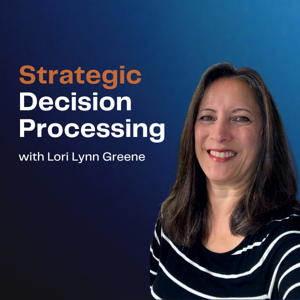
Strategic Decision Processing with Lori Lynn Greene is for executives, business owners, entrepreneurs, and leaders making decisions that can affect their finances, relationships,…
Lori explores the factors that influence the decisions we make, including assumptions, fear, pressure, priorities, responsibility, risk, relationships, past experiences, and information we may be missing. Through practical teaching, research, and real-world examples, she helps listeners think more clearly, identify the real problem, consider what matters most, and make intentional decisions with greater clarity and confidence.
Apply to work with Lori:
AlphaAdvancementStrategies.com/apply