
Sign up to save your podcasts
Or

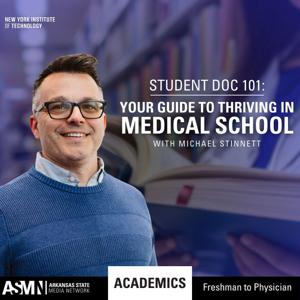


Medical school breaks your focus long before it breaks your intellect. Host Michael Stinnett joins students Amaya, Dakota, and Braxton to map out survival mechanics for the academic grind.
First-year students often trap themselves in passive note-taking. This conversation strips away the posturing to expose how these future doctors abandoned time-wasting habits for high-yield practice questions and automated flashcards. The panel explores the friction of medical training, detailing how working to your level of resistance rapidly exposes hidden knowledge gaps. They outline exact indicators of impending burnout, from dropping daily workouts to isolating from peers.
For medical students stuck in inefficient study loops, this discussion provides a blueprint to reset routines and reclaim free time. Subscribe and share this specific episode with a classmate struggling to balance their load. What non-negotiable habit keeps you grounded during exam week?
0:00 - Introductions and Paths to Medicine
7:24 - Navigating the Medical School Transition
11:05 - Evolving Study Habits and Efficiency
20:18 - Practice Questions and Finding Gaps
26:51 - Accountability and Non-Negotiable Routines
32:44 - Identifying and Managing Burnout
The pace of medical education crushes students who tie their identity to a test score. Second-year osteopathic students Priyanka and TJ expose the daily grind of NYITCOM and how to actually survive it.
They break down the shock of condensing undergraduate biochem into three short lectures. Relying on standard study frameworks like Anki and Qbanks only works if you set rigid boundaries, such as strict evening cutoffs, to avoid burnout. The discussion tackles the heavy mental weight of imposter syndrome and the danger of letting one failed practice exam spiral into permanent self-doubt.
For pre-meds obsessing over toxic online forums, this provides the blueprint to protect your peace while managing extreme study loads. Subscribe and share this episode with a peer who needs a mental reset. What specific boundary keeps your studies from taking over your daily life?
00:00 - Introductions and Coffee Obsessions
05:30 - The Shock of Medical School Pacing
13:10 - Setting Non-Negotiables and Boundaries
16:15 - Rewiring the Med School Mindset
29:07 - Conquering Imposter Syndrome
49:15 - Final Advice and Ignoring Toxic Forums
High stress and a massive volume of information break most medical students before they ever even touch a patient. With physician burnout at an all-time high, discovering how to maintain your humanity while learning to save lives is completely necessary for long-term success. We sit down with representatives from NYITCOM at Arkansas State University to unpack the osteopathic approach to rural healthcare, surviving medical school, and treating the whole patient.
We get into the specific daily habits that separate successful medical students from the ones who burn out in the first two years. The conversation covers spaced repetition frameworks, the practical application of osteopathic manipulative medicine, and how to build actual health literacy in underserved communities like the Mississippi River Delta. A major shift in perspective happens when they explain why medical education should be approached like an impressionist painting, letting the whole picture reveal itself over time rather than just cramming isolated facts.
The path to becoming a physician forces students to navigate immense academic pressure while trying not to miss their children's formative years. You will walk away from this conversation with a practical system for organizing unstructured study time and a clear warning about why skipping the gym or family dinners to study actually destroys your ability to retain information.
If you care about holistic patient care, rural healthcare access, and surviving rigorous academic programs without losing your mind, you’ll get a lot from this. Please subscribe to the channel and share this episode with anyone currently fighting their way through higher education. What is the biggest sacrifice you have had to make to pursue your career goals, and was it worth it?
@arkansasstatemedianetwork.com.
0:00 Intro to Osteopathic Medicine 2:45 Surviving the Medical School Workload 7:35 Health Literacy and the Delta Region 10:38 Work-Life Balance and Lowering Cortisol 12:30 Staying Connected to Your Purpose 15:58 Balancing Family and Medical School
Medical school is notorious for high burnout rates, relentless academic pressure, and a hyper-competitive atmosphere that isolates students. When every exam feels like a high-stakes obstacle, trying to carry the weight entirely on your own creates an environment of unnecessary anxiety and mental exhaustion. In this episode of Student Talk 101, host Michael Stinette sits down with third-year medical students Mostafa, David, and Nihaar to discuss how leaning into community and shared accountability transformed their medical education journey.
We sit down to unpack the exact strategies and mental shifts needed to navigate the pre-clinical and clinical years. The group breaks down how to find an effective study routine through trial and error, the role of active recall through practice questions, and how to track progress using self-testing rather than passive reading. They dive into their shared philosophy on rejecting the "dog-eat-dog" stereotype of medical education, choosing instead to share study strategies, hold each other accountable, and foster psychological safety within their peer group.
Thriving in medicine requires confronting the harsh reality of constant self-doubt, high-stress board prep, and the fear of coming up short. Instead of hiding struggles behind an ego, acknowledging knowledge gaps early provides a direct map of what needs improvement before high-stakes exams arrive. You will walk away with a practical framework for building a strong support network, turning academic setbacks into actionable growth, and maintaining a healthy balance outside the classroom.
If you care about medical education strategies, peer accountability, and mental wellness in healthcare, you'll get a lot from this episode. Don't forget to subscribe and share this with a fellow student who needs to hear it. What is the single biggest mindset shift that has helped you handle high-pressure academic environments? Let us know in the comments below!
@arkansasstatemedianetwork.com
0:00 - Introduction & Guest Introductions
3:20 - What Makes Medical School Hard?
8:50 - Overcoming the Competitive Mindset Through Friendship
11:20 - Goals, Values, and Accountability
17:00 - Vulnerability, Fear of Failure, and Embracing the Grind
30:48 - Work-Life Balance & Favorite Outlets
The transition from undergrad to medical school can feel like drinking from a firehose, and most students quickly realize that brute-force memorization isn't enough to survive. With high-stakes exams and massive workloads, understanding how to manage your time and protect your cognitive performance is crucial for any incoming student. In this episode of Student Doc 101, NYITCOM learning specialist Michael Stinette sits down with student doctors Erica Mosby, Kayeden Milne, and Aisley George to unpack what it really takes to thrive in medical school without losing your mind.
We get into the tactical adjustments required to conquer the medical school learning curve, from ditching popular study tools like Sketchy or Anki when they don't fit your learning style, to leveraging real-life scenarios and whiteboard dumping for complex medical concepts. The student doctors list actionable test-taking strategies, like why you should never change your first answer on an exam, and explain the importance of a tiered, scaffolding approach to question banks like ScholarRX and TrueLearn. The secret sauce to their success lies in embracing variability: recognizing that you don't have to study at 8:00 AM just because your peers do, as long as you hit your daily goals.
Behind the white coats and prestige lies a daily struggle with imposter syndrome, fight-or-flight stress responses, and the temptation to sacrifice sleep, proper diet, and exercise just to squeeze in one more hour of studying. The student doctors share their experiences with mental clutter and the danger of "over-resourcing," warning incoming students against blindly following standard schedules that lead to burnout. You will walk away with a practical mindset shift on how to establish non-negotiable self-care routines, use peer accountability to protect your personal time, and give yourself the grace needed to navigate the hardest years of your academic career.
If you care about medical school time management, efficient study hacks, and maintaining your mental health during grueling academic programs, you will get a lot from this. Don't forget to subscribe to the channel and share this episode with a fellow med student or anyone preparing for the journey ahead. What is the one self-care habit or "non-negotiable" you refuse to sacrifice during a busy work or study week? Let us know in the comments below!
@Arkansasstatemedianetwork.com.
0:00 - Why We Chose Medicine
4:15 - Surprises and the Time Management Reality Check
11:20 - What NOT to Do: Avoiding Resource Overload
15:30 - Tactical Study Habits That Actually Work
19:10 - Protecting Your Non-Negotiables: Sleep, Diet, & Exercise
33:21 - Final Takeaways: Giving Yourself Grace
Medical school will push you into panic mode if you let it. When adrenaline spikes and the heavy workload hits, the first things students usually throw overboard are sleep, nutrition, and exercise, the exact habits required to keep the brain functioning under pressure. This conversation is about stopping that desperation cycle before it starts so you can actually thrive during four grueling years of education. We sit down with medical student and former Division III college athlete Jacorey Jackson to break down how he applies a rigorous athlete's mindset to the daily demands of medical school.
We get into the direct connection between aerobic exercise and cognitive performance, examining why a physical workout is actually vital for study time for your nervous system. Jacorey shares how he transitioned from civil engineering spreadsheets to biochemistry, the trial-and-error process of scheduling study blocks around non-negotiable gym time, and how to avoid the trap of the sympathetic nervous system stress response. We also dig into the surprising level of peer cooperation in medical cohorts and how to handle social media algorithms designed to steal your focus with instant gratification. The secret sauce of his approach lies in treating well-being as a strict operational boundary rather than a luxury, ensuring you never sacrifice the physical machine that drives your mental output.
The hardest part of this journey isn't just memorizing the vast volume of material; it is fighting the urge to self-isolate and double down when you hit an academic wall. When grades drop or a concept won't stick, high achievers naturally want to beat their heads against the desk for hours instead of doing the difficult work of stepping away to reset. You will walk away from this conversation with a practical framework for setting daily boundaries, a reality check on why asking for help is a sign of resilience rather than weakness, and a counterintuitive strategy for incoming students that involves doing zero academic prep before day one.
If you care about cognitive performance, sustainable study habits, and maintaining your identity under intense pressure, you’ll get a lot from this. Hit the subscribe button to follow our ongoing guide to thriving in medical school, and share this episode with a classmate or future student who needs a reminder to step away from the desk. What is one non-negotiable daily habit you refuse to sacrifice for your studies or career? Let us know in the comments below.
@arkansasstatemedianetowrk.com.
0:00 - From College Football to Medical School
06:12 - How Athletic Discipline Prepares You for Med School
12:04 - Why You Can't Sacrifice Exercise and Sleep
15:48 - Overcoming Competition and Comparison
26:03 - The Real Strength: Asking for Help
28:31 - How to Prepare for Year One and Remember Your "Why"
Medical school will systematically strip away your identity if you let it. With physician burnout climbing and rural clinics struggling to keep their doors open, understanding how to mentally survive the gauntlet of medical training is more critical than ever. Georgie and Hunter Dance, fourth-year medical students at NYITCOM Arkansas, join the show to share their firsthand experience navigating the intense pressures of becoming osteopathic physicians.
We sit down to explore the distinct advantages of osteopathic training, breaking down how time in the OMM lab and developing strong palpation skills directly translate to better patient connections. The conversation covers the realities of rural healthcare access, the intense hands-on clinical rotations required in places like Crossett, Arkansas, and the necessary flexibility to pivot specialty interests from pediatric neurology to OBGYN and family medicine. The true anchor of their approach is a shared philosophy of "failing up," proving that a bombed practice test is not a permanent label, but a mandatory stepping stone for growth.
The daily pressure of medical education guarantees a heavy dose of failure and intense mental strain. Spending endless hours anchored to a desk for board prep and confronting the sheer volume of clinical material can easily derail your focus. You will walk away from this discussion with a practical framework for maintaining your sanity, which involves protecting the creative hobbies that ground you, adapting your study techniques when standard methods stop working, and recognizing that struggling through the curriculum is a privilege to be managed, rather than a punishment to endure.
If you care about building resilience in medical school, the future of rural healthcare, and maintaining your personal identity under heavy academic pressure, you’ll get a lot from this. Please remember to subscribe to the channel and share this episode with anyone preparing for their own journey into medicine. What is the biggest failure you've experienced that ultimately forced you to level up your approach to a difficult problem?
@Arkansasstaemedianetwork.com.
0:00 Introduction and Journeys to Med School
5:36 The DO Difference and Hands-On Medicine
10:17 The Reality of Rural Healthcare
16:05 Embracing the Struggle and Failing Up
29:12 Navigating Clinical Rotations and Specialties
35:30 Final Advice for Future Medical Students
Medical school is an absolute pressure cooker, and trying to survive it on pure adrenaline is a quick path to burnout. With nationwide physician shortages looming over the next decade, learning how to handle a massive academic load while keeping your mental health intact has never been more critical. In this episode, we talk with second-year medical student Helen Shi about her strategies for navigating the intense demands of medical training without sacrificing her well-being.
We sit down to break down the actual mechanics of balancing research, board preparation, and self-care. Helen shares how she applies her background in neuroscience and psychology to master a strict 168-hour weekly calendar, run high-yield study groups that use comprehensive answer keys to build test-taking skills, and utilize the therapeutic benefits of osteopathic manipulative medicine. Her secret sauce lies in proactively organizing her distractions, intentionally scheduling a designated "yap session" at the start of study meetings so the group can completely lock in when it matters most.
The reality of medical education means facing situations entirely out of your control, like navigating a flooded apartment and falling ill right before a major exam week. Thriving in this environment requires a strong internal locus of control and a willingness to bring in outside accountability, whether through therapy or trusted peers. Viewers will walk away with a practical framework for calculating their weekly time metrics and a clear strategy for building an academic anchor group that focuses on growth over complaints.
If you care about time management, medical education, and mental well-being, you’ll get a lot from this. Make sure to subscribe and share this episode with anyone looking to optimize their schedule. What is the biggest unexpected stressor you’ve had to handle recently, and how did you adjust your plan to get through it?
@arkansasstatemedisnetwork.com.
0:12 Introduction & Guest Intro
2:06 Finding a Passion for Medicine & Research
6:04 Demystifying Osteopathic Medicine & OMM
13:17 Breakthrough Alzheimer's & Relationship Research
16:58 Time Management and the 168-Hour Rule
30:03 Finding Your Anchor Study Group
Medical school can swallow your calendar, your identity, and your relationships if you let it, and plenty of people will tell you that’s just the price of admission. We push back on that idea with Jacob McKuin, a soon-to-be physician, former nurse, and father of three, who shares what it actually looks like to thrive in med school with a family. We talk about the hidden pressure of missing moments you can’t “make up later,” and why having a spouse and kids can be a stabilizing force instead of a distraction.
Jacob also explains the deeper mission behind his journey: returning to a small community and improving access to care in the Mississippi River Delta. That leads into a practical conversation about osteopathic medicine, holistic healthcare, and the biopsychosocial spiritual model, including why social determinants of health matter when you’re trying to serve real people, not just treat diagnoses. If you’re drawn to rural medicine, community health, or purpose-driven training, you’ll hear a clear framework for making decisions that match the life you want.
Then we get tactical about learning: why med school is often more about volume than raw difficulty, how stress and sympathetic activation can narrow your focus, and how that can wreck your study efficiency. Jacob shares a concepts-first approach, using spaced repetition tools like Anki or ScholarRx the right way, and adding practice questions early so you stop guessing what you know. You’ll leave with actionable study strategies, better stress management, and a reminder that training is part of life, not all of it.
If this helps, subscribe, share the episode with a classmate or support person, and leave a quick review, so more students and families can find it.
@Arkansasstatemedianetwork.com.
0:00 - The Med School Trap
1:45 - Balancing Family and White Coat
4:15 - Protecting What Matters Most
6:40 - The Mississippi Delta Mission
9:10 - Demystifying Osteopathic Medicine
11:35 - The Biopsychosocial Spiritual Model
14:20 - Tackling Social Determinants of Health
16:55 - Volume vs. Difficulty in Medical School
19:30 - How Stress Wrecks Study Efficiency
21:45 - Mastering Anki and Spaced Repetition
24:10 - Tactical Practice Questions Early
26:30 - Protect Your Training, Protect Your Life
You can be driven, smart, and deeply called to medicine and still feel thrown off when med school gets uncomfortable. That’s why I sit down with three student doctors, Sam Turner, Tate Snider, and David Tiu, for an honest talk about what thriving in medical school really looks like when the workload is heavy, the learning curve is steep, and your confidence takes hits.
We start with the real stories behind their paths into medicine, then get practical about osteopathic medicine, OMM, and why palpatory skills and a strong physical exam can set you apart on rotations. We also talk about NYITCOM's mission at Arkansas State, rural health disparities in the Mississippi Delta, and what programs like the Delta Caravan and the Delta Population Health Institute (DPHI) teach you about social determinants of health and the healthcare system beyond the textbooks.
From there, we dig into the most useful stuff for day-to-day survival: the surprise that med school can actually be fun, the power of camaraderie, and why isolating yourself makes everything harder. You’ll hear how they think about efficiency vs grinding, how to “earn” time off without falling behind, and why the best hack for getting comfortable with discomfort is simply doing the work and letting practice scores guide you instead of defining you. We close with one-sentence takeaways on becoming a good doctor and staying human while you do it.
If this helped you, subscribe, share it with a classmate, and leave a review so more students can find it. What’s the hardest part of med school for you right now? @Arkansasstatemedianetwork.com.
0:00 Welcome and Goals of the Show
4:22 Why a DO Program and OMM
8:25 Mission to Improve Delta Health
14:30 What Surprises Students Most
20:21 Social Support, Discipline, and Identity
27:30 Normalizing Struggle and Building Resilience
39:07 Study Resources: Efficiency and Adaptability
41:21 Final Takeaways and Favorite Off-Switches
45:49 Closing and Listener Challenge
From the publisher's feed
Hosted by Michael Stinnett, Student Doc 101 provides a high-level briefing on the academic architecture and strategic vision behind the NYITCOM Arkansas State partnership. Featuring deans and lead…