
Sign up to save your podcasts
Or



When things go wrong in the wild, one of the biggest challenges is not just staying safe, but getting found. That is where survival signaling comes in. Whether you are injured, lost, delayed, or completely cut off from help, your ability to attract attention can make the difference between a rough night and a life-threatening situation. In this episode, we are breaking down the essential signaling methods every outdoors person should know, from simple visual cues to audio and electronic options that can dramatically improve your chances of rescue.
The first thing to understand is that survival signaling starts with visibility. If rescuers cannot see you, they cannot help you. That means choosing the right location matters. High ground, open clearings, shorelines, ridgelines, and edges of terrain are usually far better than dense forest or low valleys. Once you are in a position where you can be seen, your next job is to make yourself stand out. Bright clothing, reflective materials, emergency blankets, and movement can all catch the eye. Even something as basic as laying out contrasting gear in a large, deliberate shape can help search teams identify your location from the air or distance.
Fire is another powerful signaling tool, but only if you use it correctly. A normal campfire may keep you warm, but a signal fire needs to be obvious. Smoke in daylight and flame at night are both useful, and adding green vegetation can produce thicker smoke if conditions allow. In some situations, three fires arranged in a triangle or a straight line are recognized as a distress signal. The key is consistency and intent. A random fire might be ignored, but a deliberate signal stands out. Of course, fire safety always comes first, especially in dry conditions where a signal could turn into a bigger problem than the one you started with.
Sound can also travel farther than people expect. A whistle is one of the best low-tech survival signaling tools because it is loud, lightweight, and works when your voice is gone. Three short blasts is the standard distress call in many settings, and it is far more effective than shouting until you are exhausted. Mirrors, flashlights, strobes, and phone screens can also be used to create repeating flashes that catch attention. At night, a light waved in a pattern is often easier to notice than a steady beam. During the day, a signal mirror can reach a long distance if you know how to aim it. The principle here is repetition: one flash might be missed, but a repeated pattern is much more likely to be recognized.
Modern technology adds another layer of protection, but it should never be your only plan. Phones, satellite messengers, personal locator beacons, and GPS-enabled emergency devices can all speed up rescue when used properly. That said, batteries die, signals fail, and devices get lost or damaged. The smart approach is to combine technology with traditional methods. Always carry backup signaling gear, know how to use it before you head out, and make sure someone knows your route and expected return time. The best rescue plan is the one that starts before you leave home.
At the end of the day, survival signaling is about more than waving for help. It is about understanding how rescuers look for people, how your environment affects visibility and sound, and how to use every tool available to increase your odds. If you are calm, deliberate, and prepared, you give yourself a much better chance of being found quickly. And in a real survival situation, that confidence can be just as valuable as any piece of gear.
When you’re out in the field, first aid is not a side skill. It’s survival first aid, and it can make the difference between a bad day and a life-threatening emergency. In this episode, we’re focusing on the simple, practical actions that help you stabilize injuries, reduce risk, and keep moving when professional help is far away. The goal is not to turn you into a medic overnight. The goal is to help you think clearly, act calmly, and do the right thing with what you have.
The first priority in any survival first aid situation is scene safety. Before you touch the injured person, look around. Are there sharp objects, fire, moving water, unstable ground, bad weather, wildlife, or traffic? A second casualty helps no one. Once the scene is safe, check for the biggest threats first: severe bleeding, airway problems, and signs of shock. This is where calm decision-making matters most. In a survival setting, panic wastes time. A clear head lets you identify what is truly urgent and what can wait.
One of the most important skills in survival first aid is controlling bleeding. A deep cut, puncture, or torn flesh can become serious very quickly. Apply direct pressure with a clean cloth, dressing, or bandage if you have one. If bleeding soaks through, do not remove the first layer—add more on top and keep pressure steady. If the wound is severe and life-threatening, a tourniquet may be necessary on an arm or leg, placed high and tightened until the bleeding stops. This is not a casual step, but in a true emergency, stopping catastrophic blood loss comes before everything else.
Next, think about common field injuries that can grow worse if ignored. Sprains, fractures, burns, blisters, dehydration, and heat or cold stress can all take you out of the game. For a suspected fracture, immobilize the area as best you can and avoid unnecessary movement. For burns, cool the area with clean water if available, but don’t use ice or break blisters. For blisters, prevention is better than treatment, so manage footwear, moisture, and friction before the damage spreads. And for dehydration, remember that thirst is already a warning sign. Small, frequent sips of water are better than waiting until you’re in trouble.
Finally, survival first aid includes monitoring the person after the initial treatment. Shock can develop even when an injury looks manageable. Keep the person warm, calm, and as still as possible. Reassure them, treat the obvious problem, and watch for changes in breathing, alertness, skin color, or pain level. If you’re alone, your first aid decisions must also consider your own ability to continue. Sometimes the best move is to stabilize, signal, and prepare for extraction rather than pushing forward too soon.
At its core, survival first aid is about buying time. It helps you bridge the gap between injury and rescue, or injury and safe self-reliance. Learn the basics, carry a compact kit, and practice using it before you need it. In a real emergency, the person who stays calm, thinks clearly, and acts decisively has the best chance of making it through.
When people think about survival, they usually picture fire, shelter, water, and maybe a knife in hand. But there’s another skill that can quietly decide whether you stay strong or slowly break down: survival hygiene. In the field, hygiene is not about comfort or vanity. It’s about preventing small problems from turning into infections, fatigue, illness, and bad decisions. If you can stay clean enough to protect your body, you give yourself a much better chance of staying alive.
The first principle of survival hygiene is simple: keep your hands, face, and wounds as clean as possible. Hands touch everything—food, water containers, tools, and injuries. If you cannot wash with soap and water, use the cleanest water you have and make hand-cleaning part of your routine before eating, after using the toilet, and after handling dirty gear. Pay close attention to cuts, blisters, burns, and scrapes. A small wound in the wild can become a serious infection quickly. Clean it early, cover it properly, and check it often. In survival, ignoring a minor injury is one of the fastest ways to lose momentum.
The second major area is waste management. It may not be glamorous, but it matters. Human waste, dirty bandages, food scraps, and stagnant water all attract insects, spread bacteria, and create unnecessary hazards. If you’re camping or sheltering in place, establish a simple system for where waste goes and how it’s handled. Bury waste well away from your water source, keep your sleeping area separate from your toilet area, and dispose of contaminated materials safely. The cleaner your immediate environment, the lower your risk of disease and the easier it is to think clearly. A chaotic camp often leads to a chaotic mind.
Next is body care, especially when you’re on the move for days at a time. Sweat, wet clothing, friction, and dirt can cause skin breakdown, rashes, fungal issues, and blisters. That means drying your feet whenever you can, changing socks if you have the option, and treating hotspots before they become crippling blisters. Keep clothing as dry and clean as conditions allow, because damp fabric strips heat and invites problems. Pay attention to your feet in particular—if your feet fail, your mobility fails, and in survival, mobility is freedom.
Finally, remember that survival hygiene includes mental hygiene too. A filthy body and a filthy camp can wear down morale fast, especially when the weather is bad and food is limited. Small habits create order: wash when possible, organize your gear, air out your sleeping system, and keep your routines consistent. These actions do more than prevent illness. They help you stay calm, make better decisions, and feel in control when conditions are trying to strip that away. Good hygiene supports good judgment, and good judgment keeps you alive.
Survival hygiene is one of the quiet foundations of fieldcraft. It doesn’t look dramatic, but it protects your energy, your health, and your ability to keep going. The best survivors don’t just know how to start a fire or build a shelter—they know how to stay functional day after day. Take care of the small things, and you reduce the big risks. In the wild, that can make all the difference.
When people hear the phrase bushcraft skills , they often picture a knife, a fire, and a remote patch of woodland. But bushcraft is much more than that. It’s the practical knowledge that helps you live comfortably and safely outdoors, whether you’re out for a weekend camp, facing an unexpected night in the wild, or building the confidence to handle rough conditions with a clear head. In this episode, we’re breaking down the core bushcraft skills that matter most and showing how they connect to survival, judgement, and self-reliance.
The first and most important skill is making shelter and managing warmth . Before you worry about fancy gear or complicated setups, you need to understand how to protect yourself from wind, rain, cold, and ground chill. Good bushcraft starts with reading the environment: where the wind is coming from, where water might collect, what the ground feels like, and what natural materials are available. A lean-to, debris shelter, tarp setup, or simple windbreak can make a huge difference. The goal isn’t to build a perfect camp. The goal is to create a dry, safe space that helps you conserve energy and stay calm.
Next comes fire craft , which is one of the most useful bushcraft skills you can develop. Fire gives you warmth, a way to dry clothing, a tool for cooking, and a morale boost when conditions start to wear you down. But bushcraft fire skills go beyond striking a lighter and hoping for the best. They include collecting dry tinder, understanding fire lay types, protecting your flame from wind and rain, and using fire safely in a way that respects the landscape around you. A reliable fire is built on preparation, not luck. The more you understand your fuel, your ignition source, and the conditions around you, the more dependable your fire becomes.
Another essential area is water, campcraft, and basic living systems . In the bush, comfort comes from routine and smart habits. That means knowing how to source water, purify it, store it, and keep your camp organized. It also means learning how to set up a clean cooking area, manage waste properly, and keep your sleeping area dry and efficient. These may not sound as dramatic as fire or navigation, but they’re what separate a stressful camp from a functional one. Strong campcraft saves energy, reduces mistakes, and helps you think clearly when the weather turns or the daylight fades.
Finally, bushcraft is about observation, awareness, and adaptability . The best outdoors people aren’t just handy with a knife or good at tying knots. They notice how the forest changes in the evening, how clouds build before a storm, where animals move, and how their own body is responding to cold, fatigue, hunger, or poor decisions. That kind of awareness is what makes bushcraft valuable in survival situations as well. It teaches you to stay grounded, use what’s around you, and solve problems step by step instead of panicking when conditions get difficult.
At its core, bushcraft skills are about becoming more capable, more aware, and more confident in the outdoors. You don’t need to master everything at once. Start with shelter, fire, water, and camp routine. Build from there. The more you practice, the more natural these skills become, and the more prepared you’ll be when the environment stops being comfortable and starts demanding real competence.
When people think about survival, they often jump straight to dramatic rescues, knife skills, or extreme situations. But the reality is much more practical: if you can build a safe, efficient camp, you give yourself a real advantage. That is where survival campcraft comes in. It is the everyday discipline of setting up, organizing, and maintaining a camp so you can conserve energy, reduce risk, and stay functional when conditions are working against you.
The first principle of survival campcraft is location. A good camp starts with a smart choice of ground. You want to think about drainage, wind exposure, overhead hazards, and access to water without settling too close to danger. A low spot may feel sheltered, but it can also collect cold air and water. A ridge might give you a view, but it can leave you exposed to weather. The best camp is often the one that balances concealment, comfort, and safety. Choosing well saves time, reduces stress, and makes every other task easier.
Once the site is selected, the next priority is shelter. In survival, shelter is not just about comfort—it is about preserving body heat, staying dry, and protecting yourself from wind, rain, insects, and ground chill. Simple shelters can be built with tarps, natural materials, or a combination of both. What matters most is function. A shelter should match the environment and the resources available. In cold weather, insulation and wind protection matter most. In wet conditions, runoff and waterproofing take priority. Good survival campcraft is knowing how to adapt the shelter to the problem in front of you.
Camp organization is another skill that separates a struggle from a system. A well-run camp has clear zones for sleeping, cooking, water, tools, and waste. That reduces confusion, saves energy, and improves hygiene. It also helps you move with purpose instead of wasting time searching for gear. Store essential items where you can reach them quickly. Keep sharp tools secure. Keep fire materials dry. Keep water containers clean. These sound like small details, but in a survival setting, small details prevent big problems.
Fire and water management are central to effective survival campcraft. A fire can provide warmth, light, morale, cooking capability, and a way to dry gear, but it must be used carefully and responsibly. Build only what you need, protect it from wind, and maintain it with intention. Water deserves equal attention. You need a plan for finding, collecting, filtering, or treating it, and your camp should support that process rather than complicate it. If you are efficient with fire and water, you are already ahead of the game.
At its core, survival campcraft is about making your environment work for you. It is not flashy. It is not reckless. It is methodical, calm, and practical. The better your campcraft, the more energy you preserve for the unexpected. And in survival, preserved energy means better judgment, better movement, and a better chance of staying alive.
So whether you are preparing for a night outdoors, a longer wilderness stay, or a more serious emergency, remember this: strong survival campcraft is not just about building camp. It is about building confidence, stability, and control when everything else feels uncertain.
When most people think about survival, they picture fire, shelter, or finding water. But there’s one skill that quietly sits underneath all the others: survival navigation. If you can’t tell where you are, where you’re going, or how to get back, even the best gear starts to lose its value. In a real emergency, navigation is what keeps a bad situation from turning into a dangerous one.
The first step in survival navigation is understanding that it starts before you ever leave home. Good navigation begins with preparation: studying the area, checking maps, noticing landmarks, and knowing the route you expect to take. A lot of people rely too heavily on phones and apps, but batteries fail, screens break, and signal disappears at exactly the wrong moment. A paper map and a compass may feel old-school, but they are still some of the most dependable tools you can carry. Just as important is learning how to read them calmly and confidently, because panic makes simple tasks feel impossible.
Once you’re out in the field, awareness becomes everything. Survival navigation is not just about pointing yourself north and walking. It’s about paying attention to terrain, slope, water flow, sun position, wind direction, and visible landmarks. Rivers, ridgelines, roads, and tree lines can all help you orient yourself if you know what to look for. Even subtle details matter. A change in vegetation might tell you you’re moving into wetter ground. A rise in elevation might explain why the temperature drops. The more you observe, the more the landscape starts to make sense.
One of the biggest mistakes people make is moving too fast when they’re unsure. In survival, speed can create errors, and errors can cost time, energy, and safety. A better approach is to stop, think, observe, plan, and then move. This simple habit can prevent you from walking in circles or deeper into trouble. If you’re lost, don’t just wander. Use a deliberate strategy. Pick a known feature, follow a bearing, or move to higher ground if it improves visibility and communication. Sometimes the smartest navigation choice is not to keep pushing forward blindly, but to pause and reassess.
Another essential part of survival navigation is knowing how to leave a trail of your own. Marker placement, noting direction of travel, and mentally tracking distance all help you stay oriented. In a longer emergency, that skill becomes critical for retracing steps, returning to camp, or guiding rescuers toward your position. Navigation is not only about reaching a destination. It’s about maintaining control over your movement so you can make better decisions under pressure.
In the end, survival navigation is really about confidence built on practice. The more time you spend reading maps, using a compass, and moving with intention, the less likely you are to freeze when conditions get difficult. It turns confusion into structure and uncertainty into action. And when the environment becomes hostile, that ability to stay oriented may be one of the most valuable survival skills you have.
When people think about survival, they usually picture fire, water, shelter, or maybe a knife and a pack. But the truth is, the most important tool you bring into any situation is your mind. Survival psychology is the quiet engine behind every good decision, every useful action, and every moment of self-control when conditions start to go wrong. In this episode, we’re looking at what happens inside the human mind under pressure, and how you can train yourself to stay effective when fear, fatigue, and uncertainty are trying to take over.
The first thing to understand is that stress is not the enemy. Uncontrolled stress is. In a survival situation, your body will react fast: your heart rate rises, your breathing changes, and your thoughts can narrow down to panic or fixation. That’s normal. The goal is not to eliminate that response, but to recognize it early and interrupt it before it starts making decisions for you. One of the most useful habits you can build is a simple pause-and-assess routine. Stop, breathe, look, and think. That brief reset can prevent a bad choice, whether you’re lost in the woods, dealing with a vehicle breakdown, or facing a sudden emergency at home.
The second key idea in survival psychology is emotional control. Panic spreads quickly, and so does poor judgment. People often waste energy imagining worst-case outcomes instead of focusing on immediate needs. A better approach is to break the problem into small, solvable tasks. Do you need warmth first? Water? A safe location? A signal? By narrowing your attention to what matters most in the next ten minutes, you reduce overwhelm and build momentum. Confidence in survival is not about feeling fearless. It’s about keeping your mind organized enough to act even while fear is present.
Another major part of survival psychology is decision-making under uncertainty. In the real world, you rarely get perfect information. You may not know how far you are from help, how much daylight remains, or whether weather conditions are about to change. That’s where calm judgement matters. Good survival thinkers avoid dramatic action when a smaller, safer option will do. They conserve energy, protect morale, and think in stages. Instead of asking, “How do I solve everything right now?” they ask, “What is the next best move?” That mindset keeps you from burning through your resources, both physical and mental.
Finally, resilience is built before the emergency ever happens. The people who cope best in hard conditions usually have practiced discomfort, learned to stay methodical, and developed trust in their own routines. Visualization, realistic training, and honest self-assessment all help. So does understanding your limits. Survival psychology includes knowing when to push, when to wait, and when to change plans. That flexibility can make the difference between a temporary setback and a full-scale crisis.
At the end of the day, survival psychology is about staying human when the environment becomes hostile. It’s the discipline of clear thought, controlled breathing, and practical action. If you can manage your mind, you improve every other survival skill you have. Because in the field, calm is not just comforting. It’s a survival advantage.
When people hear the phrase fieldcraft skills, they often think of something extreme or highly specialized. But at its core, fieldcraft is simply the practical ability to move, observe, adapt, and survive in the outdoors with confidence. It is the collection of small, useful habits that make a big difference when conditions change fast. In this episode, we’re looking at fieldcraft not as a dramatic concept, but as a real-world set of skills that help you stay calm, capable, and safe.
The first and most important part of fieldcraft skills is awareness. Before you can build shelter, light a fire, or move through terrain efficiently, you need to understand what’s happening around you. That means reading the landscape, noticing weather shifts, spotting hazards, and paying attention to your own energy level. Good fieldcraft starts with thinking clearly. A skilled person does not rush. They stop, assess, and ask simple questions: Where is the safest ground? Where is the water? What is the weather doing? What is the biggest risk right now? That habit of observation is often the difference between a manageable challenge and a serious problem.
Next comes movement and positioning. Fieldcraft skills are about moving with purpose rather than simply covering ground. In the wild, every decision has a cost, whether it’s energy, exposure, or time. Learning how to travel efficiently means choosing routes wisely, conserving strength, and avoiding unnecessary mistakes. It also means understanding concealment and visibility. Sometimes the best move is to stay low, blend into the environment, and reduce your profile. Other times it means choosing a high point for better navigation or signaling. Fieldcraft teaches you that movement is never just movement—it’s strategy.
Another key part of fieldcraft is practical campcraft. A good field position is not just about survival; it’s about making life easier. That means selecting a site that offers shelter from wind, access to water, and protection from flooding or other hazards. It means setting up a camp that supports rest, hygiene, and organization. When your gear is arranged well and your shelter works, your decision-making improves. You’re warmer, drier, and less stressed. And when you’re under pressure, that matters. Fieldcraft skills are built on the idea that small improvements in comfort and efficiency create a much stronger foundation for survival.
Finally, fieldcraft is about judgement under pressure. Anyone can follow a checklist when conditions are good. Real skill shows up when things get messy—when daylight is fading, the weather turns, or plans fall apart. At that point, fieldcraft becomes a mindset. It means knowing when to push on and when to stop. It means conserving resources, staying disciplined, and avoiding panic. It means using what you have, where you are, and making the best possible decision with limited information. That ability to adapt calmly is what turns knowledge into capability.
Fieldcraft skills are not built in a day, and they’re not reserved for experts. They grow through practice, repetition, and honest experience. The more you train your awareness, movement, campcraft, and judgement, the more capable you become in the real world. In the end, fieldcraft is about being prepared to think clearly and act well when it counts most. And that kind of readiness can make all the difference.
Welcome to Survival Training , where we strip away the noise and focus on what actually keeps people alive when conditions turn hostile. Survival is not about bravado or guesswork. It is about clear thinking, simple systems, and the confidence that comes from knowing what to do next. In this episode, we’re looking at the progression that turns a beginner into someone who can make smart decisions under pressure, whether that pressure comes from a missed trail, a sudden storm, or a full-scale emergency.
The first lesson in survival training is mindset. Before fire, shelter, or gear, there is judgment. Panic wastes energy, clouds memory, and leads to bad choices. The most effective survivors are not necessarily the strongest or most experienced; they are the ones who pause, assess, and act with purpose. That means learning to stay calm, conserve resources, and break a problem into manageable steps. If you can control your breathing, slow your thoughts, and ask the right questions—What’s my biggest risk right now? What do I need first? What can wait?—you already have an advantage.
From there, the basics become your foundation. Water, fire, shelter, clothing, and navigation are not separate topics; they work together. Water keeps you functional. Fire provides warmth, morale, signaling, and the ability to purify. Shelter protects your body from exposure, which is often more dangerous than hunger. Clothing helps regulate temperature and defend against wind, rain, insects, and sun. Navigation keeps you from turning a survivable situation into a worsening one. In real survival training, these skills are learned in context, not in isolation, because the field demands that you prioritize correctly and use what’s available.
As the training advances, practical fieldcraft becomes just as important as the core essentials. Campcraft, hygiene, first aid, weather reading, and the ability to survive the first night alone all build resilience in different ways. A dirty campsite can attract trouble. Poor hygiene can become a medical problem. A small injury can become serious if you don’t know how to treat it. And the first night alone is often where confidence is either built or broken. This is why good survival training emphasizes repetition and realism. You need to practice making shelter in fading light, reading cloud changes, finding safe ground, and managing discomfort without losing focus.
Then comes the more demanding layer: harsh environments and wider emergencies. Cold, heat, mountains, jungle, coastline, and river crossings each punish mistakes differently. Urban survival, home preparedness, vehicle kits, and a solid 72-hour plan remind us that emergencies do not only happen deep in the wilderness. Sometimes survival means sheltering in place, sometimes moving, and sometimes doing both in the right order. Advanced survival training teaches you to assess risk, choose the safest option, and build habits that hold up under pressure. It also develops leadership, tracking awareness, concealment, and survival psychology—skills that matter when the situation becomes complex and time-sensitive.
At its core, survival training is about becoming hard to defeat. Not because you are fearless, but because you are prepared. You know how to think clearly, move efficiently, and stay alive when things stop going according to plan. That kind of readiness does not happen overnight. It is built one skill at a time, one decision at a time, and one honest practice session at a time. If you want to survive better, start with the fundamentals, keep building, and trust the process. In the field, competence is confidence—and confidence saves lives.
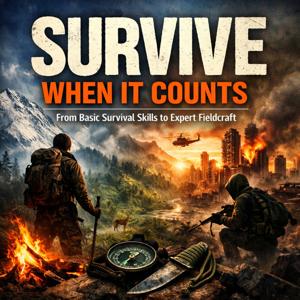
If you’ve ever wanted a clear, practical way to build real-world survival skills, this survival podcast is designed to take you there step by step. Instead of overwhelming you with random tips or dramatic worst-case scenarios, it follows a structured path: start with the basics that keep you alive, then add fieldcraft, then expand into tougher environments and more complex situations. The goal is simple: help you think clearly, move smartly, and stay capable when conditions turn against you.
At the foundation of every survival skill is mindset. Before water, fire, shelter, or gear, you need calm decision-making. This episode sets the tone for the whole series by emphasizing how panic wastes energy and clouds judgment. You’ll hear why the first priorities are stopping, assessing, and acting with purpose. From there, the essentials come into focus: finding safe water, creating fire, building shelter, choosing the right clothing, and understanding how to signal for help. These aren’t just outdoor skills; they are life-preserving habits that matter whether you’re lost on a trail or caught in an unexpected emergency.
Once the basics are in place, the podcast moves into practical outdoor competence. This is where survival becomes less about theory and more about repeatable action. Campcraft, hygiene, first aid, weather awareness, and navigation all play a role in keeping you healthy and oriented. The episode also highlights one of the most important early milestones for any learner: surviving the first night alone. That experience can reveal gaps in planning, gear, and mental readiness faster than almost anything else, which is why it’s such a valuable test of skill and confidence.
From there, the series widens its scope to cover harsher environments and real-world pressure. Cold weather and heat each bring their own risks, while mountains, jungle, coastline, and river crossings demand different strategies and different decision-making. Night movement and concealment add another layer of complexity, especially when visibility drops and mistakes become more costly. This podcast doesn’t treat these environments as dramatic backdrops; it treats them as conditions that reward preparation, discipline, and attention to detail.
The final layer brings survival thinking into everyday life. Urban emergencies, home preparedness, vehicle kits, and the debate between bugging in versus bugging out are all part of being ready for disruption beyond the wilderness. A solid 72-hour plan can make a major difference when systems fail, roads close, or services are delayed. The episode shows how survival isn’t only about remote expeditions—it’s also about building practical resilience where you live, work, and travel.
As this survival podcast develops, it blends advanced navigation, tracking, leadership, risk assessment, and survival psychology into one connected skill set. That’s what makes it useful for beginners and serious practitioners alike. It’s not just about staying alive for a night; it’s about learning how to adapt, lead, and endure through changing conditions. If you want a survival journey that starts with the essentials and builds toward expert-level thinking, this episode is the right place to begin.