
Sign up to save your podcasts
Or

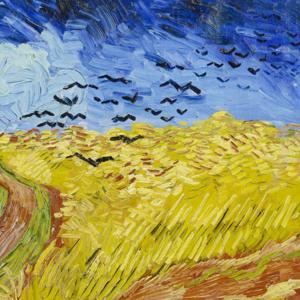


This world holds a lot of pain. We see it in people, in animals, and even in our own hearts. Hunger, sickness, loss, fear, and loneliness are common. Some days are good, but many days are hard. Arthur Schopenhauer, a famous thinker, says we should face this truth. If we look clearly, we see that suffering is not a rare thing. It is part of life itself.Why does he say this? Because desire never ends. We want food, safety, and love. We also want respect, comfort, and fun. When we do not have what we want, we feel pain. When we get what we want, the joy is short. Soon, a new desire appears. Then we feel pain again. Pleasant feelings are like a quick breeze. Pain is like a strong wind that lasts.Nature shows this struggle everywhere. Animals must hunt, hide, and fight to live. People do the same in their own way. We work, we compete, we worry, and we age. Bodies get tired and weak. Even the earth shakes, storms rage, and floods come. If we expect life to be easy, we will be let down. If we accept that life is often hard, we are less shocked when trouble comes.There is another trap: boredom. When we chase a goal, we are tense and unhappy. When we reach the goal, we often feel empty. We ask, “Now what?” So life swings between wanting and boredom. This swing makes many people restless. They try to escape it with noise, crowds, toys, or constant change. But the swing returns, again and again.More wealth and power do not cure this. Rich people still worry. Strong people still fear loss. Famous people still feel lonely. Even those who have many nice things cannot keep them forever. Health can fail. Friends can leave. Time takes everything. If we think we are safe from pain because we have “enough,” we will learn that “enough” keeps moving away.So what should we do? First, we should be kind. If suffering is everywhere, then compassion matters most. We should feel with others when they hurt. We should avoid causing pain when we can. This is true for people and for animals. A small act of care can help a lot: a warm word, a shared meal, a gentle hand. Justice and laws are good, but kindness goes deeper. It reaches the heart.Second, we should lower our desires. This does not mean we must be harsh with ourselves. It means we should choose a simple life. Simple foods, simple clothes, simple rooms, and simple plans often bring more peace than big, fancy things. When we expect less, we are thankful more. When we stop chasing every new wish, we feel calmer inside. This calm does not remove all pain, but it softens it.Third, we can find small islands of rest. Art can help. Music can lift the mind for a while. A poem, a painting, or a quiet walk can give relief. In these moments, we stop thinking, “I want, I need, I must have.” We just look or listen. We let the world be, and we breathe. Study can also help. Clear ideas can guide us like a lamp in a dark room.Some people take a deeper path. They try to “deny the will,” as Schopenhauer says. This means they practice self-control. They limit wants, control anger, and keep a peaceful mind. They may pray, meditate, or stay silent for a time. They eat simple food and avoid loud pleasures. They try to see all beings as one family. This path is hard. It is not for everyone. But it shows another way to live: less wanting, more peace.What about joy? Are we allowed to smile? Yes. Schopenhauer does not tell us to hate life. He asks us to see it clearly. Then we can be wise with our hopes. We can enjoy small, honest goods: a friend’s voice, a safe home, good work done well, a child’s laugh, a kind pet, a sunset. These joys are simple and cheap. They do not rest on pride. They do not harm others. They also pass, but while they last, they warm us.What about death? Many fear it. But if life is full of pain, death is not only a loss. It also ends our trials. This thought can calm us.
गर्भ उपनिषद् (GARBHA UPANISHAD)Meaning: “The Secret of the Womb”What is the Garbha Upanishad?The Garbha Upanishad is an old Indian text written in Sanskrit. It talks about how a baby is formed inside the mother’s womb, how it grows, and how it learns even before birth. It is one of the minor Upanishads, which are ancient books about knowledge, life, and the soul.Section 1: What is the Human Body?The human body is made of five elements — earth, water, fire, air, and space.Earth makes the body strong and solid.Water helps to digest food.Fire gives warmth and energy.Air helps things move inside the body.Space gives room for everything to exist.The body grows in six stages — it is created, born, grows, becomes an adult, gets old, and finally dies.Section 2: How is a Human Embryo Formed?A baby starts when the father’s seed (sperm) and the mother’s blood (ovum) join together.From this small beginning, all the parts of the body — bones, blood, flesh, and other parts — slowly form.Section 3: How Does the Embryo Grow?The Upanishad explains how the baby grows month by month:1st month: A small lump forms.2nd month: The head appears.3rd month: Legs and hands form.4th month: The body starts to take shape.5th to 7th months: The baby’s face, eyes, and other parts appear.8th month: The baby’s soul (Atman) enters.9th month: The baby is ready to be born.The baby gets food and strength from what the mother eats and drinks.Section 4: What Does the Embryo Know?By the eighth month, the baby in the womb remembers its past lives and understands right and wrong.It thinks about God and promises to live a good life after birth.But when the baby is born, the pain and pressure of birth make it forget all this wisdom.Section 5: Learning Through Garbh SanskarGarbh means womb and Sanskar means values or good habits.In Indian tradition, parents believe they can teach the baby even before birth by:Eating healthy food,Thinking good thoughts,Listening to calming music,Reading and praying.Stories like that of Abhimanyu in the Mahabharata say that he learned a war skill while in his mother’s womb.After BirthThe text says that the soul lives inside the body and wants to be free or enlightened.It compares the human body to a temple where the soul is the worshipper.It even lists body parts and says the body has hundreds of bones, veins, and muscles that work together like a sacred system.Main IdeaThe Garbha Upanishad teaches that life is sacred from the very beginning.It connects science, health, and spirituality, showing how body and soul grow together — from the womb to birth, and beyond. --------🙏 Support the Channel:🔸 Support via UPI: syllabuswithrohit@upi🔸 Buy Me A Coffee: buymeacoffee.com/SyllabuswithRohit
The Ashtavakra Gita is a very old book from India. It is a talk between a wise sage, Ashtavakra, and a king, Janaka. The book asks the biggest question: Who am I, really?Main claim (metaphysics):The book says your true self is pure awareness. It is not your body. It is not your thoughts. It does not change, even when life changes. The world we see comes and goes. Awareness stays.How we know (epistemology):The text says real knowing is direct seeing. It is not about long rituals or many steps. It is like waking up. When you notice you are awareness, truth feels simple and near.The world (appearance vs. reality):The book calls the changing world appearance. It is like waves on the ocean. Waves rise and fall. The ocean remains. In the same way, feelings and thoughts move. Awareness does not.The person (identity):Ashtavakra teaches, “You are the witness.” You can watch the mind the way you watch clouds. If you are the watcher, you are larger than what you watch. This gives steady peace.Freedom (moksha):Freedom is not a far place. It is being free inside right now. When you stop clinging to passing things, you rest in your real self. That rest is freedom.Method (practice, but different):The book is bold about practice. It says the key move is clear seeing. If you see you are awareness, struggle softens by itself. Effort helps only until you see.Emotions (ethics of inner life):Anger, fear, and jealousy may appear. The text suggests not fighting them and not following them. Just notice them. When you do that, the storm passes, and kindness feels natural.Action in the world (dharma):King Janaka still rules his kingdom. So the book does not demand you leave your life. It teaches calm action. Do your work, but do not let it tie your heart in knots.Time and change:Everything that starts will end. The book uses this fact to teach ease. When good times come, enjoy them. When hard times come, breathe and let them pass. Awareness makes room for both.Style and form (literary notes):The writing is short and sharp. It uses clean images, like sky and clouds, or rope and snake (a rope is mistaken for a snake in dim light). These pictures show how error happens and how truth appears.Place in Indian thought:The book stands in the Advaita Vedanta stream (non-duality). It is more direct than many texts. It talks less about gods and more about seeing the self. It is close to the Upanishads, but even plainer.Comparisons:Unlike the Bhagavad Gita, it gives few duties or steps. Unlike many yoga texts, it does not ask for long training first. It keeps saying, “Know the self, and you are free.”Scholarly debates:Some teachers love its instant message. Others worry it can be misread as “do nothing.” A careful reading shows it does not praise laziness. It praises clear, quiet awareness that guides wise action.Why it matters today:School, sports, and screens can feel heavy. The book offers a light tool: notice who is noticing. This small move can bring calm in class, at home, or on the field.Core takeaway:You are not the storm. You are the sky that holds the storm. When you know this, you act with courage and care. This is the heart of the Ashtavakra Gita. --------🙏 Support the Channel:🔸 Support via UPI: syllabuswithrohit@upi🔸 Buy Me A Coffee: buymeacoffee.com/SyllabuswithRohit
00:00:00 Introduction00:06:27 Preface00:15:58 How It Started00:41:35 Peenemunde and JPL01:19:15 The Hunting of the Hypergol . . .Ignition! is a true story about how people learned to make liquid fuels that could power rockets. The author, John D. Clark, worked in rocket labs for many years. He tells funny, sometimes scary stories about experiments, mistakes, and big wins. The book is about science, but it reads like an adventure. It shows how curious people used careful testing, teamwork, and courage to turn strange, dangerous liquids into tools that could reach space.First, the book explains what a rocket needs: a fuel and an oxidizer. Fuel is what burns. An oxidizer is the chemical that lets the fuel burn fast, even where there is no air, like in space. When fuel and oxidizer meet and burn in a rocket engine, hot gas shoots out the back and pushes the rocket forward. That’s basic rocket science.Early rocket builders tried many simple things. Liquid oxygen (very cold oxygen, called “LOX”) and gasoline worked, but LOX boils away quickly and must be kept very cold. That made it hard to store and use. People wanted “storable” propellants that could sit in a tank at room temperature and be ready to fire right away. This was important for missiles and for space missions that needed many restarts.Scientists then explored countless liquids. Some were easy. Many were terrible. Some were deadly. One group was called “hypergols.” Hypergolic fuels and oxidizers ignite the instant they touch—no spark needed. This is great for simple, reliable engines. But it is also risky, because spills can cause fire right away. Common hypergolic pairs became hydrazine or UDMH (a special form of hydrazine) mixed with red fuming nitric acid or nitrogen tetroxide. These are not friendly chemicals. They can burn the skin, poison the body, and make clouds that hurt your lungs. The book tells stories of leaks, alarms, and careful safety rules to keep people alive.Another path used hydrogen peroxide. At high strength, hydrogen peroxide breaks down into hot steam and oxygen. It can be a “monopropellant,” which means it works alone with the help of a special metal to start the reaction. It can also act as an oxidizer with a separate fuel. Peroxide could be handy, but it was touchy. If stored badly or mixed with the wrong thing, it could foam, spill, or explode. The book shares lab tales about filters, valves, and people running for the door when tanks hissed.Some chemicals were so dangerous they felt like monsters. Fluorine and its cousins, like chlorine trifluoride, are examples. They can set fire to things that do not usually burn—like brick, sand, or asbestos. They can even eat through metal. Why try them at all? Because they promised very high performance. If they worked safely, rockets could fly farther or carry more. Clark describes careful tests, nasty surprises, and the final decision that some gains were not worth the risk.During World War II, German teams at Peenemünde pushed rocket work fast. They built the V-2 missile using liquid oxygen and alcohol. After the war, their ideas and people influenced labs in the United States and other countries. In the U.S., places like JPL and small companies tried new propellant mixes, new pumps, and new engine shapes. The book shows how progress came from many small steps: test, measure, change one thing, test again.There were also “zip fuels,” which used boron compounds. On paper they looked amazing. In practice they made sticky, toxic flames and left hard glassy deposits that ruined engines. Many projects like this looked great in meetings, then failed on the test stand. Clark uses humor to explain how hope, hype, and reality often collide.
Modern Man in Search of a Soul by Carl Jung is a collection of essays that explore the human mind, the struggle for meaning, and the spiritual problems of modern life. Jung combines psychology, philosophy, and spirituality to help people understand themselves more deeply.The Main Problem of Modern ManJung says that modern people are very advanced in science and technology but are losing touch with their inner selves. They know how to build machines and explore space, but they no longer understand their own minds. Many feel empty or anxious because they have lost a sense of purpose. He calls this a “loss of soul.” To find peace, people must reconnect with their inner world.The Conscious and the UnconsciousJung explains that the human mind has two main parts: the conscious and the unconscious.The conscious mind includes thoughts and actions we are aware of.The unconscious contains hidden memories, feelings, and ideas that we don’t realize are influencing us.He says our unconscious is not just personal—it also holds universal symbols and experiences that all humans share. He calls this the collective unconscious.Dreams and SymbolsDreams, Jung says, are messages from the unconscious. They help balance our inner life. For example, if someone is too focused on work and ignores their emotions, their dreams might remind them of what is missing. Instead of treating dreams as meaningless or random, Jung sees them as guides that can help people become more whole.Dreams often use symbols—images that represent deeper truths. A snake, a mountain, or a river can stand for ideas like transformation, challenge, or life itself. By studying these symbols, we learn about parts of ourselves that we don’t yet understand.Individuation – Becoming WholeA major goal in Jung’s work is individuation—the process of becoming a complete person. This means uniting the different sides of ourselves: our strengths and weaknesses, our light and shadow.The shadow is the part of us that holds qualities we reject or hide, such as anger, fear, or selfishness. Jung says ignoring the shadow can cause problems like depression or projection—blaming others for traits we dislike in ourselves. Facing the shadow honestly allows us to grow stronger and more balanced.Individuation also involves connecting with the Self, which is the deepest and most complete form of who we are. The Self is like the center of the soul—it includes both conscious and unconscious parts. Finding it brings a sense of harmony and purpose.The Stages of LifeJung describes life as having different stages, each with its own tasks.In youth, people focus on learning, success, and finding a place in society.In middle age, outer achievements lose their charm, and people begin to ask deeper questions: Who am I? What is the meaning of my life?If someone tries to live their middle years using the same goals they had in youth, Jung warns they will feel lost. True maturity comes from turning inward, discovering inner values, and accepting both joy and suffering as part of life’s journey.The Role of Religion and SpiritualityJung believes religion, myths, and ancient stories are not just old beliefs—they reflect deep psychological truths. The symbols of gods, heroes, and demons show the struggles of the human mind.He does not tell people to follow a specific religion. Instead, he says everyone needs a spiritual attitude—a sense that life has meaning beyond the material world. Ignoring this need leads to emptiness and despair. Religion, in Jung’s view, gives people language and symbols to connect with their inner world.The Problem of Mass ThinkingJung warns that modern people often lose themselves in crowds, trends, and public opinion. They stop thinking for themselves. When this happens on a large scale, societies can become dangerous because individuals no longer take responsibility for their actions.
This book is a set of short pieces (essays and talks) where Karl Popper shares one big idea: we grow by facing problems, trying answers, finding mistakes, and fixing them. This is true for science, for schools, for friendships, and for whole countries. Problems are not stop signs. They are chances to learn.How science works (in plain words)Popper says science moves forward by bold guessing and tough testing.Guess (a “conjecture”): A scientist makes a smart guess about how something works.Test: They try hard to show the guess is wrong. If the guess fails, they learn what to change. If it survives many hard tests, it becomes a better idea—but never perfect.Why never perfect? Because a new test tomorrow might reveal a flaw. That’s okay! Knowledge grows when we find and fix errors.Popper gives the spirit of great scientists like astronomers who made daring ideas and then checked them carefully. Science needs both courage and care: big ideas plus strong checks.Learning is like evolutionPopper links learning to how living things change over time:We try many ideas.Bad ideas “die off.”Better ideas “survive”—for now.This is called trial and error. Errors are not shameful; they are useful clues. The goal is not to be right but to get closer to the truth.Mind and body, puzzles and patienceSome problems are very hard, like how the mind (thoughts and feelings) relates to the brain. Popper’s rule: don’t give up and don’t pretend you already know. Ask clear questions. Offer clear guesses. Test them. Repeat.The scientist’s dutyPopper says honesty matters. Share your methods. Welcome criticism. If you are wrong, say so and improve the idea. Be kind to people and tough on ideas.How societies get betterThe second big theme is about history, politics, and everyday life together.The “open society”An open society is a place where people can speak freely, question leaders, and change rules without fear. In an open society:We can criticize laws and plans.We protect the rights of all, including minorities.We use arguments, not force.What is democracy for?Popper has a clear answer: the main point of democracy is not to pick perfect rulers. It is to make it easy and peaceful to remove bad rulers. Elections, courts, and free speech are tools for fixing mistakes without violence.Change step by stepPopper warns against big “utopian” plans that claim to know the future. He prefers small, careful steps:Spot a real problem.Try a limited fix.Check results.Keep what works, drop what doesn’t.This is called piecemeal social change. It is safer and wiser than trying to rebuild everything at once.Against “history is destiny”Some people say history follows strict laws and the future is set. Popper disagrees. The future is open because people can learn, choose, and correct their course. He also pushes back on the cynical idea that nothing gets better. Things can improve—if we keep solving problems.Peace, not warPopper hopes for a world where we replace fights with fair rules and open debate. Peace grows when we build strong, just institutions and let criticism do the work that violence used to do.How to use Popper’s idea in daily lifeYou don’t need a lab or a government office to live this way. You can use it today:Start with a clear problem.“I keep missing homework,” or “Our group argues a lot.”Make a smart, simple guess.“I’ll pack my bag right after school.” “We’ll take turns speaking.”Test it.Try your plan for a week.Look for errors.What still went wrong? Be honest.Fix and try again.Adjust the plan and repeat.Be kind to people, tough on ideas.Don’t tease someone for being wrong. Thank them for the clue.
Biochemistry is the study of life’s chemistry—how tiny molecules inside living things make big jobs happen. If biology is the story of life and chemistry is the study of matter, then biochemistry is where the two meet. It explains how we turn food into energy, how muscles move, how brains send signals, and how cells copy themselves.All biochemistry starts with atoms that join into molecules. Four elements—carbon, hydrogen, oxygen, and nitrogen—do most of the work. Carbon is special because it can make long chains and rings, like LEGO pieces that snap many ways. From these pieces, cells build four main kinds of “bio-molecules”: carbohydrates, lipids (fats), proteins, and nucleic acids.Carbohydrates are sugars and starches. Plants make them during photosynthesis; animals eat them for fuel. Your body breaks bread or rice into glucose, a small sugar. Cells then burn glucose in tiny steps to release energy. That energy is packed into a molecule called ATP, which acts like a rechargeable battery for the cell.Lipids are fats and oils. They store energy long-term, keep us warm, and form the cell membrane, the thin skin around every cell. Membranes are made of phospholipids with a water-loving head and water-fearing tails. In water, they line up into a double layer, making a flexible barrier with selective gates for what gets in or out.Proteins are the workers. Built from 20 small parts called amino acids, they fold into shapes that do jobs: carry oxygen (hemoglobin), speed up reactions (enzymes), move muscles (actin and myosin), and fight germs (antibodies). An enzyme’s active site fits its target like a lock and key—or better, like a hand and glove that can flex a bit. Enzymes lower the activation energy, so chemistry happens fast at body temperature.Nucleic acids—DNA and RNA—store and share instructions. DNA is a long code written with four “letters” (A, T, C, G). The central dogma of biochemistry says: DNA → RNA → Protein. First, a gene is transcribed into RNA. Then a ribosome reads the RNA and translates it into a protein, linking amino acids in the right order. One wrong letter can change a protein’s shape and lead to disease.Biochemistry also explains metabolism, the sum of all chemical reactions in a cell. We group them into two flows: catabolism breaks big molecules into small ones and releases energy; anabolism builds big molecules from small ones and uses energy. Pathways like glycolysis split glucose to make ATP quickly. The citric acid cycle (Krebs) and electron transport chain in mitochondria make a lot more ATP using oxygen. It’s like a factory line: each step is run by a specific enzyme; if one step slows, the line backs up.Water is the background hero of biochemistry. Its tiny positive and negative ends make it polar, so water molecules stick to each other with hydrogen bonds. That gives water a high heat capacity (good for steady body temperature) and helps dissolve salts and sugars. Water also shapes protein folding and membrane formation.Cells must keep a steady pH so proteins keep their shape. Buffers—mixes that soak up extra acid or base—hold pH in a safe range. In blood, the bicarbonate buffer keeps pH close to ~7.4. If pH swings too far, enzymes misfold and slow down.Signals guide when chemistry should speed up or slow down. Hormones act like text messages between organs; insulin tells cells to take in glucose after a meal. Neurotransmitters carry signals between nerve cells. Inside the cell, signals often use phosphorylation—adding a small phosphate tag to a protein to turn it on or off. This lets the cell respond fast to food, stress, or danger.Vitamins and minerals are helpers. Many enzymes need cofactors like vitamin C, B-vitamins, iron, zinc, or magnesium to work. Without them, pathways stall. That’s why varied diets matter: they supply both fuel and the tiny tools that run the engines.
Hinduism is the main religion in India. It has many gods and goddesses. People see their statues and pictures everywhere: in big temples, on the roadside, in shops, or at home. Hindus live not only in India, but also in places like the Caribbean, North America, UK, and South Africa. Hinduism is not just a religion, but a big part of Indian life, culture, and traditions.Many Faces of HinduismHinduism is full of different stories, beliefs, and ways to pray. There is not just one god. Some people pray to Vishnu, Shiva, Ganesha, Durga, Rama, Sita, or Krishna. Some think all gods are part of one big God. Some people pray at temples, some at home, and some at small shrines under trees.Is Hinduism Like Other Religions?Hinduism is not exactly like Christianity or Islam. It has no single founder or one holy book. There are many scriptures: the Vedas, Upanishads, Bhagavad Gita, Ramayana, and Mahabharata. Most Hindus do not read all these books, but they know the stories and learn from elders, teachers, or TV.Hindu Life and RitualsHindu life is full of rituals and festivals. There are big events like Diwali, Holi, Navratri, and Kumbh Mela, where millions of people gather to pray and celebrate. Families have small temples at home and offer food, water, and flowers to gods every day.Priests, called Brahmins, lead special ceremonies. Gurus teach about god and life. Sometimes, a guru can be from any caste or group, not just Brahmins. Some famous gurus travel around the world and use the internet to teach.Philosophy and QuestionsHindus think deeply about questions like: Who am I? What happens after death? Why do we do good or bad actions (karma)? Many old stories talk about self (atman), rebirth, and how to find peace (moksha).There are different philosophies. Some say the soul and God are one (like Shankara). Others say they are different but connected (like Ramanuja), or totally separate (like Madhva). All these ideas are important in Hinduism.Caste and Social LifeHindu society has groups called castes: Brahmin (priests), Kshatriya (warriors), Vaishya (traders), and Shudra (workers). Long ago, only some could study or do rituals. Some people, called "untouchables" or Dalits, had very hard lives. Women also faced many rules and were often kept out of temples and learning.Change and ReformMany people tried to change unfair things in Hindu society. Ram Mohan Roy worked to stop Sati (where widows had to die with their husbands). Pandita Ramabai fought for women's education. Dr. B.R. Ambedkar was a Dalit leader who helped write India’s constitution and told Dalits to follow Buddhism for equality.The Bhakti movement showed that anyone—no matter their caste or gender—can love and pray to God. Poets like Kabir said God lives in every heart, not only in temples or statues.Hinduism Goes GlobalHindus have moved to many countries for work or trade. They took their gods, festivals, and temples with them. In places like the UK, USA, and Caribbean, Hindus built temples and kept their culture alive. Sometimes, non-Indians join Hindu groups like ISKCON (Hare Krishna) or practice yoga and meditation.Hindu Festivals and StoriesStories like Ramayana and Mahabharata are very important. On TV, people watch these stories together. In the Ramayana, Rama, Sita, and Lakshman go to the forest, Sita is taken by Ravana, and Rama saves her. Sita is seen as strong and loyal. Goddess Durga fights the demon Mahisha to show that women can be powerful.Miracles and GodsHindus believe that gods can appear anywhere—in a statue, a photo, a stone, or even in a dream. Sometimes people see miracles, like statues drinking milk. Each family may have their favorite god, but they respect others too.
Huxley wanted to learn how the mind works when we see the world in a fresh way. In 1953 he took a small dose of mescaline, a chemical from the peyote cactus. A doctor watched over him. He did this at home, in a calm room. He did not do it to party. He did it to study his own mind.What he felt and sawSoon, ordinary things looked new. Colors were very bright. Patterns stood out. A chair leg and a flower seemed deep and important. A pile of books felt less interesting than the shine of the table or the folds of his pants. He was not seeing wild monsters. He was seeing the simple world, but with great power and beauty. He felt quiet and awake. He felt safe and curious.Time, space, and selfTime seemed to slow down. Minutes felt long and full. Space felt larger and richer. He noticed tiny details he had missed before. His sense of “me” got smaller. Worries and plans stepped back. He felt more open and kind. He felt close to other people and to nature. It was like standing in front of the world and saying, “Here it is,” without judging it.The “reducing valve” ideaHuxley read about a theory from thinkers and scientists. The idea is that the brain is not a maker of thoughts as much as a filter. There may be far more reality than we can handle. To help us eat, work, and stay safe, the brain shuts out most of it. It lets in only what is useful. Huxley called this filter a “reducing valve.” He thought mescaline, prayer, or deep art can sometimes open that valve a little. When it opens, we may touch a wider “Mind at Large.” Then we feel the “suchness” or “is-ness” of things—how they simply are—without labels or hurry.Art, religion, and meaningHuxley linked his experience to art and faith. He said some painters show this pure seeing, with glowing colors and careful shapes. He felt that holy people and poets have also known it. They talk about grace, wonder, and unity. He did not say a pill can give wisdom. But he thought the vision can help us care more, fear less, and notice beauty in daily life. It can remind us that the world is more than chores and talk.Warnings and limitsHuxley added many cautions. Drugs are not toys. They are not for everyone. Some people could get scared or sick. No one should drive or make big choices while under their sway. Set and setting matter: a quiet place, a trusted guide, and a clear plan. Also, the door does not stay open. You come back to normal life. The memory fades. If you chase the feeling too hard, you may harm yourself. He said better paths include attention, kindness, meditation, and art. These can open smaller, safer doors every day.Science and questionsHuxley asked if this state could help doctors and scientists learn about the mind. He wondered if careful use could ease pain or help people who feel stuck and dull. He also asked hard questions. If language and habit hide reality, how much of what we call “real” is just a tool for living? Can we train our minds to see more without a drug? What is the right place for such visions in a good society?Where the title comes fromThe title comes from a poet, William Blake. He wrote that if the doors of perception were cleaned, we would see the world as endless and full. Huxley used this line as a hint: maybe our minds can be washed clear for a while, so we see more truth.Key takeawaysThe world may be richer than our normal view.The brain filters reality so we can get by.Sometimes the filter loosens, and we see more.Art and faith try to share this bigger view.Drugs can offer a peek, but they carry risks.Lasting growth needs care, practice, and love.
Will Durant (1885–1981) was one of the most celebrated historians and philosophers of the twentieth century. Alongside his wife, Ariel Durant, he dedicated his life to making history accessible to the wider public, blending narrative elegance with rigorous scholarship. Their monumental eleven-volume series The Story of Civilization became a landmark achievement in historical writing, earning them the Pulitzer Prize in 1968 and the Presidential Medal of Freedom in 1977. Durant’s work was notable not only for its breadth—spanning philosophy, religion, politics, and culture—but also for its humanist spirit, emphasizing the enduring struggles and achievements of humanity across the ages.Durant began his career as a philosopher and educator. His first major work, The Story of Philosophy (1926), made the ideas of great thinkers—from Plato to Nietzsche—accessible to ordinary readers and became an international bestseller. This success allowed him and Ariel to devote their lives fully to scholarship. Over four decades, they produced The Story of Civilization, covering a span from ancient times through the Napoleonic era. The Durants’ writing combined scholarship with storytelling, weaving together political events, cultural achievements, and philosophical developments into a seamless narrative. Their style was not purely academic; it was infused with warmth, wit, and the conviction that history should be not only informative but also inspiring.In his later years, Durant turned more inward, reflecting on the meaning of life and the personal lessons distilled from a century of living. Fallen Leaves: Last Words on Life, Love, War, and God, published posthumously in 2014, is a product of those reflections. Unlike his earlier grand histories, this book is intimate and personal, written in the voice of a philosopher looking back at life’s journey. In its pages, Durant considers the stages of human existence—from youth and middle age to old age and death—while also addressing perennial human concerns: love, morality, faith, politics, and the pursuit of beauty and knowledge.What makes Fallen Leaves remarkable is not just the wisdom it conveys but the humility with which Durant offers it. He does not present final answers to life’s mysteries but instead shares observations, doubts, and hopes. His writing here is candid and vulnerable, shaped by decades of learning yet tempered by experience. The result is less a lecture and more a conversation, as though the reader is sitting with a wise elder who speaks honestly about what he has seen and felt.The book is also deeply humanistic. Durant affirms the value of love, art, education, and history as forces that enrich human life. He acknowledges the flaws of civilization—war, inequality, prejudice—but remains committed to the belief that humanity can improve through knowledge, compassion, and cultural continuity. In a world often fragmented by ideological conflict, his voice is refreshingly balanced, combining philosophical depth with practical wisdom.00:00:00 preface00:04:18 our life begins00:09:29 on youth00:19:49 on middle age00:29:10 on old age00:33:44 on death00:38:28 our souls00:53:38 our gods01:04:40 on religion01:15:46 on a different second advent01:21:52 on religion and morals01:35:39 on morality01:49:22 on race01:54:35 on women02:05:01 on sex02:09:52 on war02:25:45 on politics02:37:28 on capitalism and communism02:47:17 on art02:56:37 on science03:04:18 on education03:34:48 on the insights of history03:46:37 conclusion
From the publisher's feed