
Sign up to save your podcasts
Or

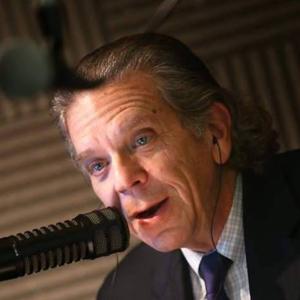


Fast food didn’t just change how America ate. It was the testing ground for today’s economy: weakened unions, low-wage labor, and concentrated corporate power.
Twenty-five years ago, investigative journalist Eric Schlosser wrote a book about hamburgers and wound up describing the future of American capitalism.
Schlosser exposed what lay behind the cheap meal and the familiar logo: concentrated corporate power, low-wage and interchangeable workers, weakened unions, industrialized agriculture, lax oversight, and a business model built on standardization, speed, and shifting costs onto everyone else. What looked in 2001 like an investigation of one industry now shows us the blueprint for the economy that followed.
His argument, outlined in my recent WhoWhatWhy podcast, is that fast food became a laboratory for practices that spread far beyond the drive-through: franchising structures, automation designed to reduce worker leverage, relentless pressure on wages, consolidation that squeezes out competitors, and a political system increasingly receptive to the industries it is supposed to regulate.
We blame American inequality on the usual suspects: tax cuts for the rich, Wall Street greed, the decline of unions. Joining me on this recent WhoWhatWhy podcast, Thomas Frank (What’s the Matter with Kansas) says something else has been at work, and it’s the last thing we would suspect.
For 70 years, creativity has been America’s most flattering idea about itself. In his new book, The Creative Con, Frank argues that it became the quiet logic of a new class system. It sorted Americans into those who supposedly create and those who supposedly don’t, and it handed the rewards to one side.
What if the ideas we love most, the ideas of creativity and innovation, are actually the ones that pulled us apart?
Ava Kofman, a staff writer at The New Yorker, joins me on the Califorina Sun Podcast to discuss her five-part podcast, “The Journey,” which investigates the story of a wealthy Southern California couple who used surrogacy to collect 27 children.
Beyond disturbing allegations of abuse, the case exposed troubling gaps in fertility industry oversight, child protection, and the law.
The Supreme Court wasn’t always this powerful. Congress once held more control over the judiciary — and could reclaim much of that authority today.
With the election over and control of Congress settled, attention now turns to the Supreme Court — and the inevitable battles over what Congress can and cannot do. But my guest on this recent WhoWhatWhy podcast, historian Rachel Shelden, argues that the court’s extraordinary power was never what the framers intended.
In her book, The Political Supreme Court: A Forgotten History, she reveals a time when Constitutional authority belonged more broadly to the people; and Congress exercised far greater control over the judiciary.
Longtime Senate staffer and historian Adam Jentleson thinks that sometimes a big win is the least interesting thing that could happen to his party. His question is what comes after: whether a midterm won on backlash lasts, or evaporates the way every majority of the past decade has.
The answer turns on a distinction candidates blur at their peril.
Jentleson spent two decades inside Democratic politics, as chief of staff to former Sen. Harry Reid (NV) and, for a brief time, chief of staff to Sen. John Fetterman (PA). His new book is Supermajority: How Democrats Can Build Lasting Power.
We spoke on my WhoWhatWhy podcast just before the election which now give his thoughts added relevance.
Christian nationalists are no longer trying to win democracy, Rep. Jared Huffman argues. They want to replace it with religious rule — and control American life.
Something has changed on the American religious right — and Rep. Jared Huffman (D-CA) tells me in this recent WhoWhatWhy podcast that we are making a dangerous mistake by continuing to describe it with the old vocabulary of politics.
The movement Huffman examines in his new book, No Prophets: The Fight to Save Democracy from Christian Nationalism, is not simply seeking greater influence in elections or a louder voice in the culture. Its most committed factions, he argues, have concluded that democracy itself no longer serves their purposes. What they seek instead is dominion: political and religious control over American institutions and, ultimately, American life.
Can we defend democracy without sacrificing the friendships and human connections that make it worth saving? The paradox of political obsession.
In this recent WhoWhatWhy podcast, I talk with political philosopher Roger Berkowitz — founder of Bard College’s Hannah Arendt Center and author of A World We Share: Hannah Arendt and the Power of Friendship in a Broken World. He explores a provocative idea: Perhaps democracy’s survival depends as much on our capacity for friendship as on our political convictions.
What if one of the greatest threats to democracy isn’t political extremism itself, but the disappearance of the human relationships that make democracy possible? What if, in our determination to defend the country, we’re slowly destroying our ability to share it?
We live in an age when political convictions increasingly determine whom we trust, whom we love, even whom we’re willing to speak to.
Outrage has become a measure of moral seriousness, and every disagreement seems to demand a verdict on someone’s character. But is this constant state of political mobilization making us better citizens, or simply making us less capable of living together?
With all the buzz surrounding You Can See Everything, the new Nathan Fielder documentary about Elizabeth Holmes, it’s worth going back to where the Theranos story began.
Eight years ago, I spoke with John Carreyrou, the Wall Street Journal reporter who broke the story of Silicon Valley’s spectacular blood-testing fraud. His book, Bad Blood, had just been published. Carreyrou, now at The New York Times, was still uncovering the full extent of the deception.
Before the trials, the documentaries, and the Hollywood treatment, this was one of the earliest in-depth podcast conversations about the case. A useful primer on how it all began.
Give this country a tragedy and it will have the heroes and villains sorted before the ambulance has pulled away. Americans no longer need to know what happened to know whose fault it is.
The one reflex a divided country still shares is the certainty that arrives before the facts do.In May 2023, Jordan Neely, homeless and in the grip of mental illness, died in a chokehold on a Manhattan subway, held down by a former Marine named Daniel Penny. Almost before the facts were known, the argument was settled.
My guest on this recent WhoWhatWhy podcast, Anand Giridharadas, put it this way, they got their group number and went to stand in the right line.
Giridharadas, a former New York Times correspondent and author of Man in the Mirror: Hope, Struggle, and Belonging in an American City, treats that subway car as a biopsy: a small incision that reveals the condition of the whole body.
What if the most disruptive thing about artificial intelligence isn’t that it takes your job, but that it makes your company indistinguishable from every competitor — and drains the humanity out of the work that’s left?
Aaron Horwath has an unusual vantage point on that question. As director of AI operations at a creative technology company, his job is to put these tools to work. But in two essays for the longform magazine Noema, published by the Berggruen Institute, he’s become one of the sharpest voices asking how much the corporate rush to “use AI for everything” is costing us as human beings.
In my WhoWhatWhy conversation, Horwath explains why even senior professionals with decades of experience are feeling a strange career dread. More than fear of unemployment, it involves the loss of something human: the ownership, the craft, the pride in work that was recognizably their own before AI wedged itself into the workplace.